France · Île-de-France
Where to Stay in Champigny-sur-Marne, Île-de-France
The Marne loops past Champigny-sur-Marne, an Île-de-France city east-southeast of Paris, known for the Musée de la Résistance nationale.
Hotel links are affiliate links: booking through them may earn us a commission, at no extra cost to you. It never affects how places are ranked. How this works



Where to stay in Champigny-sur-Marne
Where visitors usually base themselves, and why.
The choice here runs between the Marne bank toward Joinville-le-Pont and the streets inland around Église Saint-Saturnin de Champigny-sur-Marne, and the two feel like different suburbs. Water decides the first. Along the river the Bâtiment de l'Aviron de Joinville, the bridges and the walk to Le Perreux-sur-Marne give an unhurried edge to a dense inner suburb.
Rooms are scarce on that side. Most visitors settle instead in the inland streets, where the Musée de la Résistance nationale, the Musée Adrien Mentienne and the shops sit within one another's reach. The wider Marne suburbs open the field.
Nogent-sur-Marne carries the Musée de Nogent-sur-Marne and the MABA, while Saint-Maur-des-Fossés keeps église Notre-Dame-du-Rosaire de Saint-Maur-des-Fossés and a longer parade of shops. Bry-sur-Marne and Villiers-sur-Marne lie further out, quieter and thinner on beds. The Adolphe-Chéron Stadium and the parc des sports des Maisons Rouges give the commune its sporting ground, and event days can tighten what little there is.
Paris is close throughout. If you are here for the museums and the river rather than the capital, a room in Champigny-sur-Marne saves the daily journey out and back. Chennevières-sur-Marne and Ormesson-sur-Marne sit further along the river, with village churches and few rooms.
Find hotels in Champigny-sur-Marne
Direct booking searches for these neighbourhoods.
The Marne bank toward Joinville-le-Pont
Bridges, the water and the crossing to Le Perreux-sur-Marne rather than shopping streets. Lodging is scarce in this area; reserve in advance.Find hotels in The Marne bank toward Joinville-le-PontMuseum visitors working through the Musée de la Résistance nationaleThe streets around Église Saint-Saturnin
The Musée Adrien Mentienne and Château du Parangon stand in the same handful of streetsFind hotels in The streets around Église Saint-SaturninTravellers who want the MABA and a wider choice of roomsNogent-sur-Marne and Saint-Maur-des-Fossés
The Musée de Nogent-sur-Marne and the shopping parades of Saint-Maur-des-Fossés absorb the overflowFind hotels in Nogent-sur-Marne and Saint-Maur-des-FossésHotel links are affiliate links: booking through them may earn us a commission, at no extra cost to you. It never affects how places are ranked. How this works
Things to do in Champigny-sur-Marne
Ranked by global recognition; descriptions from Wikidata (CC0).
Museums & Galleries
3- Musée de la Résistance nationale
- MABA
- Musée de Nogent-sur-Marne
Churches & Religious Sites
8- Église Saint-Saturnin de Nogent-sur-Marne Heritage
- Église Saint-Saturnin de Champigny-sur-Marne Heritage
- église Saint-Pierre-Saint-Paul de Chennevières-sur-Marne Heritage
- Église Saint-Gervais-et-Saint-Protais de Bry-sur-Marne Heritage
- Église Saint-Jacques-Saint-Christophe de Villiers-sur-Marne Heritage
Show 3 more →
- Église Saint-Charles-Borromée de Joinville-le-Pont Heritage
- église Saint-Jean-Baptiste du Perreux-sur-Marne Heritage
- Église Notre-Dame-de-l'Assomption d'Ormesson-sur-Marne Heritage
Castles & Historic Sites
2- Château du Parangon Heritage
- Monument à Antoine Watteau Heritage
Stadiums & Sports
3- Bâtiment de l'Aviron de Joinville Heritage
- parc des sports des Maisons Rouges
- stade Sous la Lune - Alain Mimoun
Landmarks & Notable Places
2- Maison de Louis Daguerre Heritage
- Maison de la Fondation Albert-de-Mun Heritage
worth knowingacross 5 categories in Champigny-sur-Marne
About Champigny-sur-Marne
Resistance history sits at the centre.
What is Champigny-sur-Marne known for?
The Musée de la Résistance nationale draws visitors to Champigny-sur-Marne, and the Musée Adrien Mentienne holds the local collections a short way from Église Saint-Saturnin de Champigny-sur-Marne. Château du Parangon survives among the streets, and the Institut national de l'audiovisuel keeps its archives nearby. Rowing belongs to the Marne, recorded in the Bâtiment de l'Aviron de Joinville.
What are the main landmarks in Champigny-sur-Marne?
Two museums carry the commune's name outward. The Musée de la Résistance nationale sets out the wartime record, and the Musée Adrien Mentienne gathers the local past beside it. Château du Parangon predates both. Église Saint-Saturnin de Champigny-sur-Marne holds the parish, and Église Saint-Charles-Borromée de Joinville-le-Pont and Église Saint-Gervais-et-Saint-Protais de Bry-sur-Marne carry the same line along the Marne.
Sport occupies the Adolphe-Chéron Stadium and the parc des sports des Maisons Rouges.
What is the history of Champigny-sur-Marne?
The parish came before the suburb. Église Saint-Saturnin de Champigny-sur-Marne fixed a village on the Marne long before the city spread east-southeast out of Paris to meet it. Château du Parangon belongs to that older, quieter Champigny-sur-Marne. Along the same stretch of water, Bry-sur-Marne kept the Maison de Louis Daguerre, and Nogent-sur-Marne, Le Perreux-sur-Marne and Saint-Maur-des-Fossés grew from villages into one continuous suburb.
Villiers-sur-Marne, Chennevières-sur-Marne and Ormesson-sur-Marne kept their parish churches through all of it, and the ring of them still marks the older settlement pattern. War left the deepest mark. The Musée de la Résistance nationale keeps the record of the occupation years, a national collection rather than a municipal one, and it is what most outsiders know of Champigny-sur-Marne.
The Musée Adrien Mentienne tells the commune's own story. Broadcast archives arrived later, with the Institut national de l'audiovisuel holding France's recorded output a short way along the Marne. Rowing built its own house on the water at the Bâtiment de l'Aviron de Joinville, and the Adolphe-Chéron Stadium added ground sport to the commune.
Monument à Antoine Watteau remembers a painter.
Where is Champigny-sur-Marne?
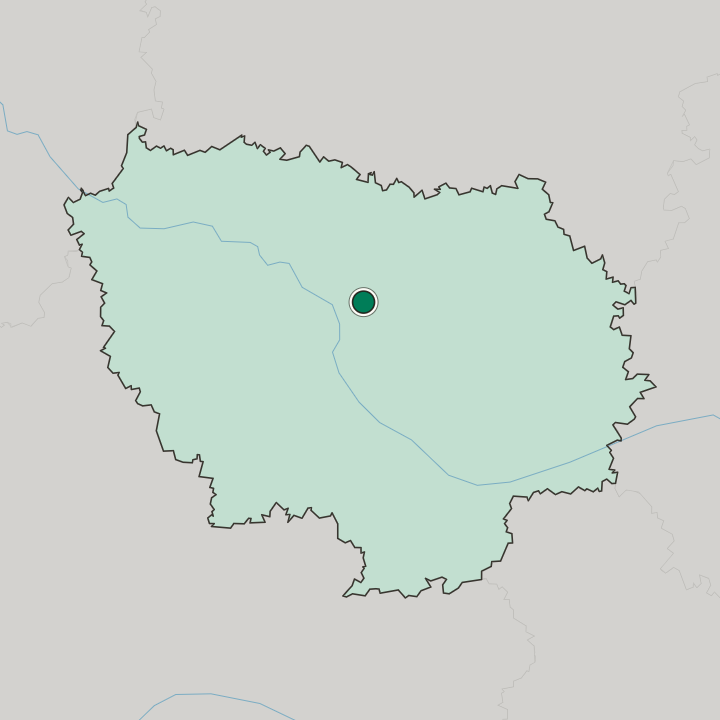
Champigny-sur-Marne stands on the Marne, twelve kilometres and a little more east-southeast of the centre of Paris, inside the continuous built-up ring of Île-de-France. The commune is small. Joinville-le-Pont, Saint-Maur-des-Fossés and Le Perreux-sur-Marne sit against it along the water, with Bry-sur-Marne and Villiers-sur-Marne beyond and Chennevières-sur-Marne and Ormesson-sur-Marne further up the valley.
Nogent-sur-Marne closes the ring toward Paris. Île-de-France surrounds the whole of it, and the commune runs from the riverbank back into unbroken suburban streets.
What is the climate of Champigny-sur-Marne?
The Marne moderates little; Champigny-sur-Marne takes the same temperate weather as the rest of Île-de-France, with no season sharp enough to close the river walks. Nothing here is extreme. Rowing on the water runs through the milder half of the year, and the Adolphe-Chéron Stadium fills whenever the ground is playable.
The museums take the rest of the calendar.
How do you get to Champigny-sur-Marne?
Champigny-sur-Marne lies east-southeast of the centre of Paris, close enough that the journey in is a suburban one rather than a trip out of town. Bridges over the Marne carry most of the traffic. Roads reach it from Saint-Maur-des-Fossés, Le Perreux-sur-Marne and Villiers-sur-Marne, and the built-up ground runs on without a break in any of those directions.
Distances between them are short. Once inside, the museums, Église Saint-Saturnin de Champigny-sur-Marne and the riverbank are all within a short local run.
Common questions
What is the best area to stay in Champigny-sur-Marne?
The Marne bank toward Joinville-le-Pont: Rowing and river walkers based near the Bâtiment de l'Aviron de Joinville. The streets around Église Saint-Saturnin: Museum visitors working through the Musée de la Résistance nationale. Nogent-sur-Marne and Saint-Maur-des-Fossés: Travellers who want the MABA and a wider choice of rooms.
Good for
More cities in Île-de-France
Updated October 2026