France · Île-de-France
Where to Stay in Saint-Maur-des-Fossés, Île-de-France
Saint-Maur-des-Fossés is a residential commune of Île-de-France, ringed by Marne-side neighbours and thick with parish churches and playing fields.
Hotel links are affiliate links: booking through them may earn us a commission, at no extra cost to you. It never affects how places are ranked. How this works


Where to stay in Saint-Maur-des-Fossés
Where the beds are, and what that means for the visit.
Nobody comes here for a hotel district. Saint-Maur-des-Fossés is a commune of houses and small apartment blocks, its beds are correspondingly modest, and the sensible way to choose one is by which of its edges the visit is actually pointed at. Charentonneau is the first answer.
Streets around the Stade de Charentonneau are quiet, ordinary and close enough to the sports halls that a weekend fixture needs no journey at all. The parish end reads differently. Around the église Notre-Dame-du-Rosaire de Saint-Maur-des-Fossés and the église Saint-François-de-Sales de Saint-Maur-des-Fossés the streets are older and slower, shops are neighbourhood shops, and this is the side to book if you want the commune as a place to live in for a week rather than a base to leave every morning.
Hotel stock stays thin. Booking ahead matters far more here than it would in a town used to visitors. The neighbours settle the rest, and there are seven of them.
Nogent-sur-Marne holds MABA, the bibliothèque Smith-Lesouëf and the Monument à Antoine Watteau, Champigny-sur-Marne keeps the Musée de la Résistance nationale, Joinville-le-Pont has the Château du Parangon and the Église Saint-Charles-Borromée de Joinville-le-Pont, and Maisons-Alfort adds the Église Saint-Rémi. Chennevières-sur-Marne, Saint-Maurice and Bonneuil-sur-Marne complete the ring. Any of them can absorb a stay when Saint-Maur-des-Fossés cannot.
Find hotels in Saint-Maur-des-Fossés
Direct booking searches for these neighbourhoods.
Charentonneau
Plain residential streets wrapped around the Stade de Charentonneau, with the commune's sports halls inside the same short walk. Rooms are few around here — worth securing early.Find hotels in Charentonneaua slow week living where the commune actually shopsThe parish streets
The older blocks between the église Notre-Dame-du-Rosaire de Saint-Maur-des-Fossés and the église Saint-François-de-Sales de Saint-Maur-des-Fossés. Few places to stay nearby — book ahead.Find hotels in The parish streetsart days at MABA and the bibliothèque Smith-LesouëfNogent-sur-Marne
A neighbouring commune whose draws are indoor ones, from MABA to the Monument à Antoine Watteau.Find hotels in Nogent-sur-Marnethe Musée de la Résistance nationale and the Château du ParangonJoinville-le-Pont and Champigny-sur-Marne
Two Marne-named neighbours holding the Musée de la Résistance nationale, the Château du Parangon and the Église Saint-Charles-Borromée de Joinville-le-Pont.Find hotels in Joinville-le-Pont and Champigny-sur-MarneHotel links are affiliate links: booking through them may earn us a commission, at no extra cost to you. It never affects how places are ranked. How this works
Things to do in Saint-Maur-des-Fossés
Ranked by global recognition; descriptions from Wikidata (CC0).
Museums & Galleries
2- bibliothèque Smith-Lesouëf Heritage
- MABA
Churches & Religious Sites
8- Church of St. Nicholas, Saint-Maur-des-Fossés Heritage
- Église Saint-Saturnin de Nogent-sur-Marne Heritage
- église Notre-Dame-du-Rosaire de Saint-Maur-des-Fossés Heritage
- église Saint-Pierre-Saint-Paul de Chennevières-sur-Marne Heritage
- église Saint-François-de-Sales de Saint-Maur-des-Fossés Heritage
Show 3 more →
- Église Saint-Charles-Borromée de Joinville-le-Pont Heritage
- Église des Saints-Anges-Gardiens de Saint-Maurice Heritage
- Église Saint-Martin de Bonneuil-sur-Marne Heritage
Castles & Historic Sites
2- Château du Parangon Heritage
- Monument à Antoine Watteau Heritage
Stadiums & Sports
2- Adolphe-Chéron Stadium Heritage
- stade Sous la Lune - Alain Mimoun
worth knowingacross 4 categories in Saint-Maur-des-Fossés
About Saint-Maur-des-Fossés
Sport fills the local diary.
What is Saint-Maur-des-Fossés known for?
The Adolphe-Chéron Stadium, the Stade de Charentonneau and the Palais des sports Robert-Oubron give the commune more organised playing space than most towns its size, with the gymnase Daniel-Fery and the stade Sous la Lune - Alain Mimoun extending the same provision. Parishes carry the older layer. The église Notre-Dame-du-Rosaire de Saint-Maur-des-Fossés and the église Saint-François-de-Sales de Saint-Maur-des-Fossés hold that record between them.
What are the main landmarks in Saint-Maur-des-Fossés?
Two houses and a lot of churches. Château du Parangon and Château de Réghat are the commune's grandest survivals, the église Notre-Dame-du-Rosaire de Saint-Maur-des-Fossés and the église Saint-François-de-Sales de Saint-Maur-des-Fossés serve its parishes, and the ring around it adds the Église Saint-Saturnin de Nogent-sur-Marne, the Église Saint-Martin de Bonneuil-sur-Marne and the Église des Saints-Anges-Gardiens de Saint-Maurice. Museums sit just outside.
MABA and the Musée de la Résistance nationale are the two worth crossing a boundary for.
What is the history of Saint-Maur-des-Fossés?
Saint-Maur Abbey was founded in 638 and the little settlement that grew around it took the abbey's name, developing a market in the thirteenth century, after which the commune's past is read off its buildings. Parishes come first. The église Notre-Dame-du-Rosaire de Saint-Maur-des-Fossés and the église Saint-François-de-Sales de Saint-Maur-des-Fossés mark the ground where settlement gathered, and the same pattern repeats in every direction around it, at the Église Saint-Saturnin de Nogent-sur-Marne, the Église Saint-Rémi in Maisons-Alfort and the Église Saint-Martin de Bonneuil-sur-Marne.
Country houses make the second layer. Château du Parangon and Château de Réghat survive from the period when this stretch of Marne-side ground was somewhere to keep a house out of the capital, and they now stand among ordinary streets that grew up around them. That growth was steady rather than dramatic.
What arrived with it was municipal building of the plainest kind, and the commune's sports map is the clearest surviving evidence of it. The twentieth century left a heavier mark next door. Champigny-sur-Marne keeps the Musée de la Résistance nationale, which records the occupation years for the whole region rather than for one commune, and Nogent-sur-Marne holds the bibliothèque Smith-Lesouëf, MABA and the Monument à Antoine Watteau.
Saint-Maur-des-Fossés built stands and gymnasiums instead. The Adolphe-Chéron Stadium, the Stade de Charentonneau, the Palais des sports Robert-Oubron and the gymnase Daniel-Fery all belong to that century of steady municipal provision.
Where is Saint-Maur-des-Fossés?
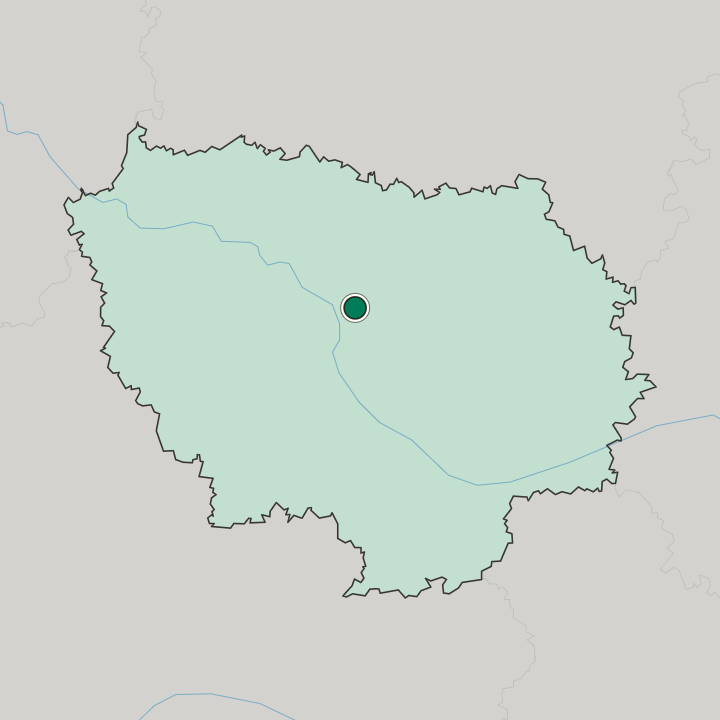
Eleven square kilometres of Île-de-France, fully built. Four of the communes bordering Saint-Maur-des-Fossés take their name from the Marne, Nogent-sur-Marne, Champigny-sur-Marne, Chennevières-sur-Marne and Bonneuil-sur-Marne, and Joinville-le-Pont, Maisons-Alfort and Saint-Maurice close the ring on the remaining sides. The ground is level throughout.
Charentonneau and the streets around the Palais des sports Robert-Oubron are as near to a centre as this commune keeps.
What is the climate of Saint-Maur-des-Fossés?
Weather comes off the Marne corridor, the same air that reaches Nogent-sur-Marne and Bonneuil-sur-Marne within the hour, and nothing in Saint-Maur-des-Fossés, no ridge, no forest of any size, alters it before it arrives. Low ground holds damp. Autumn and winter run grey and wet more often than cold, spring turns unreliable enough to need two sorts of coat, and high summer can hold warm dry weeks that fill the terraces around the Stade de Charentonneau.
Storms clear fast.
How do you get to Saint-Maur-des-Fossés?
Every road in crosses a neighbour first, because Saint-Maur-des-Fossés touches seven communes and open country nowhere: Joinville-le-Pont and Saint-Maurice on one flank, Champigny-sur-Marne and Chennevières-sur-Marne on another, Nogent-sur-Marne, Maisons-Alfort and Bonneuil-sur-Marne filling the rest. Inside Saint-Maur itself, everything is walking distance. A car helps for the museum run to Champigny-sur-Marne and Nogent-sur-Marne, and helps far less inside a commune whose streets were laid out for houses.
Common questions
What is the best area to stay in Saint-Maur-des-Fossés?
Charentonneau: weekend fixtures at the Stade de Charentonneau. The parish streets: a slow week living where the commune actually shops. Nogent-sur-Marne: art days at MABA and the bibliothèque Smith-Lesouëf. Joinville-le-Pont and Champigny-sur-Marne: the Musée de la Résistance nationale and the Château du Parangon.
Good for
More cities in Île-de-France
Updated October 2026