United Kingdom · England
Where to Stay in Leicester, England
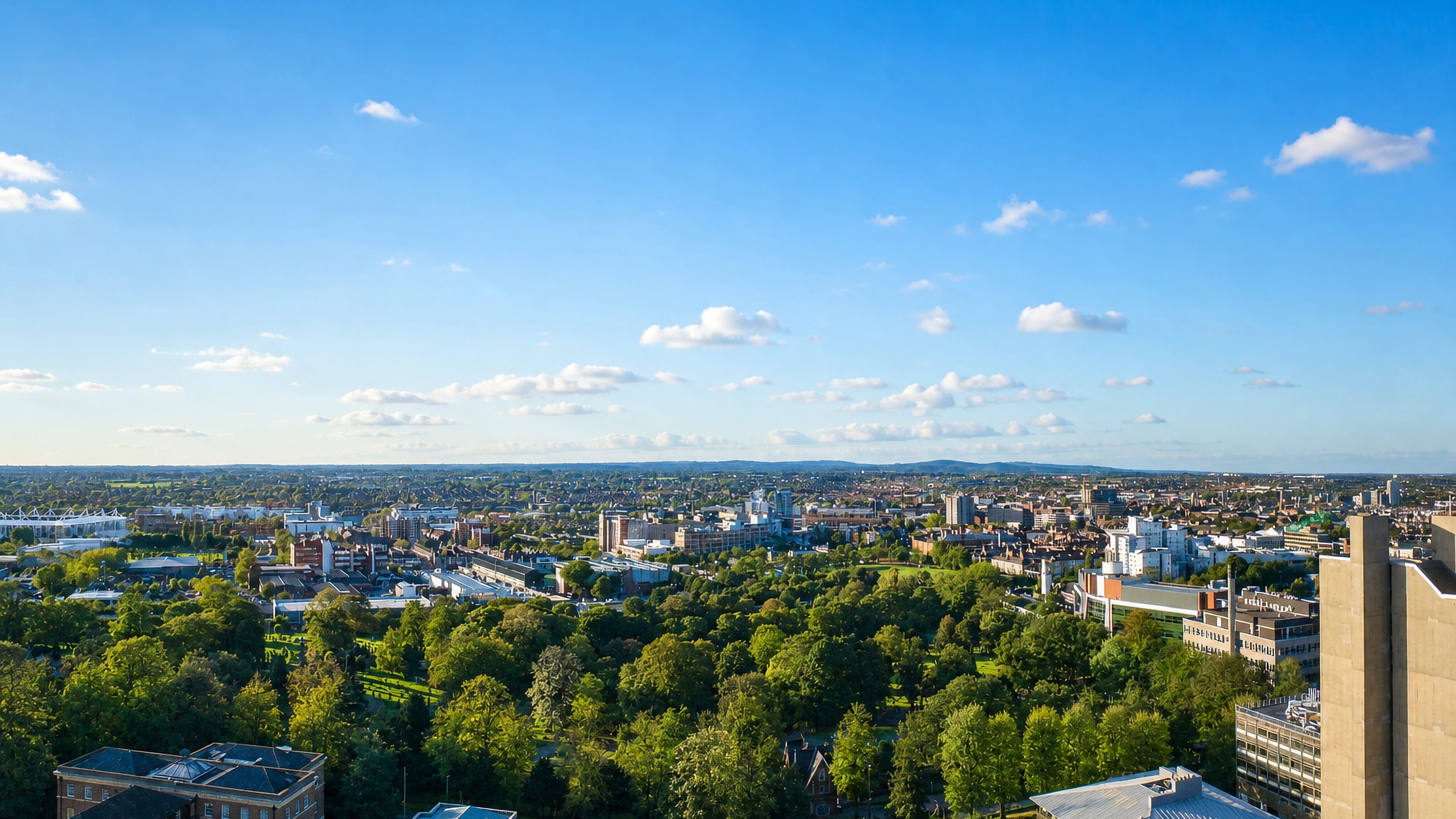
Roman foundations underlie Leicester, the county town of Leicestershire in the East Midlands of England, known for the King Richard III Visitor Centre.
Hotel links are affiliate links: booking through them may earn us a commission, at no extra cost to you. It never affects how places are ranked. How this works


Where to stay in Leicester
Each area has its own feel; here's who each one suits.

 LeicesterUnited Kingdom
Black Friars
Roman ground, and civic ground. Black Friars holds Ratae Corieltauvorum, Leicester Castle and the Jewry Wall Museum within one quarter of Leicester.Black Friars →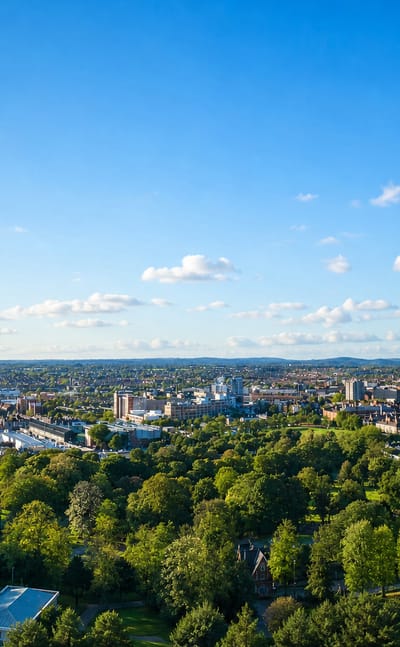 LeicesterUnited Kingdom
Frog Island
Frog Island is a district of Leicester whose name list runs to the National Space Centre and the Church of St Mark.Frog Island → LeicesterUnited Kingdom
Highfields
Highfields is an inner city area of Leicester on high ground, bounded by the Midland Main Line, London Road and East Park Road.Highfields → LeicesterUnited Kingdom
Westcotes
Westcotes, also known as West End, is an inner city ward of Leicester just west of the centre across the River Soar.Westcotes → LeicesterUnited Kingdom
Spinney Hills
Spinney Hills belongs to Leicester. St Saviour's Church, St Stephen and The 1620s House and Garden are the named landmarks of this district.Spinney Hills →LeicesterUnited KingdomClarendon Park
Clarendon Park is a Leicester district known on the record for the Church of St John the Baptist and a listed house called White House.Clarendon Park →LeicesterUnited KingdomNorth Evington
An electoral ward of Leicester, North Evington also counts as a suburb in the ceremonial county of Leicestershire. Church of St Barnabas stands here.North Evington →LeicesterUnited KingdomNew Parks
New Parks is a residential suburb of Leicester in Leicestershire, with St Aidan and the Church of St Anne as its named buildings.New Parks →LeicesterUnited KingdomStoneygate
Stoneygate is a district of Leicester whose listed houses include Beaumont Hall, Hastings House and Glebe House.Stoneygate →LeicesterUnited KingdomRushey Mead
Rushey Mead is a northern suburb and ward of Leicester in Leicestershire, covering part of Belgrave and the gardens of Belgrave Hall.Rushey Mead →LeicesterUnited KingdomKnighton
Knighton is a residential suburb of Leicester, in Leicestershire, ringed by Clarendon Park, Stoneygate, Oadby and Wigston and the Saffron Lane estate.Knighton → LeicesterUnited Kingdom
Beaumont Leys
Beaumont Leys is a Leicester suburb in Leicestershire, its name used locally for the housing estate centred on Strasbourg Drive.Beaumont Leys →LeicesterUnited KingdomEyres Monsell
Eyres Monsell is an electoral ward and administrative division of Leicester, its parish life carried by the Church of St Thomas.Eyres Monsell →Hotel links are affiliate links: booking through them may earn us a commission, at no extra cost to you. It never affects how places are ranked. How this works
Things to do in Leicester
Ranked by global recognition; descriptions from Wikidata (CC0).
Museums & Galleries
3- King Richard III Visitor Centre
- Leicester Museum & Art Gallery
- Gas Museum
Churches & Religious Sites
8- Greyfriars, Leicester Heritage
- Church of St Mary de Castro, Leicester Heritage
- St Nicholas' Church, Leicester Heritage
- St Margaret's Church, Leicester Heritage
- St Peter's Church, Leicester Heritage
Show 3 more →
- All Saints Church, Leicester Heritage
- St Saviour’s Church Heritage
- Holy Trinity Church, Leicester Heritage
Castles & Historic Sites
3- Monument To Edward Holdsworth At East End Of Garden At Belgrave Hall Including Statue Of Religion Heritage
- Ratae Corieltauvorum
- Leicester Castle
Stadiums & Sports
2- Grace Road
- Aylestone Road
Landmarks & Notable Places
7- Beaumont Hall Heritage
- Beaumont Leys House Heritage
- Former Home for Penitent Females with Boundary Walls Heritage
- Glebe House Heritage
- Hastings House Heritage
Show 2 more →
- The Knoll Heritage
- White House Heritage
worth knowingacross 5 categories in Leicester
About Leicester
What is Leicester known for?
Leicester is known as the county town of Leicestershire, a city in the East Midlands with a history reaching back to Roman Ratae Corieltauvorum. Leicester's roots go back a long way. The King Richard III Visitor Centre marks the king whose grave was found beneath the old streets, while the National Space Centre and the Leicester Museum & Art Gallery draw visitors across the city.
The Guildhall and Leicester Castle stand from the medieval town. St Mary de Castro carries the story back to the Norman age.
What are the main landmarks in Leicester?
Leicester's landmarks gather across the old core and the northern edge. The King Richard III Visitor Centre and Leicester Castle stand in the medieval quarter, near the Guildhall and St Mary de Castro. Ratae Corieltauvorum lies close by.
The National Space Centre and the Abbey Pumping Station Museum rise to the north, while the Leicester Museum & Art Gallery and the Newarke Houses Museum hold the city's collections, and the Haymarket Memorial Clock Tower marks the centre. Belgrave Hall stands out along the northern road.
What is the history of Leicester?
Leicester began as the Roman town of Ratae Corieltauvorum on the East Midlands plain, where the baths and foundations of that settlement still lie beneath the streets. The town grew through the medieval centuries around its castle and churches. Leicester Castle held the old lordship.
St Mary de Castro rose beside it from the Norman age, and the Guildhall and the Newarke Houses came to serve the growing town as Leicester spread across the county of Leicestershire. Trade and cloth carried it through the later centuries. The most famous chapter came late, when the grave of King Richard III was found beneath a city car park and marked at the King Richard III Visitor Centre.
Belgrave Hall and the churches of the old parishes stand from the town's long expansion. The Abbey Pumping Station Museum keeps the record of the industrial age, while the National Space Centre marks a newer chapter on the northern edge. Those Roman walls are long buried.
The city they began still holds its old core in the East Midlands.
Where is Leicester?
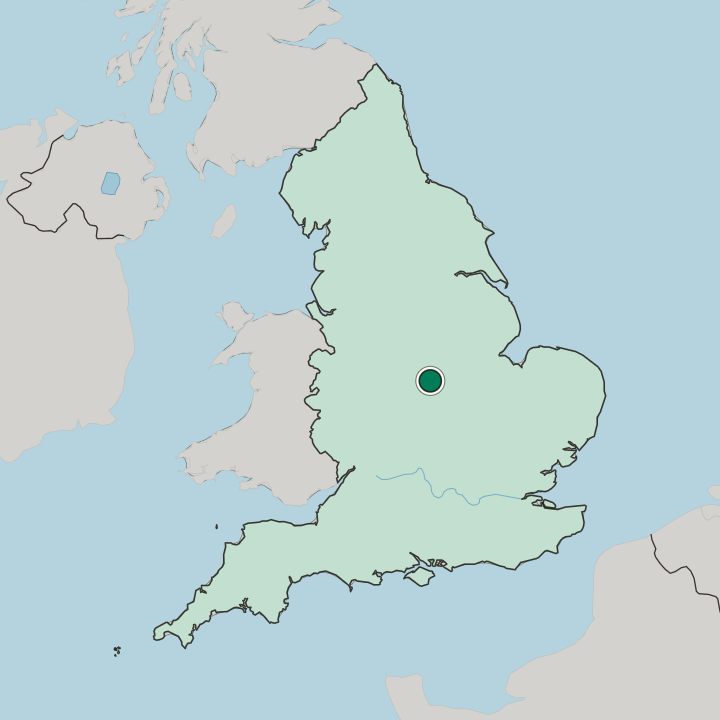
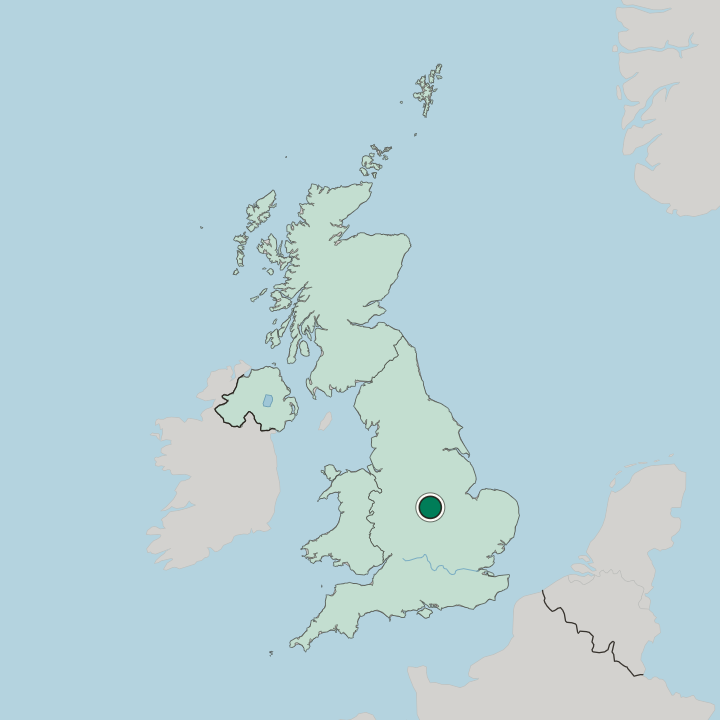
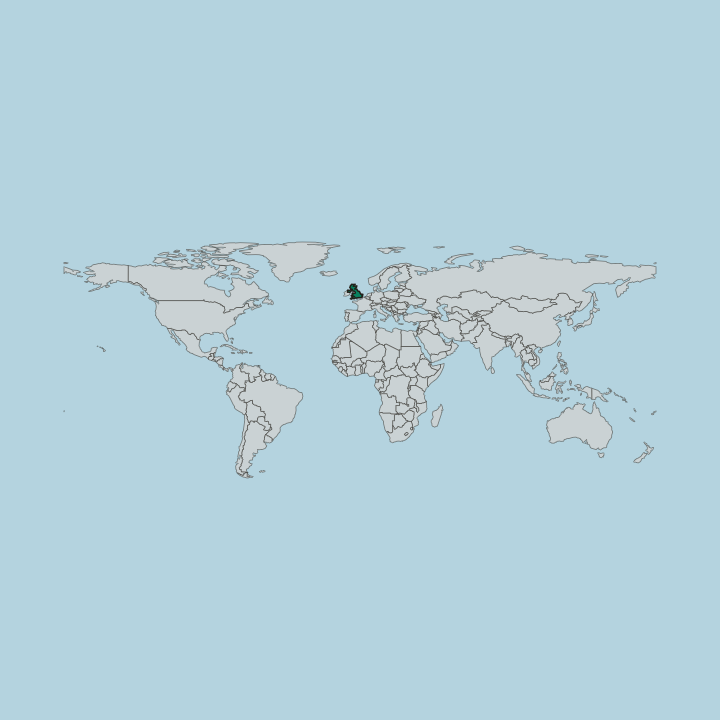
Leicester stands in the East Midlands of England, the county town of Leicestershire on the low plain of the region. The city sits on gently rolling ground. River meadows edge its northern side.
The land opens outward across Leicestershire in every direction, flat and green toward the surrounding country, while the built-up streets gather around the old Roman and medieval core at the centre.
What is the climate of Leicester?
Leicester has a mild, changeable oceanic climate typical of the inland East Midlands. Winters are cool and grey, with rain and the occasional frost settling over the plain of Leicestershire. Summers turn warm and green over the Leicestershire plain.
Rain comes in every season. When the clear days arrive, the open country around the city stands out bright under a wide inland sky, far from any coast.
How do you get to Leicester?
Leicester is reached mainly by rail and road across the East Midlands. Its station sits on the main line running north and south through the region toward the wider country. Motorways pass close to the city.
The roads link it across Leicestershire and on toward the neighbouring counties, and the airport of the East Midlands lies within reach to the north of the city.
Good for
More cities in England
Updated October 2026