United Kingdom · England
Where to Stay in Sheffield, England
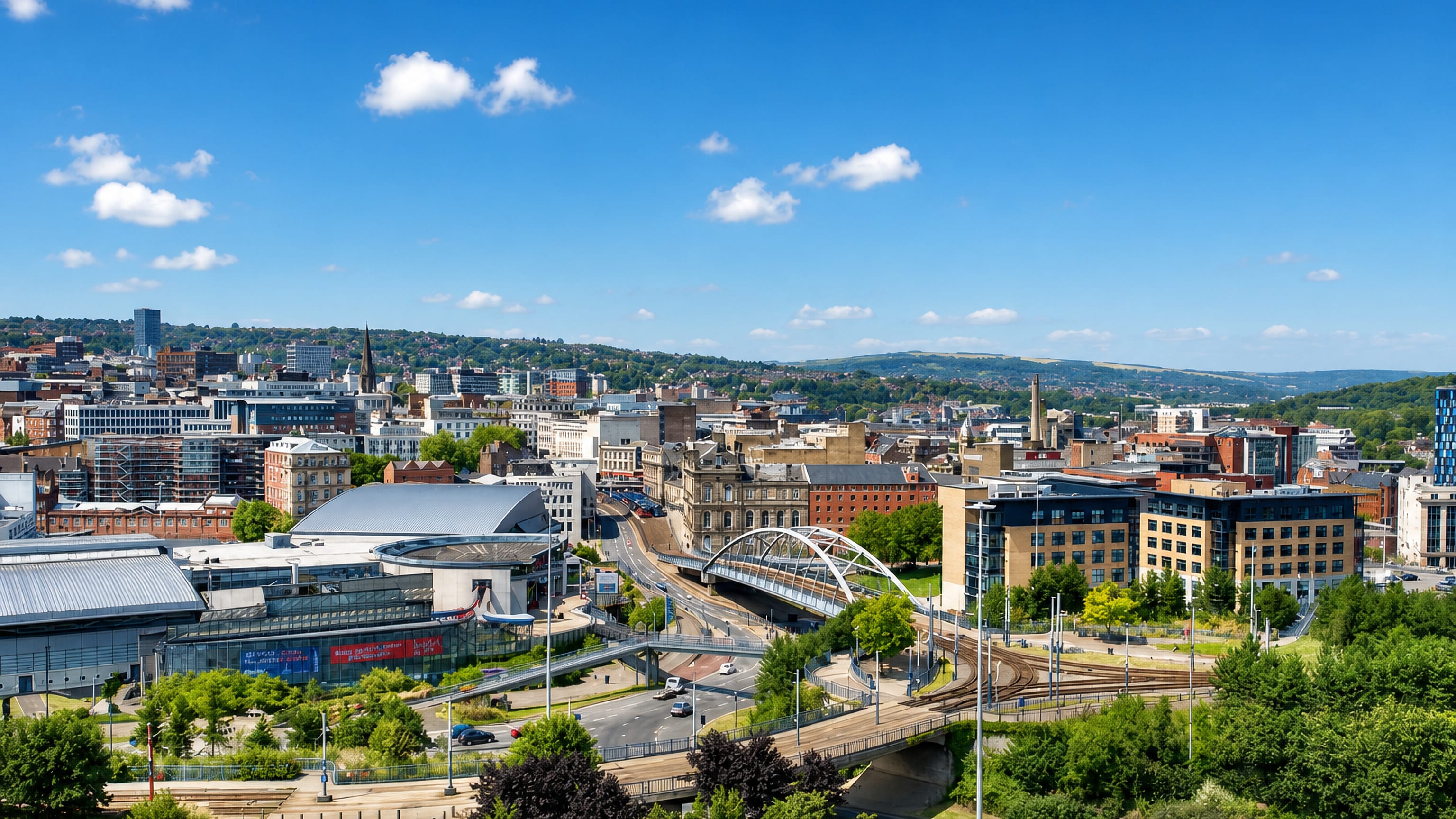
Theatre and industry meet in Sheffield, a city in South Yorkshire, England, known for the Crucible Theatre and the Kelham Island Museum.
Hotel links are affiliate links: booking through them may earn us a commission, at no extra cost to you. It never affects how places are ranked. How this works


Where to stay in Sheffield
The right area depends on your trip — here's what each neighbourhood is best for.

 SheffieldUnited Kingdom
Park Hill
Built between 1957 and 1961, the Park Hill estate in Sheffield reached the RIBA Stirling Prize shortlist twice after its renovation.Where to stay → SheffieldUnited Kingdom
Neepsend
The flood plain of the River Don carries Neepsend, a Sheffield suburb running from Lady's Bridge at the Wicker up to Hillfoot Bridge.Where to stay →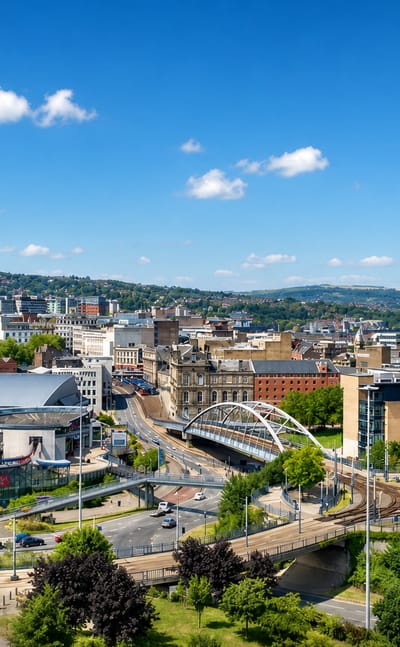 SheffieldUnited Kingdom
Lowfield
Lowfield is a district of Sheffield whose listed names run from the South Yorkshire Transport Museum to St Mary's Church, Bramall Lane.Where to stay → SheffieldUnited Kingdom
Sharrow
Sharrow is a Sheffield suburb southwest of the city centre, with most of its listed monuments standing inside the General Cemetery.Where to stay →SheffieldUnited KingdomWalkley
Walkley sits between three Sheffield suburbs, Burngreave, Hillsborough and Crookes, with a church and a school house as its only listed names.Where to stay →SheffieldUnited KingdomArbourthorne
Arbourthorne is a Sheffield district known by three entries: the Church of St Aidan and St Luke, The Beacon and City Road Cemetery's gatehouse.Where to stay → SheffieldUnited Kingdom
Broomhill
Broomhill is a Sheffield district of listed halls and churches, holding Weston Park Museum, the Mappin Art Gallery and Broom Hall.Where to stay →SheffieldUnited KingdomPitsmoor
Pitsmoor holds five listed addresses in Sheffield: Abbeyfield House, Carr Wood House, and the churches of Christ Church, St Peter and All Saints.Where to stay → SheffieldUnited Kingdom
Heeley
Heeley is a district of Sheffield whose listed fabric is church fabric: Christ Church, a Methodist school, one memorial.Where to stay →SheffieldUnited KingdomCrookes
Crookes stands west of Sheffield city centre, bordered by Broomhill, Walkley and Upperthorpe, with open countryside along the River Rivelin beyond.Where to stay → SheffieldUnited Kingdom
Manor
Manor is a residential district of Sheffield, United Kingdom, whose landmark register runs to St Swithun and Temple Park Centre.Where to stay →SheffieldUnited KingdomAttercliffe
Attercliffe holds the Olympic Legacy Park and the Park Community Arena on the south bank of the River Don, in northeast Sheffield.Where to stay →All neighbourhoods (34)
 SheffieldUnited Kingdom
Brincliffe
Brincliffe is a Sheffield district of large houses and parish churches, among them Riverdale House, The Towers and St Gabriel's Church.Where to stay →SheffieldUnited KingdomShirecliffe
Shirecliffe stands on a steep escarpment above the Don valley at Neepsend, a public-housing suburb of Sheffield two miles out from the centre.Where to stay → SheffieldUnited Kingdom
Meersbrook
Meersbrook takes its name from the Meers Brook, the boundary brook that once divided Yorkshire from Derbyshire alongside the River Sheaf.Where to stay → SheffieldUnited Kingdom
Malinbridge
Malinbridge is the Sheffield suburb where the rivers Loxley and Rivelin meet, gathered around a single road bridge on the way to Stannington.Where to stay →SheffieldUnited KingdomBrightside
Brightside is an industrial quarter of Sheffield on the hill above Attercliffe and the River Don, with the Roman Ridge below Wincobank Hill.Where to stay →SheffieldUnited KingdomCarbrook
Carbrook is an industrial quarter of Sheffield south-east of Brightside, named for the Carr Brook that once ran through this ground.Where to stay → SheffieldUnited Kingdom
Abbeydale
Abbeydale traces the River Sheaf valley through Sheffield, named for the abbey that stood at Beauchief until 1537.Where to stay →SheffieldUnited KingdomMillhouses
Millhouses is a Sheffield suburb on the northwest bank of the River Sheaf, grown from the hamlet around the Ecclesall Corn Mill.Where to stay → SheffieldUnited Kingdom
Woodseats
Woodseats grew from Norton Woodseats, a village on Derbyshire Lane, and has belonged to the City of Sheffield since 1901.Where to stay →SheffieldUnited KingdomDarnall
Darnall keeps two grounds and a hall under its own name, a suburb of eastern Sheffield about three miles from the city centre.Where to stay → SheffieldUnited Kingdom
Longley
Longley is a residential suburb north of Sheffield city centre, its streets laid out as council housing around Longley Hall and Goddard Hall.Where to stay → SheffieldUnited Kingdom
Hillsborough
Hillsborough carries a public park, the Yorkshire Natural History Museum and a scatter of listed houses under one Sheffield district name.Where to stay →SheffieldUnited KingdomWoodthorpe Estate
Sheffield's Woodthorpe Estate, labelled in shorter form as Woodthorpe, is a housing district whose one named address is St Catherine of Siena, Richmond.Where to stay →SheffieldUnited KingdomShiregreen
Shiregreen is a Sheffield district sharing its electoral ward with Brightside and Wincobank, out in the northern part of the city.Where to stay → SheffieldUnited Kingdom
Wisewood
Wisewood is a residential Sheffield suburb of council-built streets, bordered by Loxley, Wadsley, Malin Bridge and Hillsborough.Where to stay →SheffieldUnited KingdomFirth Park
Firth Park is a residential quarter north of Sheffield city centre, and the name the City of Sheffield gives to the ward around it.Where to stay →SheffieldUnited KingdomWadsley Bridge
Wadsley Bridge is a Sheffield suburb of housing and small works, holding Birley Old Hall, Birley House and the church at Middlewood Hospital.Where to stay → SheffieldUnited Kingdom
Herdings
Herdings is a Sheffield housing estate in the Gleadless Valley ward, grouped with Hemsworth and Rollestone.Where to stay →SheffieldUnited KingdomNorton
Norton is a Sheffield district thick with listed buildings, among them Norton Hall, St James, Norton, and Chantrey House.Where to stay → SheffieldUnited Kingdom
Meadow Head
The Church of St Chad gives Meadow Head its one listed name, in a residential district of Sheffield also written Meadowhead.Where to stay → SheffieldUnited Kingdom
Whirlow
Whirlow is an affluent Sheffield suburb between Parkhead and Whirlow Bridge, straddling the A625 road out toward Hathersage.Where to stay →SheffieldUnited KingdomNormanton Spring
Normanton Spring is a Sheffield district holding three listed buildings: St Cyprian, St James Woodhouse, and Bramley Hall.Where to stay →Hotel links are affiliate links: booking through them may earn us a commission, at no extra cost to you. It never affects how places are ranked. How this works
Find hotels in Sheffield
Direct booking searches for these neighbourhoods.
City centre and theatre district
The centre puts the Crucible Theatre, the Millennium Gallery and the Sheffield Castle site within a short walk of your roomFind hotels in City centre and theatre districtVisitors who like a reworked industrial quarterKelham Island
Converted works and waterside pubs around the Kelham Island Museum give a lively neighbourhood base with an industrial pastFind hotels in Kelham IslandHotel links are affiliate links: booking through them may earn us a commission, at no extra cost to you. It never affects how places are ranked. How this works
Things to do in Sheffield
Ranked by global recognition; descriptions from Wikidata (CC0).
Museums & Galleries
3- Kelham Island Museum
- Millennium Gallery
- Graves Art Gallery
Churches & Religious Sites
8- St George's Church, Portobello Heritage
- Victoria Hall, Sheffield Heritage
- All Saints Church, Ecclesall Heritage
- St John's Church, Ranmoor Heritage
- St Mary's Church, Bramall Lane Heritage
Show 3 more →
- St Matthew's Church, Sheffield Heritage
- Attercliffe Chapel Heritage
- Church of St Mark, Broomhill, Sheffield Heritage
Castles & Historic Sites
6- Sheffield Castle Heritage
- Monument And Railings To Gh Foster 7 Metres West Of St Michaels Cemetery Chapel Heritage
- Monument To Mark Firth 60 Metres East Of New Chapel At General Cemetery Heritage
- Monument To William Parker 40 Metres South West Of Old Chapel At General Cemetery Heritage
- Roman Ridge: section 180yds (160m) long on SE slopes of Wincobank Hill Heritage
Show 1 more →
- Walsh Monument And Railing At Rivelin Glen Cemetery Heritage
Stadiums & Sports
3- Crucible Theatre Heritage
- Ponds Forge
- Olive Grove
Landmarks & Notable Places
8- Broom Hall Heritage
- Norton Hall Heritage
- Sheffield Royal Infirmary Heritage
- Tapton Hall Heritage
- Riverdale House Heritage
Show 3 more →
- Leader House Heritage
- Burrowlee House Heritage
- Birley Old Hall Heritage
worth knowingacross 5 categories in Sheffield
About Sheffield
Sheffield is known for its industry and its stages.
What is Sheffield known for?
The Kelham Island Museum tells the story of the trades that built the city, and the Crucible Theatre draws audiences from across England to a district thick with galleries. The Millennium Gallery, the Graves Art Gallery, and the Weston Park Museum fill out that cultural map. Older survivals remain too.
Bishops' House and the buried remains of Sheffield Castle recall the town that stood here in South Yorkshire long before the factories.
What are the main landmarks in Sheffield?
Sheffield's landmarks range widely. The Kelham Island Museum preserves the machinery and trades that made the city, while the Weston Park Museum and the Graves Art Gallery hold its collections and cultural life gathers around the Crucible Theatre and the Millennium Gallery in the centre. The Wheel of Sheffield turns nearby.
Older survivals include the timber-framed Bishops' House and the buried remains of Sheffield Castle, with green space at Hillsborough Park to the north-west.
What is the history of Sheffield?
Sheffield traces its origins to around 701, when a settlement grew where fast streams cut down from the surrounding hills in what is now South Yorkshire. Water was the making of it. The steep valleys and their quick rivers powered mills and forges for centuries, and the medieval town gathered around Sheffield Castle, a stronghold whose buried remains still lie beneath the modern centre.
The timber-framed Bishops' House survives from that older Sheffield. Industry transformed the town beyond recognition. The trades of metalworking and cutlery drew workers into the valleys, and the quarter around what is now the Kelham Island Museum filled with works and forges, a story the museum keeps in its wheels and engines.
As the city prospered it built for its people, endowing the Weston Park Museum and the Graves Art Gallery and, in time, the Crucible Theatre and the Millennium Gallery. Parks such as Hillsborough Park were laid out among the terraces. The result is a city that carries its working past openly while it lives its cultural present.
Where is Sheffield?
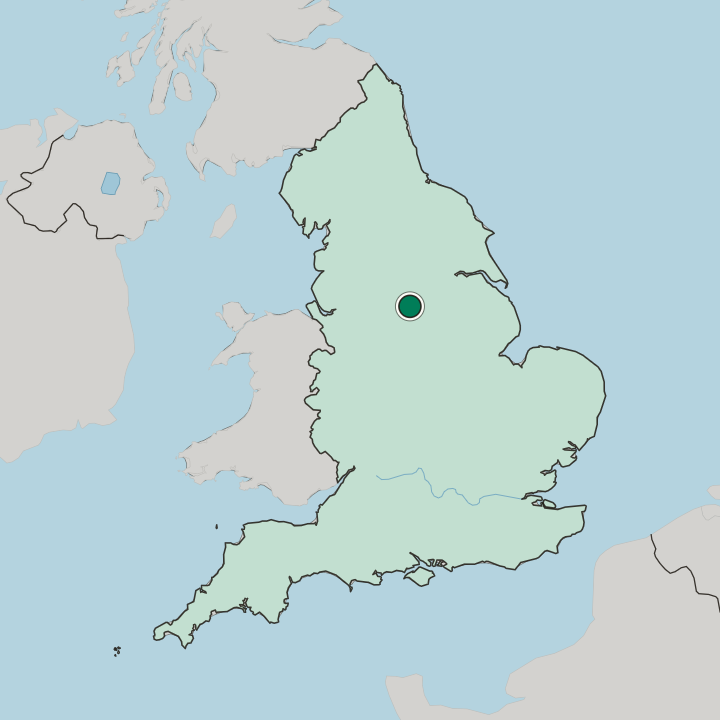
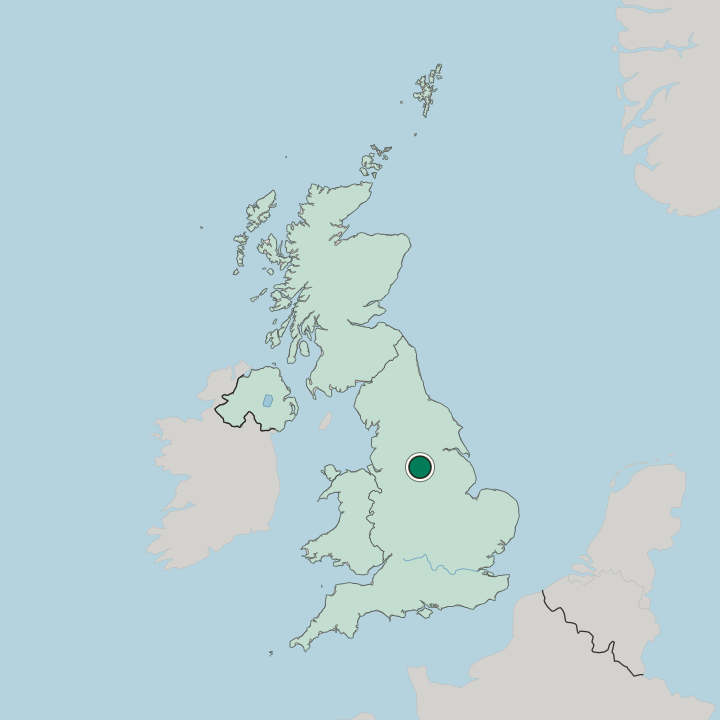
Sheffield stands among steep hills and river valleys in South Yorkshire, England, south of Leeds and east of Manchester. The land rises sharply toward the moorland on the city's western edge. Fast streams cut down through the built-up valleys toward the centre, where the Crucible Theatre and the Sheffield Castle site sit on lower ground, while parks such as Hillsborough Park and the moors beyond give the city an unusually green setting.
What is the climate of Sheffield?
Sheffield has a cool, wet maritime climate, made damper by the high moorland that rises to its west. Summers are mild rather than hot. Winters are chilly and grey, and the exposed hills above the city catch far more snow than the sheltered valleys where the centre lies.
Rain is frequent through the year, feeding the fast streams that once powered the valley forges of South Yorkshire.
How do you get to Sheffield?
Getting into Sheffield takes little effort. Trains run into its central station from London and from nearby Leeds and Manchester, a short walk from the Crucible Theatre and the galleries. Motorways skirt the eastern edge of the city, linking it into the northern road network, and buses and trams carry visitors up the steep valleys.
Once in the centre, the cultural district around the Millennium Gallery is best walked.
Common questions
What is the best area to stay in Sheffield?
City centre and theatre district: Culture-seekers near the Crucible Theatre and Millennium Gallery. Kelham Island: Visitors who like a reworked industrial quarter.
Good for
More cities in England
Updated October 2026