United Kingdom · England
Where to Stay in Coventry, England
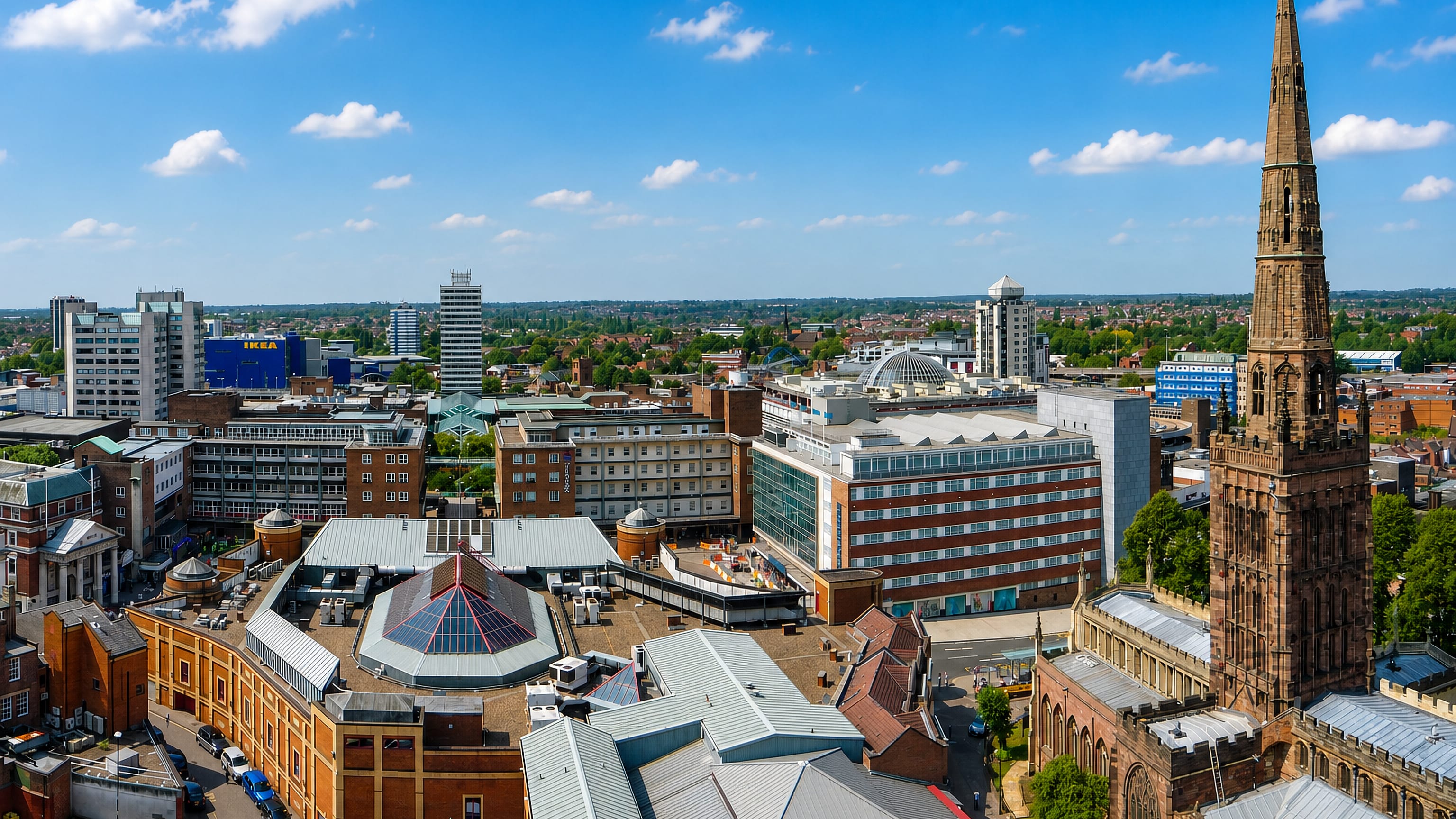
Three medieval spires rise over Coventry, a city in the West Midlands known for its two cathedrals and the legend of Lady Godiva.
Hotel links are affiliate links: booking through them may earn us a commission, at no extra cost to you. It never affects how places are ranked. How this works



Where to stay in Coventry
The right area depends on your trip — here's what each neighbourhood is best for.

 CoventryUnited Kingdom
Hillfields
Harnall was the older name. Hillfields is a suburb of Coventry in the West Midlands, standing north of the city centre and rebuilt after the war.Where to stay → CoventryUnited Kingdom
Chapel Fields
Chapel Fields is a district of Coventry, in England, with the church of St Mary Magdalen as its named landmark.Where to stay →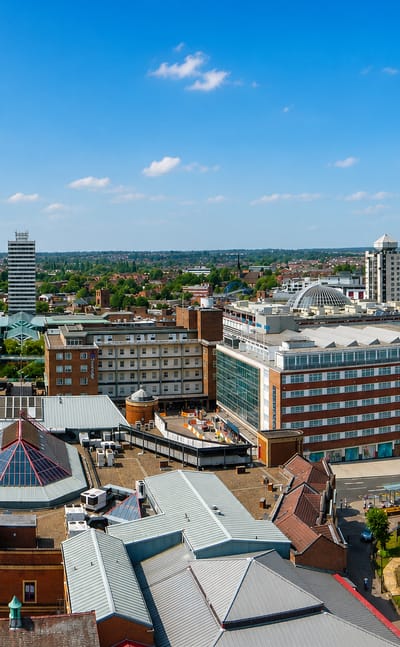 CoventryUnited Kingdom
Spon End
Spon End sits west of Coventry city centre, with Butts Park Arena on the main road through the suburb.Where to stay →CoventryUnited KingdomEarlsdon
Frank Whittle was born here. Earlsdon is a residential suburb and electoral ward of Coventry, about a mile southwest of Coventry City Centre.Where to stay →CoventryUnited KingdomCourt House Green
Court House Green is a suburb in the north of Coventry, with Bell Green, Stoke Heath, Wyken and Foleshill on its borders.Where to stay →CoventryUnited KingdomCheylesmore
The Charterhouse anchors Cheylesmore. This part of Coventry also carries the Paxton Memorial, the Church of St James and Coventry Zoo among its names.Where to stay → CoventryUnited Kingdom
Holbrooks
A residential Coventry area. Holbrooks sits in the West Midlands of England, and St Luke's Church, Holbrooks carries the district name in its dedication.Where to stay → CoventryUnited Kingdom
Little Heath
Little Heath keeps four named sites inside Coventry: the Church of St Lawrence, the Church of St Thomas, Mill House and a war memorial.Where to stay → CoventryUnited Kingdom
Bell Green
Three dedications do the work. Bell Green is part of Coventry, with St Chad's Church its plainest marker.Where to stay →CoventryUnited KingdomStoke Aldermoor
The River Sowe and the Coventry Canal border Stoke Aldermoor, a suburban community in south-eastern Coventry with the Alan Higgs Centre inside it.Where to stay →CoventryUnited KingdomWood End
Wood End is a residential district on the north side of Coventry, bounded by Bell Green, Alderman's Green, Potters Green and Henley Green.Where to stay →CoventryUnited KingdomWillenhall
Willenhall is a suburb of Coventry in the county of the West Midlands, with the Church of St John the Divine and its bell tower among its landmarks.Where to stay →CoventryUnited KingdomFinham
Finham is a civil parish and suburb of Coventry, sitting on the border of the West Midlands county and Warwick District with Lunt Roman Fort nearby.Where to stay →CoventryUnited KingdomBinley
Binley sits on the eastern edge of Coventry, a former mining village in the West Midlands built up into a large residential area.Where to stay →Hotel links are affiliate links: booking through them may earn us a commission, at no extra cost to you. It never affects how places are ranked. How this works
Find hotels in Coventry
Direct booking searches for these neighbourhoods.
Cathedral quarter
St Mary's Priory and Cathedral and the Ruined Cathedral Church of St Michael stand together at the medieval heart.Find hotels in Cathedral quarterthe Transport Museum and Herbert galleryMuseum quarter
The Coventry Transport Museum and Herbert Art Gallery and Museum sit a short walk from the cathedral ruins.Find hotels in Museum quarterHotel links are affiliate links: booking through them may earn us a commission, at no extra cost to you. It never affects how places are ranked. How this works
Things to do in Coventry
Ranked by global recognition; descriptions from Wikidata (CC0).
Museums & Galleries
3- Lunt Roman Fort Heritage
- Coventry Transport Museum
- Herbert Art Gallery and Museum
Churches & Religious Sites
8- St Mary's Priory and Cathedral Heritage
- Holy Trinity Church, Coventry Heritage
- Whitefriars, Coventry Heritage
- Greyfriars, Coventry Heritage
- St John the Baptist Church, Coventry Heritage
Show 3 more →
- St Osburg's Church Heritage
- All Saints Church, Allesley Heritage
- St Mary Magdalene's Church, Wyken Heritage
Castles & Historic Sites
5- Baginton Castle Heritage
- Allesley Castle Heritage
- Deserted medieval village at King's Hill Heritage
- Ernesford Grange moated site, Binley Heritage
- Site of Charterhouse Heritage
Stadiums & Sports
3- Butts Park Arena
- SkyDome Arena
- The Alan Higgs Centre
Landmarks & Notable Places
7- Kirby House, Coventry Heritage
- Bird Grove House Heritage
- 1-4 The Quadrant Heritage
- Mill House Heritage
- Pypes Mill House Heritage
Show 2 more →
- Stoke House Heritage
- The Chace Heritage
worth knowingacross 5 categories in Coventry
About Coventry
What is Coventry known for?
Coventry is known as the Three Spired City, for the church and cathedral spires that stand over its skyline. It carries the medieval legend of Lady Godiva and holds two cathedrals, one of them the Ruined Cathedral Church of St Michael, kept as a shell after wartime bombing. The Coventry Transport Museum records its long history of car and cycle making.
Spires define it. Coventry sits at the centre of the West Midlands.
What are the main landmarks in Coventry?
Coventry's landmarks centre on its two cathedrals and three medieval spires. The Ruined Cathedral Church of St Michael stands beside its modern successor, while St Mary's Priory and Cathedral and Holy Trinity Church, Coventry hold the older ground. Nearby, the Herbert Art Gallery and Museum and the Coventry Transport Museum gather the city's collections.
The Charterhouse and the remains of Coventry Castle mark its medieval past. Spires crown them all.
What is the history of Coventry?
Coventry traces its origin to a priory founded in 1043, the house tied by legend to Lady Godiva and her ride through the medieval town. St Mary's Priory and Cathedral grew from that foundation, and the town prospered on wool and cloth in the centuries that followed. Three great spires rose over its streets, at St Michael's, Holy Trinity Church, Coventry, and Christ Church, and gave the place its lasting name.
Cloth built it. The medieval city guarded itself behind walls, and the Charterhouse and Greyfriars, Coventry stood among its religious houses.
Where is Coventry?
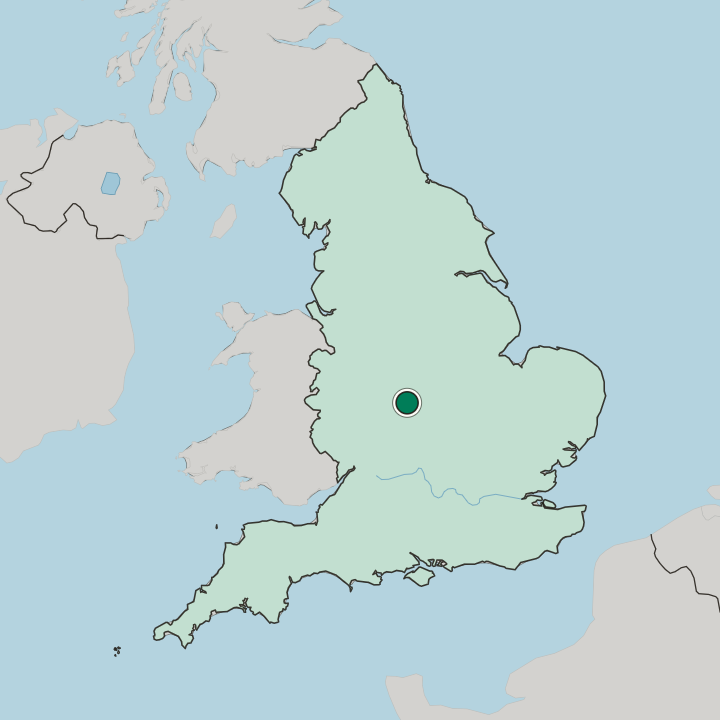
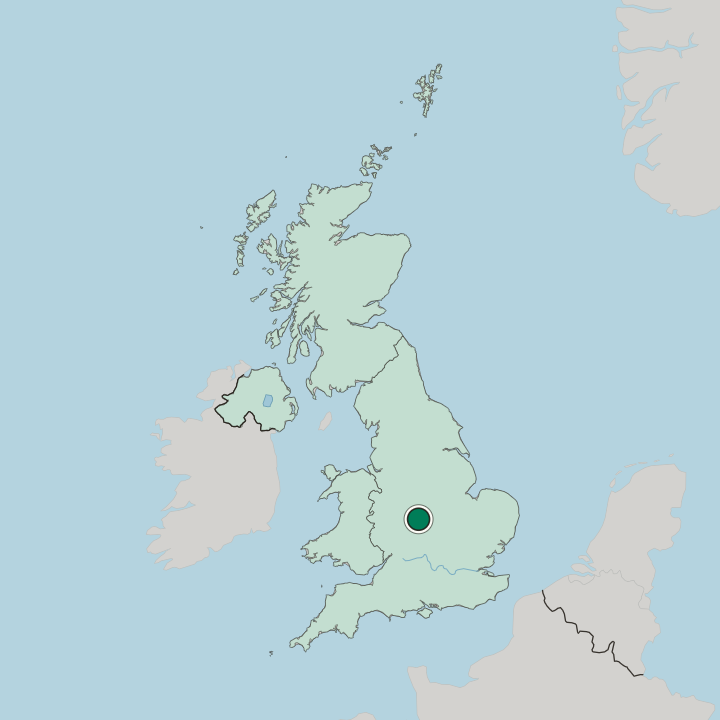
Coventry lies in the West Midlands of England, an inland city set on gently rising ground near the centre of the country. Its pedestrianised core sits within a ring road that loops around the old streets. The three spires rise above it.
The land is low and rolling here. Beyond the built-up centre, Coventry spreads outward across the wider West Midlands toward its neighbouring towns.
What is the climate of Coventry?
Coventry has a mild, damp climate typical of the inland West Midlands. Rain falls fairly evenly through the year, brought in on westerly weather that crosses the low country of central England. Overcast is Coventry's default.
Summers stay mild rather than hot, and winters run cool and often wet over the city and its three spires. Snow falls now and then in the colder months, though it rarely lingers on the streets.
How do you get to Coventry?
Coventry sits on the main rail and motorway routes of the West Midlands, near the heart of the national network. Trains run in from London, Birmingham, and beyond, and the station lies just south of the ring road that circles the centre. Motorways pass close by.
From the station the two cathedrals and the spires stand a short walk away. Roads have long met at the city.
Common questions
What is the best area to stay in Coventry?
Cathedral quarter: the two cathedrals and old spires on foot. Museum quarter: the Transport Museum and Herbert gallery.
Good for
More cities in England
Updated October 2026