United Kingdom · England
Where to Stay in Bradford, England
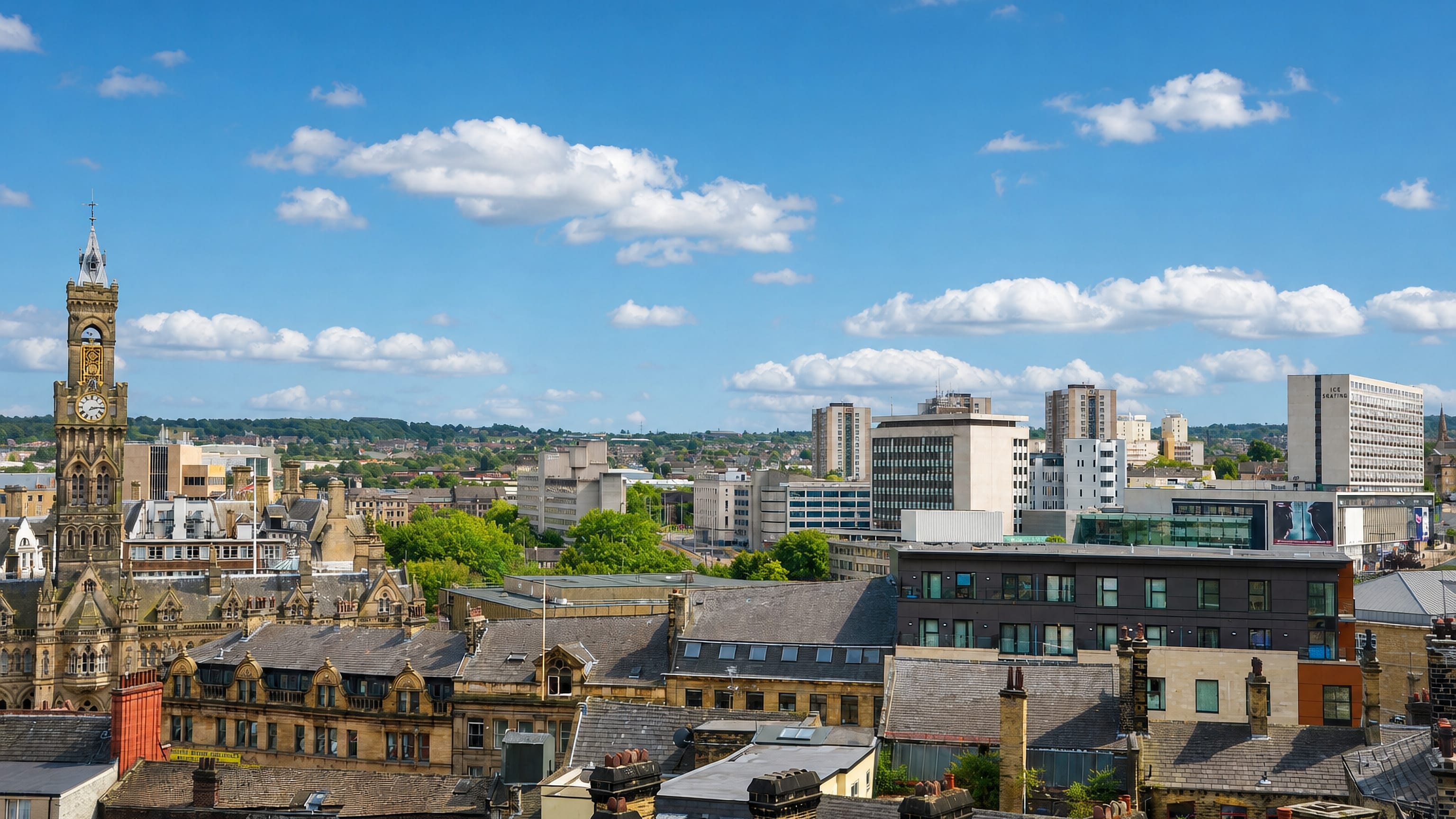
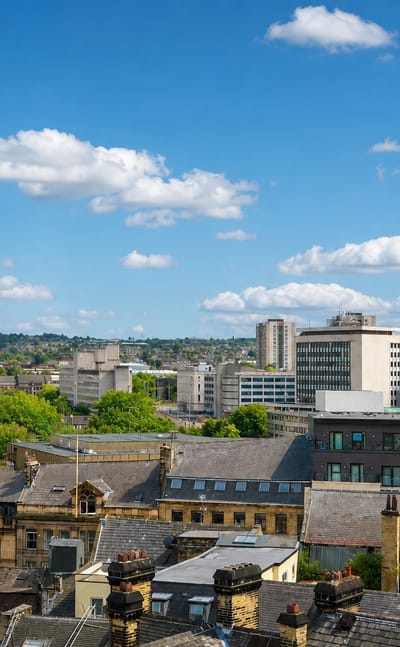
Mill-yard stone sets the tone in Bradford, an inland city in England, known for the National Science and Media Museum and the greenery of Lister Park.
Hotel links are affiliate links: booking through them may earn us a commission, at no extra cost to you. It never affects how places are ranked. How this works


Where to stay in Bradford
Each area has its own feel; here's who each one suits.
 BradfordUnited Kingdom
Broomfields
Broomfields is a historic district of Bradford, commercial ground now, holding the National Science and Media Museum and The Peace Museum.Where to stay →BradfordUnited KingdomBarkerend
Barkerend is an inner-city area of Bradford, immediately east of the centre, with the modern housing of Pollard Park set inside it.Where to stay →BradfordUnited KingdomRipleyville
Ripleyville is a district of Bradford in England, written in some records as Ripley Ville, with Cambridge House its one listed address.Where to stay → BradfordUnited Kingdom
Manningham
Manningham is a council ward of Bradford in West Yorkshire, an industrial workers' quarter whose park holds Cartwright Hall Art Gallery.Where to stay → BradfordUnited Kingdom
Bolton
Bolton is a district of Bradford whose older fabric survives at Bolton Old Hall, Ivy Hall and the houses and barn of Hodgson Fold.Where to stay → BradfordUnited Kingdom
Little Horton
Little Horton is a ward of Bradford in West Yorkshire, named for the de Horton family who once held the manor of that name.Where to stay →BradfordUnited KingdomLaisterdyke
Laisterdyke is an area of Bradford in West Yorkshire, east of the city and on the border with the City of Leeds.Where to stay → BradfordUnited Kingdom
Bowling
Bowling is a district of Bradford, in England, holding Bolling Hall Museum and two churches dedicated to St John.Where to stay →BradfordUnited KingdomBradford Moor
Bradford Moor is one of the districts wrapped around Barkerend, an inner-city area east of Bradford's centre, and its landmark is St Margaret.Where to stay →BradfordUnited KingdomMoorside
Moorside belongs to Bradford, one of the nineteen districts the register files under that city in England, and it arrives with a name and nothing else.Where to stay →BradfordUnited KingdomGreat Horton
Great Horton, a district of Bradford, has the Church of St Wilfrid, Stanford House and a listed terrace at Hill End on its sheet.Where to stay →BradfordUnited KingdomThornbury
Thornbury is a district of Bradford whose record runs to two churches: St Margaret and The Parish Church of St James the Great.Where to stay →All neighbourhoods (16)
BradfordUnited KingdomTyersal
Tyersal is a village two miles east of Bradford in West Yorkshire, holding Tyersal Hall and the churches of St Mary and St Christopher.Where to stay →BradfordUnited KingdomBankfoot
Bankfoot is a Bradford district where three churches, Low Moor House and the former Hare and Hounds Public House share the heritage list.Where to stay →BradfordUnited KingdomFagley
Fagley is one of Bradford's districts, and the register that lists it carries no landmark, no founding year and no separate area for it.Where to stay →BradfordUnited KingdomGirlington
Girlington is a Bradford district known on the map for three churches and the stone houses that survive at Grange Fold.Where to stay →Hotel links are affiliate links: booking through them may earn us a commission, at no extra cost to you. It never affects how places are ranked. How this works
Find hotels in Bradford
Direct booking searches for these neighbourhoods.
City centre and the museums
The centre gathers the National Science and Media Museum, the Impressions Gallery, and The Peace Museum within a walk of the main streets and the market.Find hotels in City centre and the museumsGarden and art visitors beside Cartwright Hall Art Gallery in BradfordLister Park and Cartwright Hall
North of the centre the lawns of Lister Park spread around Cartwright Hall Art Gallery, a green quarter above the stone streets of the city.Find hotels in Lister Park and Cartwright HallQuieter stone streets near Bolling Hall Museum in BradfordThe old halls
The older edges around Bolling Hall Museum and the Paper Hall keep Bradford's early stone buildings away from the busiest central blocks.Find hotels in The old hallsHotel links are affiliate links: booking through them may earn us a commission, at no extra cost to you. It never affects how places are ranked. How this works
Things to do in Bradford
Ranked by global recognition; descriptions from Wikidata (CC0).
Museums & Galleries
3- Cartwright Hall Art Gallery Heritage
- National Science and Media Museum
- The Peace Museum
Churches & Religious Sites
8- Church of St John Heritage
- Church of St Mary Heritage
- Church of St Paul And St Jude Heritage
- Church of St Mathew Heritage
- Church of the Holy Trinity Heritage
Show 3 more →
- Church of St Clement Heritage
- Church of St John (Methodist) Heritage
- Church of All Saints Heritage
Landmarks & Notable Places
8- Paper Hall Heritage
- Pennine House Heritage
- Bolton Old Hall Heritage
- Tyersal Hall Heritage
- Eastbrook Hall Heritage
Show 3 more →
- Bradford Conditioning House Heritage
- 1 Barkerend Road Heritage
- Fountain Hall Heritage
worth knowingacross 3 categories in Bradford
About Bradford
What is Bradford known for?
Bradford is known for its wool-trade heritage and the museums that keep it, an inland city in England. The mill shaped the place. Its stone streets hold the Bradford Industrial Museum and the Bradford Conditioning House alongside the National Science and Media Museum, while the Cartwright Hall Art Gallery presides over the lawns of Lister Park above the centre.
What are the main landmarks in Bradford?
Bradford holds landmarks that trace its trade, its halls, and its galleries. The National Science and Media Museum anchors the centre. Its galleries mark the modern face of the city, while the Bradford Industrial Museum keeps the wool machinery of old Bradford, Cartwright Hall Art Gallery crowns the greenery of Lister Park, Bolling Hall Museum and the Paper Hall stand among the older stone, and the Church of St John rises over the streets.
What is the history of Bradford?
Bradford grew from an old settlement in England into a city built on the wool trade. Cloth made the town. The stone streets filled with mills and warehouses as the industry spread, and buildings such as the Bradford Conditioning House and the halls that became the Bradford Industrial Museum record the wool work that gave the growing city its shape and its wealth across generations.
From that trade the older heart of Bradford kept its stone landmarks. The Paper Hall and Bolling Hall Museum stand from earlier days, while the Church of St John and Horton Moravian Church mark the faiths of the townsfolk. Through every change the stone endured.
From a settlement in the folds of England, Bradford grew into a city whose museums, from the National Science and Media Museum to the Industrial Museum, still hold its story.
Where is Bradford?
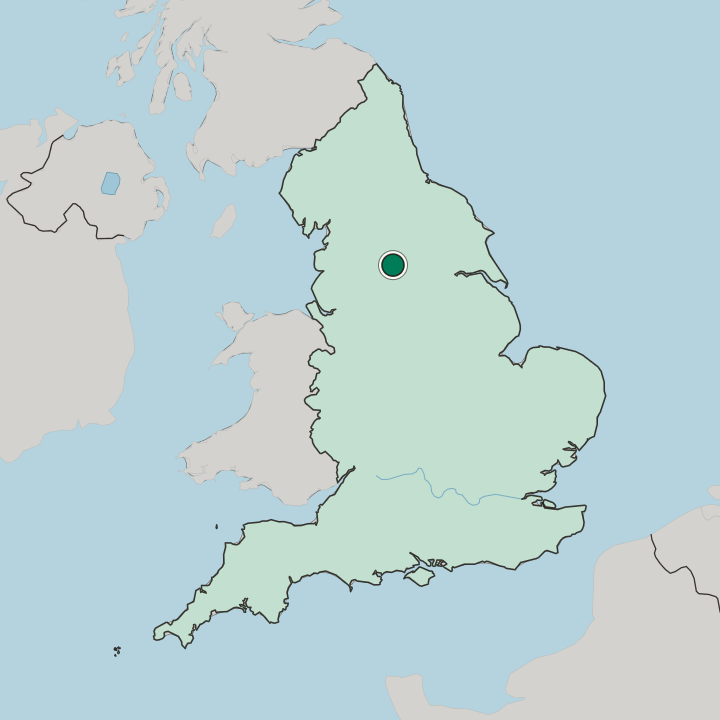
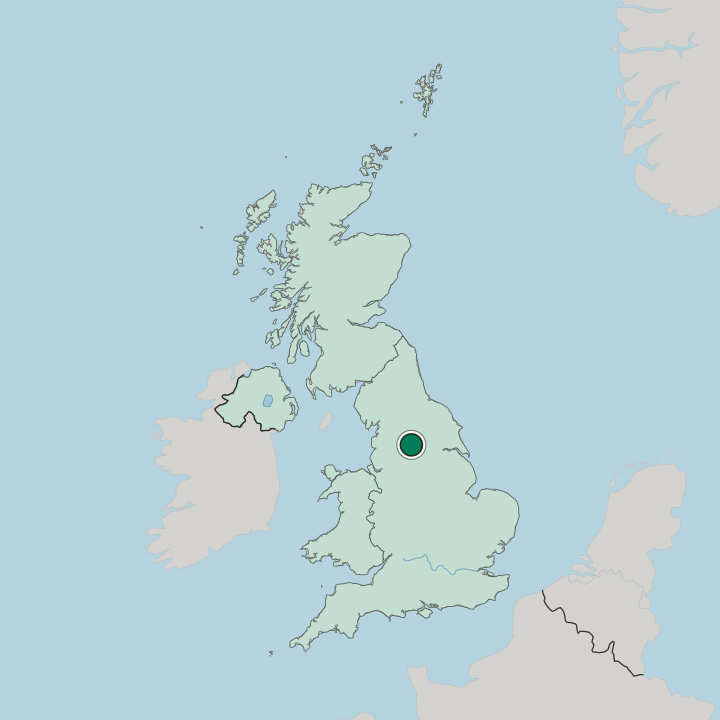
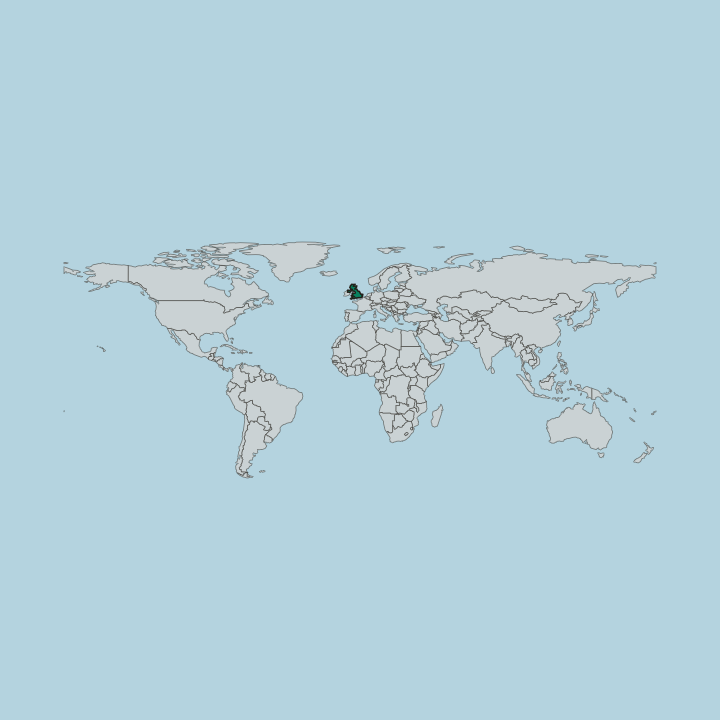
Bradford lies inland in the north of England, a city set among rising ground and stone streets. The land climbs around it. The centre gathers in a hollow of the higher ground, the lawns of Lister Park spreading on the slopes to the north, while the older stone of Bolling Hall Museum marks the edges of a city that grew across the folds of the surrounding country.
What is the climate of Bradford?
Bradford has a cool, damp climate typical of inland northern England. Cloudy, grey skies are the norm over Bradford. Cloud and rain sweep across the higher ground through much of the year, keeping summers mild rather than warm, while the rising land around the city holds the cool air over the stone streets and the lawns of Lister Park.
How do you get to Bradford?
Bradford is reached by road and rail through the north of England. Almost everyone arrives by road or rail. Rail lines and roads run into the centre from the wider country around it, carrying visitors toward the National Science and Media Museum and the streets below the slopes of Lister Park.
Common questions
What is the best area to stay in Bradford?
City centre and the museums: First-time visitors near the National Science and Media Museum in Bradford. Lister Park and Cartwright Hall: Garden and art visitors beside Cartwright Hall Art Gallery in Bradford. The old halls: Quieter stone streets near Bolling Hall Museum in Bradford.
Good for
More cities in England
Updated October 2026