United Kingdom · England
Where to Stay in Nottingham, England
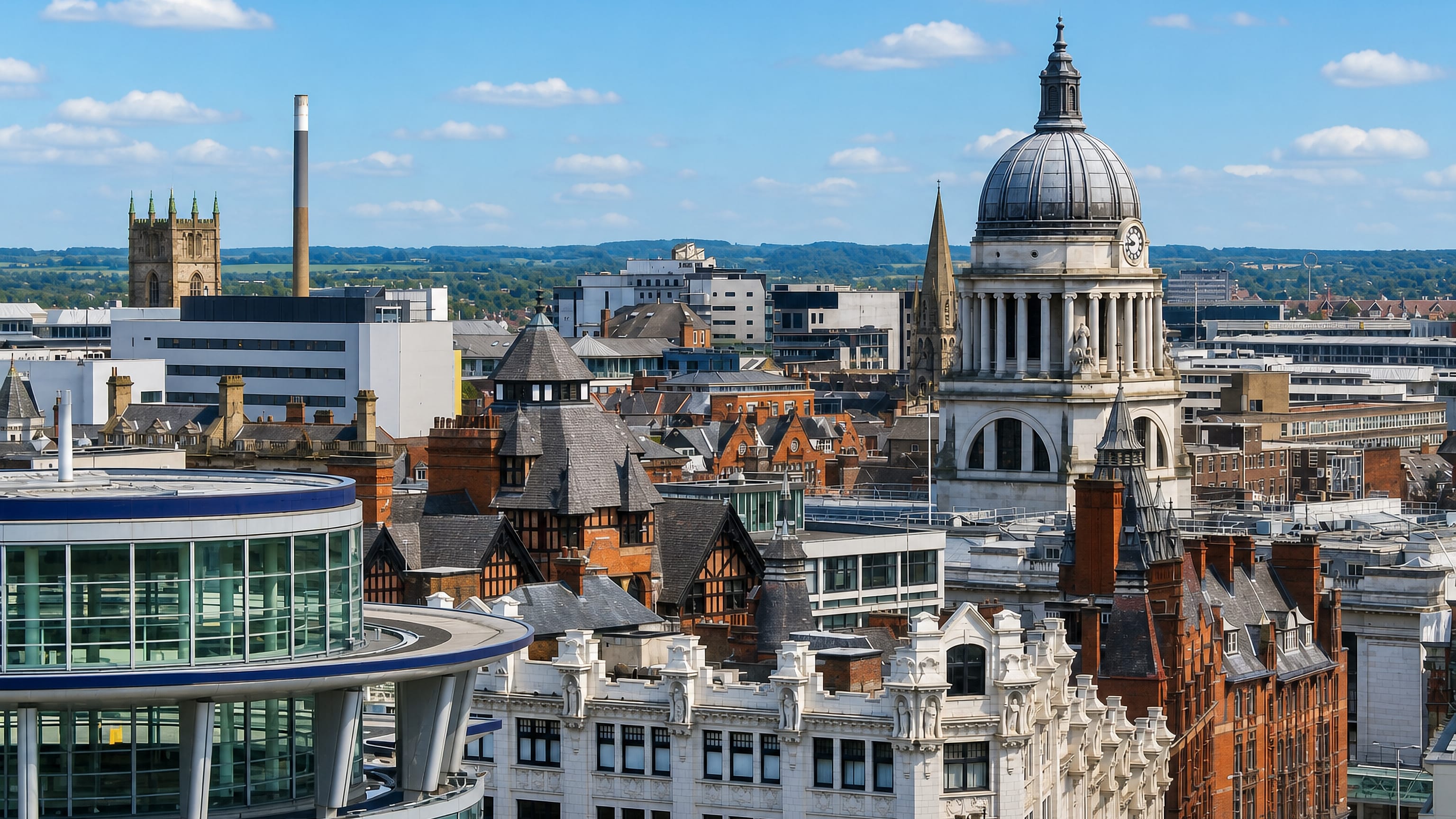
Sandstone caves honeycomb the rock beneath Nottingham, a city in Nottinghamshire, England, known for Nottingham Castle and the legend of Robin Hood.
Hotel links are affiliate links: booking through them may earn us a commission, at no extra cost to you. It never affects how places are ranked. How this works


Where to stay in Nottingham
Where you base yourself shapes the visit — here's the character of each area.

 NottinghamUnited Kingdom
Lace Market
The Lace Market is a quarter-mile square in the centre of Nottingham, once the trading floor of the world's lace industry.Where to stay → NottinghamUnited Kingdom
St Ann's
St Ann's is a large district of Nottingham in the ceremonial county of Nottinghamshire, with St Ann with Emmanuel among its parish churches.Where to stay → NottinghamUnited Kingdom
The Park
The Park is a private residential estate west of Nottingham city centre, in England, known for Victorian houses and gas street lighting.Where to stay → NottinghamUnited Kingdom
Sneinton
Sneinton is a district of Nottingham marked by Green's Windmill and Science Centre and the William Booth Birthplace Museum.Where to stay →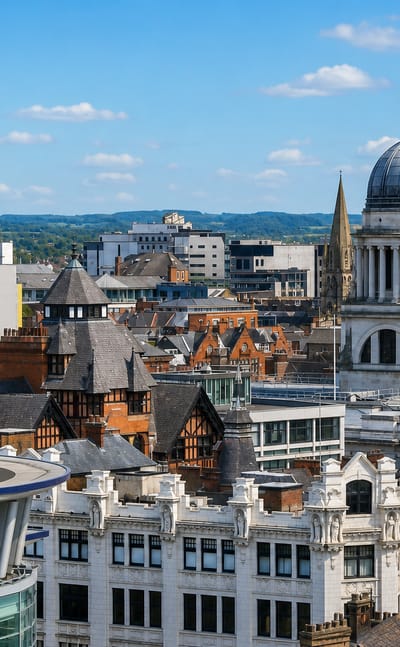 NottinghamUnited Kingdom
Meadows
Meadows, also written The Meadows, is a district of Nottingham with St George in the Meadows and St Saviours in the Meadows among its churches.Where to stay →NottinghamUnited KingdomForest Fields
Forest New Ground and the Arboretum edge Forest Fields, a Nottingham district that carries All Saints' Church on its record.Where to stay →NottinghamUnited KingdomSherwood Rise
Sherwood Rise is a residential quarter of Nottingham, ringed by Carrington, Basford, Forest Fields and Sherwood.Where to stay →NottinghamUnited KingdomHyson Green
Hyson Green is a district of Nottingham marked by the New Art Exchange, the Capitol Cinema and the John Player Ground.Where to stay →NottinghamUnited KingdomMapperley
Sherwood, Thorneywood and Gedling ring Mapperley, entered in the record as a residential and commercial suburb of Nottingham.Where to stay →NottinghamUnited KingdomOld Basford
Old Basford is a Nottingham area whose parish church, St Leodegarius, was built in the 12th century and stands near a Manor House of about 1700.Where to stay →NottinghamUnited KingdomAspley
Aspley is a ward of Nottingham three miles west of the city centre, with St Margaret's Church and Aspley Hall among its named buildings.Where to stay → NottinghamUnited Kingdom
Wollaton
Wollaton is a suburb in the western part of Nottingham, and Wollaton Hall stands there with its museum, deer park and lake.Where to stay → NottinghamUnited Kingdom
Bestwood
Bestwood Village is a civil parish in the Gedling district of Nottinghamshire, where the headstocks of Bestwood Colliery still stand over the village.Where to stay →Hotel links are affiliate links: booking through them may earn us a commission, at no extra cost to you. It never affects how places are ranked. How this works
Find hotels in Nottingham
Direct booking searches for these neighbourhoods.
City centre and market square
The centre gathers Nottingham Castle, Nottingham Contemporary and the National Justice Museum around the market square within a short walkFind hotels in City centre and market squareVisitors who want converted-warehouse character near St Mary's ChurchThe Lace Market
Red-brick warehouses around St Mary's Church give a quieter historic base a few minutes from the squareFind hotels in The Lace MarketHotel links are affiliate links: booking through them may earn us a commission, at no extra cost to you. It never affects how places are ranked. How this works
Things to do in Nottingham
Ranked by global recognition; descriptions from Wikidata (CC0).
Museums & Galleries
3- National Justice Museum
- Nottingham Contemporary
- New Art Exchange
Churches & Religious Sites
8- St Mary's Church, Nottingham Heritage
- St Peter's Church, Nottingham Heritage
- All Saints' Church, Nottingham Heritage
- St Nicholas' Church, Nottingham Heritage
- Greek Orthodox Church of the Virgin Mary Eleousa Heritage
Show 3 more →
- St. Leodegarius Church, Basford Heritage
- St Wilfrid's Church, Wilford Heritage
- St. Stephen's Church, Sneinton Heritage
Castles & Historic Sites
2- Nottingham Castle Heritage
- Bendigo Monument In St Mary's Rest Garden Heritage
Stadiums & Sports
2- John Player Ground
- Forest New Ground
Landmarks & Notable Places
8- Newdigate House Heritage
- Highfield House Heritage
- County House Heritage
- Willoughby House Heritage
- Sheriff House Heritage
Show 3 more →
- Winding House And Headstocks At Bestwood Colliery Heritage
- Basford House Heritage
- Green's Mill House Heritage
worth knowingacross 5 categories in Nottingham
About Nottingham
What is Nottingham known for?
Nottingham is known for Nottingham Castle and its long association with the legend of Robin Hood and the Sheriff of Nottingham. The city built its wealth on trade. Lace, bicycles, and tobacco made its name across the East Midlands, and it later became a UNESCO City of Literature.
Cultural anchors such as Nottingham Contemporary and the National Justice Museum sit among older churches, including St Mary's Church and St Peter's Church in the historic core.
What are the main landmarks in Nottingham?
Nottingham's landmarks gather around the castle rock. Nottingham Castle crowns its sandstone bluff, riddled beneath with caves, while the National Justice Museum occupies the former county gaol and courthouse nearby. Modern art fills the edge of the Lace Market.
There Nottingham Contemporary stands close to St Mary's Church, which rises over the old warehouses, and St Peter's Church and the grand Willoughby House complete the historic centre.
What is the history of Nottingham?
Nottingham began around 600 as a settlement on a sandstone bluff above the valley in what is now Nottinghamshire. The rock shaped everything. Generations dug cellars and dwellings straight into the soft stone beneath the town, and after the Conquest the Normans set Nottingham Castle on the highest crag, the stronghold that fixed the city in the tales of Robin Hood and the Sheriff of Nottingham.
St Mary's Church rose in the merchant quarter below. Trade and industry made the modern city. Nottingham grew rich on lace, and its bicycle and tobacco works drew labour into the East Midlands, filling the Lace Market with tall brick warehouses around St Mary's Church.
The town received its city charter in 1897, and in later years the old gaol became the National Justice Museum while Nottingham Contemporary brought a modern gallery to the edge of the old quarter. Recognised as a UNESCO City of Literature, the city still wears its industrial and legendary past together, the castle rock at its centre.
Where is Nottingham?
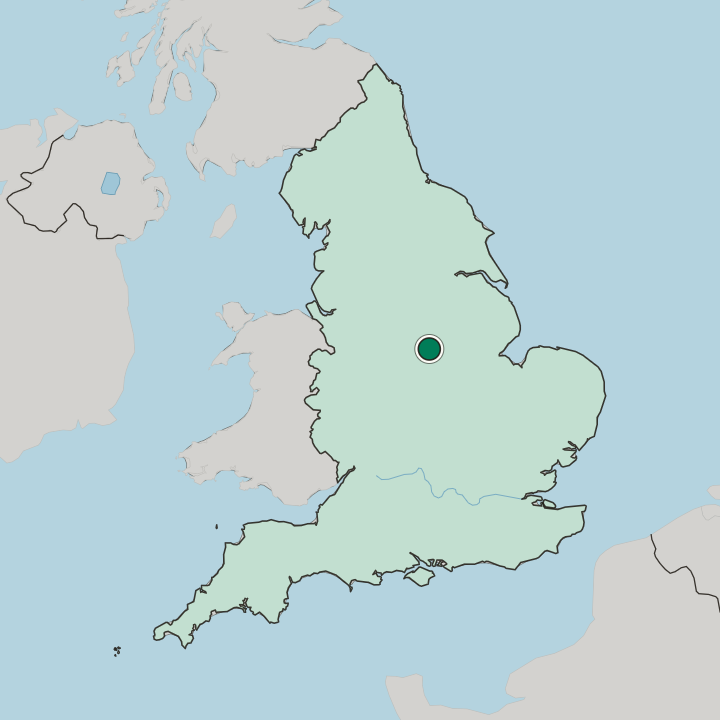
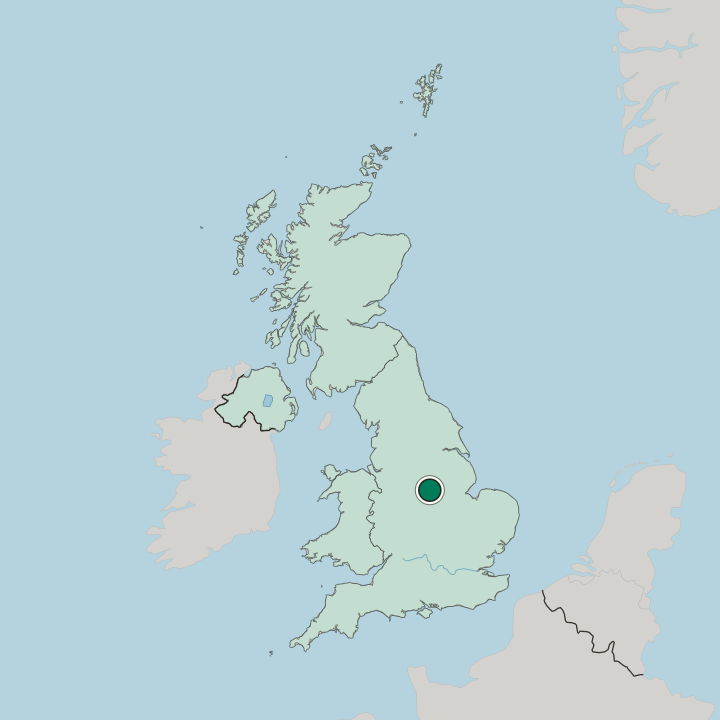
Nottingham stands on a sandstone ridge in Nottinghamshire, England, south of Sheffield and north of Birmingham in the East Midlands. A river runs through the valley below the town. The old core sits on higher ground where Nottingham Castle caps its crag, its soft rock hollowed by centuries of cave-cutting, while the Lace Market and the modern city spread out across the slopes and the flatter ground toward the water.
What is the climate of Nottingham?
Nottingham has a mild, moderately damp inland climate typical of the East Midlands. Summers are warm and changeable. Winters are cool and often grey, with frost common on clear nights and snow falling only occasionally over the sandstone ridge, while rain is spread evenly through the year.
The valley below the town can hold mist on still autumn mornings before it burns off toward midday.
How do you get to Nottingham?
Getting to Nottingham is straightforward. Trains run from London to its central station, close to the castle and the Lace Market, and the city sits between Sheffield and Birmingham on the East Midlands rail network. Motorways feed in from all sides, and an airport lies a short way south.
In the centre a tram network and level streets make Nottingham Castle and the old town simple to reach on foot.
Common questions
What is the best area to stay in Nottingham?
City centre and market square: First-timers near Nottingham Castle and the National Justice Museum. The Lace Market: Visitors who want converted-warehouse character near St Mary's Church.
Good for
More cities in England
Updated October 2026