Greece · Attica
Where to Stay in Néa Smýrni, Attica
Néa Smýrni is a municipality of South Athens, named for Smyrna and settled by refugees who reached Attica after 1922.
Hotel links are affiliate links: booking through them may earn us a commission, at no extra cost to you. It never affects how places are ranked. How this works



Where to stay in Néa Smýrni
Where the beds are, and what that means for the visit.
The Arch of Hadrian marks the line most visitors draw. Around it sit the Acropolis Museum, the Ancient Agora of Athens and the Theatre of Dionysus, and rooms cluster tightly across that ground because a walking day can start at the door. The Temple of Olympian Zeus and the Choragic Monument of Lysicrates fall inside the same central band, which is where the shortest itineraries stay.
Néa Smýrni lies further out. The municipality gives up those few minutes of walking distance in exchange for residential streets, and for anyone staying a week rather than a weekend that is often the better trade. South Athens has its own grain.
Néa Smýrni's squares and shopping streets run on local trade rather than on visitors, so evenings there feel unlike the ground around the Odeon of Herodes Atticus, and the difference is the reason some people choose it. You get quiet nights and a short ride in. The First Cemetery of Athens and the Panathenaic Stadium fall between the two, close enough that the municipality never feels cut off from the centre, and the Kerameikos Archaeological Museum sits at the far side of the same walk.
Find hotels in Néa Smýrni
Direct booking searches for these neighbourhoods.
Néa Smýrni
Squares and shopping streets that run on their own trade, with the Panathenaic Stadium the nearest of the central monuments.Find hotels in Néa SmýrniMornings at the Theatre of Dionysus and the Odeon of Herodes AtticusAcropolis Museum quarter
The Acropolis Museum, the Theatre of Dionysus and the Odeon of Herodes Atticus stand within one continuous archaeological walk.Find hotels in Acropolis Museum quarterEvenings between Hadrian's Library and the Tzistarakis MosqueAncient Agora surrounds
Hadrian's Library, the Tzistarakis Mosque and the Church of Panaghia Kapnikarea mark the old streets beside the Ancient Agora of Athens.Find hotels in Ancient Agora surroundsHotel links are affiliate links: booking through them may earn us a commission, at no extra cost to you. It never affects how places are ranked. How this works
About Néa Smýrni
The name is the story.
What is Néa Smýrni known for?
Néa Smýrni carries the name of Smyrna, the city its settlers left behind, and that inheritance still marks the municipality more clearly than any monument standing inside its boundaries. Athens supplies the monuments. The Acropolis Museum, the Odeon of Herodes Atticus and the Temple of Olympian Zeus all lie a short way north, which is why South Athens sells itself on access rather than on sights of its own.
What are the main landmarks in Néa Smýrni?
Antiquity dominates the list. The Erechtheion, the Propylaea of Athens, the Temple of Athena Nike and the Old Temple of Athena belong to the same hilltop group above the Acropolis Museum, while the Stoa of Eumenes and the Stoa Poikile survive from the civic ground below. Later centuries left less.
The Tzistarakis Mosque and the Church of the Holy Apostles stand for the Ottoman and Byzantine layers, and the Eleusinion and the Pnyx complete a set that Néa Smýrni reaches without difficulty.
What is the history of Néa Smýrni?
The name arrived before the streets. Néa Smýrni takes its name from Smyrna, and the municipality grew from the settlement of refugees who reached Attica after the Burning of Smyrna in 1922, during the Greco-Turkish war. Displacement did the founding.
A whole district took shape around that arrival, with housing, parishes and squares laid out on the southern side of Athens for people who had lost the city their new home was named after. Old Athens stood a few streets away the whole time. The Pnyx, the Ancient Agora of Athens and the Eleusinion had been in the ground for millennia when the refugees arrived, and Hadrian's Library, the Arch of Hadrian and the Temple of Olympian Zeus recorded the Roman chapter of the same city.
Empires kept adding. The Church of Panaghia Kapnikarea and the Church of the Holy Apostles came with Byzantium, the Tzistarakis Mosque with Ottoman rule, and the Choragic Monument of Lysicrates had already outlasted every one of them. Ships add a modern layer.
The Greek cruiser Georgios Averof and USS Charrette both belong to the naval record that sits alongside this stretch of South Athens, far removed from the antiquities inland. Kerameikos closes the circle. Its archaeological museum holds the burial ground of a city that has been continuously inhabited since long before Smyrna's people made a second home beside it.
Where is Néa Smýrni?
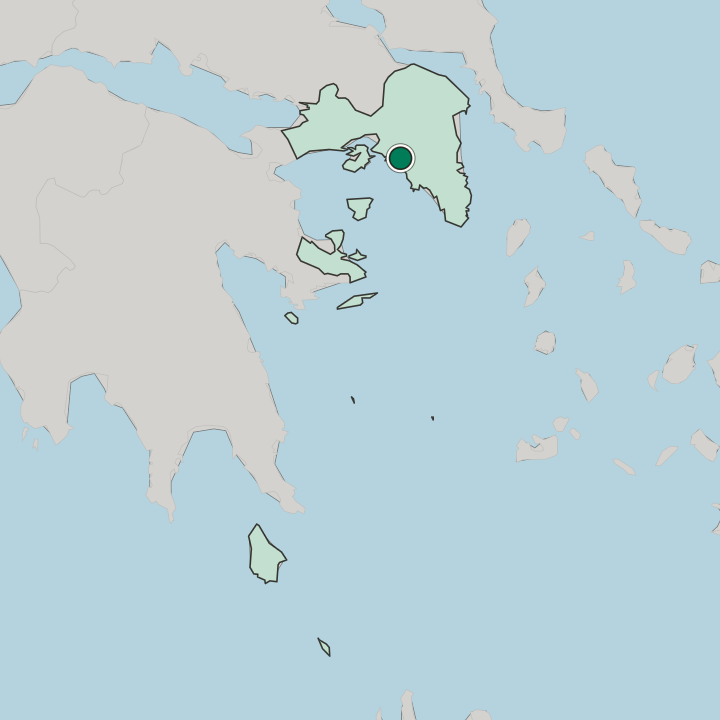
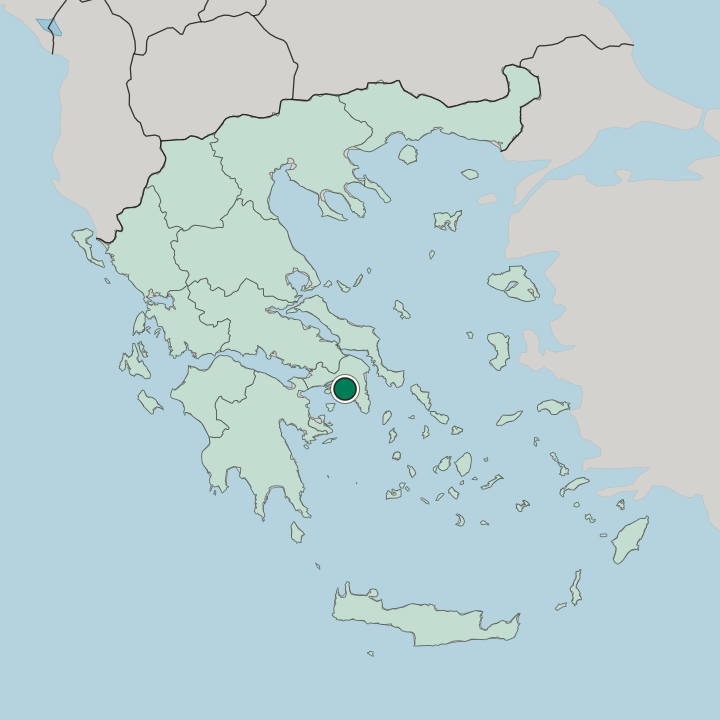
Four square kilometres, no more. Néa Smýrni occupies a compact block of South Athens, hemmed in by neighbouring municipalities on every side, so the boundary follows streets rather than any natural edge. Attica does the rest.
The Panathenaic Stadium and the First Cemetery of Athens mark how quickly the ground turns into central Athens once the municipal line is crossed.
What is the climate of Néa Smýrni?
Heat is the defining season. Néa Smýrni sits in the temperate band of the northern hemisphere, so the middle of the year runs warm while the turn of it brings the cooler and wetter stretch that Attica depends on. Stone amplifies the difference.
Anyone climbing to the Pnyx or the Philopappos Monument at midsummer meets exactly what the municipality's own streets deliver, because the two lie within a few kilometres of each other.
How do you get to Néa Smýrni?
Central Athens is the reference point. Néa Smýrni lies on the South Athens side of the built-up area, a few kilometres out from the Arch of Hadrian and the Temple of Olympian Zeus, with continuous streets the whole way rather than any gap of open ground. Distances stay walkable at a push.
Most arrivals come through the centre first, then out across the band that holds the First Cemetery of Athens and the Panathenaic Stadium.
Common questions
What is the best area to stay in Néa Smýrni?
Néa Smýrni: Weeklong stays on the South Athens side. Acropolis Museum quarter: Mornings at the Theatre of Dionysus and the Odeon of Herodes Atticus. Ancient Agora surrounds: Evenings between Hadrian's Library and the Tzistarakis Mosque.
Good for
More cities in Attica
Updated October 2026