Indonesia
Kepulauan Bangka Belitung, Indonesia — Towns & Travel Guide
Kepulauan Bangka Belitung is an Indonesian tin-mining island province off Sumatra, its white-sand beaches strewn with giant granite boulders.
Hotel links are affiliate links: booking through them may earn us a commission, at no extra cost to you. It never affects how places are ranked. How this works


Towns & cities in Kepulauan Bangka Belitung
One town here has its own guide — it links to where to stay.

 Indonesia
Pangkalpinang
Pangkalpinang is the capital of the Bangka Belitung Islands Province and the largest city on Bangka, standing on the island's east coast since 1757.Where to stay →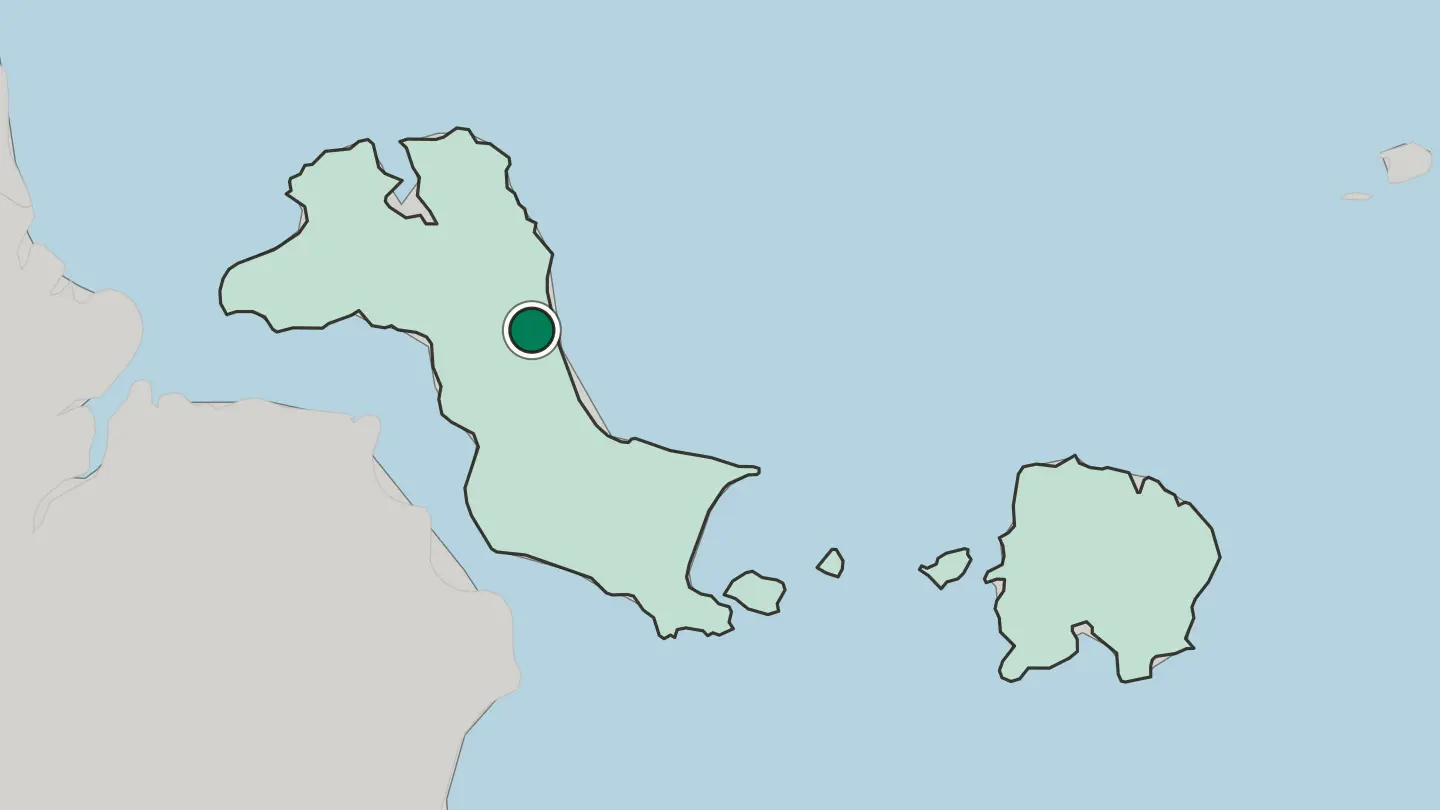
Hotel links are affiliate links: booking through them may earn us a commission, at no extra cost to you. It never affects how places are ranked. How this works
About Kepulauan Bangka Belitung
Tin and beaches define these islands.
What is Kepulauan Bangka Belitung known for?
Bangka and Belitung have supplied the world with tin since around 1710, and the ore still shapes both the land and the towns. Travellers come for the coast instead, drawn by pale sand, warm shallow water, and clusters of house-sized granite boulders that pile up along Tanjung Tinggi and Tanjung Kelayang on Belitung. Offshore sits Lengkuas, its Dutch-built lighthouse still marking the reef.
The 2008 film Laskar Pelangi, shot on Belitung, made the island a domestic holiday name. Pangkalpinang, on Bangka, is the provincial capital and main point of arrival.
Where is Kepulauan Bangka Belitung?
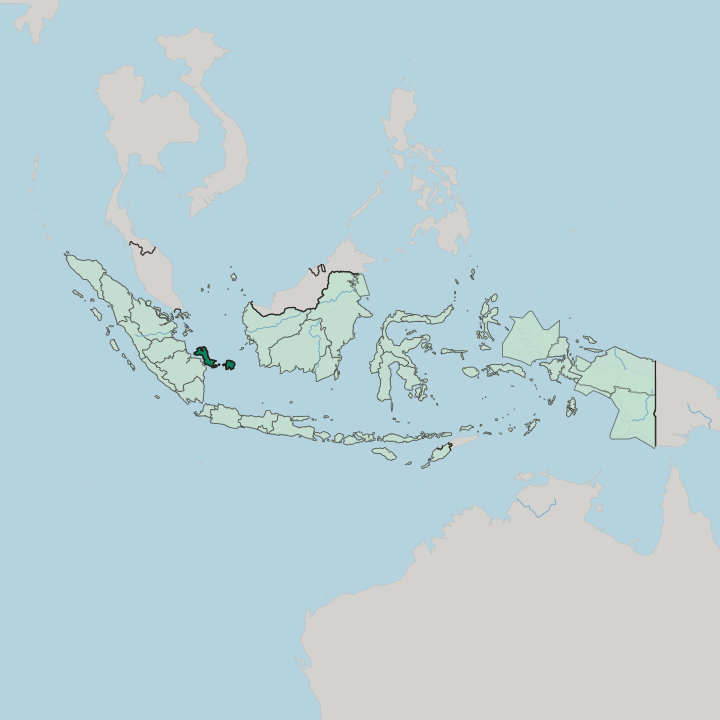
Kepulauan Bangka Belitung lies off the southeast coast of Sumatra, across the Bangka Strait. It is made of two main islands and hundreds of smaller ones. Bangka is the larger and sits to the west, closest to Sumatra; Belitung lies to the east, out toward Borneo.
The narrow Gaspar Strait runs between them. To the east of Belitung the wider Karimata Strait opens toward Kalimantan on Borneo, linking the South China Sea to the Java Sea. The Java Sea washes the southern shores; open water lies north toward the South China Sea.
So the province is defined by water on every side. Neither island is high. Bangka is mostly low and gently rolling, its interior rising to modest hills, with swampy, mangrove-lined stretches along parts of the coast.
The ground is what matters here: both islands sit on a belt of tin-bearing granite, and that same granite surfaces on the beaches as the huge pale boulders Belitung is known for. Old mining pits and dredged flats scar the interior in places, a mark of three centuries of digging. Tanjung Pandan anchors Belitung in the west of that island, while Pangkalpinang sits on Bangka's east coast, facing the Java Sea.
What is Kepulauan Bangka Belitung like?
Two communities have shaped island life: Malays and Chinese. Malay settlement is old, but tin is what pulled in the rest. From the eighteenth century onward, Hakka labourers came from Guangdong in southern China to work the mines, and their descendants gave Bangka a strong Chinese stamp rare elsewhere in Indonesia.
The two traditions sit side by side. Malay wooden houses stand near Hakka clan temples, and Bangka Malay, Hakka, and Indonesian are all heard in the markets of Pangkalpinang. In Pangkalpinang, Chinese shophouses and a scatter of temples share the same streets as Malay mosques.
Food is where the mix is easiest to taste. Mie Bangka, a wheat-noodle dish topped with pork or chicken, mushrooms, and scallion, came straight from Hakka kitchens and stayed. Pantiaw, a flat rice noodle, and martabak, known on Bangka by its Hakka name Hok Lo Pan, belong to the same lineage.
Seafood runs through all of it, given how close the coast always is. Festivals track both calendars, with Chinese New Year and the lantern nights of Cap Go Meh marked across the towns alongside the Muslim Malay year.
What is the history of Kepulauan Bangka Belitung?
These islands passed through the great Sumatran powers before the tin era. The Srivijaya empire and later the Palembang Sultanate held sway here. Everything changed around 1710, when tin was found on Bangka and mining began in earnest, drawing labour from China and the wider archipelago.
Then came the Dutch. The ore turned into a colonial prize. The Bangka leader Depati Amir led a revolt against the Dutch around 1850 and was exiled for it, remembered ever since as a national hero.
Bangka Belitung became a province in its own right in 2000, split from South Sumatra.
What is the climate of Kepulauan Bangka Belitung?
The islands sit close to the equator, so the heat barely shifts across the year. It is hot and humid throughout. Rain is the real variable, not temperature.
The heaviest downpours come with the northwest monsoon between about November and March, when squalls sweep in off the Java Sea. The drier months fall around the middle of the year. Even then, the sea keeps the air heavy, and short tropical showers are never far away.
How do you get to Kepulauan Bangka Belitung?
Reaching the Bangka Belitung islands almost always means flying. The two islands are Bangka and Belitung. Bangka is served by Depati Amir Airport at Pangkalpinang, named for the island's own resistance hero, while Belitung has Hanandjoeddin Airport just outside Tanjung Pandan.
Most flights are domestic hops from Jakarta and other Indonesian cities. Hanandjoeddin holds international status too, and has run direct links to Singapore and Kuala Lumpur. Ferries also cross the Bangka Strait from Sumatra, landing on Bangka's west side near Muntok.
Between the two islands, the quickest link is another short flight.
Common questions
What is the best area to stay in Kepulauan Bangka Belitung?
Pangkalpinang: a first base on Bangka. Tanjung Pandan: reaching Belitung's beaches. Tanjung Kelayang: island-hopping to Lengkuas. Sungailiat: Bangka's resort beaches.
Good for
More regions in Indonesia
Updated September 2026