Iraq
Al-Qadisiyah Governorate, Iraq — Towns & Travel Guide
Al-Qadisiyah is a fertile Euphrates province of south-central Iraq, holding ancient Nippur and the town of Al Diwaniyah.
Hotel links are affiliate links: booking through them may earn us a commission, at no extra cost to you. It never affects how places are ranked. How this works


Towns & cities in Al-Qadisiyah Governorate
One town here has its own guide — it links to where to stay.
 Iraq
Iraq
Al Diwaniyah
Al Diwaniyah is the capital of Iraq's Al-Qādisiyyah Governorate, founded by the rulers of the Khaza'il Dynasty and named for a guest house.Where to stay →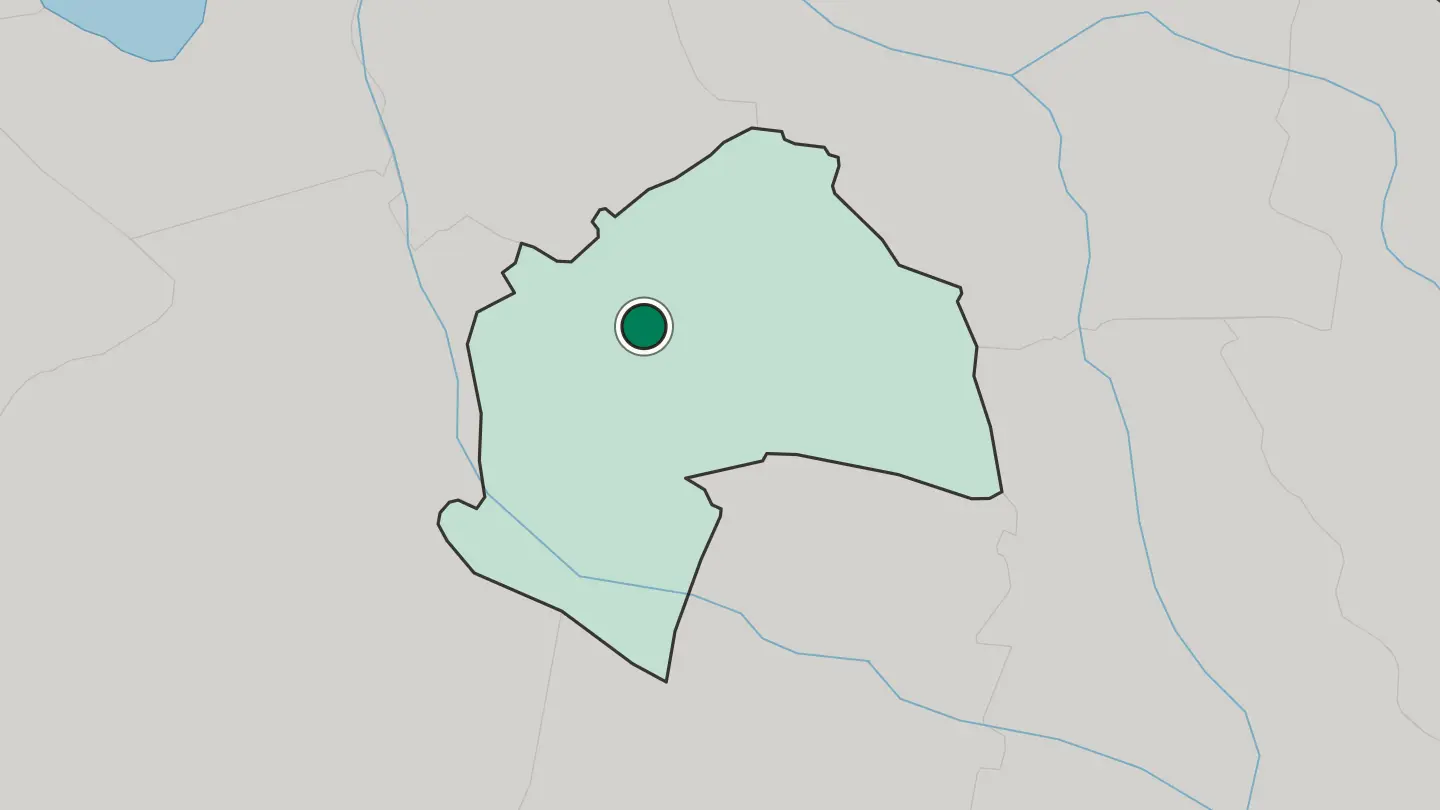
Hotel links are affiliate links: booking through them may earn us a commission, at no extra cost to you. It never affects how places are ranked. How this works
About Al-Qadisiyah Governorate
This is farming country on the Euphrates.
What is Al-Qadisiyah Governorate known for?
Al-Qadisiyah takes its name from the Battle of al-Qadisiyyah, the clash of 636 that broke Sasanian Persia and opened Iraq to Arab rule. Its irrigated plain, watered from a channel of the Euphrates near Al Diwaniyah, ranks among the most cultivated ground in the country, and the ruins of Sumerian Nippur sit in its northern reaches near the town of Afak. Al Diwaniyah anchors the province as its market and rail town.
Where is Al-Qadisiyah Governorate?
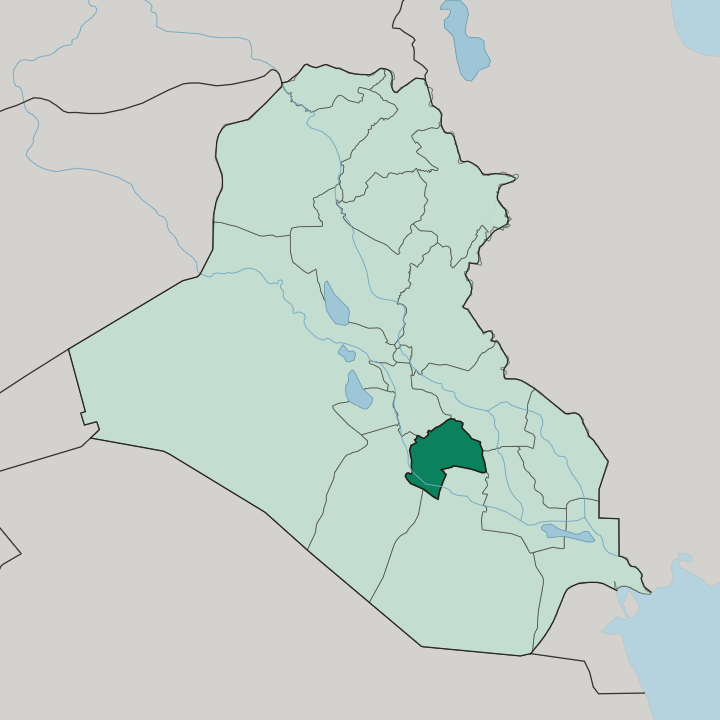
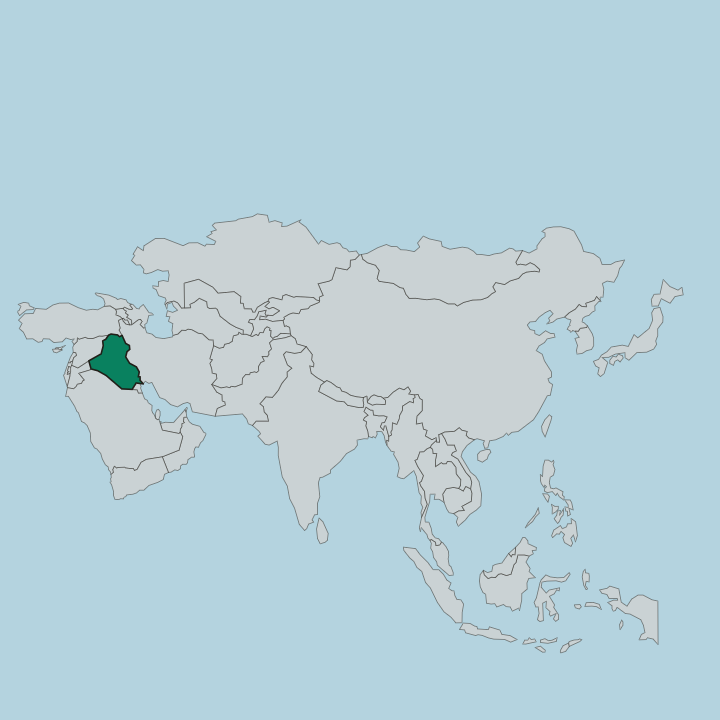
Al-Qadisiyah lies in south-central Iraq, on the alluvial plain of the lower Euphrates. It is inland country. No sea touches it, and no great mountain rises within it; the land runs low, flat, and open toward the horizon.
A channel of the Euphrates passes near Al Diwaniyah, the provincial capital, and the water drawn from it turns the surrounding fields green across ground that would otherwise be dry. That belt of irrigated farmland is the fertile core of the province. Away from the canals the plain fades toward semi-desert, and to the north the reed marsh of Hawr Al-Dalmaj spreads across the boundary.
Five governorates ring Al-Qadisiyah. Babylon lies to the north and Wasit to the north-east, Najaf sits along the west, and Al Muthanna and Dhi Qar close off the south and south-east. The province covers a little over 8,000 square kilometres of that Mesopotamian floodplain.
Its northern edge holds a deeper mark of the past: the ruin field of Nippur, a Sumerian city near the town of Afak, its temple mounds still standing above the flat farmland. Water, and the lack of it, has always drawn the map here.
What is Al-Qadisiyah Governorate like?
Al-Qadisiyah is a province of farmers and river towns. Its people are overwhelmingly Shia Arabs, and Arabic is the language of the fields, the markets, and the mosque. Life bends to the Euphrates.
The canals drawn off the river set the rhythm of planting and harvest across the plain, and the date palms, orchards, and grain of the irrigated belt feed both the local table and the wider country. Al Diwaniyah gathers this world into one place. It is the province's market, its administrative seat, and the point where the produce of the countryside meets the trains and roads that carry it away.
The past presses close here. The name Al-Qadisiyah recalls the battle of 636 that ended Sasanian rule, and the mounds of Nippur, sacred to the Sumerian sky god Enlil long before that, still rise from the farmland to the north. Faith and farming and old stone hold together.
The province wears its history in the ground itself.
What is the history of Al-Qadisiyah Governorate?
Time runs deep in Al-Qadisiyah. Nippur, near modern Afak, was a working city more than four thousand years ago, the holy seat of the Sumerian god Enlil and the place where its temple archives gave up thousands of clay tablets of the earliest writing. Long after Sumer fell, this stretch of the Euphrates plain lent its name to the Battle of al-Qadisiyyah, the Arab-Muslim victory of 636 over the Sasanian army that carried Islam into Persia.
The modern province took that battle's name. Two ages meet in one word.
What is the climate of Al-Qadisiyah Governorate?
Al-Qadisiyah has a hot desert climate. Summers are long and fierce, running from May into October under clear skies with almost no rain, and the plain around Al Diwaniyah bakes through the middle of the day. Winters are short, cooler, and bring what little rain the province sees.
The Euphrates and its canals, not the sky, keep the fields alive; without the river the irrigated belt would slip back into the surrounding semi-desert. Come in the cooler months.
How do you get to Al-Qadisiyah Governorate?
Most travellers reach Al-Qadisiyah overland from Baghdad. Al Diwaniyah sits on the main rail line that runs south from the capital toward Basra, and the same road corridor threads through the province, so trains and buses stop in the capital. There is no international airport in the province itself; arriving from abroad means flying into Baghdad or Najaf and driving down onto the Euphrates plain.
From Al Diwaniyah, local roads fan out to Afak, the marsh at Hawr Al-Dalmaj, and the ruins of Nippur.
Common questions
What is the best area to stay in Al-Qadisiyah Governorate?
Al Diwaniyah: a base beside the Euphrates in Al-Qadisiyah. Afak: reaching the ruins of Nippur. The Hawr Al-Dalmaj wetlands: the marsh and its birdlife.
More regions in Iraq
Updated September 2026