Iraq
An Najaf, Iraq — Towns & Travel Guide
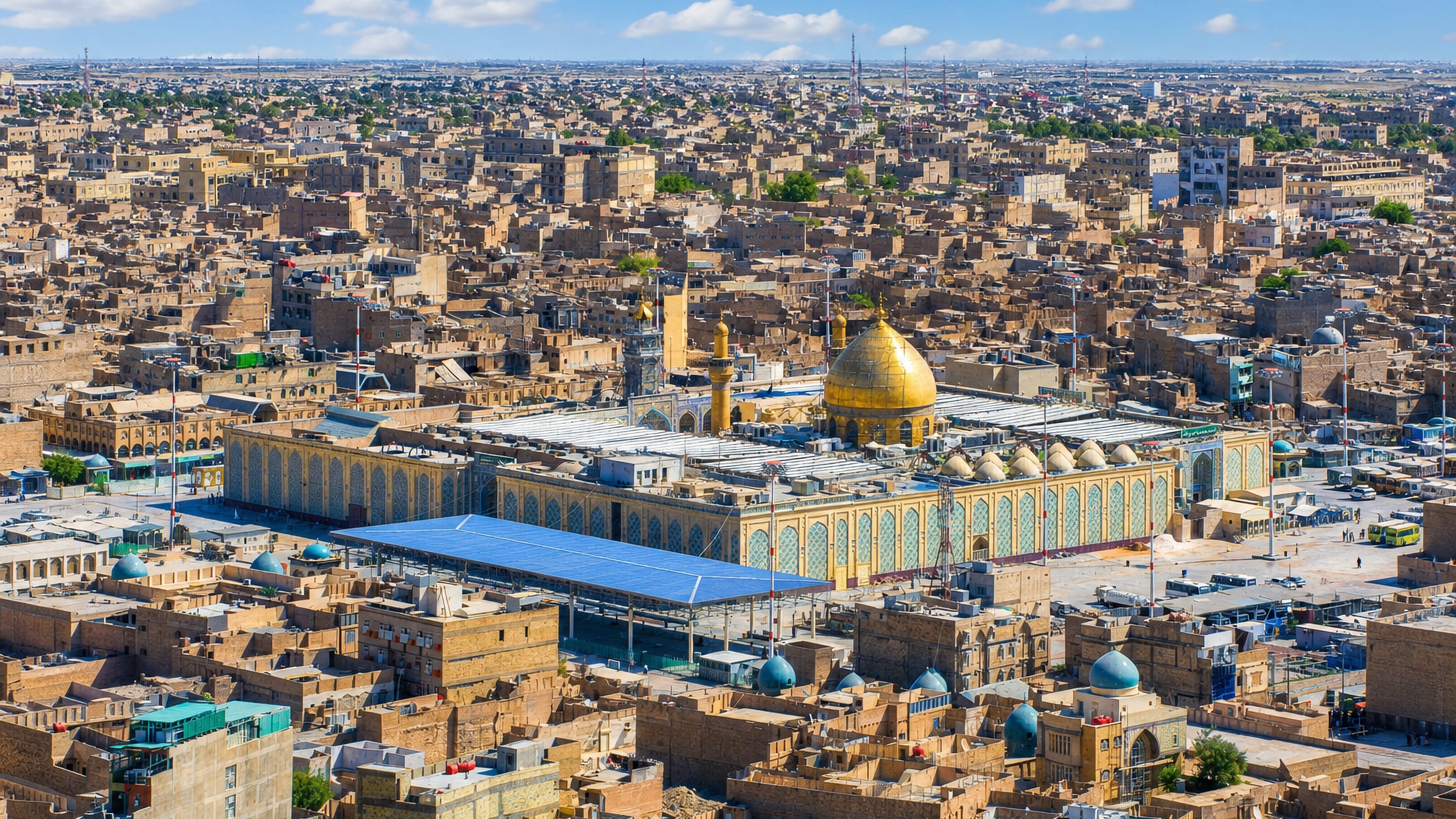
An Najaf is a desert region of central Iraq built around the Imam Ali Shrine, one of the holiest cities in Shia Islam.
Hotel links are affiliate links: booking through them may earn us a commission, at no extra cost to you. It never affects how places are ranked. How this works


Towns & cities in An Najaf
Pick a town or city — each links to where to stay.
 Iraq
Iraq
Najaf
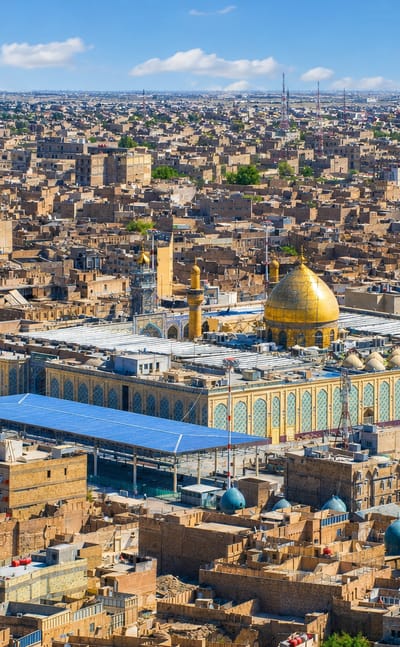
The Imam Ali Shrine crowns Najaf, a holy city of Shia Islam in Iraq, close to Kufa and rimmed by the vast cemetery of Wadi-us-Salaam.Where to stay →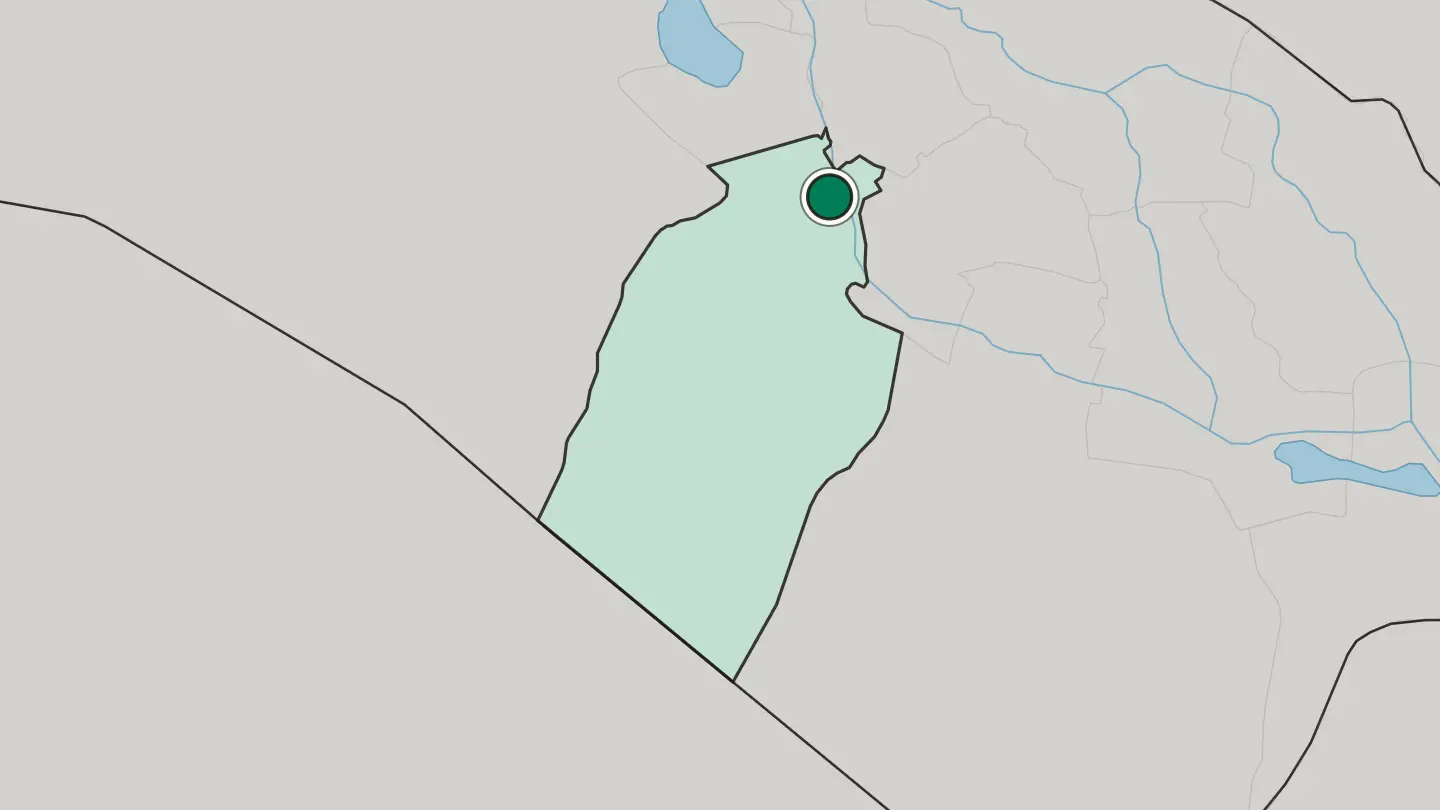 Iraq
Iraq
Kufa
The Euphrates runs past Kufa, a holy city of Shia Islam in Iraq, close to Najaf and set beside the ancient ground of Al-Hirah.Where to stay →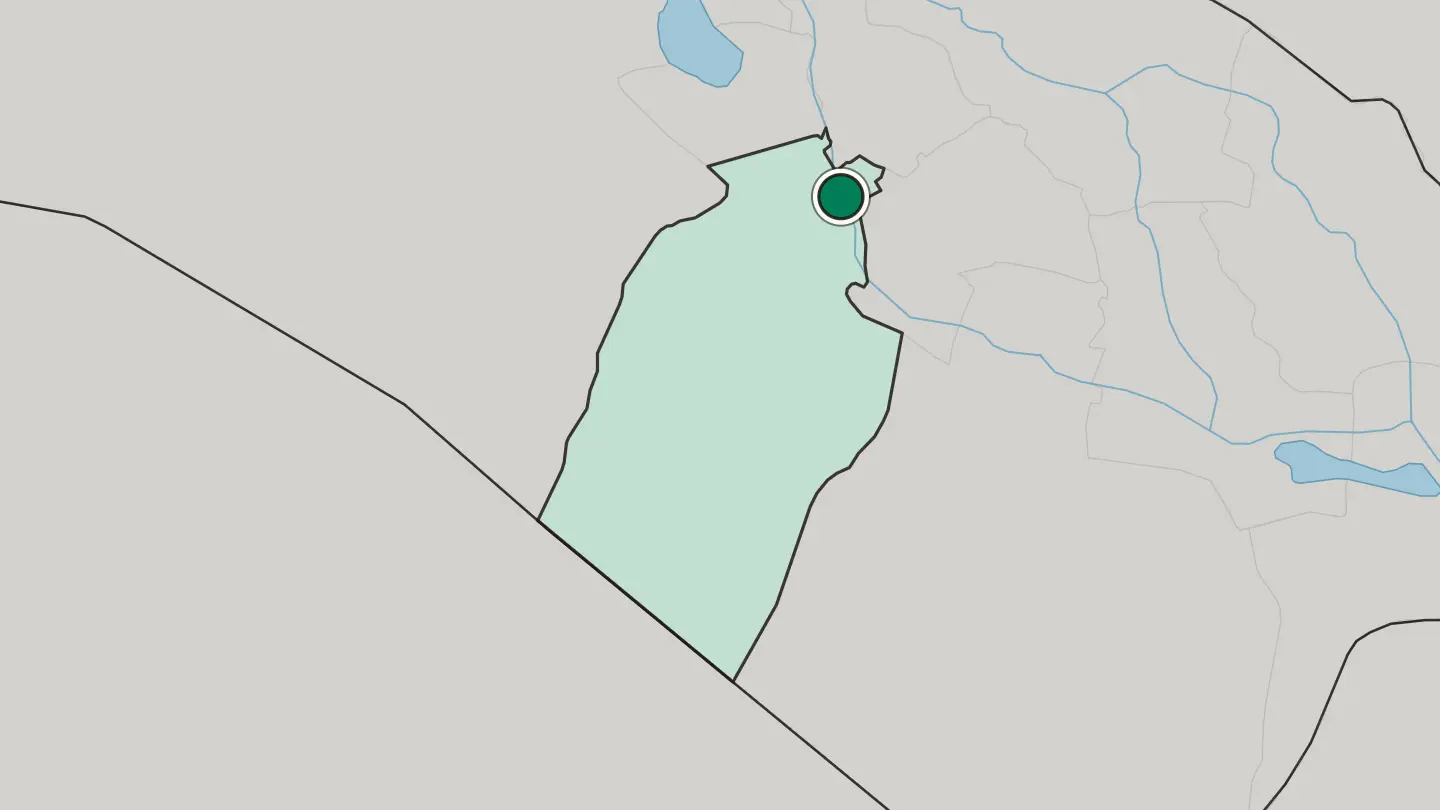
Hotel links are affiliate links: booking through them may earn us a commission, at no extra cost to you. It never affects how places are ranked. How this works
About An Najaf
Pilgrimage is the point.
What is An Najaf known for?
The gold-domed Imam Ali Shrine, raised over the tomb of Ali ibn Abi Talib, cousin and son-in-law of the Prophet Muhammad, draws millions of Shia pilgrims to the capital city of Najaf each year. It ranks among the holiest sites of Shia Islam. Beside the shrine spreads Wadi-us-Salaam, reckoned the largest cemetery on earth, where the faithful have buried their dead for more than a thousand years.
Najaf is also a seat of learning, its hawza seminary teaching Shia scholars for centuries.
Where is An Najaf?
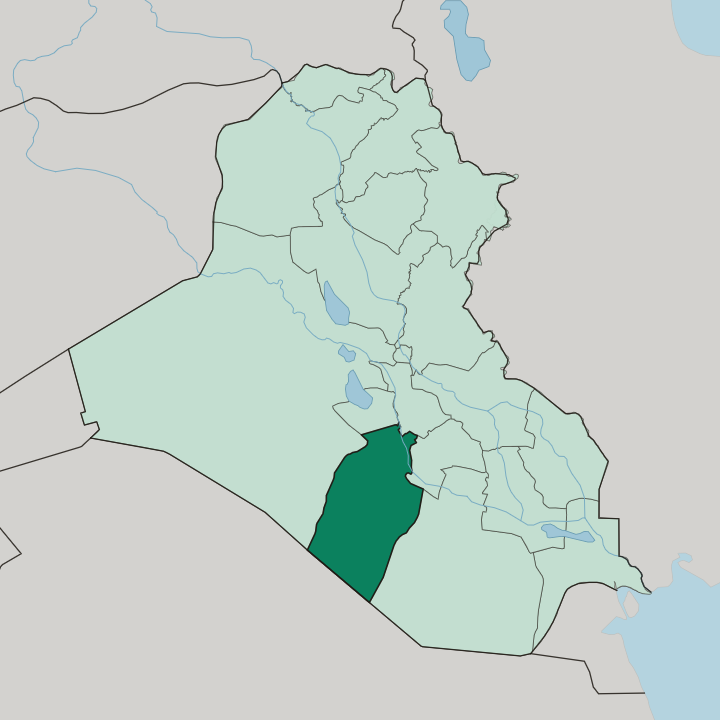
An Najaf sits in central Iraq, its capital about 100 miles south of Baghdad. The region is mostly desert. It stretches from the Euphrates in the north-east, where the land is watered and green, out across bare gravel plains toward the border with Saudi Arabia in the south-west.
Almost all the people live in the narrow strip along the river; the rest is emptiness. The city of Najaf stands on a low ridge on the western bank, raised just enough above the flood plain to keep dry feet. Just north-east lies Kufa, the older settlement, planted right on the Euphrates itself.
That river edge is the region's lifeline. West of it the ground climbs almost imperceptibly into the Syrian Desert, a flat expanse of stone and sand that runs unbroken for hundreds of miles. The governorate covers a little over 28,000 square kilometres, one of the larger in Iraq, yet a traveller sees only its wet fringe. Karbala, the other great Shia shrine city, lies a short way to the north.
Everything of interest in An Najaf clings to the Euphrates and its canals; step away from the water and the desert takes over at once.
What is An Najaf like?
Faith orders daily life in An Najaf far more than in most of Iraq. The rhythm of the region turns on the Imam Ali Shrine, whose call to prayer sets the pace of the streets and whose courtyards fill and empty five times a day. Black-clad pilgrims from Iran, Pakistan, India and the Gulf mix with Iraqi families and turbaned clerics.
The common language is Arabic. Najaf is a scholarly place above all else, and its hawza is among the oldest and most authoritative centres of Shia religious learning anywhere, drawing students who study for years under leading ayatollahs. Grand Ayatollah Ali al-Sistani, the most influential Shia authority in Iraq, teaches and issues rulings from here.
Death is unusually present, and openly so. Funeral processions wind daily toward Wadi-us-Salaam, and many Shia across the world still wish to be carried to Najaf for burial near the first Imam. The old city is a warren of covered markets selling prayer beads, turbah tablets of Karbala clay, and clerical robes.
Hospitality to the traveller runs strong. Pilgrims are fed and housed at religious guesthouses, and strangers on the road to the shrine are treated as guests of Imam Ali himself.
What is the history of An Najaf?
Najaf owes its existence to a grave. Ali ibn Abi Talib was struck down with a poisoned sword while at prayer in the Great Mosque of Kufa and died in the year 661; his followers buried him in secret to spare the tomb from desecration. The site was rediscovered under the Abbasid caliph Harun al-Rashid, who raised the first structure over it late in the eighth century, and the town of Najaf grew up around the shrine.
From that tomb everything else followed: the hawza, the pilgrim roads, and the vast burial ground of Wadi-us-Salaam beside it.
What is the climate of An Najaf?
The summers are brutal. From May into October the heat sits well above 40 degrees, and July and August routinely push toward the mid-forties under a bleached sky with almost no cloud to break the glare of the sun. Rain scarcely falls.
A handful of light showers between November and March is the whole year's allowance. Winters are the reward, mild by day and cool at night, the pleasant season when most pilgrims come, and summer brings the dust as storms sweep in off the desert west of the Euphrates and blot out the sky for hours.
How do you get to An Najaf?
Most pilgrims fly straight in. Al Najaf International Airport, on the edge of the city, was built largely to carry the pilgrim traffic and handles direct flights from Iran, the Gulf and beyond. Overland, Najaf sits about 100 miles south of Baghdad on the main road down the Euphrates valley, an easy run shared with pilgrims heading between the shrine cities.
Karbala lies a short drive north, and many visitors pair the two in a single journey. Within the region, taxis and shared cars link the airport, the shrine district and Kufa.
Good for
More regions in Iraq
Updated September 2026