Italy · Emilia-Romagna
Where to Stay in Ferrara, Emilia-Romagna
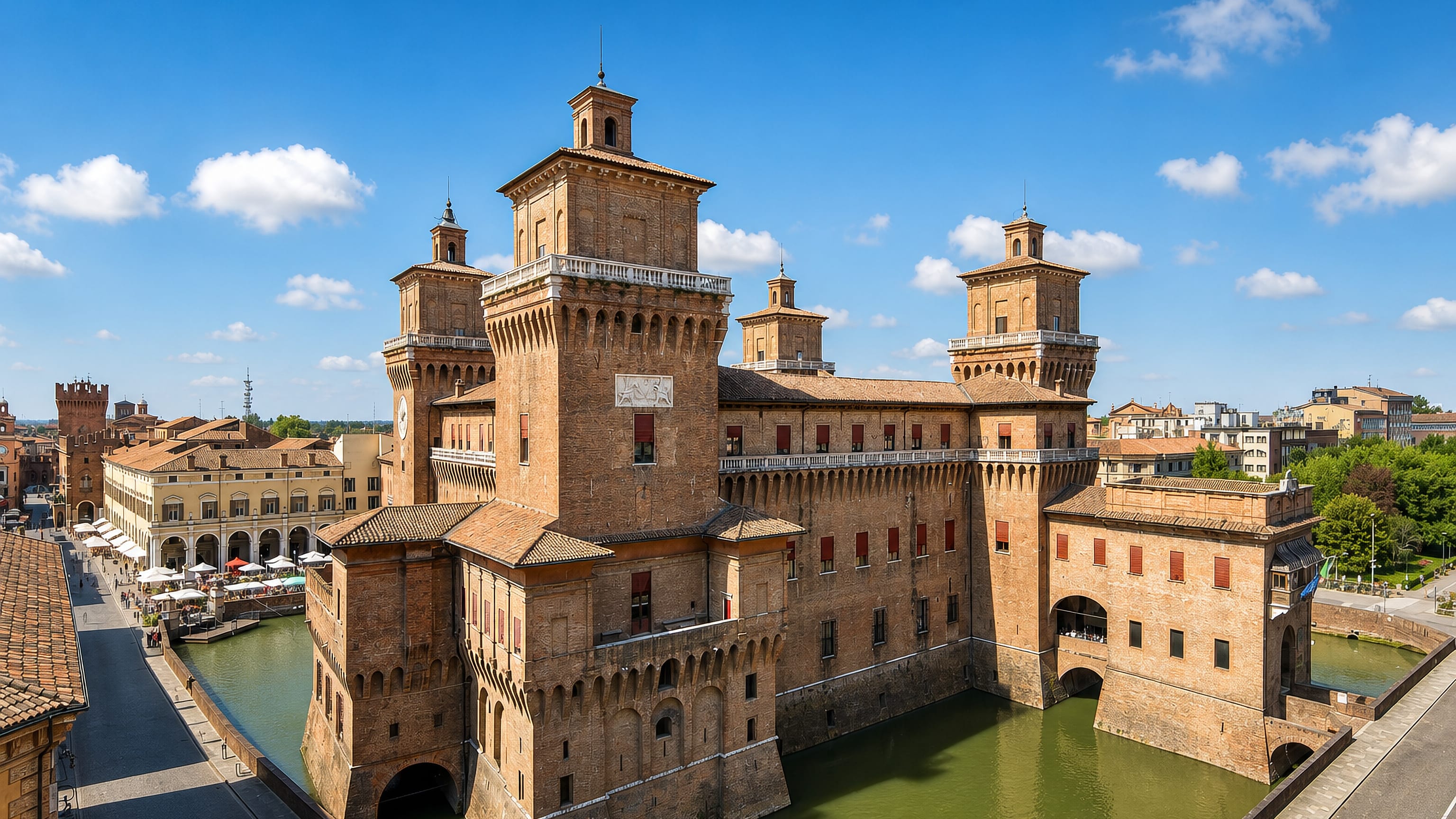
Ferrara is a World Heritage city on the Po di Volano, its Renaissance streets laid out around the Castello Estense and Ferrara Cathedral.
Hotel links are affiliate links: booking through them may earn us a commission, at no extra cost to you. It never affects how places are ranked. How this works


Where to stay in Ferrara
Where the beds are, and what that means for the visit.
The Castello Estense is the landmark to walk from. A room in the streets between the castle and Ferrara Cathedral puts the Pinacoteca Nazionale and the Torre della Vittoria inside a short circuit, and most of the Renaissance fabric is on that side. Everything sits inside one walk.
That is the base for a first visit. Palazzo Schifanoia sits on the other axis. The quarter around it holds the Palazzina Marfisa d'Este, the Chiesa di Santa Maria in Vado and the Museum of Italian Judaism and the Shoah, a quieter and heavier half of the city than the castle streets.
Allow a full morning there. The Ferrara Synagogue belongs to the same history. Bologna is 44 kilometres away. Anyone using Ferrara as a base for the province, or for the delta of the Po river that shares its World Heritage listing, does better on the edge of the comune where the roads out are quicker to reach.
The University of Ferrara Botanic Garden and the National Archaeological Museum fill the gaps between. Choose by what the days are for. The Museo Boldini adds another collection to the list.
Find hotels in Ferrara
Direct booking searches for these neighbourhoods.
Between the Castello Estense and Ferrara Cathedral
The Castello Estense, Ferrara Cathedral and the Torre della Vittoria stand within one short circuit of streets.Find hotels in Between the Castello Estense and Ferrara Cathedralthe Museum of Italian Judaism and the Shoah and a slower half-dayThe quarter around Palazzo Schifanoia
Palazzo Schifanoia, the Palazzina Marfisa d'Este and the Chiesa di Santa Maria in Vado belong to this quieter side of Ferrara.Find hotels in The quarter around Palazzo Schifanoiadrivers heading on to the delta of the Po riverThe outer edge of the comune towards the Po
The delta of the Po river shares Ferrara's World Heritage listing and is reached from the outer edge of the comune. Few places to stay nearby — book ahead.Find hotels in The outer edge of the comune towards the PoHotel links are affiliate links: booking through them may earn us a commission, at no extra cost to you. It never affects how places are ranked. How this works
Things to do in Ferrara
Ranked by global recognition; descriptions from Wikidata (CC0).
Museums & Galleries
3- Palazzo Schifanoia Heritage
- Pinacoteca Nazionale Heritage
- Palazzina Marfisa d’Este Heritage
Churches & Religious Sites
8- Ferrara Cathedral Heritage
- Chiesa di Santa Maria in Vado Heritage
- Saint George's Basilica Heritage
- Basilica of St. Francis of Assisi Heritage
- San Cristoforo alla Certosa (Church : Ferrara, Italy) Heritage
Show 3 more →
- San Paolo, Ferrara Heritage
- San Domenico Heritage
- Chiesa del Gesù Heritage
Castles & Historic Sites
2- Castello Estense Heritage
- Castrum bizantino di Ferrara
Nature & Outdoors
1- University of Ferrara Botanic Garden Heritage
Landmarks & Notable Places
1- Torre della Vittoria Heritage
worth knowingacross 5 categories in Ferrara
About Ferrara
The Este court set the pattern.
What is Ferrara known for?
Broad streets and Renaissance palaces came out of the years when the House of Este held its court here, and the Castello Estense, Palazzo Schifanoia and the Palazzina Marfisa d'Este are what that period left standing. UNESCO listed the result. Ferrara and the nearby delta of the Po river share the inscription, which puts the city's plan and its palaces on the same list as the delta country beyond it.
What are the main landmarks in Ferrara?
Castello Estense holds the middle. Ferrara Cathedral, Saint George's Basilica, the Basilica of Saint Francis of Assisi, San Domenico, Santo Stefano and the Chiesa di San Giuliano carry the church list, and the Corpus Domini Monastery and San Cristoforo alla Certosa extend it further. Palazzo Schifanoia, the Palazzina Marfisa d'Este and the House of Ludovico Ariosto stand for the secular half.
The Ferrara Synagogue and the Museum of Italian Judaism and the Shoah record another part of the city. The Torre della Vittoria rises above.
What is the history of Ferrara?
A Byzantine castrum is the first layer. The Castrum bizantino di Ferrara marks the earliest recorded ground of the city, and the National Archaeological Museum holds the material that comes from that depth of the record. The Po di Volano runs through it.
Ferrara stands on that branch channel of the Po River, whose main stream lies 5 km north, which is the geography that made a city here possible at all. The House of Este made it a capital. Its court brought the broad streets and the palaces that the city is still laid out around, among them the Castello Estense, Palazzo Schifanoia and the Palazzina Marfisa d'Este, all of them from the Renaissance decades.
One house keeps a name. The House of Ludovico Ariosto carries the name of the man who lived there, and the Pinacoteca Nazionale and the Museo Boldini hold the pictures the city has gathered since. Churches multiplied alongside.
Ferrara Cathedral, Saint George's Basilica, the Chiesa di Santa Maria in Vado, the Chiesa del Gesù, San Paolo, San Carlo Borromeo and the Corpus Domini Monastery are the record of that, and San Cristoforo alla Certosa closes it. A Jewish community is part of the same city. The Ferrara Synagogue stands in the old streets, and the Museum of Italian Judaism and the Shoah sets out that history in a museum of national scope.
UNESCO's listing covers the city and the delta of the Po river alike.
Where is Ferrara?
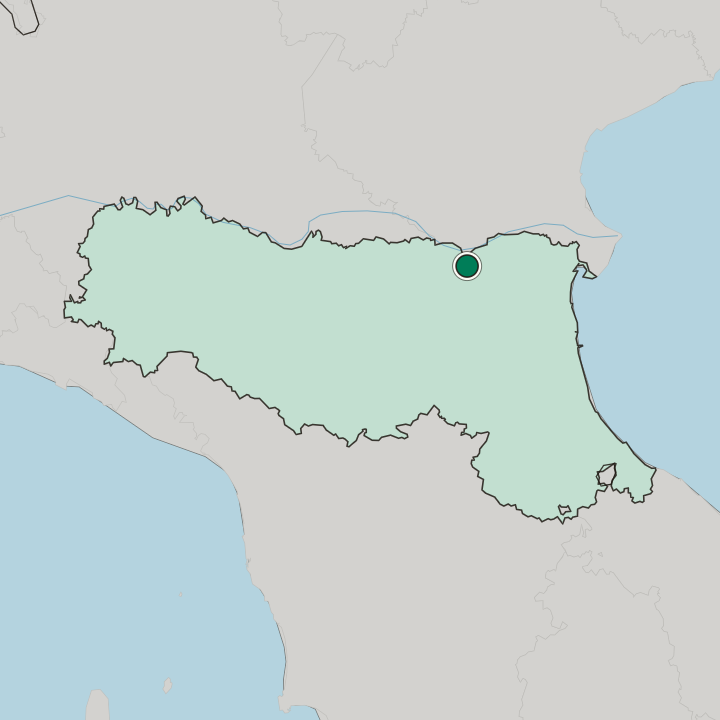
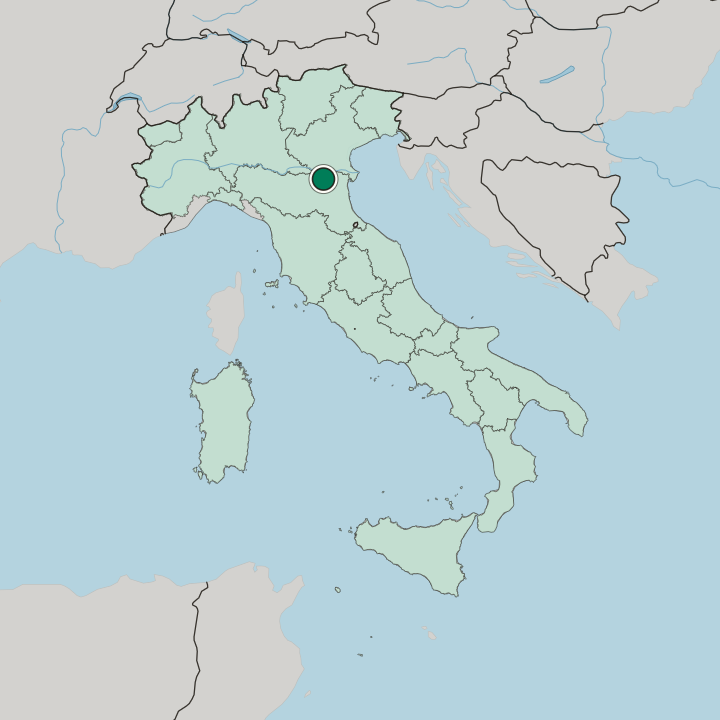
Water shapes the plain. Ferrara stands on the Po di Volano, a branch channel of the Po River whose main stream lies 5 km north, on flat ground in Emilia-Romagna that the comune covers over a wide territory. Bologna is 44 kilometres away.
The delta of the Po river lies beyond the fields, sharing the World Heritage listing that the city carries.
What is the climate of Ferrara?
The Po makes the weather here. Ferrara sits on the same flat river country as the delta, so the temperate summer settles heavily over the plain and the winter arrives damp, with the Po di Volano running through the middle of it. The broad streets take the light.
Walking between the Castello Estense and Ferrara Cathedral is easy work in spring and autumn, which is when the University of Ferrara Botanic Garden is worth the detour.
How do you get to Ferrara?
Bologna is the nearest big city. Ferrara lies 44 kilometres northeast of it, which makes the approach from that direction the usual one, and the city is itself the capital of its province, so provincial traffic converges here. The Po River is 5 km north.
Inside Ferrara the broad streets make the centre easy to cross, with the Castello Estense, Ferrara Cathedral and Palazzo Schifanoia all reachable without transport.
Common questions
What is the best area to stay in Ferrara?
Between the Castello Estense and Ferrara Cathedral: a first visit walked end to end on foot. The quarter around Palazzo Schifanoia: the Museum of Italian Judaism and the Shoah and a slower half-day. The outer edge of the comune towards the Po: drivers heading on to the delta of the Po river.
Good for
More cities in Emilia-Romagna
Updated October 2026