Italy · Emilia-Romagna
Where to Stay in Rimini, Emilia-Romagna
Rimini is a resort city of Emilia-Romagna where beach hotels back onto Castel Sismondo, a Roman amphitheatre and an excavated Roman house.
Hotel links are affiliate links: booking through them may earn us a commission, at no extra cost to you. It never affects how places are ranked. How this works



Where to stay in Rimini
The practical side of choosing where to sleep.
Two Riminis share one address. The shore side runs on beach hotels and the water, while the older core a short way inland keeps Castel Sismondo, the Torre dell'Orologio and Santa Maria dei Servi within minutes of one another, and that is the choice most visitors are really making. Beds near the Roman Amphitheatre of Rimini favour the second.
So do rooms around the Domus del Chirurgo and the City Museum of Rimini, where an evening can end on foot. Sant'Agostino belongs to the same handful of streets. San Giuliano is the third option.
The streets by San Nicolò al Porto lie on the harbour side, clear of the beach hotels, and the Fellini Museum stands close enough to make an unhurried day of the city's cinema and its working port. Museo degli Sguardi holds the ethnographic material. It suits you if the beach is not the point.
Palasport Flaminio and the Chiesa di Sant'Andrea dell'Ausa stand back from all of it, on the side of the city given over to events rather than holidays, and rooms there trade the sea for space and quiet.
Find hotels in Rimini
Direct booking searches for these neighbourhoods.
The old core
The Roman Amphitheatre of Rimini and Santa Maria dei Servi sit minutes apartFind hotels in The old coreStays pairing the Fellini Museum with the streets by San Nicolò al PortoSan Giuliano and the port
The harbour side keeps its own evenings, clear of the beach hotelsFind hotels in San Giuliano and the portArrivals wanting space near the Chiesa di Sant'Andrea dell'AusaThe Palasport Flaminio side
Rooms back here stand well behind the shore, with Museo degli Sguardi in reach. Beds are limited here, so book early.Find hotels in The Palasport Flaminio sideHotel links are affiliate links: booking through them may earn us a commission, at no extra cost to you. It never affects how places are ranked. How this works
Things to do in Rimini
Ranked by global recognition; descriptions from Wikidata (CC0).
Museums & Galleries
2- City Museum of Rimini Heritage
- Fellini Museum
Churches & Religious Sites
8- Tempio Malatestiano Heritage
- Sant'Agostino, Rimini Heritage
- San Giuliano, Rimini Heritage
- Santa Maria dei Servi Heritage
- San Francesco Saverio, Rimini Heritage
Show 3 more →
- Santa Maria Ausiliatrice Heritage
- San Bernardino, Rimini Heritage
- San Nicolò al Porto Heritage
Castles & Historic Sites
3- Castel Sismondo Heritage
- Domus del Chirurgo Heritage
- Roman Amphitheatre of Rimini Heritage
Stadiums & Sports
1- Palasport Flaminio
Landmarks & Notable Places
2- Torre dell'Orologio Heritage
- Torrione delle Mura Malatestiane Heritage
worth knowingacross 5 categories in Rimini
About Rimini
The sea does the recruiting.
What is Rimini known for?
Rimini works as a resort on the Italian Riviera, and the beach trade sits directly against a centre that keeps Castel Sismondo, the Torre dell'Orologio and the Roman Amphitheatre of Rimini within a short walk. Rome left the floors. The Domus del Chirurgo preserves an excavated Roman house, the City Museum of Rimini interprets what came out of it, and the Fellini Museum accounts for the city's place in cinema.
What are the main landmarks in Rimini?
Roman work survives underfoot. The Roman Amphitheatre of Rimini and the Domus del Chirurgo carry the oldest of it, while Castel Sismondo and the Torre dell'Orologio speak for the fortified and civic centuries that came after. Churches crowd the rest.
Sant'Agostino, San Giuliano, San Bernardino, San Fortunato, Santa Maria dei Servi and San Nicolò al Porto number among them, and the Fellini Museum, the City Museum of Rimini and Museo degli Sguardi hold the collections.
What is the history of Rimini?
Rome is the first layer. The Roman Amphitheatre of Rimini fixes the scale of the ancient settlement, and the Domus del Chirurgo, dug out of the centre, gives the domestic side of the same period in rooms whose floors are still readable. The City Museum of Rimini took the finds.
Everything after was built on the grid those centuries left, which is why the walk between one monument and the next in this city is measured in minutes rather than in bus rides. Castel Sismondo fixes the fortified stretch. Its towers mark the period when the city was rebuilt as a seat rather than only a landing place, and the Torre dell'Orologio dates the civic side of that same effort.
Churches multiplied alongside. Sant'Agostino, San Giuliano, San Bernardino, San Fortunato, Santa Maria dei Servi, Madonna della Misericordia and Santi Giovanni e Paolo account for much of the older parish stock, while San Nicolò al Porto kept the harbour end of the city in its own orbit. Cinema is the newest layer.
The Fellini Museum, opened in buildings of the historic centre, is the city's own account of it, and Museo degli Sguardi came later still.
Where is Rimini?
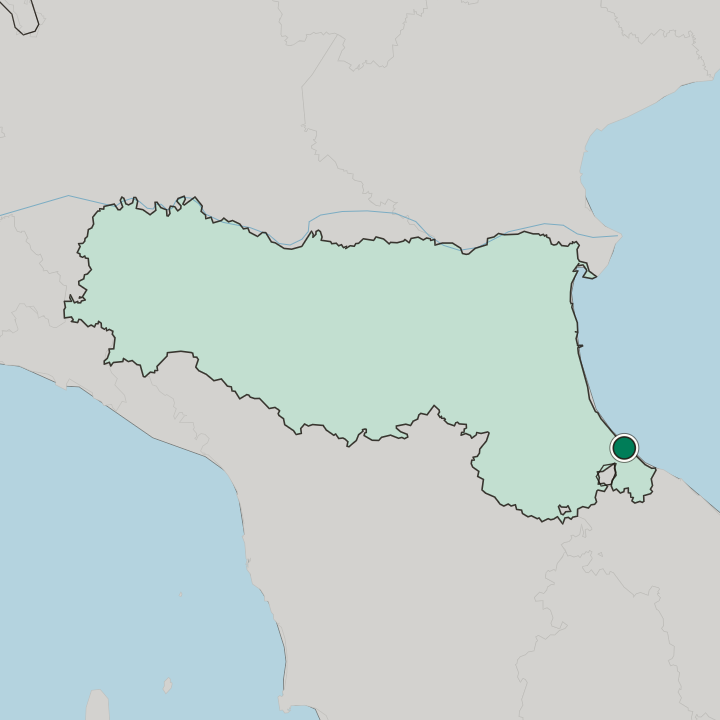
The shore runs flat and open. Rimini sits on the coast of Emilia-Romagna with its municipal territory spread back from the water, so the beach line, the historic centre around Castel Sismondo and the harbour at San Nicolò al Porto all fall inside the same city. Sand governs the front.
Behind it the ground rises only gently, and Palasport Flaminio marks the outer, newer band of building.
What is the climate of Rimini?
The sea keeps the extremes down. Rimini lies in the temperate band of the northern hemisphere with water on one side of it, which lengthens the warm season the beach hotels depend on and keeps the cold half milder than it runs a little inland. Cold spells here are brief.
The Italian Riviera trades on exactly that arrangement.
How do you get to Rimini?
The coast route carries most arrivals. Traffic along the Italian Riviera reaches Rimini from either direction and drops into a centre small enough that Castel Sismondo, Sant'Agostino and the Domus del Chirurgo are reached on foot from wherever it stops. The port takes boats.
San Nicolò al Porto stands at that end of the city, and Palasport Flaminio marks the road side.
Common questions
What is the best area to stay in Rimini?
The old core: Visitors who want Castel Sismondo and the Torre dell'Orologio on foot. San Giuliano and the port: Stays pairing the Fellini Museum with the streets by San Nicolò al Porto. The Palasport Flaminio side: Arrivals wanting space near the Chiesa di Sant'Andrea dell'Ausa.
Good for
More cities in Emilia-Romagna
Updated October 2026