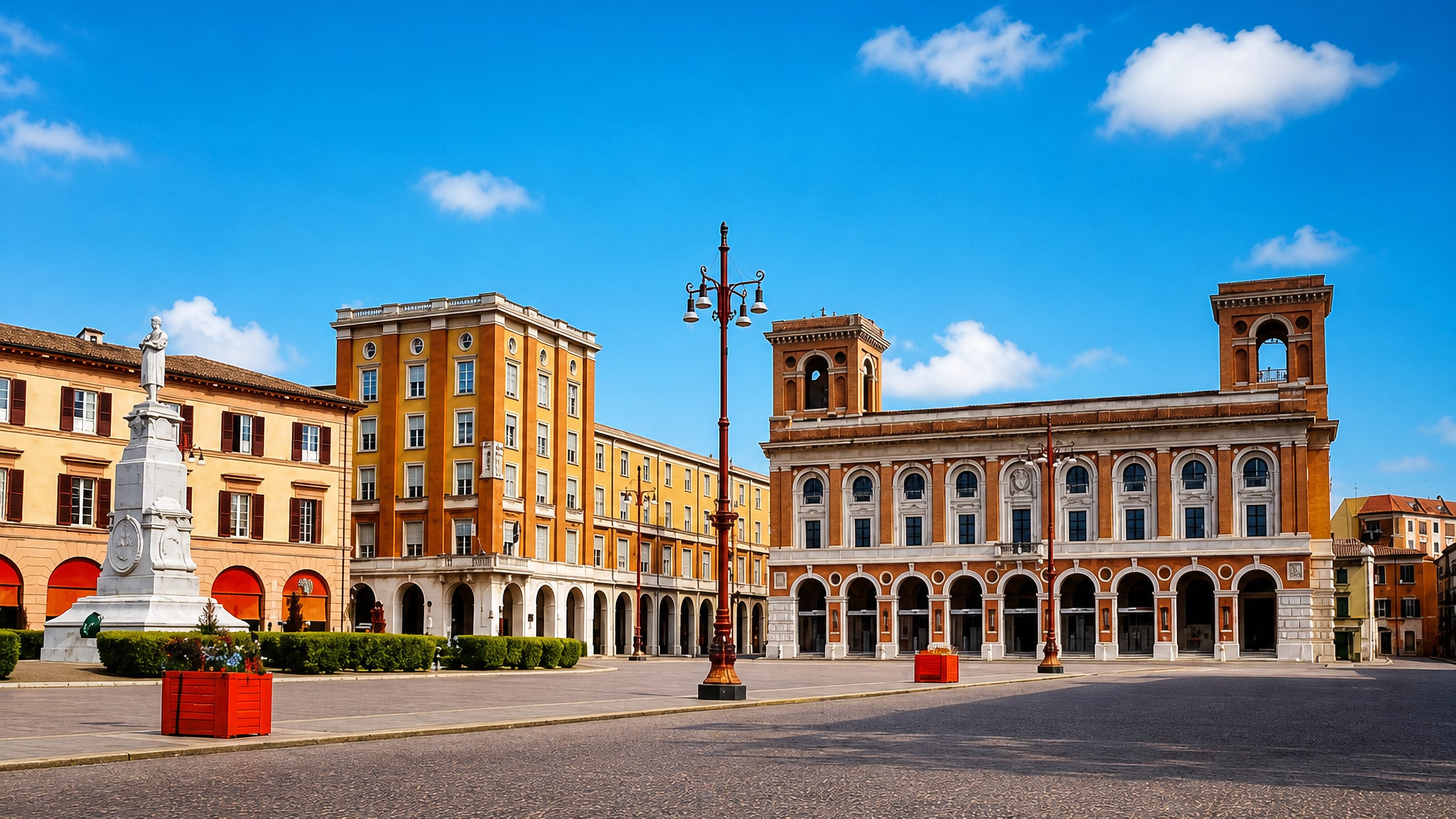
Italy · Emilia-Romagna
Where to Stay in Forlì, Emilia-Romagna
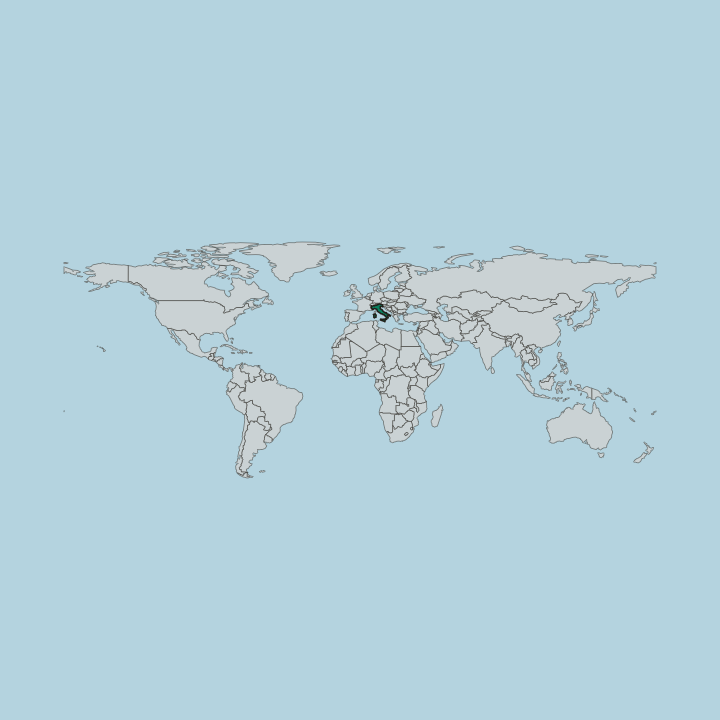
Forlì stands on the Montone. The Via Emilia crosses the city, which shares the capital of its province with neighbouring Cesena.
Hotel links are affiliate links: booking through them may earn us a commission, at no extra cost to you. It never affects how places are ranked. How this works


Where to stay in Forlì
How the choice of base plays out on the ground.
Two habits split the choice. Take a room inside the old core, within a few minutes of San Mercuriale, Forlì cathedral and the Torre Civica, and the day gets walked rather than driven, with the Pinacoteca Civica and the Museo Civico San Domenico close enough to visit on an hour's whim. The Via Emilia offers the opposite bargain.
Beds along the through-road put the car first, with the run to Cesena starting at the door and the centre reachable without ever parking twice. Forlì is a working city, and its beds answer to that. The distance between one street and the next is measured in walking minutes to Forlì cathedral, in whether the Montone or the open fields sit at the end of the block, and in how quickly the Via Emilia can be reached.
Event dates change the arithmetic. The Unieuro Arena draws its own kind of visit, and a stay planned around its calendar is easier from that side of Forlì. If you want the Basilica di San Pellegrino Laziosi and the Theatre Museum of the Romagna on the same afternoon, the centre suits you best.
Find hotels in Forlì
Direct booking searches for these neighbourhoods.
Around San Mercuriale
The abbey, the cathedral and the civic tower stand close enough together that a stay here needs no transport at all, and the Pinacoteca Civica follows on the same walk.Find hotels in Around San Mercurialedrivers who want the through-road and the run on to CesenaAlong the Via Emilia
Rooms strung along the Via Emilia trade narrow streets for parking and a straight exit toward Cesena and the fields of the Forlì-Cesena province.Find hotels in Along the Via Emilianights built around whatever the Unieuro Arena has bookedThe Unieuro Arena side
This edge of Forlì answers to an events calendar rather than to sightseeing, and it puts the arena within reach without a drive across the built-up ground.Find hotels in The Unieuro Arena sideHotel links are affiliate links: booking through them may earn us a commission, at no extra cost to you. It never affects how places are ranked. How this works
Things to do in Forlì
Ranked by global recognition; descriptions from Wikidata (CC0).
Museums & Galleries
4- Museo Civico San Domenico Heritage
- Pinacoteca Civica di Forlì Heritage
- Antonio Santarelli Archaeological Museum Heritage
- Armeria Albicini Heritage
Churches & Religious Sites
8- San Mercuriale abbey Heritage
- Forli cathedral Heritage
- Basilica di San Pellegrino Laziosi Heritage
- Chiesa di San Biagio (Forlì) Heritage
- Santa Maria della Visitazione Heritage
Show 3 more →
- Santissima Trinità (Forlì) Heritage
- Madonna del Carmine (Forlì) Heritage
- Chiesa del Miracolo Heritage
Stadiums & Sports
1- Unieuro Arena
Landmarks & Notable Places
1- Torre Numai Heritage
worth knowingacross 4 categories in Forlì
About Forlì
What is Forlì known for?
Forlì is the birthplace of the painters Melozzo da Forlì and Marco Palmezzano, and the pictures gathered in the Pinacoteca Civica and the Museo Civico San Domenico keep that lineage where a visitor can actually stand in front of it. Farming pays the bills. Grain and orchard land ground the local trade, the Via Emilia carries it through, and San Mercuriale, Forlì cathedral and Torre Numai supply the names above the roofline.
What are the main landmarks in Forlì?
Four names carry most of the city's fabric: San Mercuriale, Forlì cathedral, the Torre Civica, and Torre Numai. Chiesa di San Biagio and the Basilica di San Pellegrino Laziosi hold other dedications, and the Armeria Albicini adds a smaller name to the same list. Museums fill an afternoon.
The Museo Civico San Domenico, the Pinacoteca Civica, and the Theatre Museum of the Romagna cover painting and stagecraft, while the Antonio Santarelli Archaeological Museum takes the older material and the Unieuro Arena takes the crowds.
What is the history of Forlì?
No document fixes the year Forlì began. What it carries instead is a built record, legible in dedications: San Mercuriale as the abbey, Forlì cathedral as the seat, and behind them a long roll of parish churches: Santa Lucia, Santa Maria del Fiore, Santissima Trinità, Sant'Antonio Abate in Ravaldino, Chiesa di San Filippo Neri. Each name stands for a congregation, a patron and a stretch of building work.
Towers belong to the same account. Torre Civica takes a civic name and Torre Numai a family one, and the pair mark the difference between what a commune put up for itself and what a household put up to be seen. Painting gives the city its widest reach.
Melozzo da Forlì and Marco Palmezzano were both born here, and the Pinacoteca Civica together with the Museo Civico San Domenico is where that inheritance is met rather than read about. Farming has been the constant. Grain and orchard land press up to the edge of the built-up ground, and the Via Emilia has moved what the land produced for as long as the road has run through Emilia-Romagna.
Administration made a pair of the city and Cesena. The Province of Forlì-Cesena carries both names, and the capital is held jointly rather than by one town alone. The museum layer came later: the Theatre Museum of the Romagna and the Antonio Santarelli Archaeological Museum gather what earlier centuries made, and the Unieuro Arena answers a need none of them were built for.
Where is Forlì?
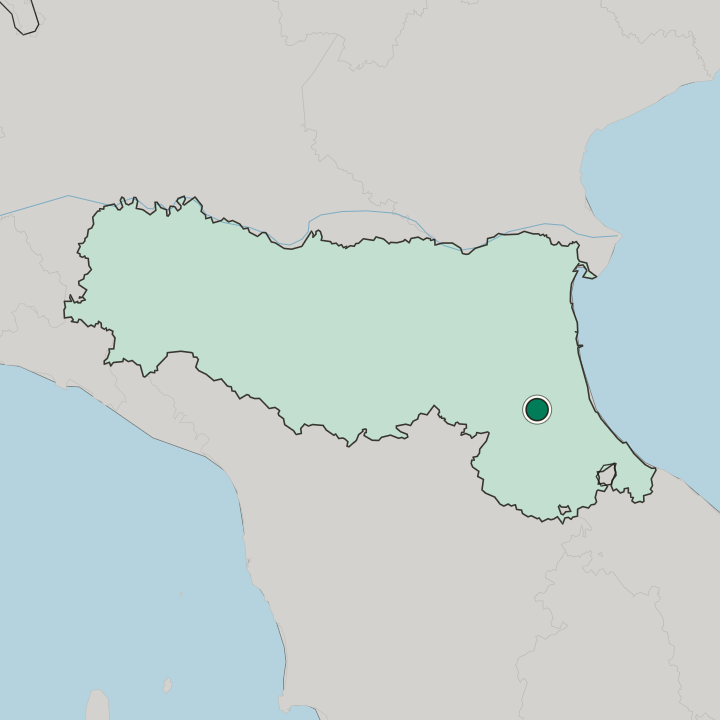
The Montone runs past the built-up core, and the farmland that gives Forlì its trade spreads from both banks in level parcels of grain and orchard. The Via Emilia sets its spine. Everything else hangs off that line, from the abbey of San Mercuriale and Forlì cathedral to the newer blocks that reach toward the edge of the comune and the road on to Cesena.
What is the climate of Forlì?
Seasons here follow the temperate pattern of the northern hemisphere, so the growing months fall in the middle of the year and the harvest sets the busiest weeks around Forlì. Winter empties the fields. The Montone carries whatever the season sends down through it, and the orchards and grain that ring the comune take their calendar from the same swing between a warm middle and a cool close.
How do you get to Forlì?
The Via Emilia does the work. It enters Forlì from one side and leaves toward Cesena on the other, so a driver crossing the built-up area follows one line from edge to edge instead of hunting for a second road. Cesena shares that road and the provincial capital with Forlì, which makes the pair easy to treat as a single stop.
The Montone gives the last landmark before the fields start again.
Common questions
What is the best area to stay in Forlì?
Around San Mercuriale: reaching the abbey, Forlì cathedral and the Torre Civica from one doorway. Along the Via Emilia: drivers who want the through-road and the run on to Cesena. The Unieuro Arena side: nights built around whatever the Unieuro Arena has booked.
Good for
More cities in Emilia-Romagna
Updated October 2026