Italy
Emilia-Romagna, Italy — Towns & Travel Guide
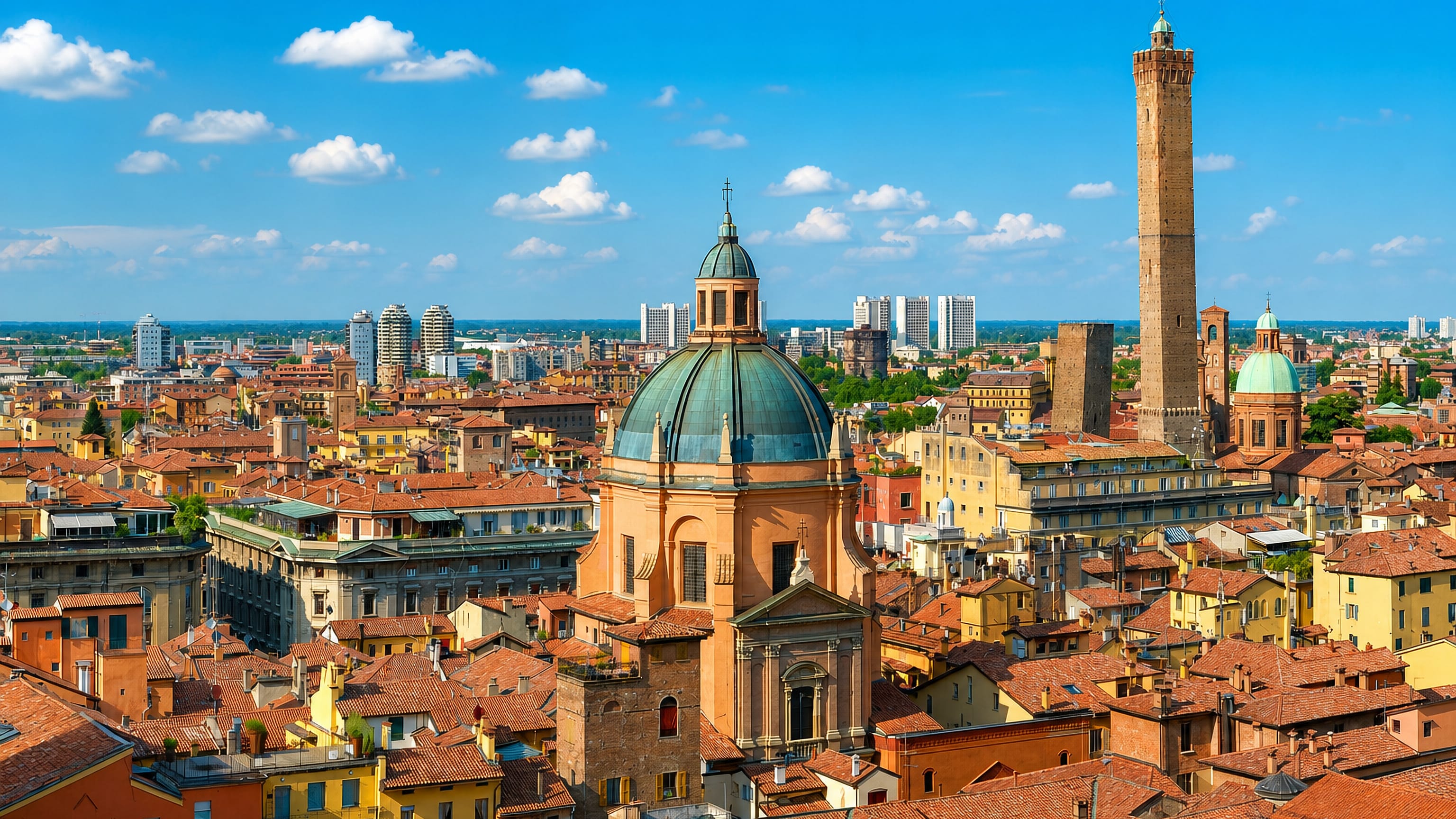
Emilia-Romagna is an administrative region of northern Italy, uniting the historical lands of Emilia and Romagna around its capital, Bologna.
Hotel links are affiliate links: booking through them may earn us a commission, at no extra cost to you. It never affects how places are ranked. How this works


Towns & cities in Emilia-Romagna
Pick a town or city — each links to where to stay.
 Italy
Italy
Bologna
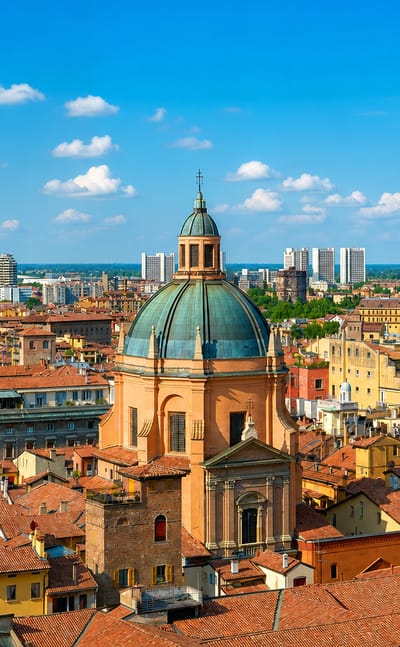
Bologna is the capital of Emilia-Romagna in northern Italy, an arcaded university city built around the Basilica di San Petronio.Where to stay →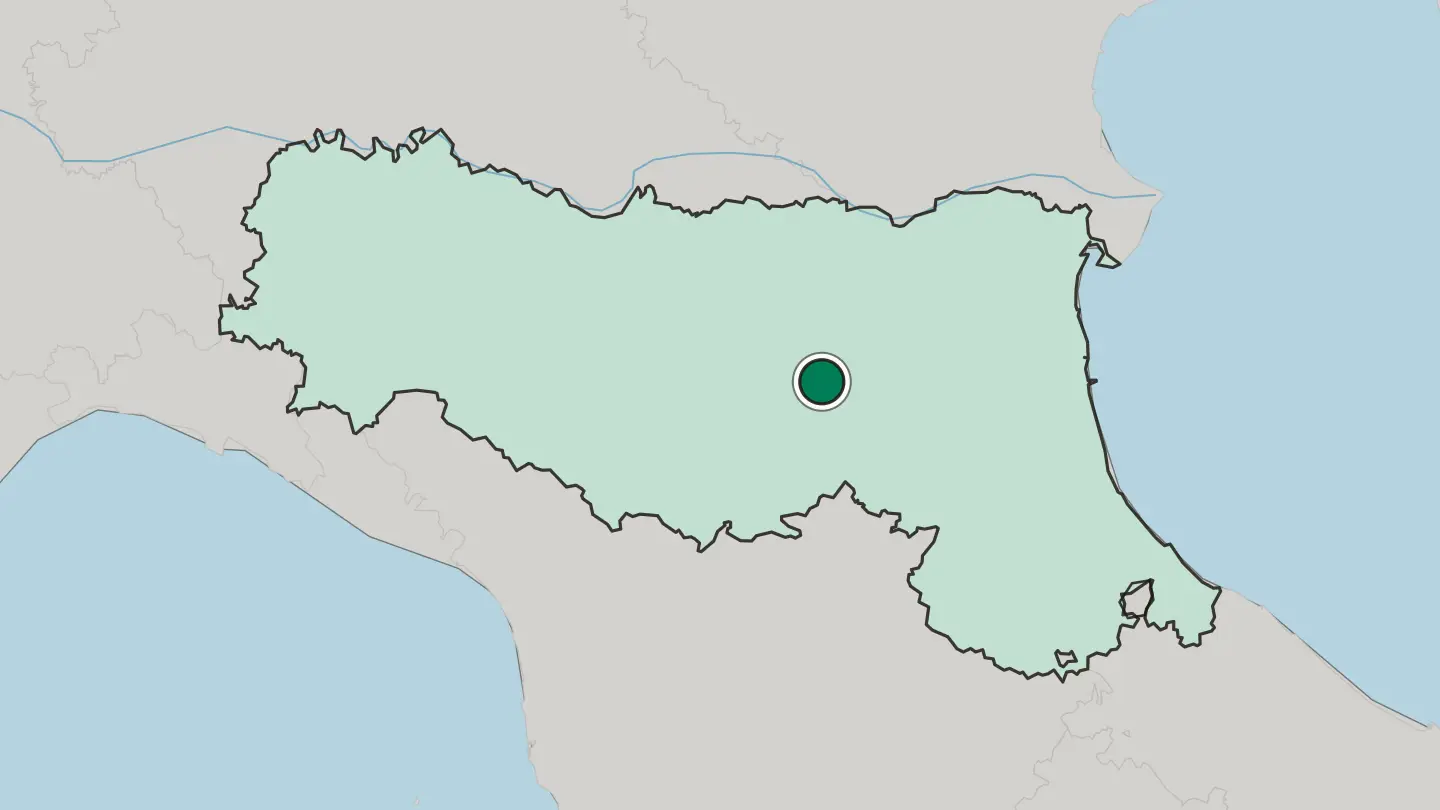
 Italy
Italy
Parma
The Parma stream splits the city. Parmigiano Reggiano, Prosciutto di Parma and the Teatro Farnese carry the name beyond Emilia-Romagna.Where to stay →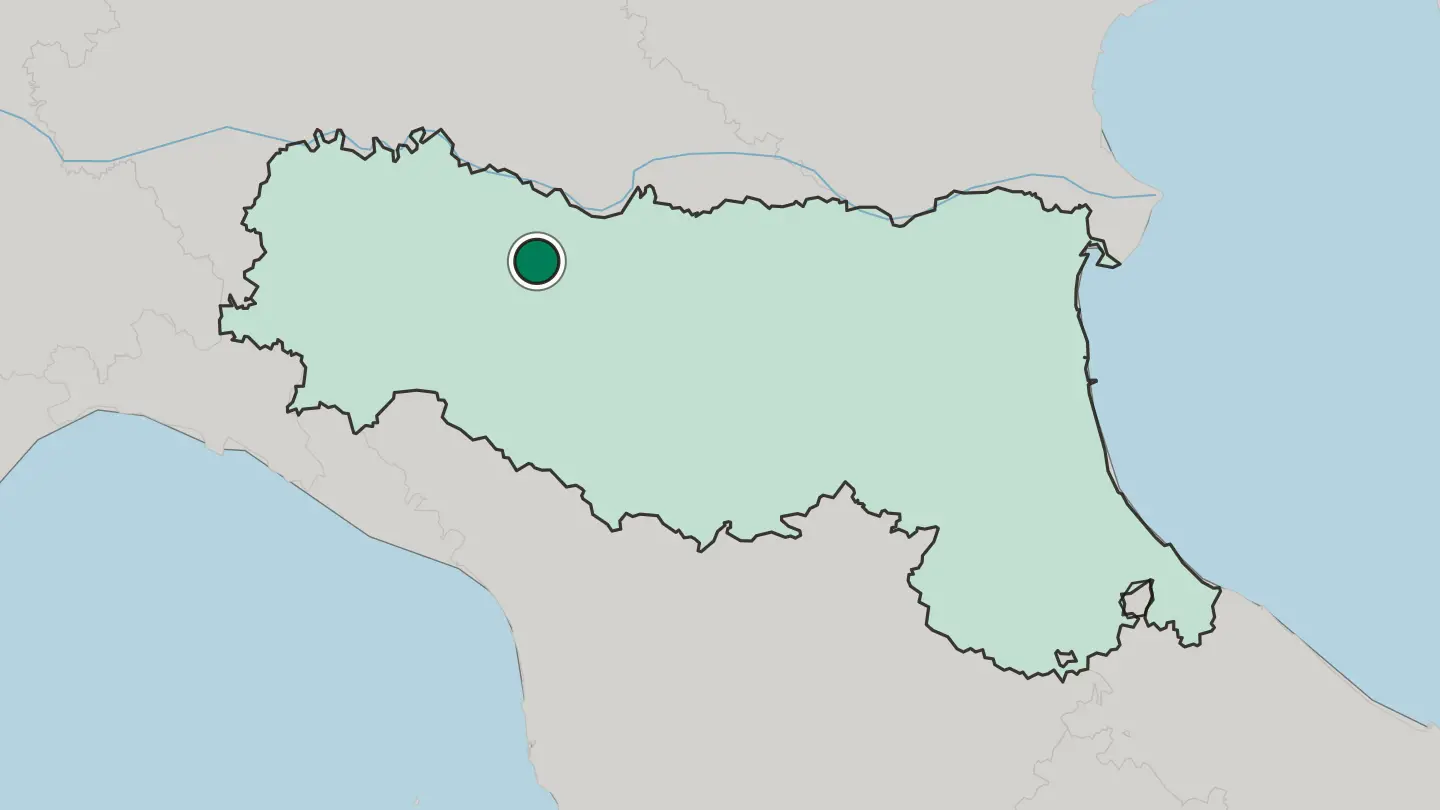
 Italy
Italy
Modena
Modena keeps three reputations at once. Its cathedral, the Galleria Estense and the Museo Enzo Ferrari sit on the south side of the Po Valley.Where to stay →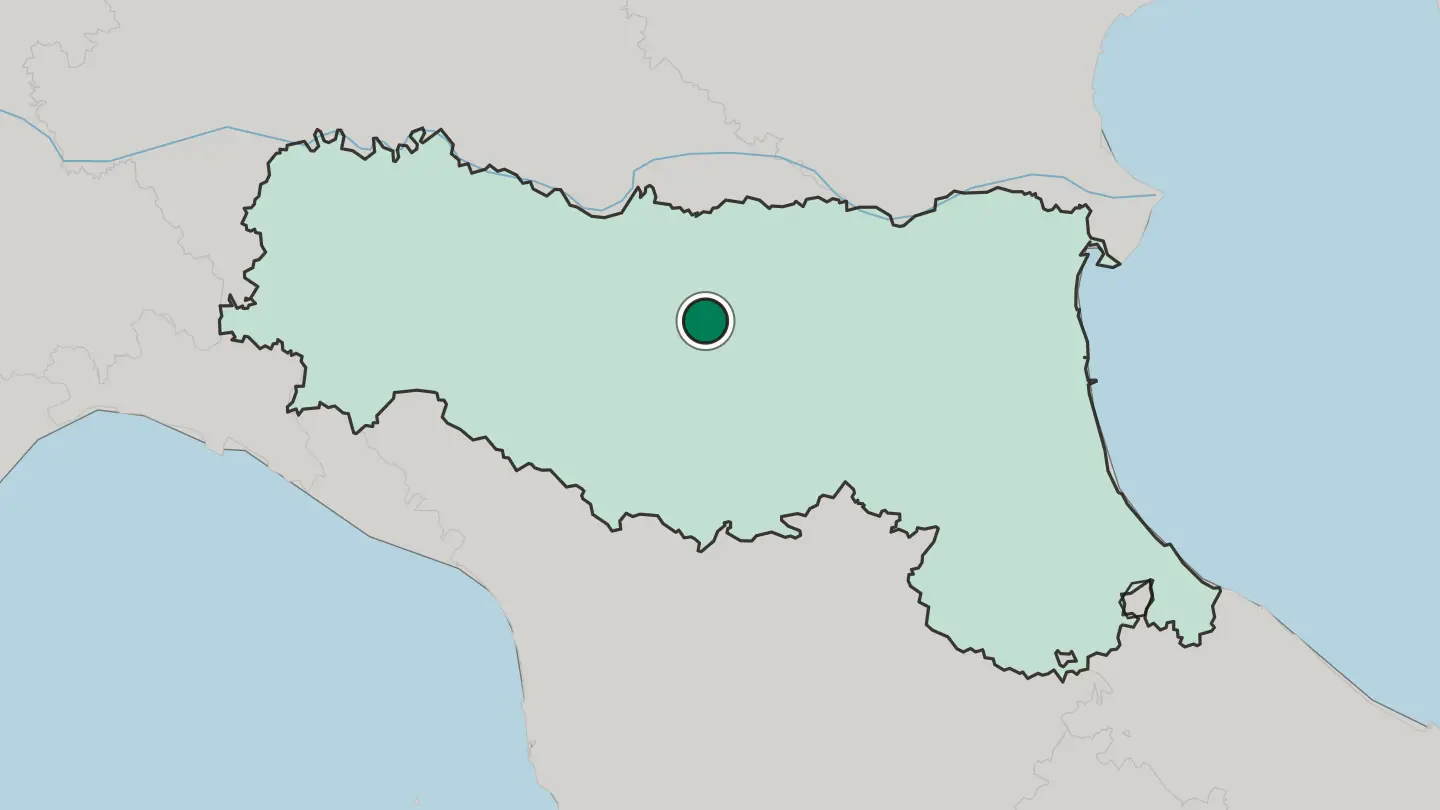
 Italy
Italy
Reggio nell'Emilia
Reggio nell'Emilia stands on the Via Emilia between Parma and Modena, an Emilia-Romagna city built around the Basilica della Ghiara.Where to stay →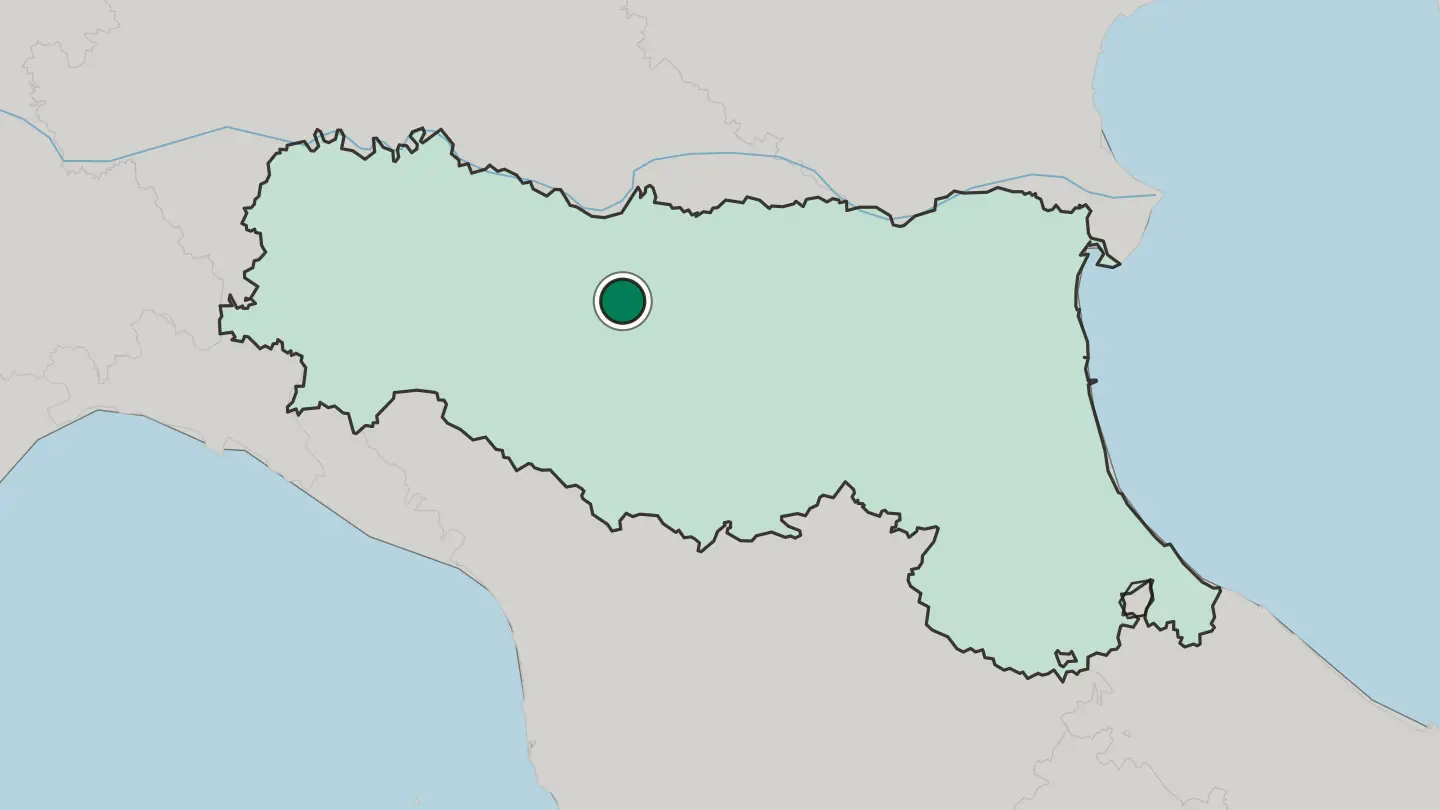 Italy
Italy
Rimini
Rimini is a resort city of Emilia-Romagna where beach hotels back onto Castel Sismondo, a Roman amphitheatre and an excavated Roman house.Where to stay →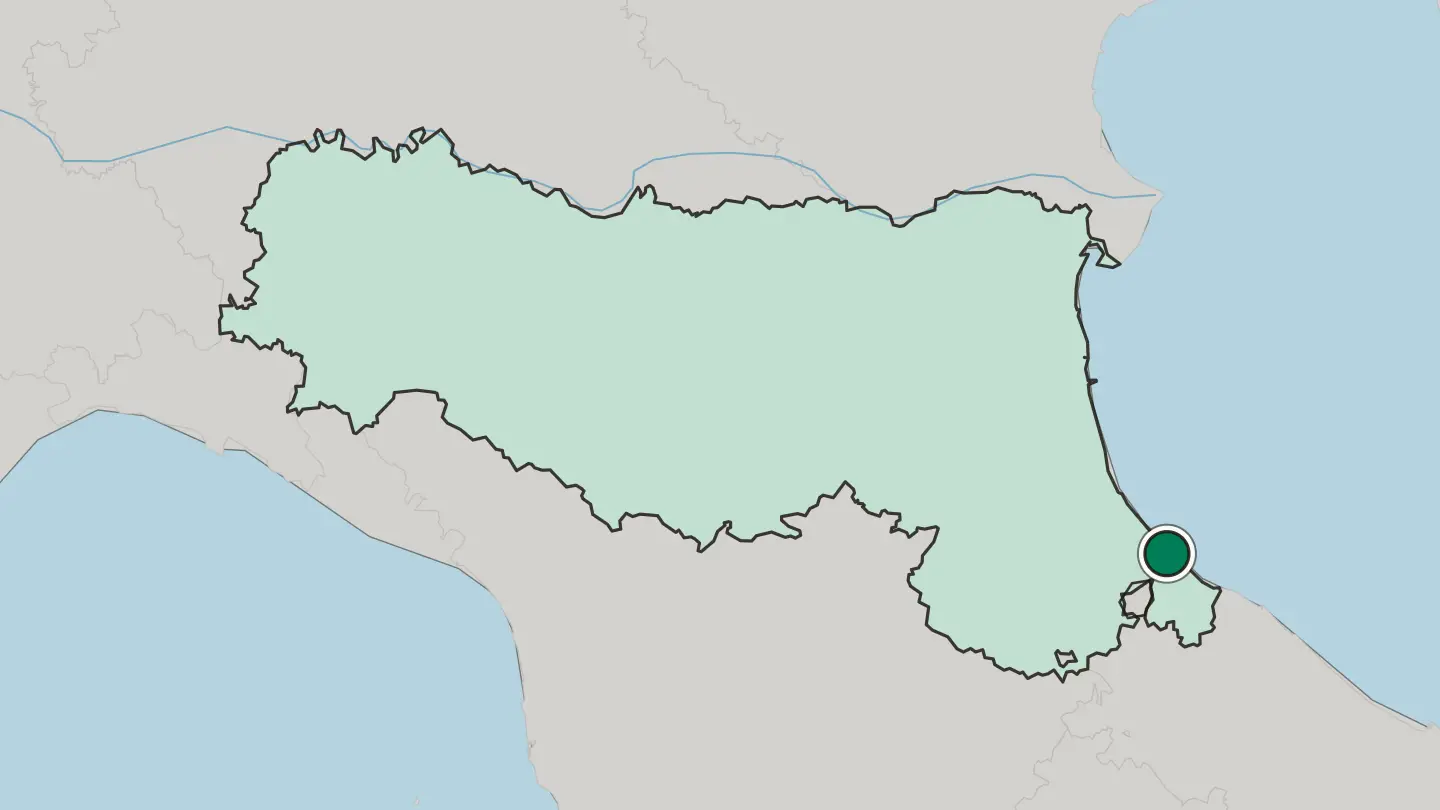
 Italy
Italy
Ferrara
Ferrara is a World Heritage city on the Po di Volano, its Renaissance streets laid out around the Castello Estense and Ferrara Cathedral.Where to stay →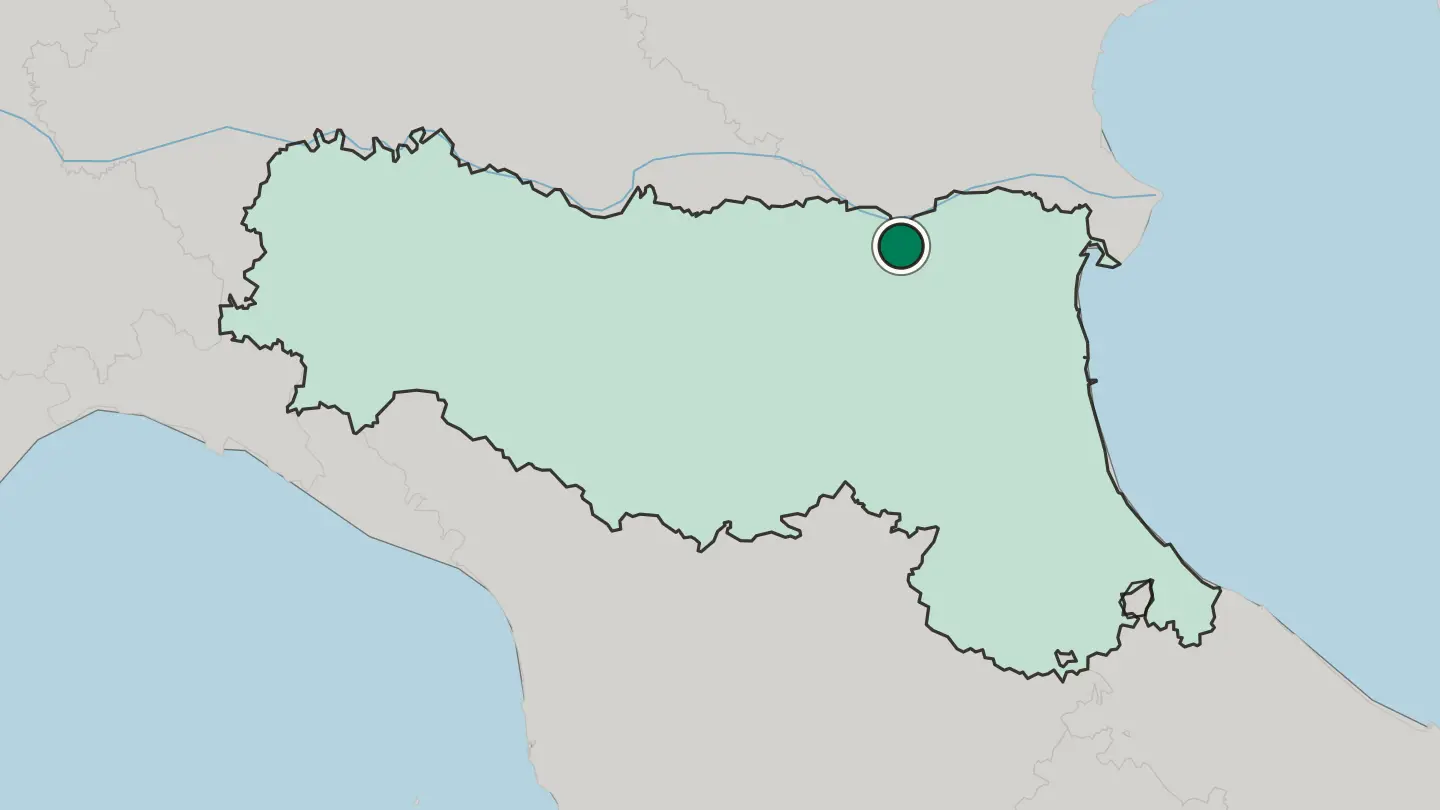
 Italy
Italy
Forlì
Forlì stands on the Montone. The Via Emilia crosses the city, which shares the capital of its province with neighbouring Cesena.Where to stay →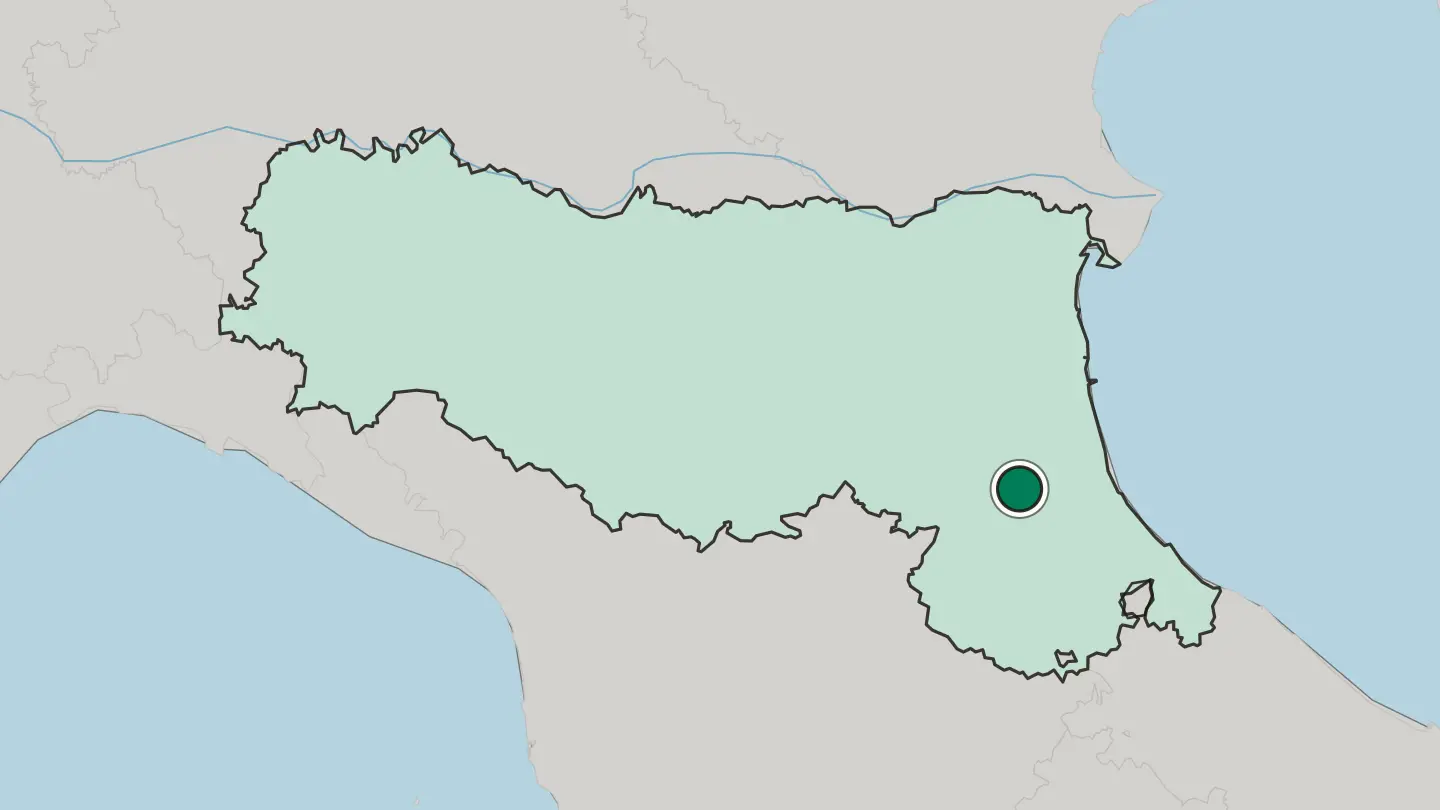
 Italy
Italy
Piacenza
Piacenza heads its own province. Piacenza Cathedral, the Horses of Mochi and the Galleria d'arte moderna Ricci Oddi head the list.Where to stay →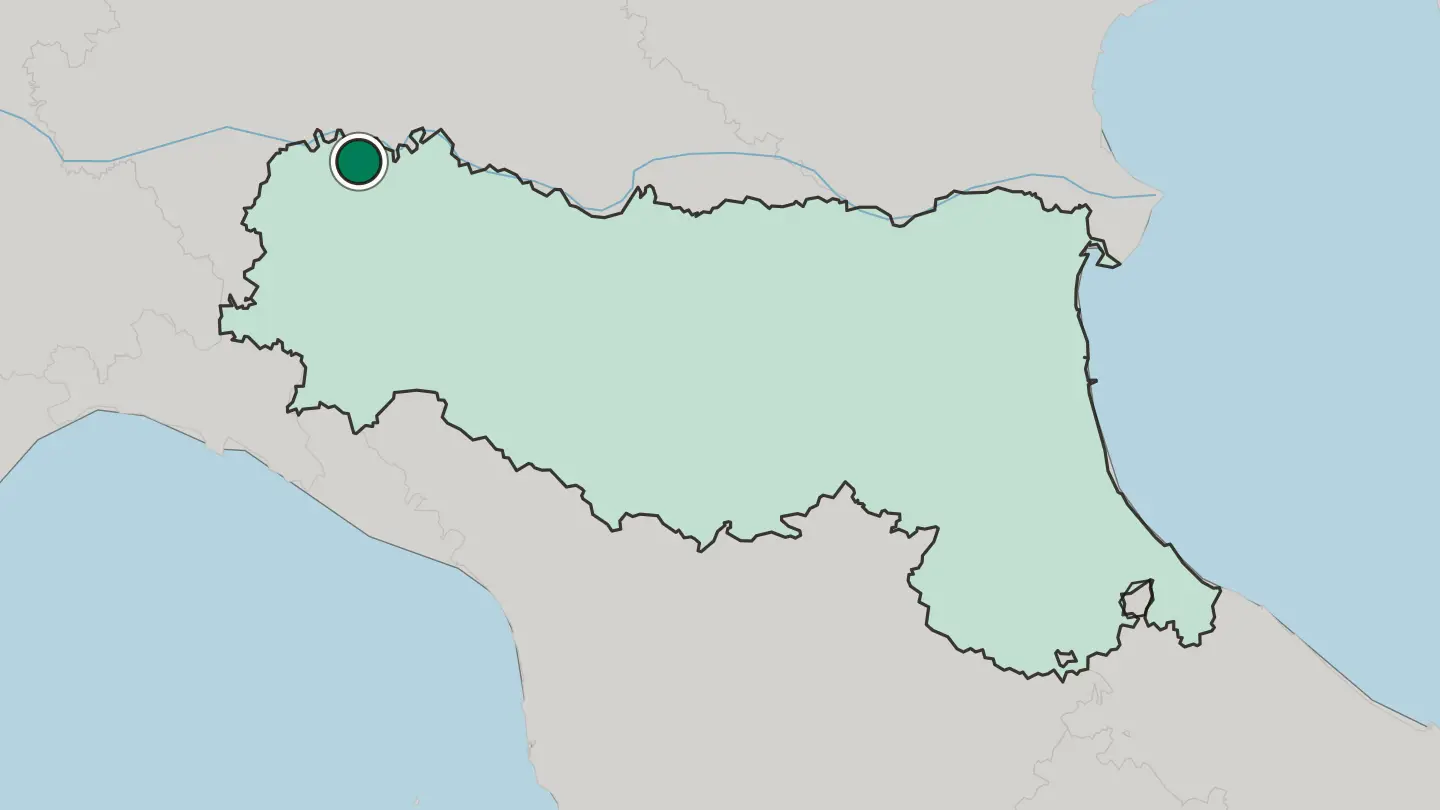
All towns & cities (12)
 Italy
Italy
Cesena
Cesena is an Emilia-Romagna city under the Colle Garampo, with Cesena Cathedral, the Fontana Masini and the Loggetta Veneziana at its centre.Where to stay →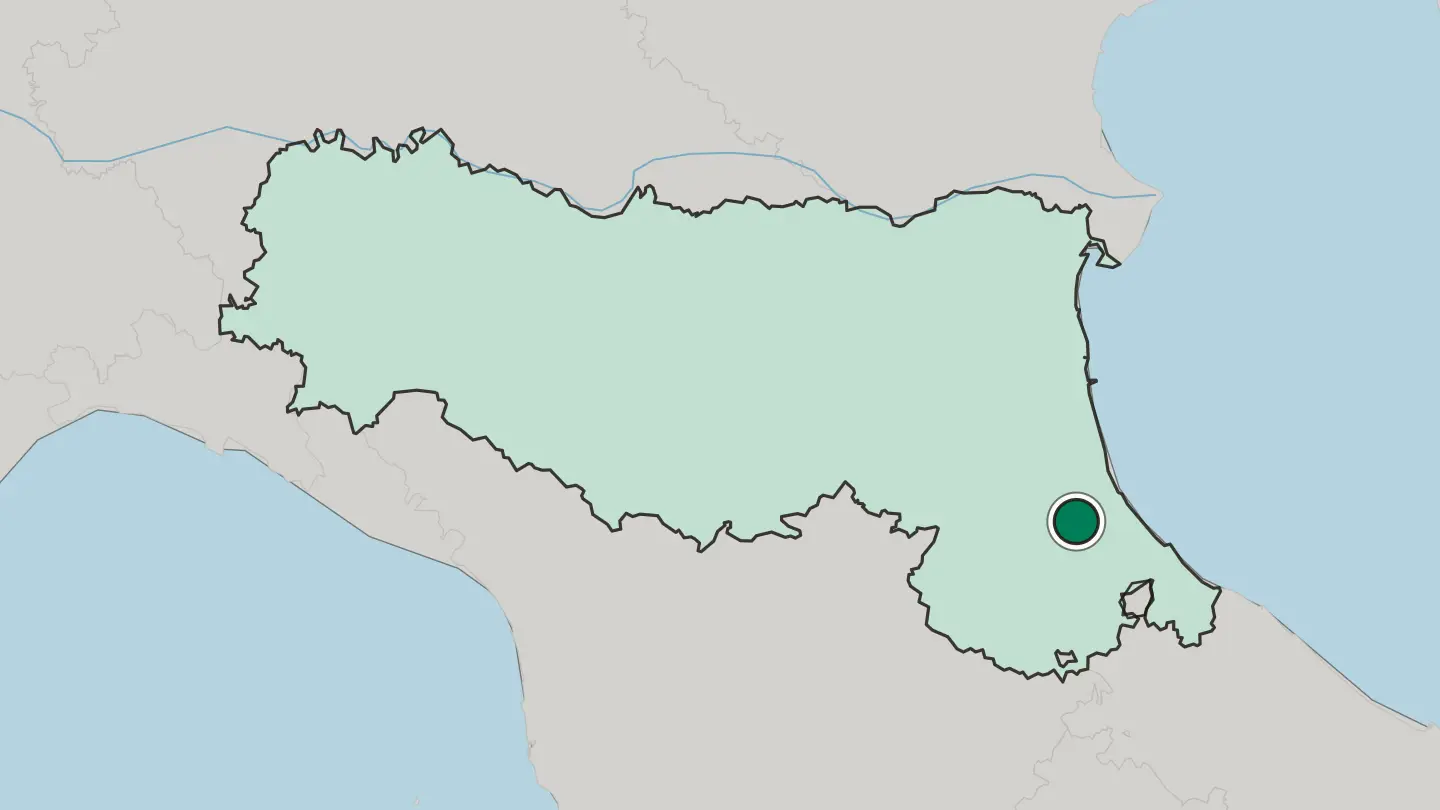
 Italy
Italy
Ravenna
Ravenna was an imperial capital. The Basilica of San Vitale, the Mausoleum of Theodoric and Sant'Apollinare Nuovo remain from those centuries.Where to stay →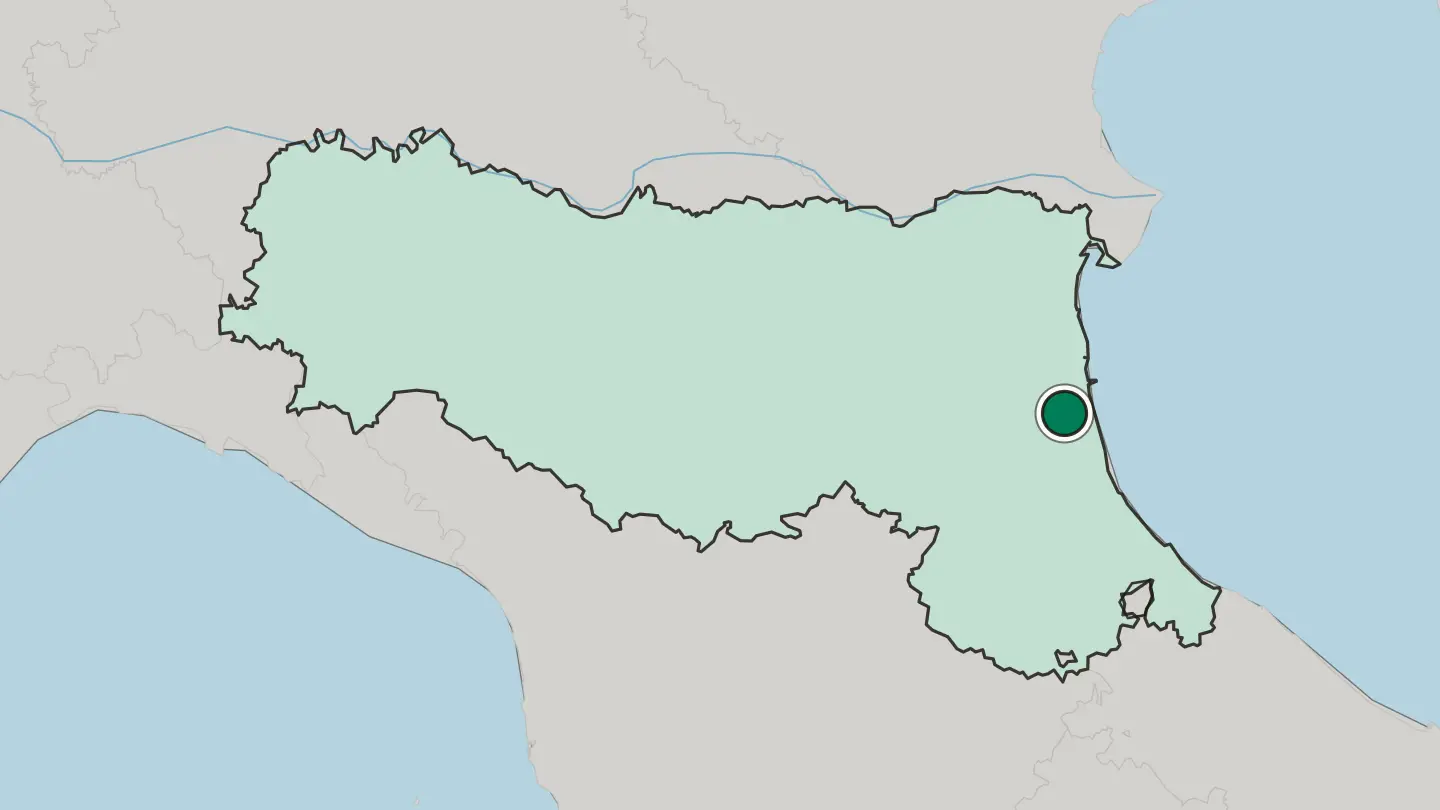
 Italy
Italy
Carpi
Carpi stands in the Po valley 20 km north of Modena, its centre gathered around the Castello dei Pio and Carpi Cathedral.Where to stay →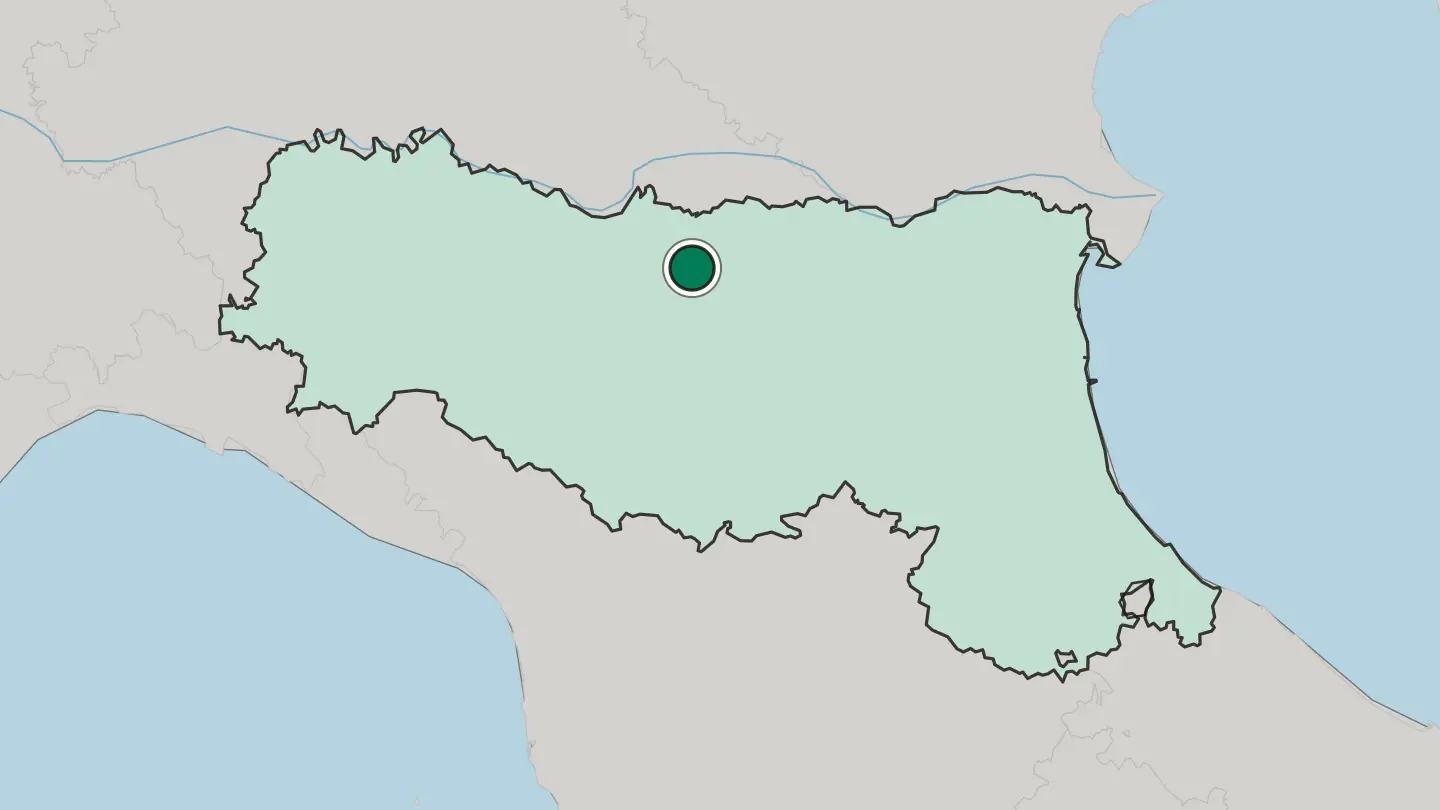
 Italy
Italy
Imola
Imola sits on the Santerno. Formula One brings the crowds; Imola cathedral and the Rocca Sforzesca hold the older town together.Where to stay →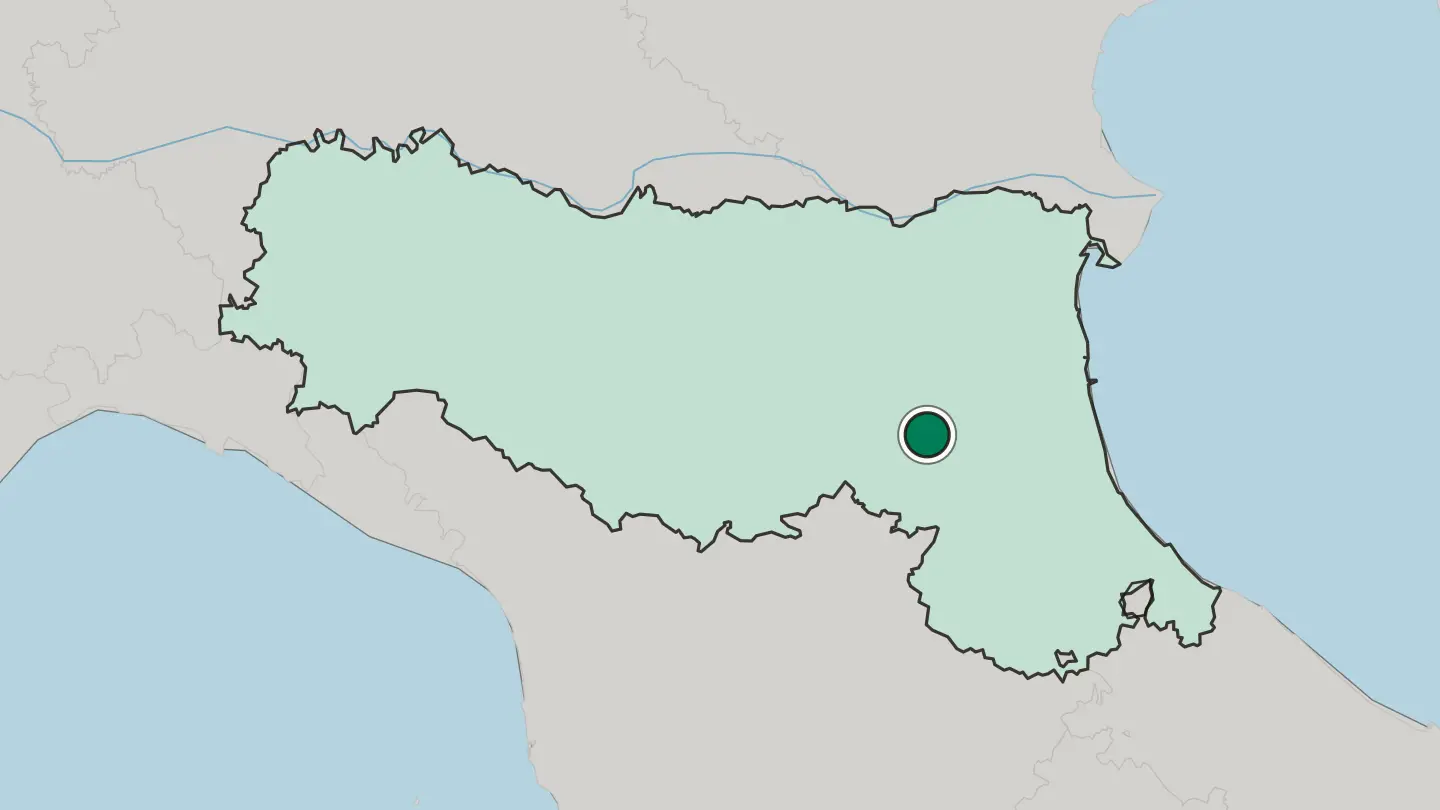
Hotel links are affiliate links: booking through them may earn us a commission, at no extra cost to you. It never affects how places are ranked. How this works
About Emilia-Romagna
What is Emilia-Romagna known for?
Emilia-Romagna joins two historical territories under a single administration. The name pairs Emilia in the west with Romagna in the east, and the combined region takes in a broad stretch of northern Italy governed from the capital at Bologna. Bologna anchors it.
Across both halves, the shared identity is what the region is mainly known for, rather than any one province standing apart from the rest.
Where is Emilia-Romagna?
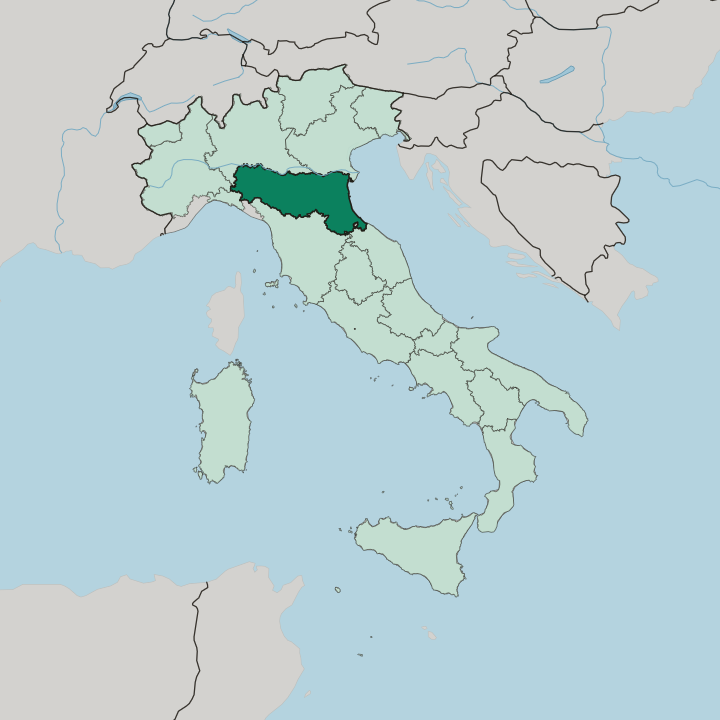
Emilia-Romagna occupies a broad band of northern Italy. The administrative region draws together two historical territories, Emilia in the west and Romagna in the east, and the boundary between those older lands still shapes how the region is described. Bologna stands near the middle, the capital from which the whole region is governed.
Its reach is wide. Measured across its full extent, the region covers more than 22,000 square kilometres, a substantial slice of the country's northern interior that stretches well beyond the capital itself. The two halves give the region its shape.
Emilia forms the western portion and Romagna the eastern, and the pairing of the two names is the clearest way to read the map of this part of Italy. Bologna links them. From Bologna, the administration extends across both the Emilian and Romagnol portions, so the seat of government and the geographic centre of the region sit close together rather than at one edge.
Because the region is defined by administration rather than a single natural feature, its identity rests on the union of Emilia and Romagna under one government seated in northern Italy.
What is Emilia-Romagna like?
Two names, one region. The culture of Emilia-Romagna is shaped by the pairing that gives it its title, because Emilia and Romagna were distinct historical territories before they were governed together as a single region of Italy. That older division has not vanished.
People still speak of the Emilian side and the Romagnol side, and the double-barrelled name keeps both identities in view rather than dissolving them into one. Italian is the common language across the whole region. Bologna gives the region a clear centre.
As the capital, it draws together the administrative and civic life of both halves, and a visitor moving through northern Italy will find that the city stands for the region as a whole in the way capitals often do. The wider character is recognisably Italian, set within the north of the country. From Bologna outward, the same regional government covers Emilia and Romagna alike.
What holds it together is less a single tradition than the long habit of treating Emilia and Romagna as two parts of one place, named in full so that neither half is forgotten.
What is the history of Emilia-Romagna?
Emilia and Romagna were separate before they shared a name. Each was a historical region in its own right, and the modern administrative region was formed by bringing the two together under one government with Bologna as its capital. Bologna is the capital.
What the combined name records is exactly that history: two older territories of northern Italy, joined into a single region while keeping both of their names.
What is the climate of Emilia-Romagna?
The weather across Emilia-Romagna stays temperate through the year. Across the northern part of Italy, the region sees the seasonal swing typical of temperate Europe, with a warmer stretch in the middle of the year giving way to cooler, shorter days as autumn turns. The pattern holds region-wide.
Emilia in the west and Romagna in the east fall within the same temperate band, so the broad weather of the two halves is much the same.
How do you get to Emilia-Romagna?
Bologna is the way in. As the capital and main hub, it is where most arrivals into Emilia-Romagna are routed, and from the city both the Emilia side to the west and the Romagna side to the east open up for onward travel. The region sits in northern Italy.
That keeps it within reach of the rest of the country, with Bologna acting as the pivot between the wider nation and the two halves of the region.
Common questions
What is the best area to stay in Emilia-Romagna?
Bologna: Reaching both Emilia and Romagna from one central base.
More regions in Italy
Updated September 2026