Lebanon
Mohafazat Liban-Sud, Lebanon — Towns & Travel Guide
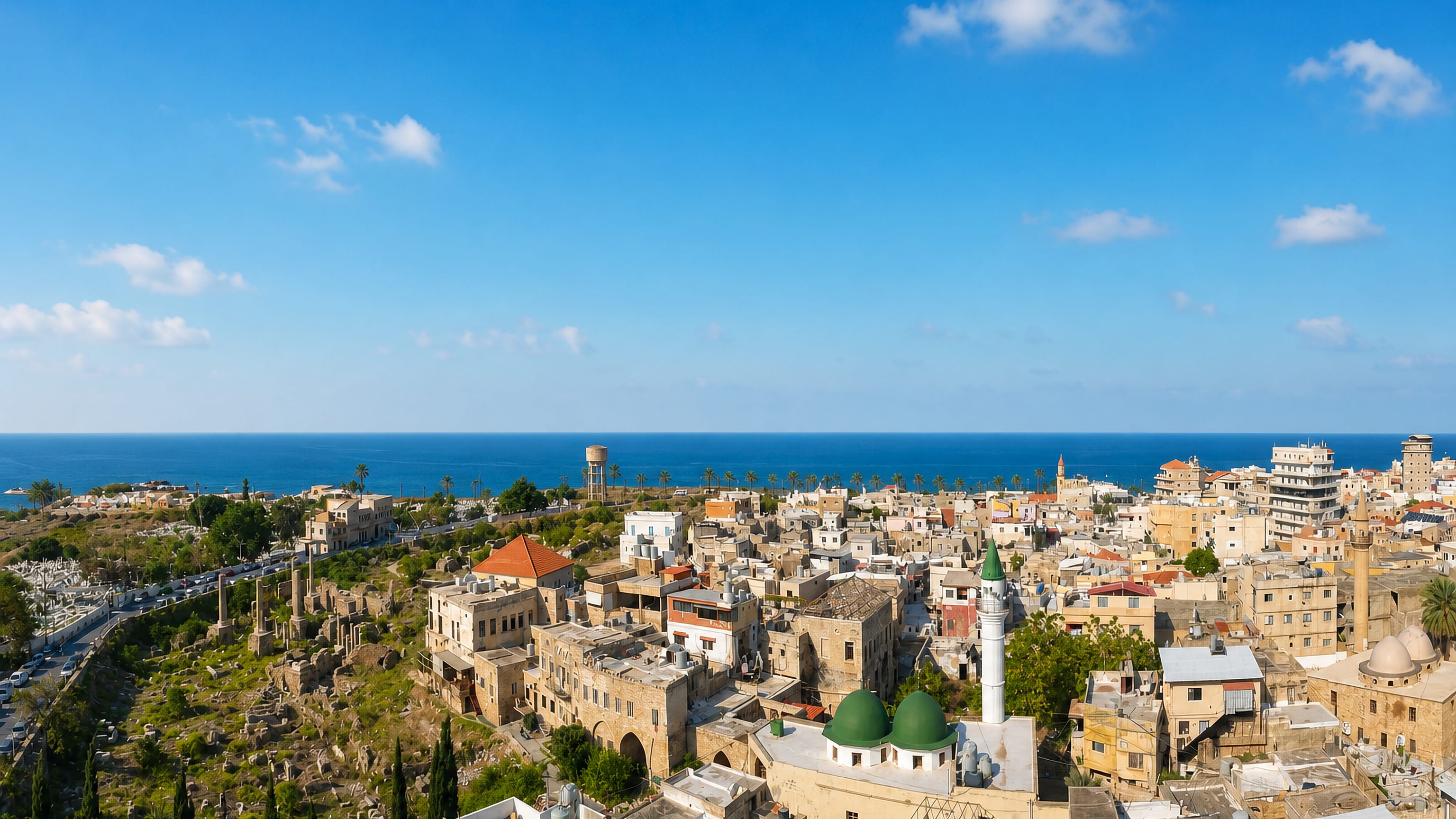
South Lebanon is the country's southern coast, where Phoenician Sidon and Tyre meet the sea and the pine highlands of Jezzine rise behind them.
Hotel links are affiliate links: booking through them may earn us a commission, at no extra cost to you. It never affects how places are ranked. How this works


Towns & cities in Mohafazat Liban-Sud
Pick a town or city — each links to where to stay.
 Lebanon
Sidon
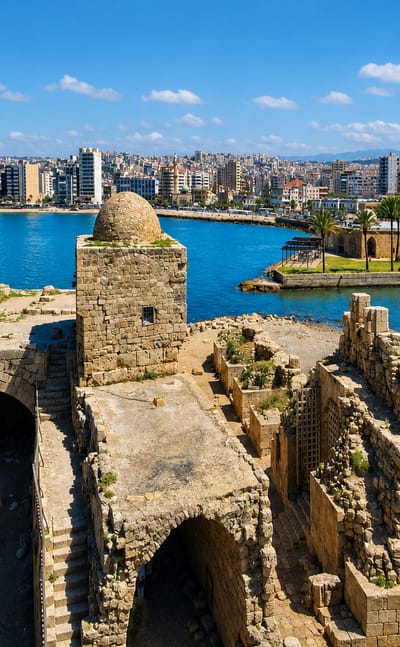
The Sea Castle stands on its islet off Sidon, an ancient Phoenician port on the coast of South Lebanon, known for the Temple of Eshmun and its old souks.Where to stay →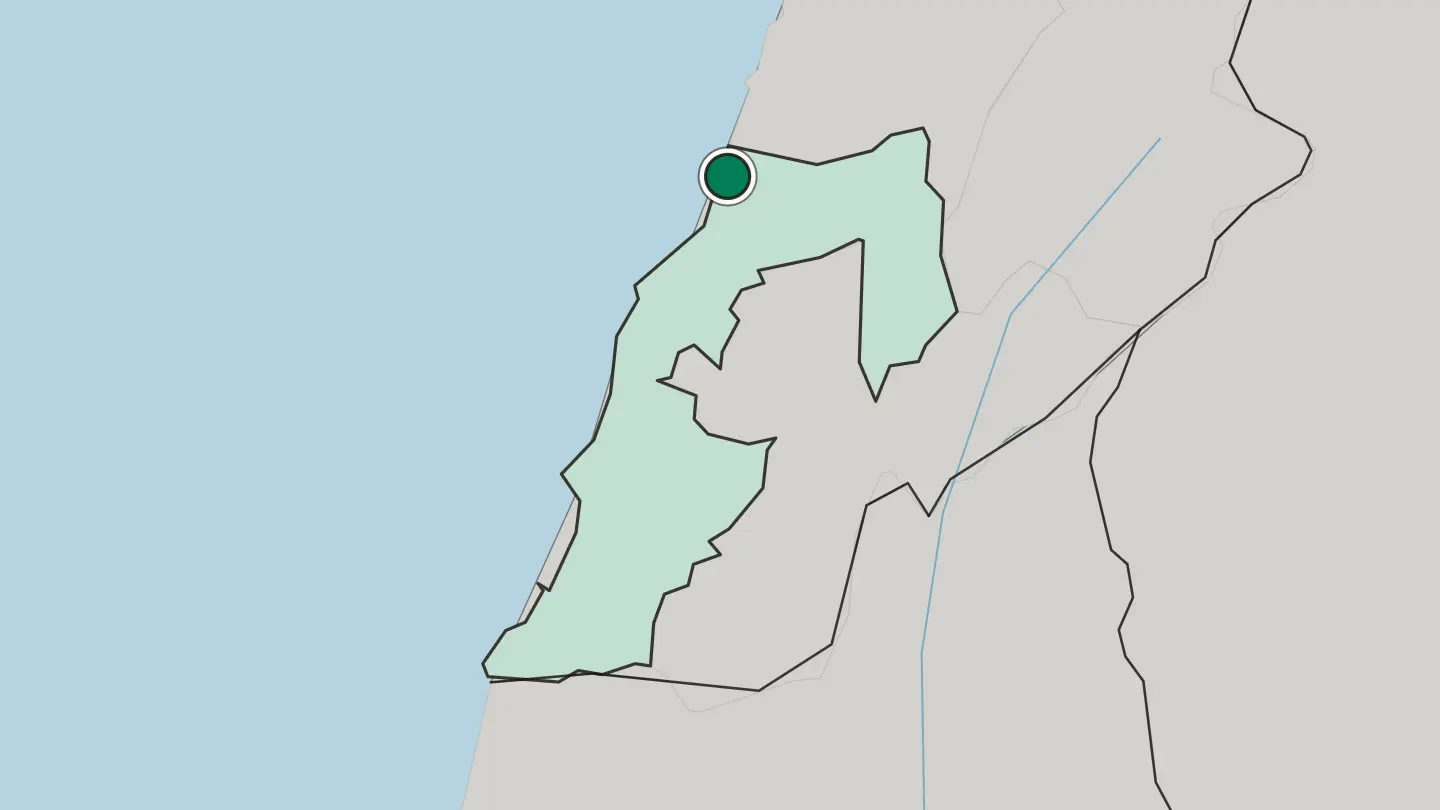
 Lebanon
Tyre
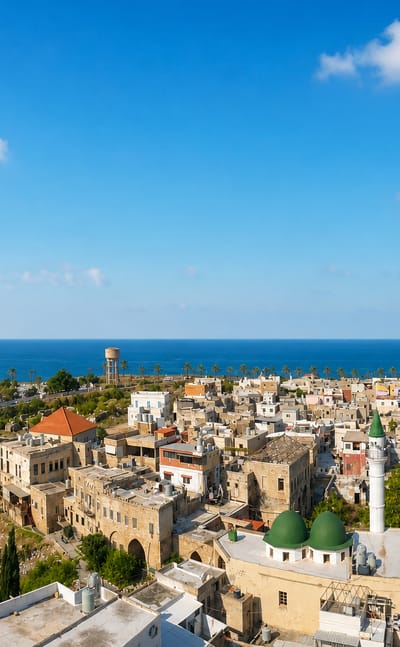
Roman columns line the shore at Tyre, a Mediterranean city on a peninsula in southern Lebanon, known for its Tyre Hippodrome and clean beaches.Where to stay →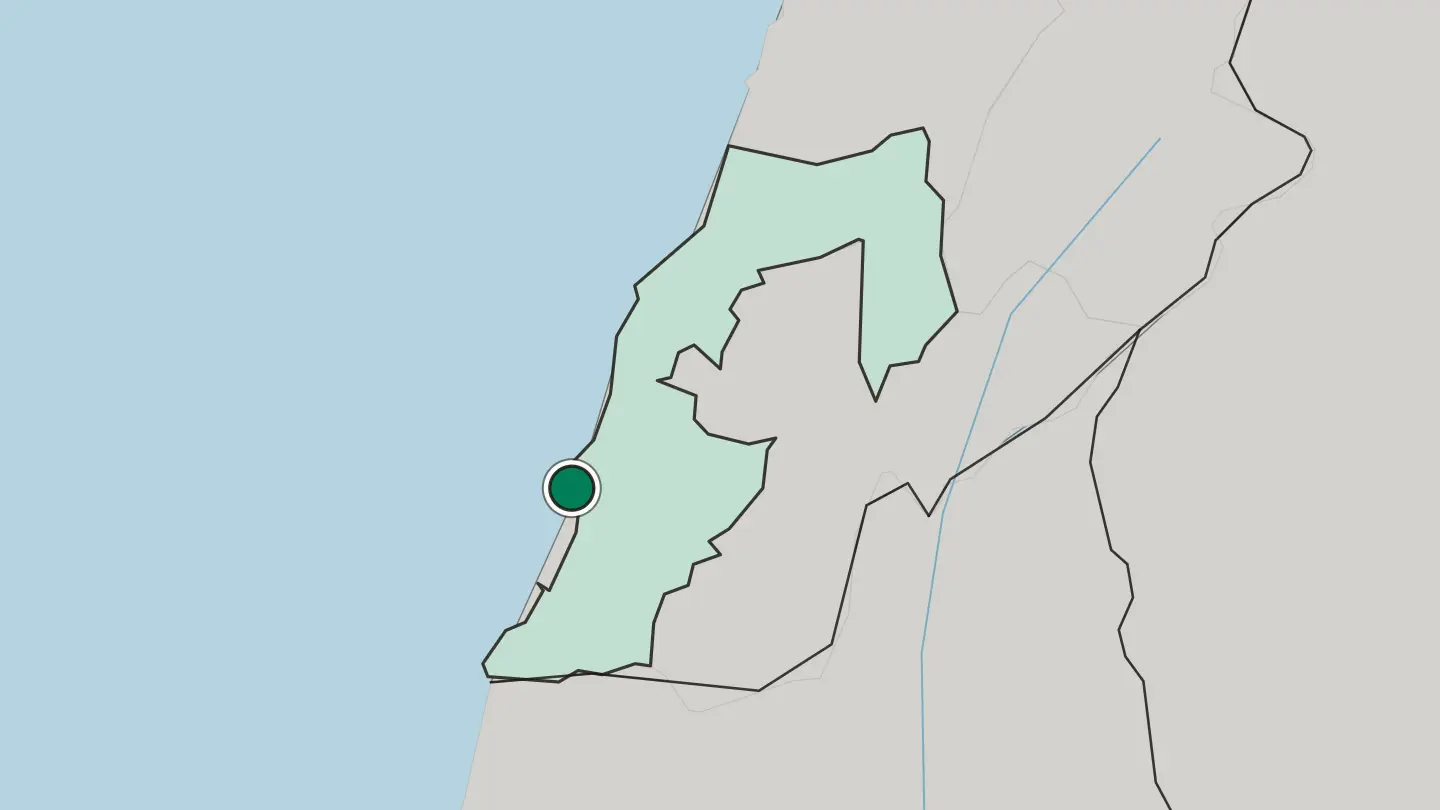
Hotel links are affiliate links: booking through them may earn us a commission, at no extra cost to you. It never affects how places are ranked. How this works
About Mohafazat Liban-Sud
What is Mohafazat Liban-Sud known for?
The south is Lebanon's Phoenician coast. Sidon and Tyre both trace their harbours back nearly five thousand years, and Tyre's Roman hippodrome and Al-Bass necropolis have carried a UNESCO listing since 1984. Sidon holds the capital's role.
Its Sea Castle sits on a small island just off the old port, linked to the souks by a stone causeway. Inland the land climbs fast toward Jezzine, where a waterfall drops from the pine ridges and a Maronite town keeps to cooler air. Citrus and banana groves line the plain between.
Where is Mohafazat Liban-Sud?
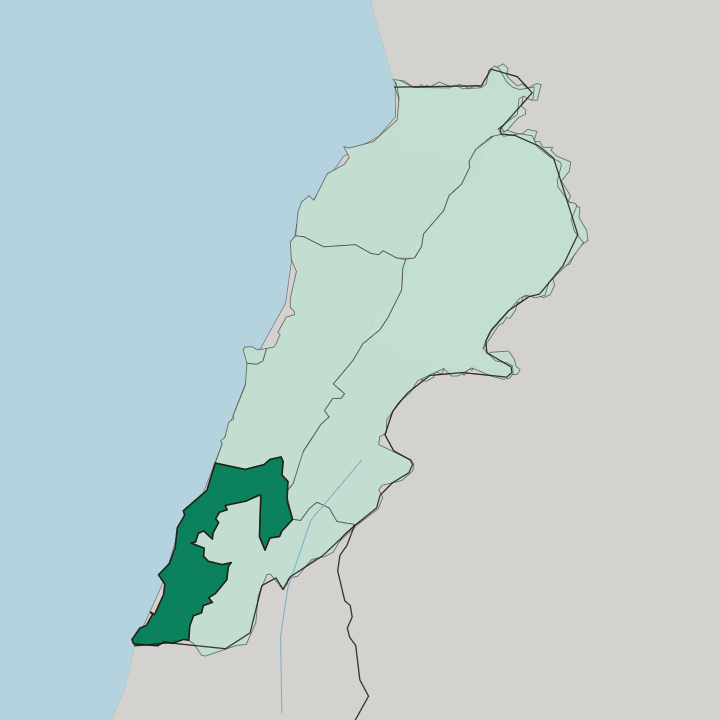
The South Governorate runs along Lebanon's Mediterranean shore, the coastal strip and the hills behind it that fall away toward the country's southern edge. It covers roughly 930 square kilometres. Sidon stands on the coast about forty kilometres south of Beirut, and Tyre lies a similar distance further down the shore, its old core built on a peninsula that was once an island.
Behind the ports the ground rises quickly. Jezzine sits high in the interior, near a thousand metres up among pine ridges and orchards, a different world from the citrus plain below. Six rivers reach the sea across the governorate.
The Litani is the longest river held entirely inside Lebanon; it swings west out of the Beqaa Valley and empties into the Mediterranean just north of Tyre, and the Awali, the Zahrani, the Qasmiyeh, the Naqoura and the Hasbani drain the rest of the slope. Water is everywhere here. The Qasmiyeh reach alone waters citrus and banana farms across thousands of dunums near the coast.
The lowest ground is the sea itself; the highest ridges climb toward a thousand metres inland. This is a narrow south, crowded and well-watered.
What is Mohafazat Liban-Sud like?
The south carries two ways of life at once. On the coast the old Phoenician cities set the tone, Sidon and Tyre, Sunni-majority ports where fishing boats still work the same harbours that once sent colonists to Carthage. The mix runs deep.
The governorate counts Shia and Sunni Muslims, Druze and several Christian communities, and the balance shifts sharply from town to town. Sidon's soap museum and its covered souks keep older trades alive. Up in Jezzine the character changes completely; the town is almost entirely Maronite and Greek Catholic, and its workshops have hand-forged inlaid cutlery since the eighteenth century, bone and mosaic set into the handles.
Arabic is the everyday language across all of it. Bananas and citrus set the rhythm of the coastal plain, while the highlands turn to vineyards, pine nuts and the summer crowds who climb up to escape the heat. Food, faith and farming vary by the valley here.
That patchwork is the south's real character.
What is the history of Mohafazat Liban-Sud?
Sidon is the elder of the two great ports, called the mother of the Phoenician cities, and settlers from here are said to have founded Tyre in turn. Tyre grew into the greater power, sending its own colonists west to found Carthage and Leptis Magna across the Mediterranean. The past runs deep.
Rome, Byzantium and the Crusaders each left their mark, and Sidon's Sea Castle was raised by crusaders early in the thirteenth century on the island guarding the harbour. Both rank among the oldest lived-in cities on earth.
What is the climate of Mohafazat Liban-Sud?
The coast has a Mediterranean climate, hot and humid in summer and mild and wet through winter. Rain falls almost entirely between autumn and spring, leaving the citrus and banana plain warm and dry through the long southern summer. The ports turn sticky.
Jezzine tells a different story; at close to a thousand metres among the pines its air stays cool when the coast swelters, which is exactly why the town fills each summer. The sea keeps winters gentle.
How do you get to Mohafazat Liban-Sud?
Almost everyone reaches the south through Beirut. The country's only civil airport sits just south of the capital, and the coast road runs straight down from there to Sidon in well under an hour, then on to Tyre near the country's southern end. Jezzine takes longer.
The mountain road climbs inland from Sidon, roughly twenty kilometres of switchbacks up into the pine highlands. There is no rail. Along the coast a single trunk highway ties the ports together, and taxis and shared vans cover the rest.
Common questions
What is the best area to stay in Mohafazat Liban-Sud?
Sidon: the Phoenician capital and its souks. Tyre: the UNESCO ruins and the southern beaches. Jezzine: pine highlands above the coastal heat.
Good for
More regions in Lebanon
Updated September 2026