Malaysia
Perlis, Malaysia — Towns & Travel Guide
Perlis is Malaysia's smallest state, a sliver of paddy plains and limestone hills in the far north against the Thai border.
Hotel links are affiliate links: booking through them may earn us a commission, at no extra cost to you. It never affects how places are ranked. How this works


Towns & cities in Perlis
One town here has its own guide — it links to where to stay.

 Malaysia
Kangar
Kangar is the state capital of Perlis, on the Perlis River next to the Thailand border at the northernmost point of Peninsular Malaysia.Where to stay →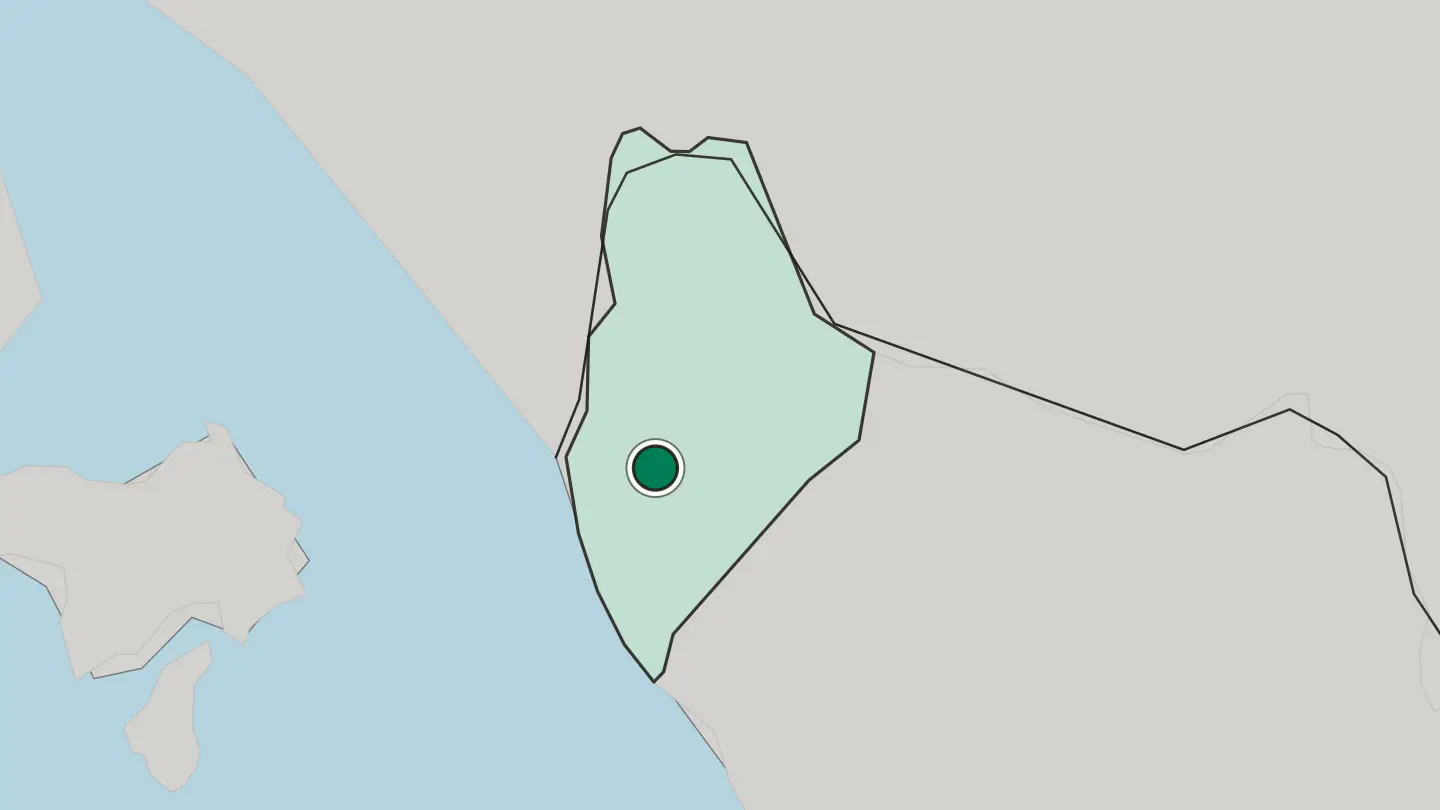
Hotel links are affiliate links: booking through them may earn us a commission, at no extra cost to you. It never affects how places are ranked. How this works
About Perlis
Perlis is the smallest and northernmost state of Malaysia.
What is Perlis known for?
Rice defines it. The Kedah-Perlis Plain that fills the state is one long sweep of paddy fields, and Kangar, the capital, sits among them as the market town for the harvest. Along the northern edge the karst ridges of the Nakawan Range mark the frontier with Thailand.
Kuala Perlis, on the coast, is the ferry port for Langkawi across the Strait of Malacca.
Where is Perlis?
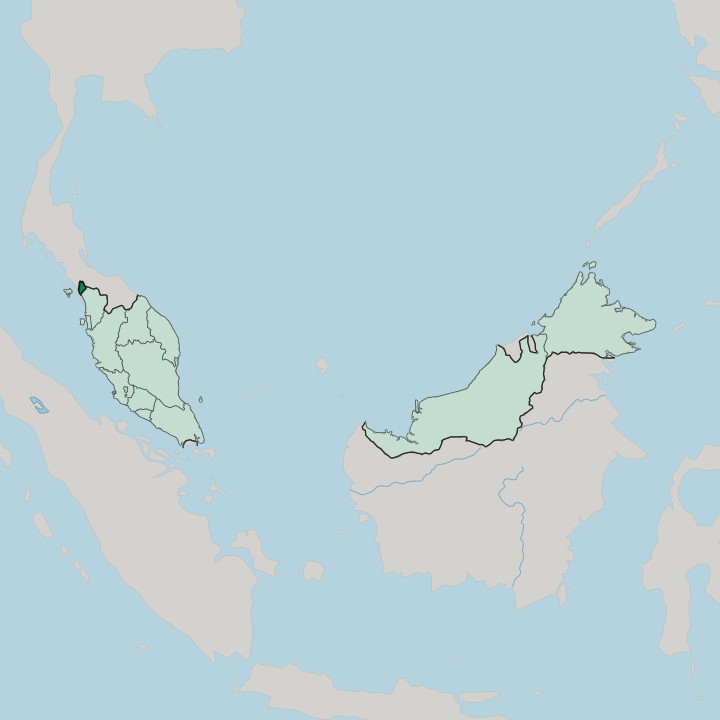
Perlis occupies the far north-western corner of Peninsular Malaysia, the smallest of the country's states by a wide margin. It is wedged between two edges. Thailand lies along the whole northern border, where the Thai provinces of Satun and Songkhla meet Malaysian soil, and Kedah wraps around the state to the south and east.
To the west a short coast, barely twenty kilometres of it, opens onto the Strait of Malacca. Most of Perlis is flat. The Kedah-Perlis Plain runs across it as a broad table of paddy fields, drained by the Perlis River, which threads through Kangar and reaches the sea at Kuala Perlis.
Relief comes only at the rims. Along the Thai frontier the Nakawan Range rears up in a wall of karst limestone, its forested crags riddled with caves, and Mount Perlis crowns the ridge as the highest ground in the state. Isolated limestone towers stand out of the plain elsewhere, sudden and grey above the green rice.
Across the water to the west lie the Langkawi islands, reached by ferry from Kuala Perlis. The whole state can be crossed in an hour by road. That compactness is part of its character, a country in miniature pressed between the ridge and the strait.
What is Perlis like?
Perlis moves at the pace of the rice year. Life here is rural and Malay to its core, ordered by the flooding, planting and harvest of the paddy fields that fill the Kedah-Perlis Plain. The everyday tongue is Perlis Malay, a sub-dialect of the Kedah Malay spoken across the border in Kedah, softer and slower than the standard heard on television.
Islam shapes the calendar and the skyline. Village mosques punctuate the plain, and the state mosque at Arau stands beside the palace of the Raja. That royal detail sets Perlis apart from most of Malaysia, where the hereditary rulers are Sultans; here alone the ruler holds the title of Raja, and the House of Jamalullail has kept the throne since the state was founded.
Food leans on what the land and the strait give. Rice from the fields, fish landed at Kuala Perlis, and the pale local mango known as harum manis all belong to the table. The border town of Padang Besar adds a Thai and Chinese seam to the mix, its arcades busy with cross-frontier trade.
Little of this is staged for visitors. Perlis is a working farm state first, and the traveller who comes finds the quiet, unhurried northern edge of the peninsula rather than a resort.
What is the history of Perlis?
Perlis was once part of Kedah. It broke away as a separate state in 1843, when the Siamese, who then held sway over the region, installed Sayyid Hussain Jamalulail as the first Raja and founded the House of Jamalullail that rules still. For decades the little state sat under Siamese suzerainty.
The Anglo-Siamese Treaty of 1909 transferred it to British control, and from there Perlis passed into the Federation of Malaya at independence in 1957 and into Malaysia in 1963.
What is the climate of Perlis?
Perlis has a tropical monsoon climate, hot and humid the year round. Monsoon rain divides the year. The wettest stretch comes with the south-west monsoon toward the end of the year, when October and November bring the heaviest downpours and the paddy fields sit brimming.
Drier, dustier months open the year before the rains return. The Nakawan Range along the Thai border catches cloud that the flat plain does not, so its wooded slopes stay greener and damper than the open rice country below.
How do you get to Perlis?
There is no airport within Perlis itself. Most travellers fly into Kedah instead, landing at Alor Setar an hour to the south or on the island of Langkawi, then coming overland or across the water. The railway from Kuala Lumpur runs up through the state, stopping at Arau and at Padang Besar, where the line crosses the border into Thailand.
Buses reach Kangar along the North-South Highway from Penang and the cities down the peninsula. From Kuala Perlis the ferry runs out to Langkawi across the Strait of Malacca.
Common questions
What is the best area to stay in Perlis?
Kangar: a first base in Perlis among the rice country. Kuala Perlis: catching the boat to the Langkawi islands. Padang Besar: the Thai frontier and cross-border shopping. Arau: the royal town and its palace grounds.
Good for
More regions in Malaysia
Updated September 2026