Russia
Pskov Oblast, Russia — Towns & Travel Guide
Pskov Oblast is the far-western corner of Russia, pressed against Estonia and Latvia, defended for centuries by stone fortresses above the Velikaya.
Find your area →


Towns & cities in Pskov Oblast
Pick a town or city — each links to where to stay.
 Russia
Pskov
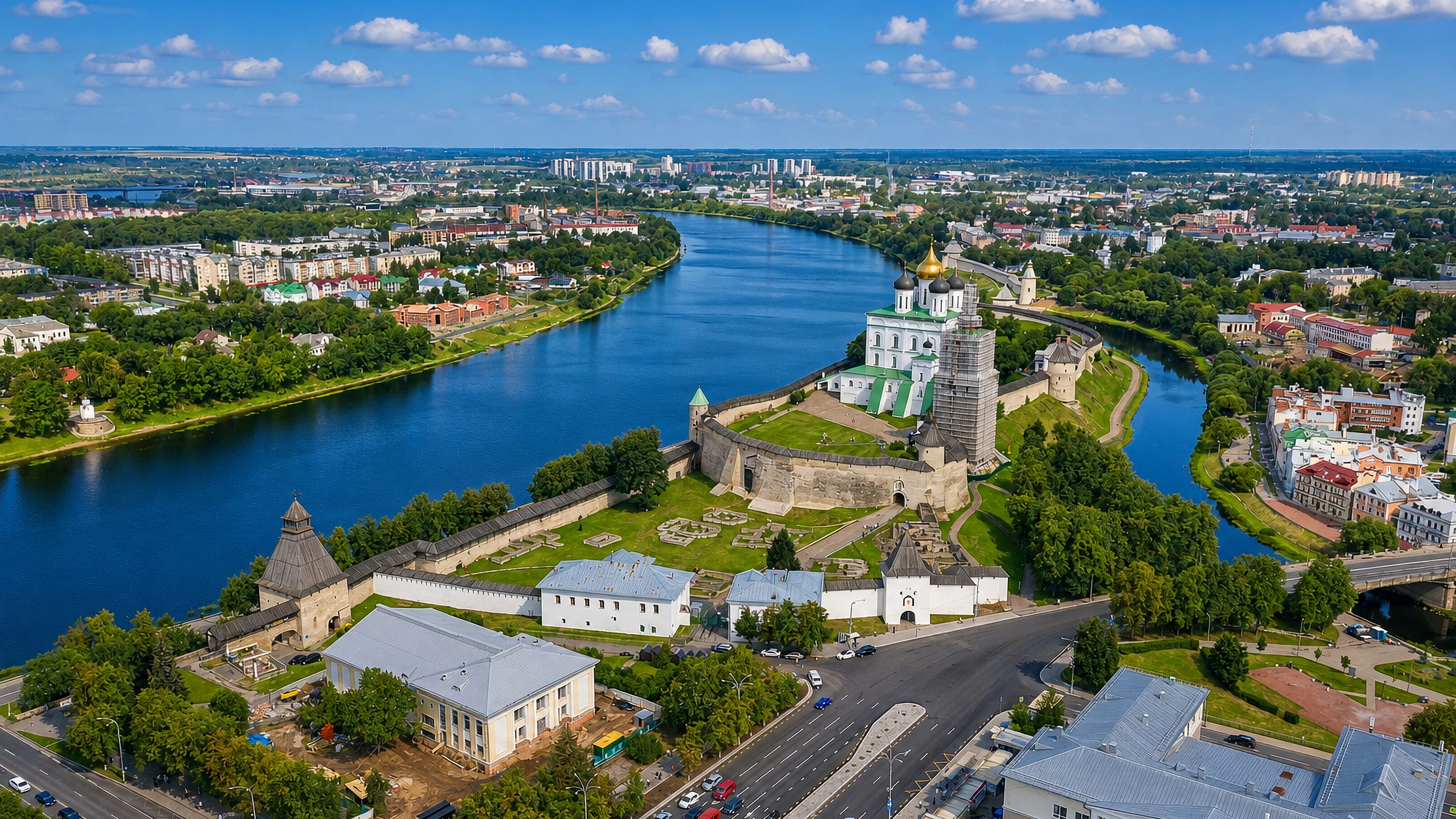
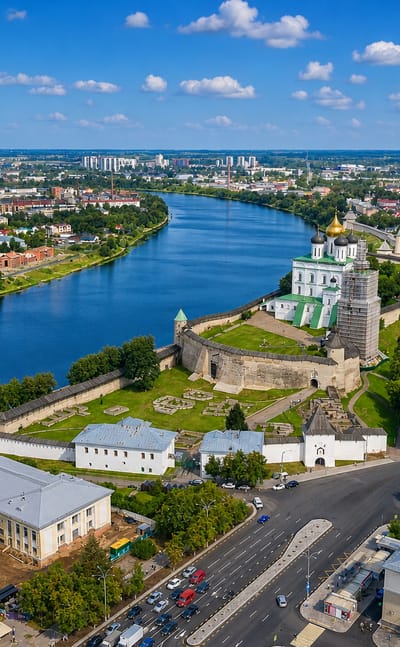
Stone towers and old churches stand over Pskov, an ancient walled city in Pskov Oblast known for its Trinity Cathedral and Gremyachaya Tower.Where to stay →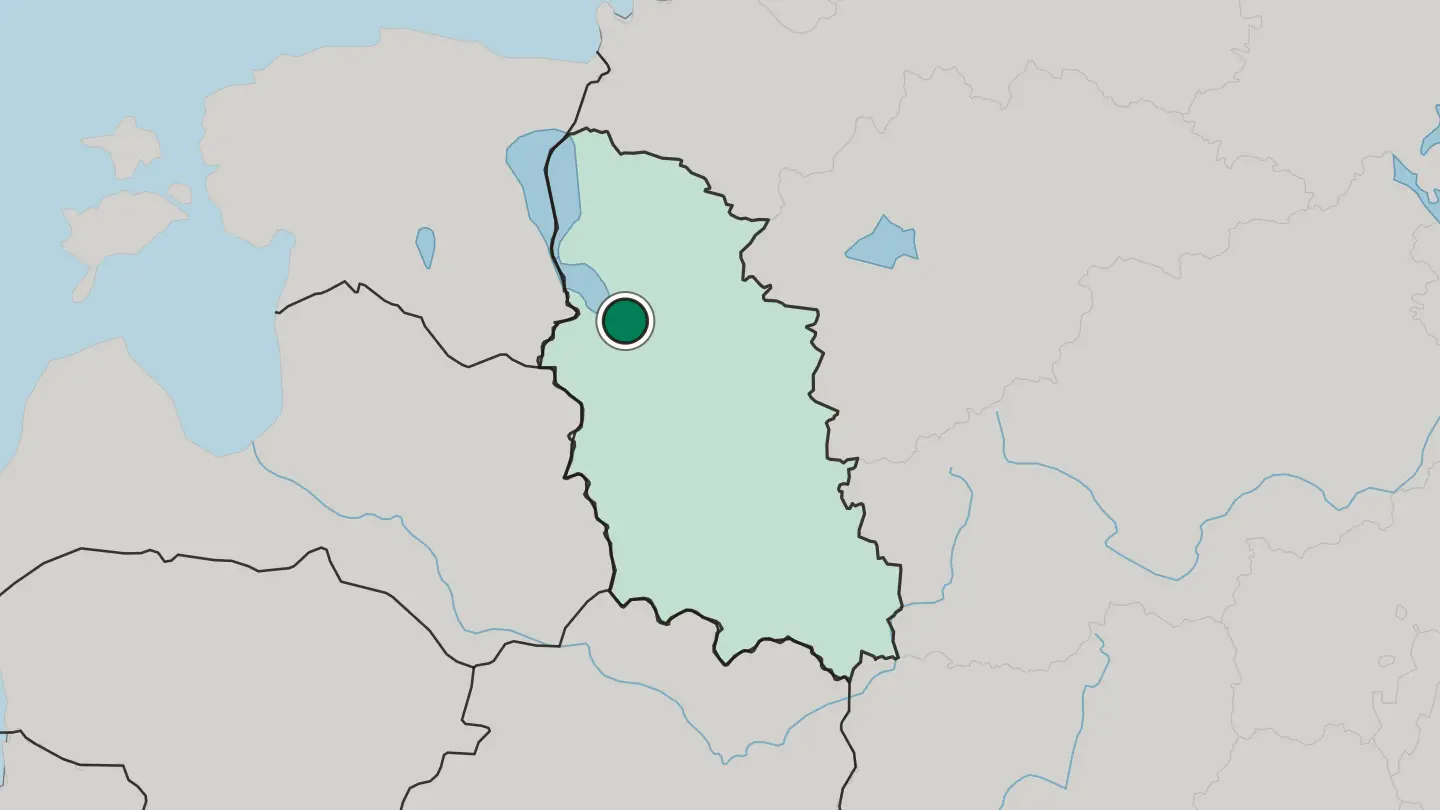
 Russia
Velikiye Luki
Velikiye Luki sits on the meanders of the Lovat, the second town of Pskov Oblast and a City of Military Glory.Where to stay →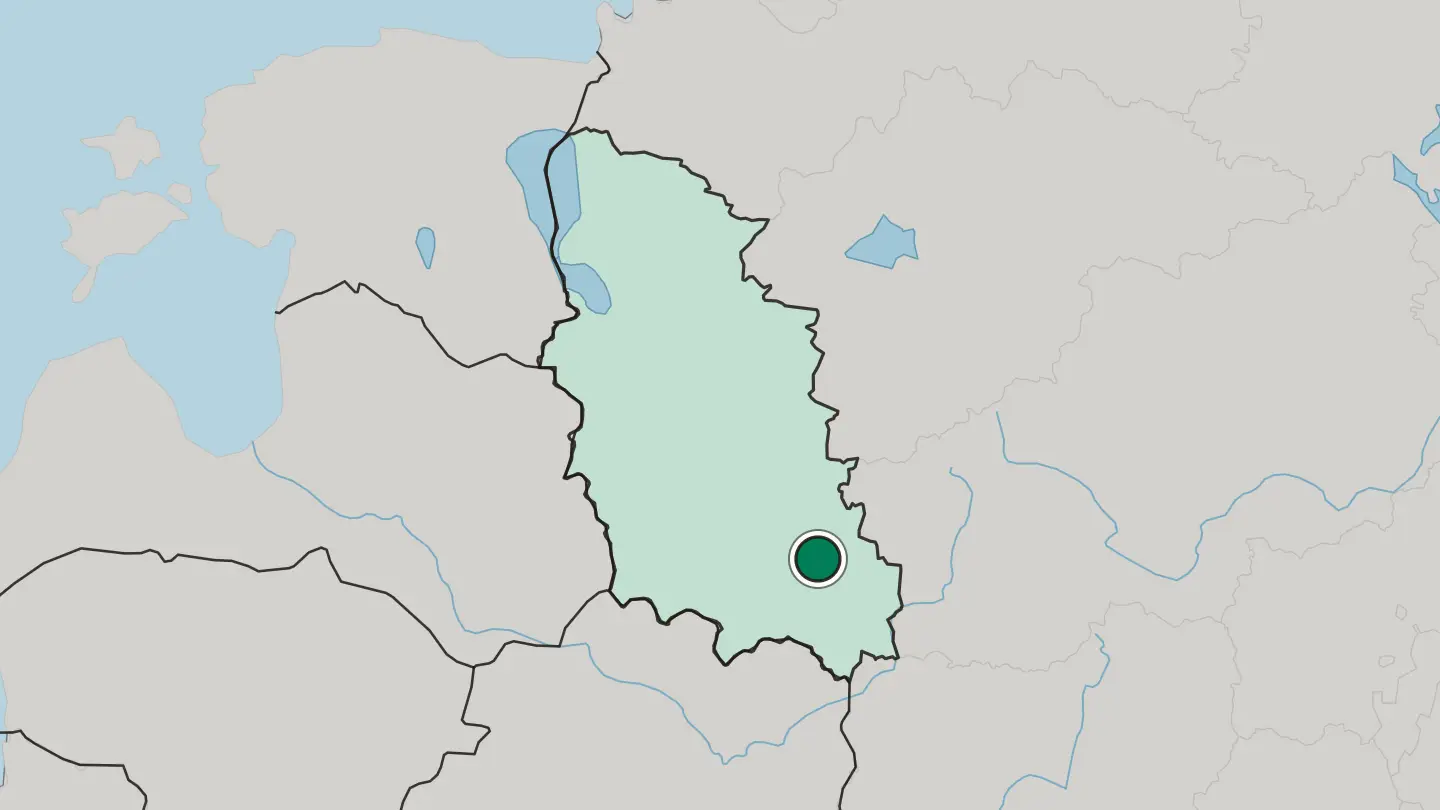
About Pskov Oblast
What is Pskov Oblast known for?
Pskov Oblast is Russia's westernmost mainland region, pinned into the corner where the country meets Estonia and Latvia. Ancient stone fortresses define it. The old city of Pskov, first named in the chronicles in 903, guards the point where the Pskova joins the Velikaya, and its kremlin and Trinity Cathedral tower over the water.
Izborsk and the Pskovo-Pechersky Monastery at Pechory carry that same medieval weight. West of it all lies Lake Peipus, the sheet of water where Alexander Nevsky broke the Teutonic Knights on the ice in 1242.
Where is Pskov Oblast?
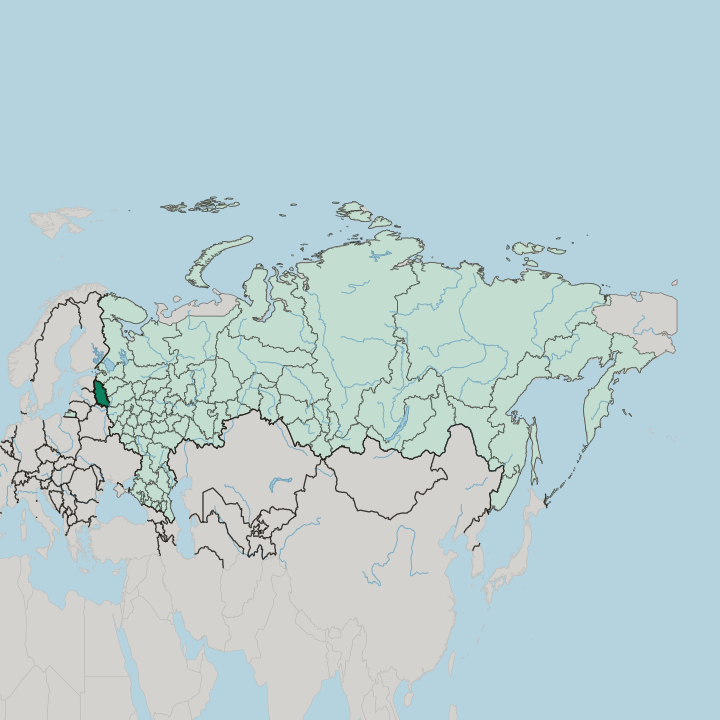
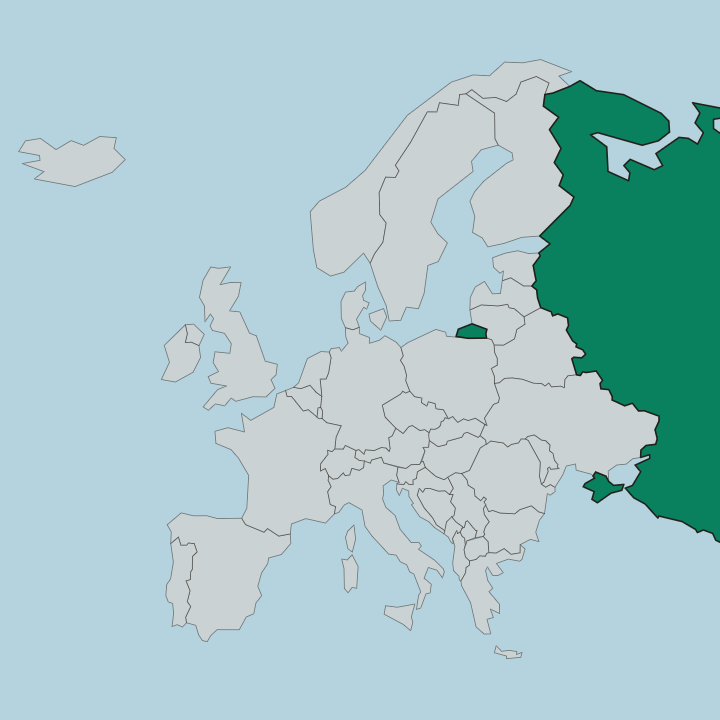
Pskov Oblast fills the far west of European Russia, the last stretch of land before Estonia and Latvia begin. It is the country's westernmost mainland region. Lake Peipus and its southern arm, Lake Pihkva, form most of the boundary with Estonia and pool along the whole western side.
The Velikaya is the region's spine. It rises in the south and runs the length of the oblast from south to north, gathering the Pskova and other streams before it spreads into a delta and empties into the lake near Pskov. Lower morainic uplands roll between the river basins of the Velikaya, the Lovat, and the Shelon, left behind by the ice sheets that once ground across this plain.
Forest covers roughly a third of the ground. Belarus lies to the south, Leningrad Oblast to the north, and Novgorod, Tver, and Smolensk oblasts wrap the eastern flank. The Lovat cuts down from Belarus toward Lake Ilmen beyond the northern border, while the Velikaya carries the western half of the region toward the lakes.
Water and low woodland set the whole scene, and no ridge rises high enough to break the horizon across these lake-country lowlands. Marsh and slow river fill the gaps between the woods.
What is Pskov Oblast like?
Culture here is bound up with old stone and older faith. The Pskov school of church building left its mark across the whole region: whitewashed walls, single domes, and free-standing bell towers that look nothing like the churches of Moscow. Ten of these medieval churches in Pskov, strung along the Velikaya, were inscribed together as a World Heritage Site in 2019.
Orthodoxy runs deep. The Pskovo-Pechersky Monastery at Pechory has kept its cave-cut chapels in continuous use since the fifteenth century, one of the few Russian monasteries never closed under Soviet rule. The land also shaped Russian letters.
Alexander Pushkin was exiled to the family estate at Mikhaylovskoye in the Pushkin Hills, wrote much of his greatest work there, and lies buried nearby at the Svyatogorsky Monastery. Craftsmen worked the local limestone into the walls of Izborsk, one of the oldest fortresses in the country, and the same stone raised the towers of the Pskov kremlin. Pilgrims and readers both come for this.
Russian is the language of the whole region, spoken with a border country's memory of Estonia and Latvia just beyond the fields.
What is the history of Pskov Oblast?
Pskov was first named in the chronicles in 903, and for centuries it stood among the great trading towns of early Rus on the road from the Varangians to the Greeks. It grew into a republic of its own. The Treaty of Bolotovo in 1348 recognised the Pskov Republic as independent of Novgorod, ruled by its own veche assembly until Vasili III of Moscow took the city in 1510 and carried its veche bell away.
The frontier made it a fortress region. Its walls faced the Livonian and Teutonic knights for generations, and the campaigns of the 13th century still echo here.
What is the climate of Pskov Oblast?
The climate sits on the seam between maritime and continental, softened by the great sheet of Lake Peipus to the west. The cold season drags on across Pskov Oblast. A months-long snow cover is normal here.
The lake itself freezes hard enough that armies once fought across it, as Alexander Nevsky's men did in 1242. Summers are short, green, and mild, warm enough for the lakeshore beaches and the river meadows along the Velikaya. Rain falls through the year rather than in one season.
How do you get to Pskov Oblast?
Most travellers reach the region through Pskov, which has both a railway station and a small airport with flights from Moscow and Saint Petersburg. Trains matter most here. The line from Saint Petersburg runs down through the oblast toward Riga and the Baltic states, and sleeper services link Pskov and Velikiye Luki to Moscow.
Because this is Russia's western border country, roads and rails also cross into Estonia, Latvia, and Belarus. From Saint Petersburg the drive south takes only a few hours.
Common questions
What is the best area to stay in Pskov Oblast?
Pskov: a solid first orientation to Pskov Oblast. Velikiye Luki: the southern Lovat country.
Good for
More regions in Russia
Updated September 2026