Russia
Sakhalin Oblast, Russia — Towns & Travel Guide
Sakhalin Oblast is Russia's only all-island region, spanning Sakhalin and the Kuril chain off the Far Eastern coast.
Find your area →


Towns & cities in Sakhalin Oblast
One town here has its own guide — it links to where to stay.
 Russia
Yuzhno-Sakhalinsk
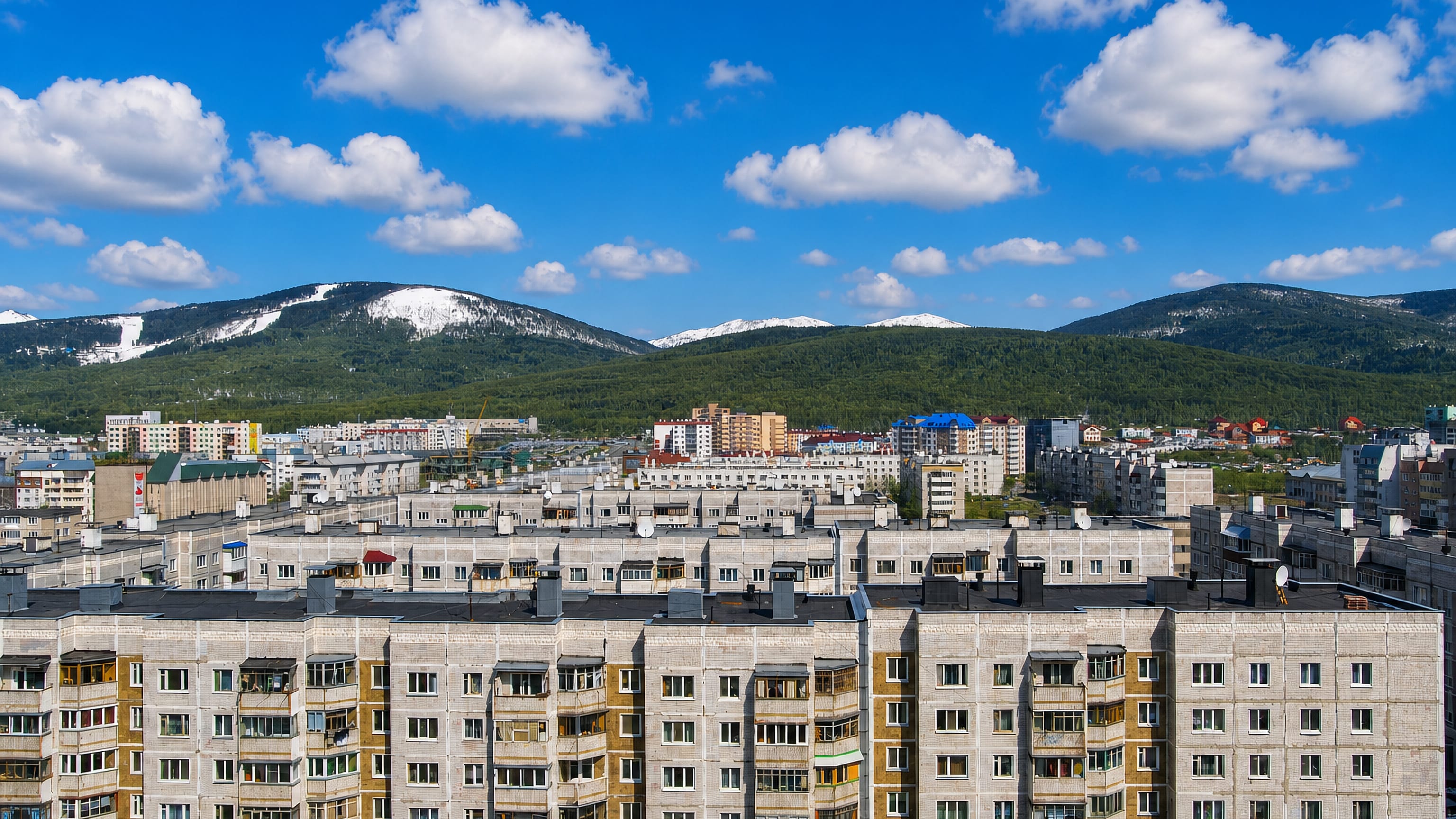
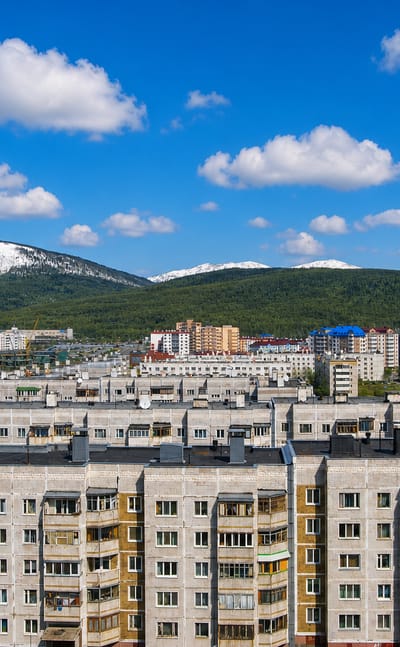
Island air fills Yuzhno-Sakhalinsk, capital of Sakhalin Oblast on the island of Sakhalin, known for the Sakhalin Regional Museum and its Japanese streets.Where to stay →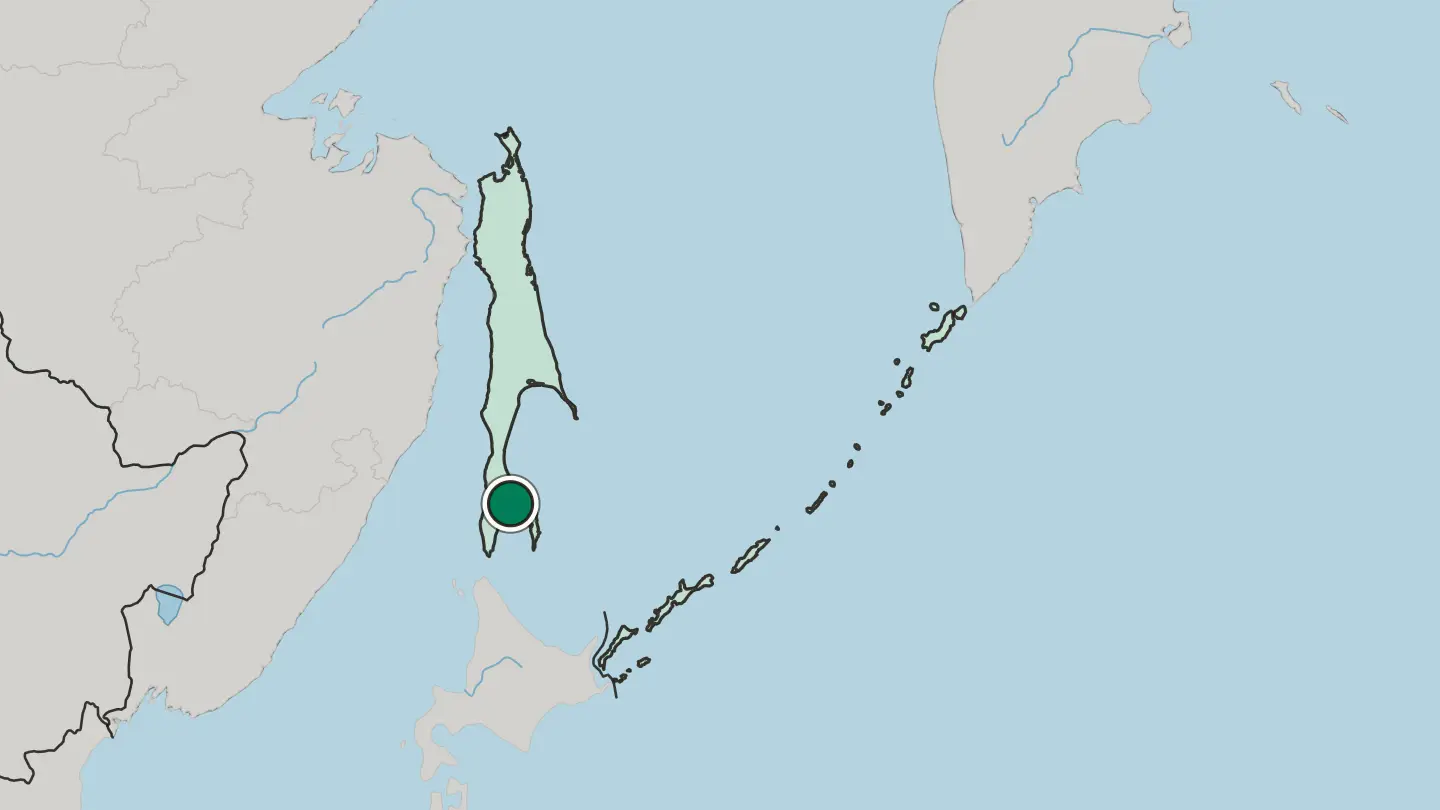
About Sakhalin Oblast
Oil and gas built this place.
What is Sakhalin Oblast known for?
Sakhalin Island's northern shelf makes the oblast one of Russia's leading oil and gas regions, with the Sakhalin-2 liquefied-gas plant sitting on Aniva Bay near the port of Korsakov. Beyond the rigs, travellers come for wild volcanic scenery, the salmon runs of the Sea of Okhotsk, and a layered past that swings between Russian and Japanese hands. The capital, Yuzhno-Sakhalinsk, still shows its years as Japanese Toyohara.
Where is Sakhalin Oblast?
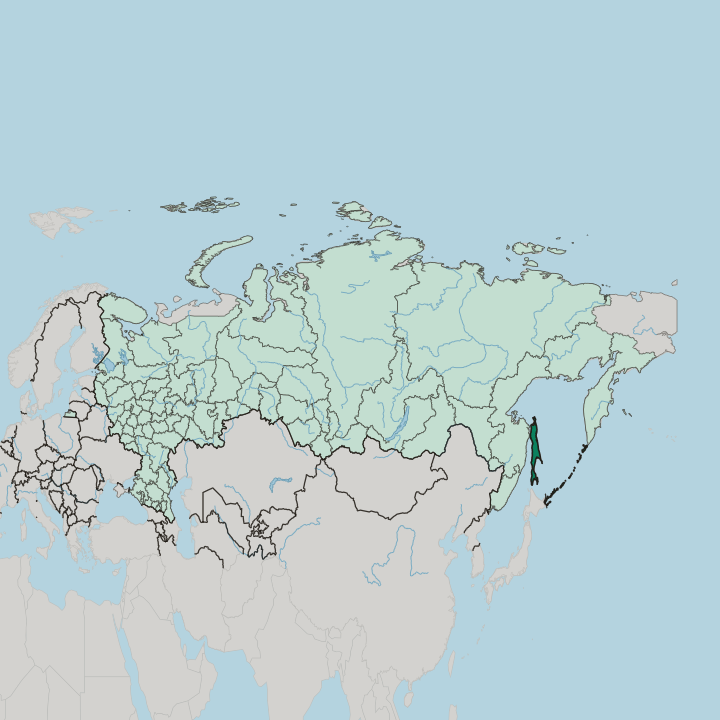
Sakhalin Oblast is the only Russian region made up entirely of islands. Its heart is Sakhalin, a long fish-shaped island stretching roughly 950 kilometres down the Far Eastern coast, north of Japan's Hokkaidō. The narrow Strait of Tartary separates it from the Asian mainland to the west, while the Sea of Okhotsk washes its eastern and northern shores and the Sea of Japan laps the far south.
Two low mountain chains, the West Sakhalin and East Sakhalin ranges, run the length of the island along either coast. Between them lie the river valleys of the Tym and the Poronay, the lowland corridor that carries road and rail up the spine of the island. The oblast does not stop at Sakhalin.
The Kuril Islands trail south-west from the Kamchatka Peninsula toward Hokkaidō, a volcanic arc of more than fifty islands closing off the Sea of Okhotsk from the open Pacific. Roughly a hundred and sixty volcanoes stand across the region, dozens of them still active. The capital, Yuzhno-Sakhalinsk, sits inland in the south, sheltered in the Susuya valley.
Almost everything here is sea, rock, or forest. No corner of the oblast is far from a coastline.
What is Sakhalin Oblast like?
Sakhalin wears its double history openly. The island passed between Russia and Japan for the better part of a century, and both left marks that outlasted them. In Yuzhno-Sakhalinsk the old Toyohara street grid, a former Japanese museum building, and Soviet apartment blocks stand within a few streets of one another.
That mix is the texture of daily life here. The people carry the same layering. Russians make up the great majority, but the island is also home to the Sakhalin Koreans, descended from labourers brought over in the Japanese decades who could not leave after the war.
Older still are the Nivkh, an indigenous people who fished the rivers and the Sea of Okhotsk long before either empire arrived, alongside smaller groups of Uilta reindeer herders in the north. Anton Chekhov came in 1890 to document the penal colony, and his book Sakhalin Island fixed the place in Russian memory as a hard, far edge of the country. Fishing, energy work, and a frontier self-reliance shape the culture.
It is Russian, but not quite like the rest of Russia.
What is the history of Sakhalin Oblast?
The oblast dates to 1932. Its island beneath it holds a far older and more contested story, worked by Imperial Russia from 1857 as a penal colony that shipped convicts across the Strait of Tartary to the mines. Then Japan arrived.
After losing the Russo-Japanese War in 1905, Russia ceded the southern half of the island, which Japan governed as Karafuto prefecture for four decades until Soviet forces seized the whole of Sakhalin and the Kuril Islands in 1945. That final capture drew the borders the region still keeps.
What is the climate of Sakhalin Oblast?
Sakhalin runs cold and wet. The Sea of Okhotsk holds pack ice against the coast well into spring, so summer arrives late and stays cool even in the south. Winters are long and snowy, driven by winds off the Asian mainland, while autumn brings the tail ends of Pacific typhoons that soak the island in rain.
Fog hangs along the shores through the warmer months. The Kuril Islands, strung out in the open ocean, are foggier and cooler still.
How do you get to Sakhalin Oblast?
For nearly all arrivals, a flight is the way in to Sakhalin. Yuzhno-Sakhalinsk Airport, named for Anton Chekhov, handles the long haul from Moscow and the shorter hops from the Russian Far East, and it is the practical door to the whole oblast. The sea route survives too.
A train ferry crosses the Strait of Tartary from Vanino on the mainland to the west-coast port of Kholmsk. Reaching the Kuril Islands means another flight or a boat onward from Sakhalin.
Good for
More regions in Russia
Updated October 2026