Russia
Tomsk Oblast, Russia — Towns & Travel Guide
Tomsk Oblast is a taiga-and-swamp region of West Siberia, drained by the Ob and centred on the old university city of Tomsk.
Find your area →


Towns & cities in Tomsk Oblast
Pick a town or city — each links to where to stay.
 Russia
Tomsk
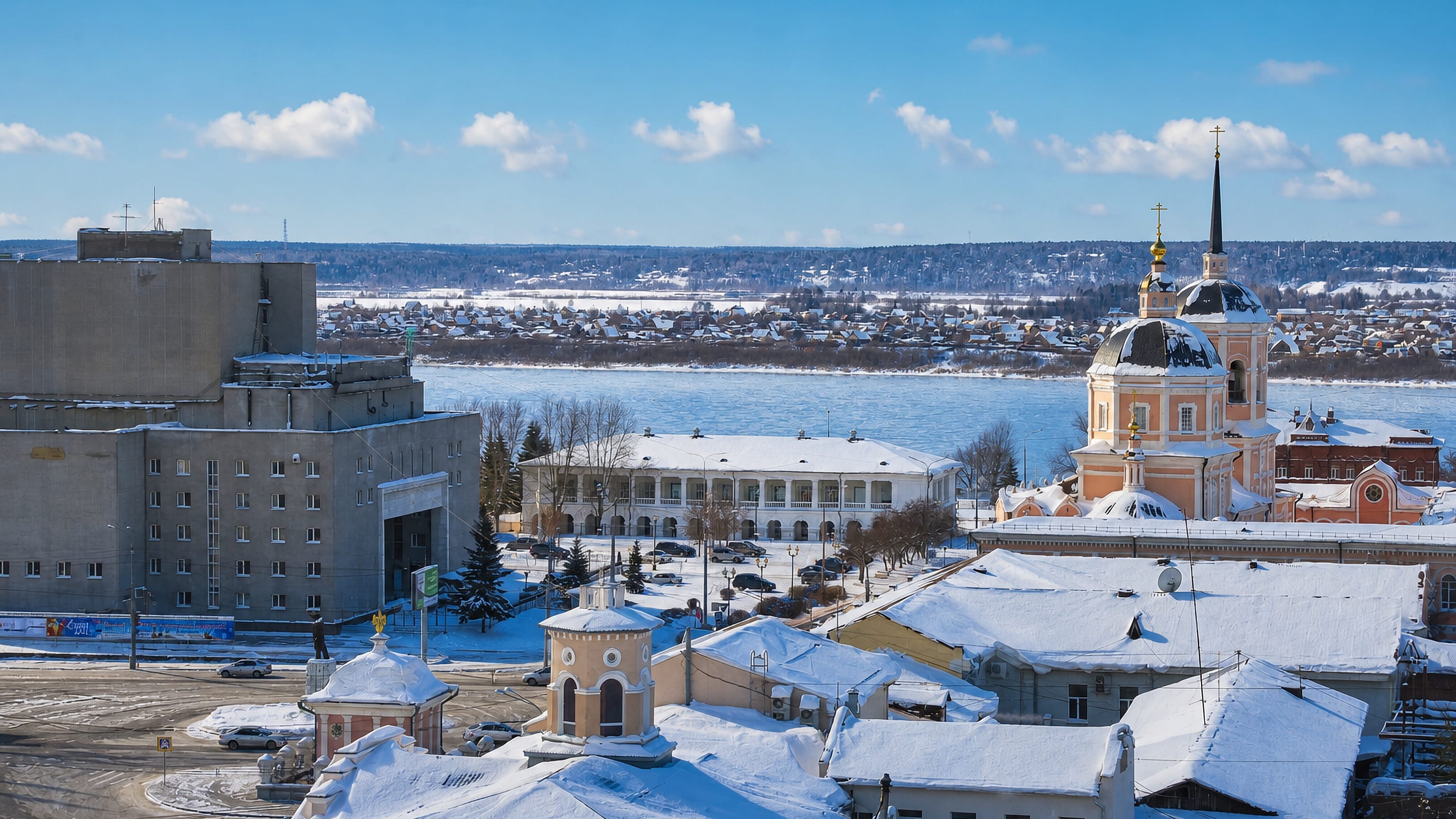
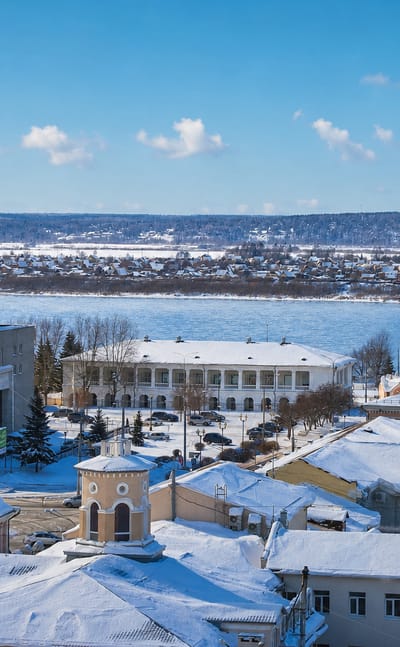
Carved wooden houses line the hills of Tomsk, an old university city in Tomsk Oblast known for its timber lace and the Cathedral of the Epiphany.Where to stay →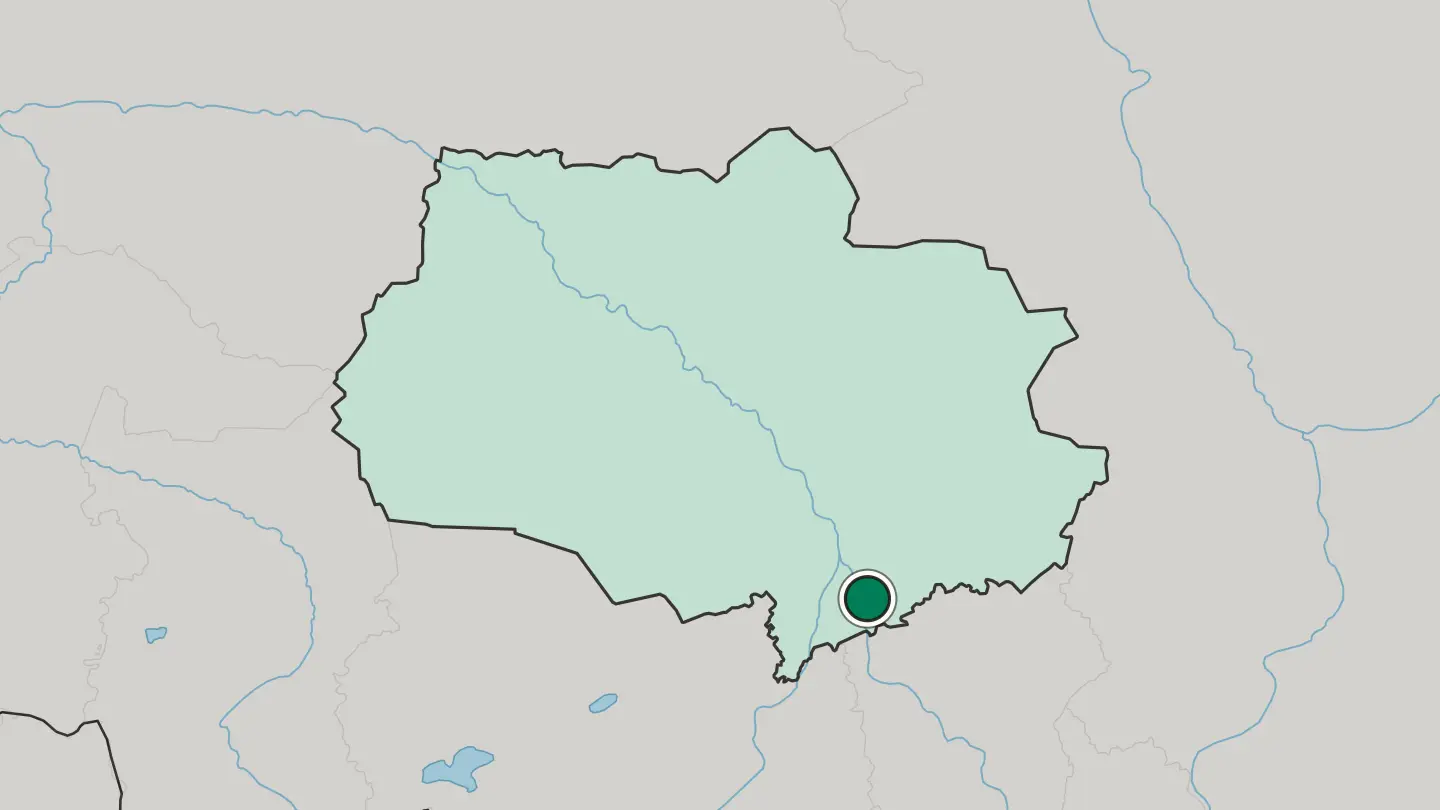
 Russia
Seversk
Seversk, founded in 1949 as Tomsk-7, is a closed city on the right bank of the Tom River, 15 kilometres northwest of Tomsk in Tomsk Oblast.Where to stay →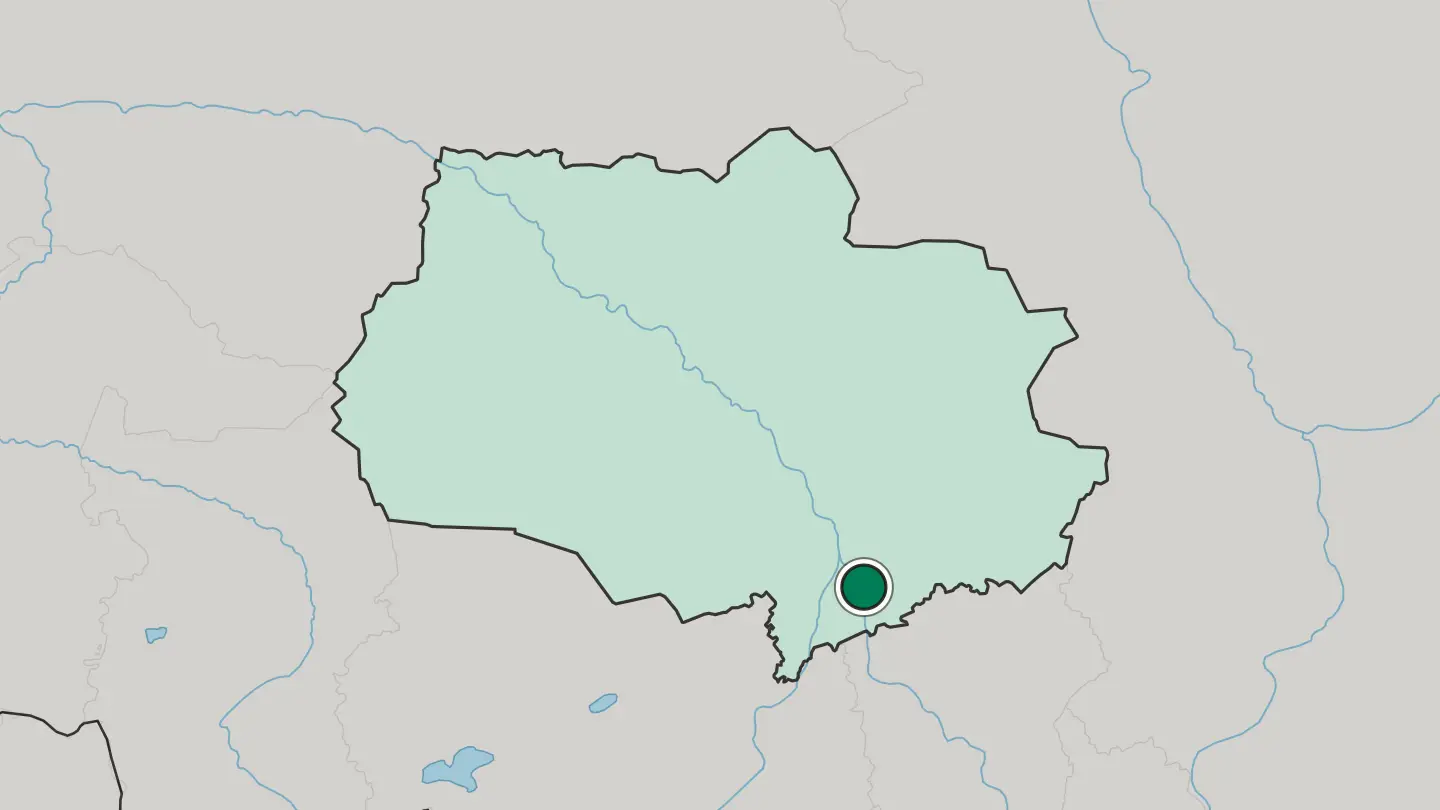
About Tomsk Oblast
Two things define this region.
What is Tomsk Oblast known for?
The first is Tomsk itself, founded in 1604 and home to the oldest university east of the Urals, which earned the city the nickname Siberian Athens. The second is the land around it, an expanse of pine and birch taiga cut by the Ob and studded with the Vasyugan Swamp, the largest mire in the northern hemisphere. Wooden lace houses, timber, and northern oilfields fill in the rest of the picture.
Where is Tomsk Oblast?
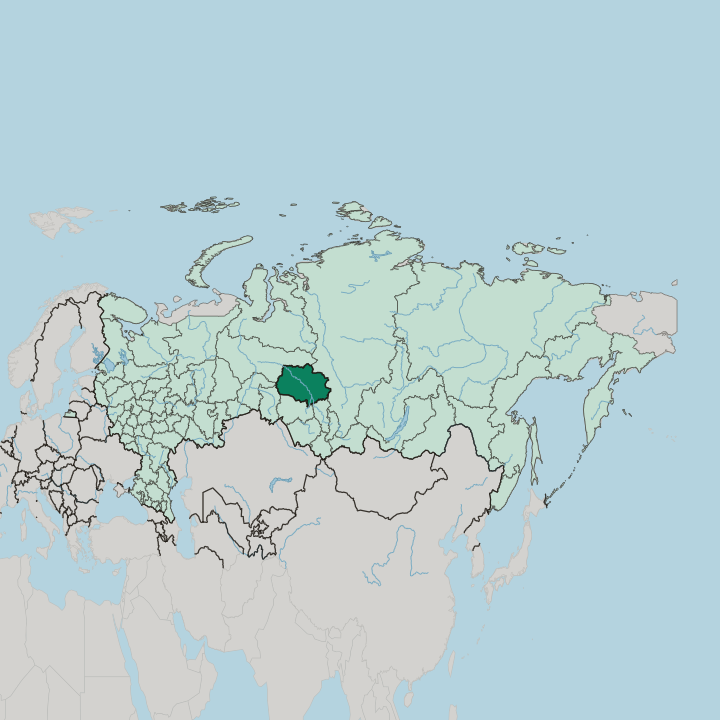
Tomsk Oblast lies in the south-east of the West Siberian Plain, deep in the interior of Siberia and well east of the Ural Mountains. The land is flat and low. The Ob crosses it diagonally from the south-east to the north-west, splitting the region into two almost equal halves and gathering in a fan of tributaries as it goes.
Among them are the Tom, the Chulym, the Ket, the Parabel, and the Vasyugan, the last of which lends its name to the enormous mire that spreads across the western reaches. That mire matters. The Vasyugan Swamp is the largest in the northern hemisphere, a waterlogged sponge of peat, bog pine, and slow channels that swallows much of the interior and shapes where people can and cannot live.
Roughly eighty-five percent of the oblast is taiga forest, a near-unbroken cover of Siberian pine, spruce, fir, larch, and birch. Human settlement clings to the higher, drier ground. The regional capital, Tomsk, stands in the far south on a slight rise above the Tom, close to where that river joins the Ob.
To the south lies Kemerovo Oblast and its Kuznetsk coal country, to the west Novosibirsk, and to the north the forest and bog run on toward the Arctic lowlands with hardly a road to cross them.
What is Tomsk Oblast like?
The culture of the oblast is really the culture of one city carried across a huge forest. Tomsk is a student town. Its identity was fixed in 1888, when the first university in the Asian part of Russia opened its doors after a decree a decade earlier, and generations of students since have given the place the unofficial title of Siberian Athens.
That youth shows in the streets. Alongside the lecture halls stands its wooden architecture, whole avenues of two-storey timber houses whose window frames, gables, and towers are cut into elaborate fretwork that locals call wooden lace. Neo-Gothic, classicism, and Art Nouveau were all rendered in pine by Siberian carpenters who had far more timber than stone to hand.
Beyond Tomsk the human map thins fast. Villages sit along the rivers, and the wider region keeps the memory of exile and settlement that runs through so much of Siberia, from Tatar and Selkup communities of the north to the descendants of those sent east under the tsars and later. Russian is the working language everywhere.
The rhythm is quieter the farther you get from the university quarter, out where the taiga takes over.
What is the history of Tomsk Oblast?
Tomsk began as a frontier fort. In 1604, by decree of Tsar Boris Godunov and at the request of the Eushta chief Toyan, Russian troops raised a stockade above the Tom to guard the freshly claimed lands against nomad raids. For nearly three centuries the town grew as a trade and administrative post on the road across Siberia, until the Trans-Siberian Railway was pushed through to the south and bypassed it.
The oblast in its present borders is far younger, carved out as a separate region only in 1944. Oil and gas found in the northern swamps later reshaped its economy.
What is the climate of Tomsk Oblast?
Winters here are long and severe. Sitting deep inland on the West Siberian Plain, far from any moderating sea, the oblast swings hard between a January that hovers around twenty below and a short July that warms into the high teens. Snow blankets the taiga for roughly half the year.
Break-up on the Ob and the Tom comes late, and the thaw floods the low ground and feeds the mires. Summer is brief, green, and plagued by mosquitoes over the swamps.
How do you get to Tomsk Oblast?
Flying is the simplest way in. Bogashevo Airport, south-east of Tomsk, links the region to Moscow, Novosibirsk, and other Russian cities. The railway is the twist: the main Trans-Siberian line runs about fifty kilometres to the south and misses Tomsk entirely, so trains reach the city on a branch that climbs up from the junction town of Tayga.
From Tomsk, roads and river lead on into the interior. Reaching the northern oil and swamp districts often means light aircraft or a boat along the Ob.
Common questions
What is the best area to stay in Tomsk Oblast?
Tomsk: the wooden-lace university quarter.
Good for
More regions in Russia
Updated October 2026