Sweden · Norrbotten County
Where to Stay in Luleå, Norrbotten County
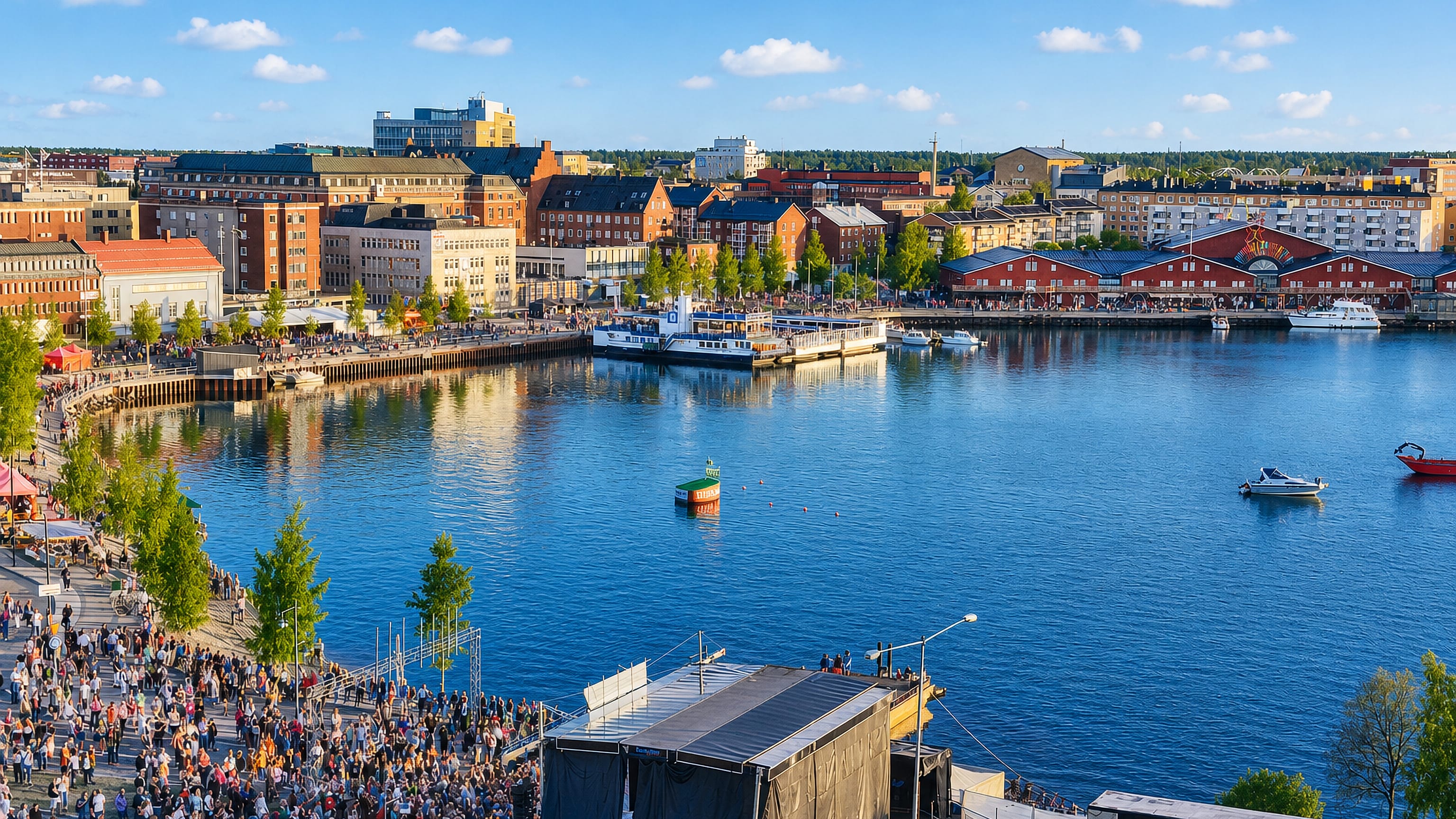
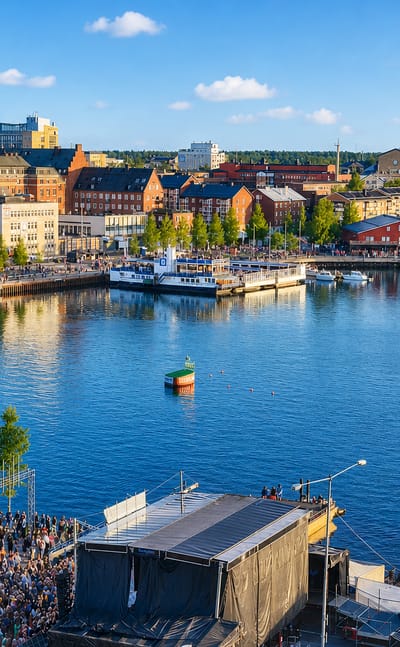
Luleå is the county seat of Norrbotten County and a Baltic-coast city in north-eastern Sweden, set among a wide brackish archipelago of islands.
Hotel links are affiliate links: booking through them may earn us a commission, at no extra cost to you. It never affects how places are ranked. How this works


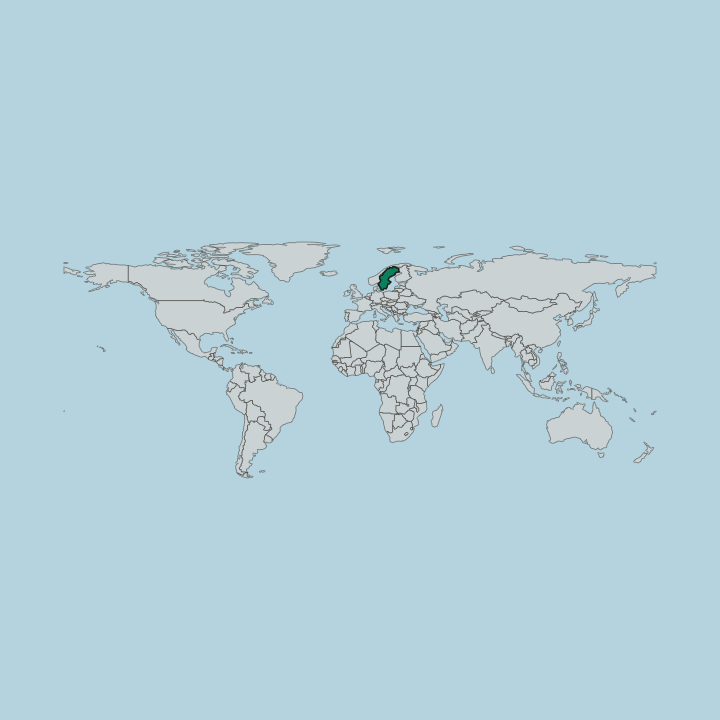
Where to stay in Luleå
The right area depends on your trip — here's what each neighbourhood is best for.
 LuleåSwedencampus visits
Björkskatan
apartments and chain hotels bordering the university campusBjörkskatan → LuleåSweden
Östermalm
Östermalm is a residential area of Luleå, within Luleå kommun in north-eastern Sweden.Where to stay →LuleåSwedenSvartöstaden
Svartöstaden is a district on the south-eastern side of Luleå, the coastal city in north-eastern Sweden.Where to stay →LuleåSwedenMjölkudden
Mjölkudden is a district on the north-western side of Luleå, the coastal city in north-eastern Sweden.Where to stay →Hotel links are affiliate links: booking through them may earn us a commission, at no extra cost to you. It never affects how places are ranked. How this works
Find hotels in Luleå
Direct booking searches for these neighbourhoods.
Luleå centrum
the peninsula grid between harbour and stationFind hotels in Luleå centrumheritage staysGammelstad
guesthouses among the world-heritage church cottagesFind hotels in Gammelstadsteelworks visitsHertsön
residential hotels out toward the SSAB worksFind hotels in HertsönHotel links are affiliate links: booking through them may earn us a commission, at no extra cost to you. It never affects how places are ranked. How this works
Things to do in Luleå
Ranked by global recognition; descriptions from Wikidata (CC0).
Churches & Religious Sites
5- Örnäsets kyrka Heritage
- Mjölkuddskyrkan Heritage
- Porsökyrkan Heritage
- Hertsö Church Heritage
- Björkskatakyrkan Heritage
Stadiums & Sports
1- Pontushallen
worth knowingacross 2 categories in Luleå
About Luleå
What is Luleå known for?
Luleå's reputation runs from a medieval church town to a frozen sea. Gammelstad Church Town, a tight grid of red timber cottages around the stone Nederluleå kyrka, is listed as a UNESCO World Heritage Site and ranks as the best-preserved church town in the country. Offshore spreads the world's largest brackish-water archipelago, broken into 1,312 islands.
Steel from the SSAB works and engineering from Luleå University of Technology give the modern town its weight. The sea freezes solid each winter.
What are the main landmarks in Luleå?
The city's signature sight is Gammelstad, the church town inland, where hundreds of wooden cottages crowd around a tall medieval stone church once used by parishioners travelling far to worship. In the modern centre the brick Gustafskyrkan rises as a landmark of the industrial era, and sports and events fill the Pontushallen. Newer suburbs carry their own churches, from Björkskatakyrkan to Örnäsets kyrka.
The contrast is the point. A medieval church town and a steel city share one municipality.
What is the history of Luleå?
Luleå began as a church town. The settlement grew around Nederluleå kyrka, a stone church consecrated in the 1490s, where parishioners from a scattered Lappland hinterland lodged in clustered wooden cottages between services. King Gustav II Adolf granted the place town privileges in 1621, fixing a trading port at the river mouth to draw the far north into the Swedish realm.
Post-glacial land uplift soon worked against it. The shoreline kept rising, the harbour silted into useless shallows, and after barely three decades the burghers abandoned the original site and shifted the town several kilometres seaward to the Sandön peninsula in 1649. Gammelstad, the church town, stayed behind.
The new Luleå burned to the ground in 1887, then rebuilt in brick and stone along its grid. A year later the Malmbanan railway arrived, and the harbour became the Baltic outlet for iron ore hauled down from the ore fields of Gällivare and Kiruna. Heavy industry followed the rails.
The Norrbottens Järnverk steelworks rose in the 1940s, a plant later folded into SSAB, while Luleå University of Technology opened its doors in 1971 as the country's northernmost engineering school. The old kyrkstad, with its tight ranks of red cottages around the medieval church, was inscribed as a UNESCO World Heritage Site. Each winter the sea ice still seals the archipelago shut, as it did when the first traders waited for the thaw.
Where is Luleå?
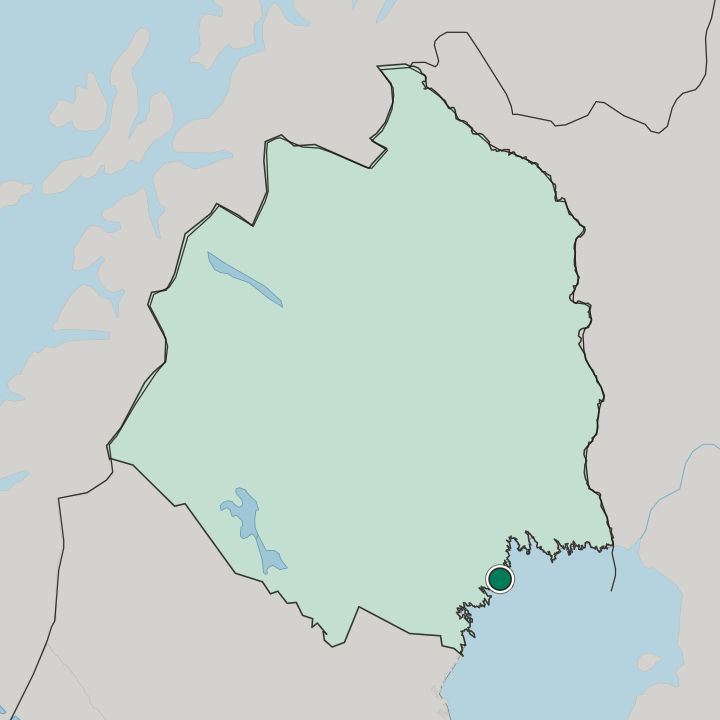
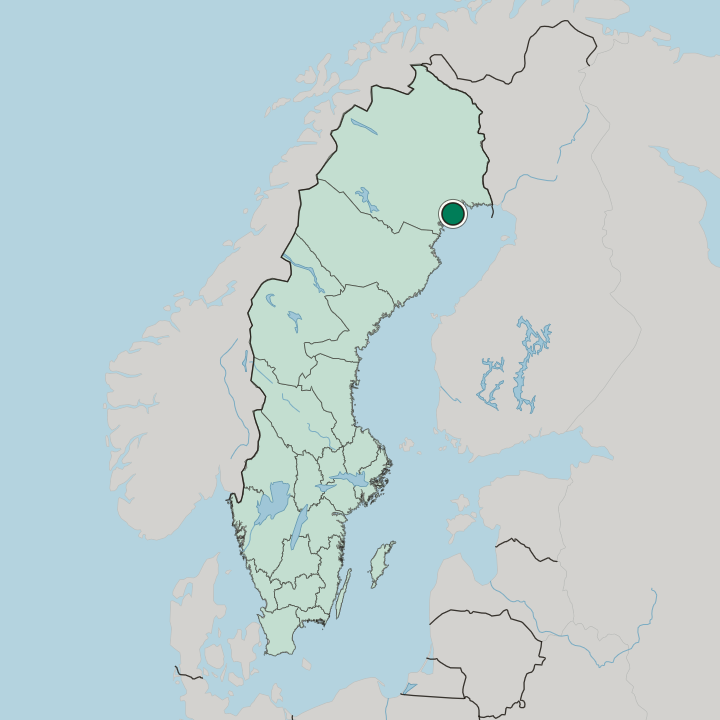
Luleå lies in the south-eastern part of Norrbotten County, on the coast where the Lule River reaches the Bay of Bothnia. Offshore, an archipelago of more than a thousand islands, skerries, and islets spreads across brackish water fed by the river, by repute the largest brackish-water archipelago anywhere. The city itself sits on a peninsula and nearby islands, low and close to the sea.
Land is still rising here. The old shoreline keeps moving out.
What is the climate of Luleå?
Luleå has a subarctic climate, tempered slightly by the Baltic in summer and locked down hard in winter. The cold season is long, dark, and snowy, and the brackish sea freezes solid enough to carry ploughed ice roads out to the islands. Winter is serious here.
Summers are short, mild, and remarkably bright, with near-endless daylight around midsummer that fills the long evenings, before autumn returns the dark. The shift between them is quick.
How do you get to Luleå?
Luleå is the transport hub of the far north. The E4 coastal motorway passes through, and the main northern railway and the ore line meet here, linking the city south toward Stockholm and inland to the mountains. Luleå Airport, the busiest in Norrbotten, carries daily flights to the capital and beyond.
The port handles ore and cargo year-round, kept open by icebreakers. Connections fan out from here. Most long-distance visitors fly in or take the night train.
Common questions
What is the best area to stay in Luleå?
Luleå centrum: a city base with dining and transport. Gammelstad: heritage stays. Hertsön: steelworks visits. Björkskatan: campus visits.
Good for
More cities in Norrbotten County
Updated October 2026