Sweden · Norrbotten County
Where to Stay in Pajala, Norrbotten County
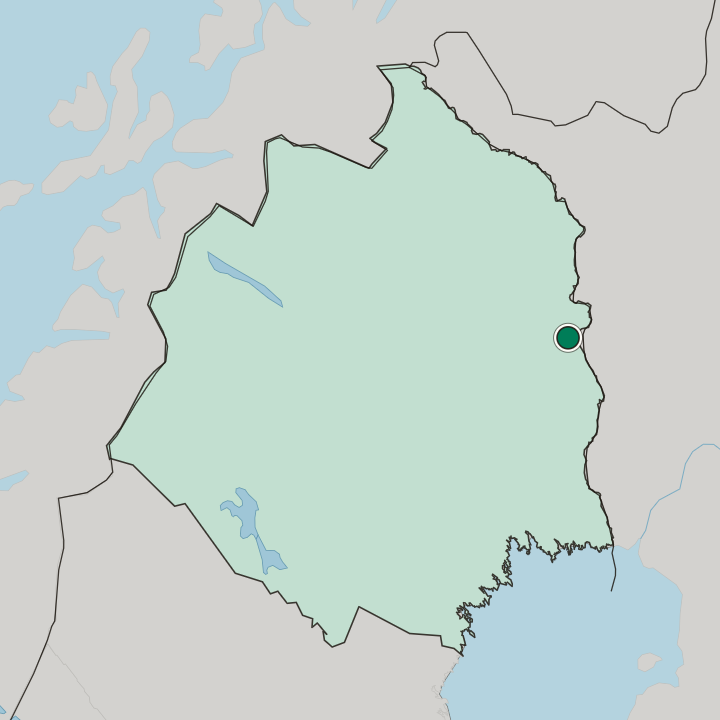
Pajala is a municipality in northern Norrbotten on the Torne River, the heart of Tornedalen near the Finnish border.
Hotel links are affiliate links: booking through them may earn us a commission, at no extra cost to you. It never affects how places are ranked. How this works


Where to stay in Pajala
Where visitors usually base themselves, and why.
Pajala keeps most of its rooms in the village centre, a small cluster of hotels, guesthouses, and cabins near the church and the river. Pajala offers only a handful of beds. Book ahead, especially around the midsummer market and the autumn hunting season, when the town fills and the few rooms go quickly.
Stay in the centre if you want to walk to Læstadiuspörtet, the river, and the shops; it suits travellers using Pajala as a base for fishing, the Finnish border crossing, or the road further north. Outside the village the municipality scatters into small Tornedalen settlements such as Kengis and Tärendö, where lodging means the occasional cabin or fishing camp rather than a hotel, and where you trade convenience for quiet and dark skies. Anyone wanting hotel choice and an airport nearby is better basing in Kiruna or down on the coast and visiting Pajala on a loop.
Find hotels in Pajala
Direct booking searches for these neighbourhoods.
Pajala centrum
hotels and cabins near the church, river and LæstadiuspörtetFind hotels in Pajala centrumcabins under dark skiesKengis
a scattered Tornedalen settlement near old ironworks. Few places to stay nearby — book ahead.Find hotels in Kengisremote fishing campsTärendö
a small inland village away from the centre. Few places to stay nearby — book ahead.Find hotels in TärendöHotel links are affiliate links: booking through them may earn us a commission, at no extra cost to you. It never affects how places are ranked. How this works
About Pajala
Pajala carries two strong reputations.
What is Pajala known for?
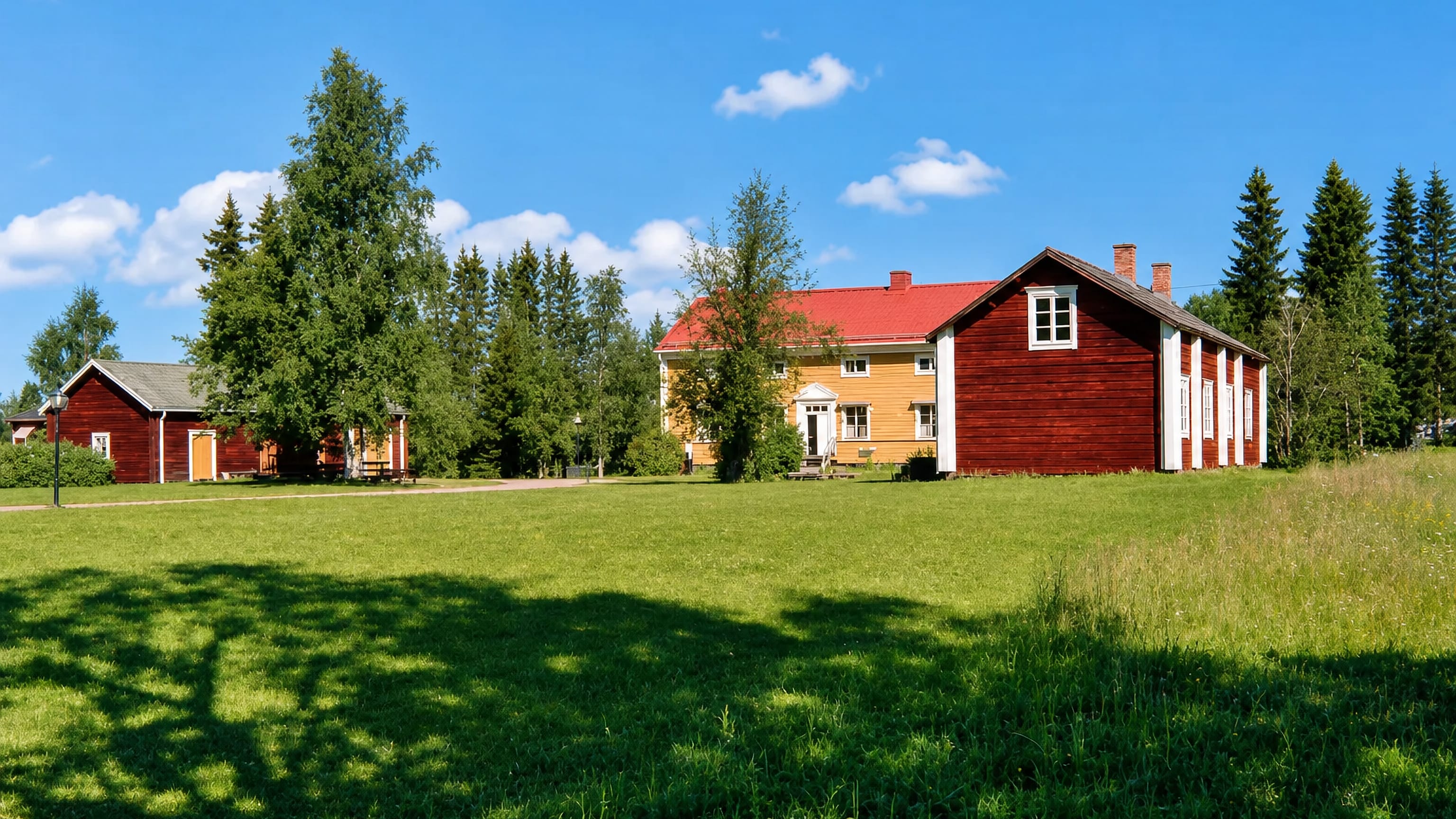
It was the long-time home of the revivalist preacher Lars Levi Læstadius, whose stern Lutheran movement still shapes religious life across the north, and his preserved cottage, Læstadiuspörtet, stands in the village. The town also lends its setting to a well-known Swedish novel of growing up in 1960s Tornedalen, and each summer a large traditional market fills its streets.
What are the main landmarks in Pajala?
The white Pajala kyrka stands near the river, a large 19th-century church for so small a town, built when the parish stretched across a vast, thinly settled land. Beside it the past is kept at Læstadiuspörtet, the timber parsonage where the preacher lived and wrote. Outside town a tall hill draws visitors on clear summer nights to watch the sun circle without setting.
The landmarks are modest. Their meaning is local and deep.
What is the history of Pajala?
Pajala grew as a river village in Tornedalen, the valley of the Torne, long a single cultural region where Finnish, Sami, and Swedish life mixed along the water. In the 17th century an ironworks at nearby Kengis brought early industry to this remote valley, drawing labour and trade north. For generations the river was road, larder, and boundary all at once.
Two events marked the wider area. When Sweden lost Finland in the early 19th century, the Torne River became an international border, splitting Tornedalen between two states while families and language stayed shared across it. Around the same time the Læstadian revival began here, a severe Lutheran awakening that spread from these parishes across the north and into emigrant communities abroad.
Mining and forestry later reshaped the local economy, but Pajala has stayed small. Its history is the history of a border valley, bilingual, devout, and stubbornly remote.
Where is Pajala?
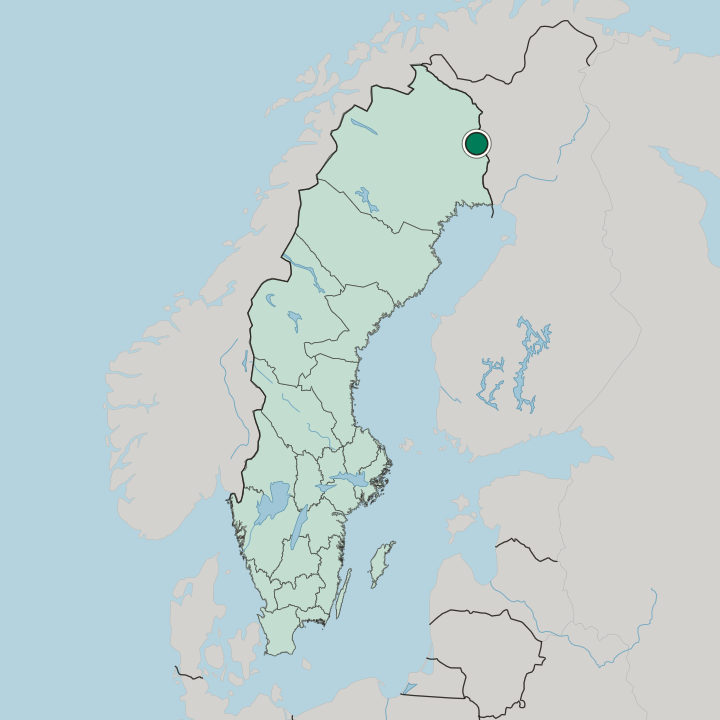
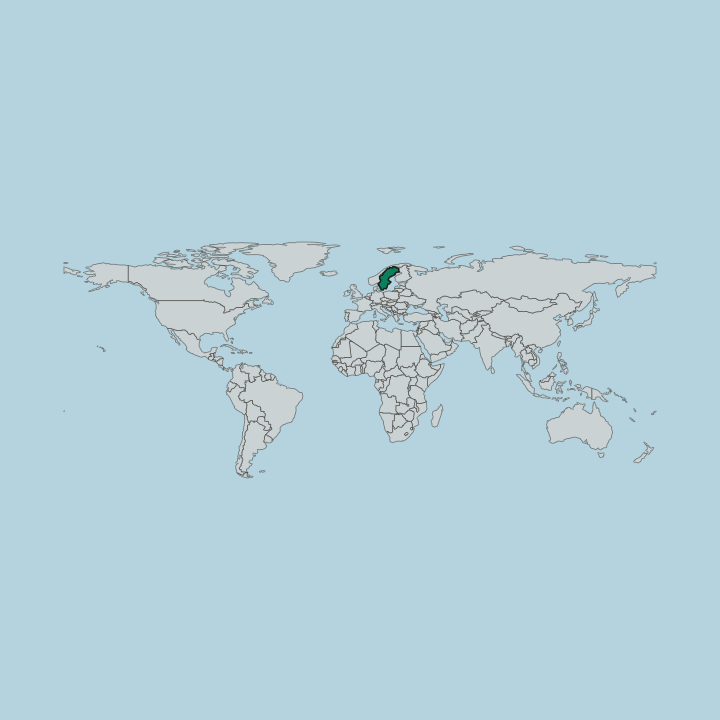
Pajala lies in the eastern part of Norrbotten County, well north of the Arctic Circle, in Tornedalen, the broad valley of the Torne River. The land here is low and forested. Pine and birch run to the horizon, broken by mires, lakes, and isolated fells that rise above the flat taiga and draw walkers up for the midnight sun.
Eastward the Torne and its tributaries mark the border with Finland, so the edge of the municipality is also the edge of Sweden, while the river itself threads south through village after village toward the Gulf of Bothnia. Roads are few and long.
What is the climate of Pajala?
Pajala has one of Sweden's most continental climates, far from the moderating sea. Winters are severe, long, dark, and bitterly cold, with deep snow and some of the lowest temperatures recorded in the country. The cold is dry and still.
Summers swing the other way, short but genuinely warm by day under a sun that never sets at midsummer, before the brief season tips back toward early frost. Spring and autumn pass fast.
How do you get to Pajala?
Pajala sits off the main rail lines, reached mostly by road. The roads are long and quiet. Route 99 follows the Torne valley north along the border, and route 395 climbs inland from the coast near Kalix and Överkalix.
A small airport offers limited flights, while the nearest railheads and the larger airport lie hours away at Kiruna or down on the coast. Most visitors drive in, often as one leg of a longer Tornedalen loop.
Common questions
What is the best area to stay in Pajala?
Pajala centrum: fishing trips and border crossings. Kengis: cabins under dark skies. Tärendö: remote fishing camps.
Good for
More cities in Norrbotten County
Updated September 2026