Sweden · Norrbotten County
Where to Stay in Piteå, Norrbotten County
Piteå is a municipality in Norrbotten County, a Baltic-coast town at the mouth of the Pite River that locals simply call Pite.
Hotel links are affiliate links: booking through them may earn us a commission, at no extra cost to you. It never affects how places are ranked. How this works


Where to stay in Piteå
Where visitors usually base themselves, and why.
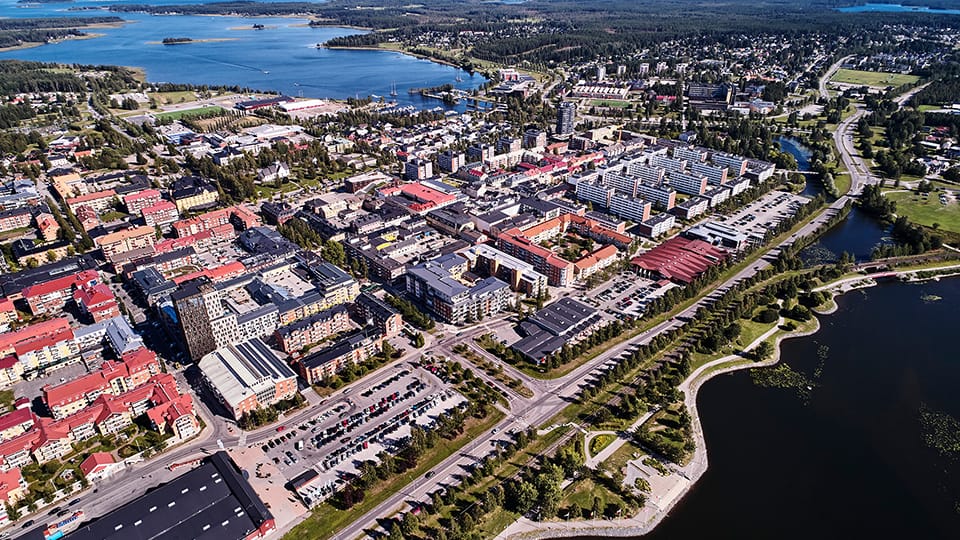
Most visitors base themselves in the compact centre, at the mouth of the Pite River on the Baltic coast. Streets here run within a short walk of the harbour, the shops, and Piteå stadskyrka, while the concert hall at Acusticum keeps culture close through the dark months. Pulp and paper mills along the river still set the working rhythm beyond the old streets.
Pite is small. A car helps for the beaches but earns little inside the town itself, where most rooms sit within a few blocks of one another. If you want everything at the door all year round, settle in the centre.
The other obvious base lies south of town at Piteå Havsbad. This is the resort quarter, a long beach strip where cabins and low seaside hotels back onto the warm summer water that draws Swedes from far inland. Beds there grow scarce in the brief sub-Arctic summer, so book well ahead.
Families lean toward the cabins for the sand and the room to spread out, while couples after quiet tend to prefer the centre once the season fills the shore. Out of season the strip empties. The town becomes the easier choice.
Find hotels in Piteå
Direct booking searches for these neighbourhoods.
Centrum
The compact town centre at the mouth of the Pite River, walkable to the harbour, the shops and the concert hall at Acusticum.Find hotels in Centrumfamilies wanting beach and space in summerPiteå Havsbad
The resort strip south of town, with cabins and seaside hotels on a long beach known for warm summer swimming; beds fill in the short season. Rooms are few around here — worth securing early.Find hotels in Piteå HavsbadHotel links are affiliate links: booking through them may earn us a commission, at no extra cost to you. It never affects how places are ranked. How this works
Things to do in Piteå
Ranked by global recognition; descriptions from Wikidata (CC0).
Museums & Galleries
1- Piteå Museum
Churches & Religious Sites
4- Öjeby Church Heritage
- Piteå City Church Heritage Church of Sweden church building
- Furubergskyrkan Heritage church in Munksund area of Piteå municipality
- Strömnäskyrkan Heritage
Castles & Historic Sites
1- Kungsstenen, Minnesstenen Heritage
Stadiums & Sports
1- Piteå Wall of Fame
worth knowingacross 4 categories in Piteå
About Piteå
Pite draws Swedes north.
What is Piteå known for?
Piteå Havsbad, a long stretch of beach just south of town, turns the brief sub-Arctic summer into a season of warm-water swimming that surprises first-time visitors expecting only cold. The town keeps a strong musical streak too, from the concert hall at Acusticum to a full calendar of festivals, while pulp and paper mills along the river anchor everyday working life.
What are the main landmarks in Piteå?
The Piteå stadskyrka rises over the central square, its broad timber frame typical of the northern coast. A few streets away, the Piteå museum keeps the town's seafaring and forestry past. Out on the old ground stands the Kungsstenen, a memorial stone tied to royal history, while parish churches such as Furubergskyrkan and Strömnäskyrkan mark the surrounding neighbourhoods.
None of it is grand. The appeal is in how church, water, and working harbour sit side by side.
What is the history of Piteå?
Piteå stands where the Piteälven empties into the Gulf of Bothnia, on the low coast of north-eastern Sweden. King Gustav II Adolf granted the settlement its town privileges in 1621, on a site upstream that became the church town of Öjebyn. For decades the young port traded the timber, tar, and salmon carried down from the river valley.
Then came fire. The wooden town burned to the ground in 1666, and its people carried what they could downstream to the island of Häggholmen, where the centre has stood ever since. Rows of red church cottages ring the old parish at Öjebyn.
The relocated town kept its living from timber and shipping, and a harbour quarter grew along the sound. Piteå landsförsamlings kyrka still stands at Öjebyn, older than the chartered town itself. The surrounding parishes, Öjebyn, Hortlax, and the river hamlets, long looked to Piteå for their market and their port.
Sawmills and pulp mills took hold as the coast industrialised, and a railway branch tied the town into the network running up the Norrland coast. Music took root as well, and the schools at Framnäs made the town a centre for it across the north. The river still sets the pace.
Its broad sandy shore has drawn bathers to the Bothnian coast for generations, where the Piteälven spills its fresh water into the brackish sea.
Where is Piteå?
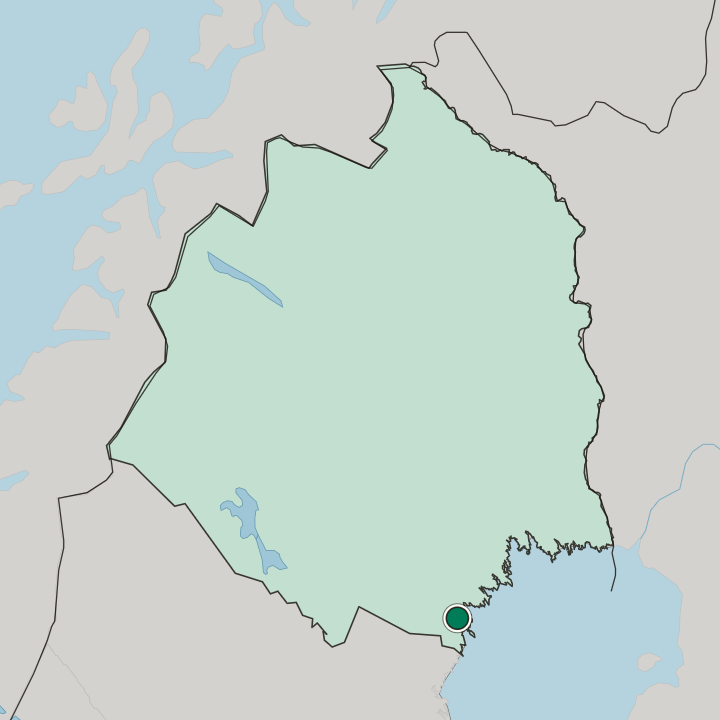
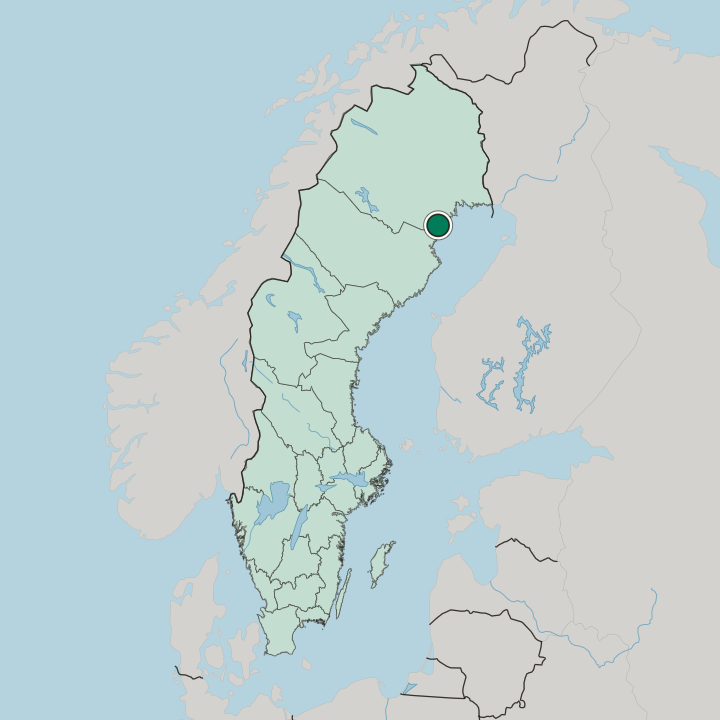
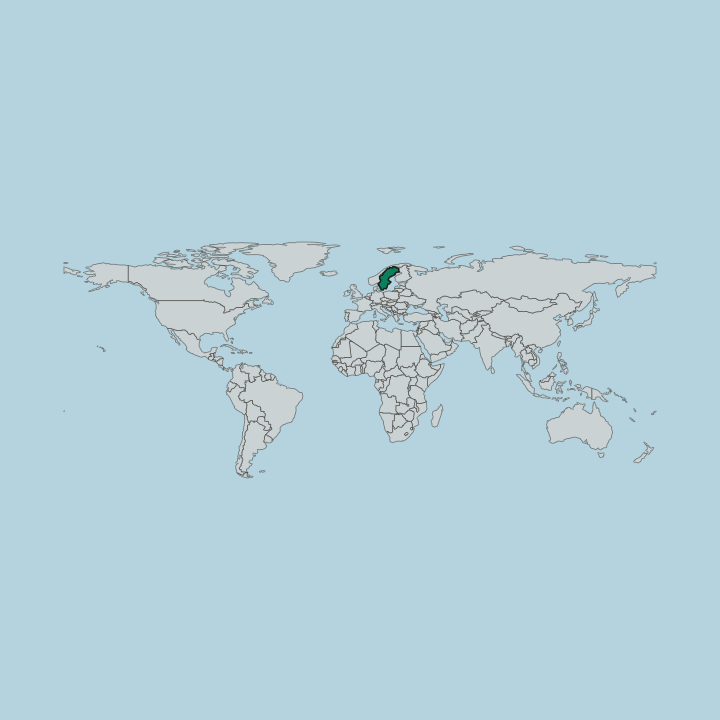
Piteå lies in the south-eastern part of Norrbotten County, where the Pite River empties into the Bay of Bothnia. The coast here breaks into a low archipelago of islands and skerries, and the land behind it is flat, forested, and threaded with water. The town sits on and around a river-mouth point, with Öjebyn inland and the long beach at Havsbad to the south.
Winters lock the bay in ice. Summers open it for boats.
What is the climate of Piteå?
The coast gives Piteå a subarctic climate softened a little by the open sea. Winters run long and cold, the bay frozen for months, the daylight short. Spring comes late and fast.
Summers stay mild and bright, stretched by very long northern days that keep evenings light well past a southern bedtime, and the nearby water lends the warm season much of its appeal. Autumn turns quickly back toward frost.
How do you get to Piteå?
The European route E4 runs straight through Piteå, linking it south toward Umeå and north to Luleå. Long-distance buses follow the same coast road. The nearest large airport sits at Luleå, a short drive up the coast, and rail on the northern lines passes close by, though most travellers arrive by road.
Piteå's own harbour still handles cargo, a reminder that the sea was the first way in.
Common questions
What is the best area to stay in Piteå?
Centrum: a year-round base near the harbour and culture. Piteå Havsbad: families wanting beach and space in summer.
Good for
More cities in Norrbotten County
Updated October 2026