Turkey
Giresun, Turkey — Towns & Travel Guide
Giresun is a province on Turkey's eastern Black Sea coast, its hazelnut country and cherry-named capital backed by the steep Pontic Mountains.
Hotel links are affiliate links: booking through them may earn us a commission, at no extra cost to you. It never affects how places are ranked. How this works


Towns & cities in Giresun
One town here has its own guide — it links to where to stay.

 Turkey
Giresun
Giresun is a Black Sea port of northern Turkey, an ancient town on a green cape below the Pontic mountains, the old home of the cherry.Where to stay →
Hotel links are affiliate links: booking through them may earn us a commission, at no extra cost to you. It never affects how places are ranked. How this works
About Giresun
To buyers, Giresun means hazelnuts.
What is Giresun known for?
The province and neighbouring Ordu together grow close to two-fifths of Turkey's crop, and Giresun-grade nuts are prized above all others in the trade. Its story is older than that. By tradition Rome first carried the cultivated cherry into Europe from these shores, and the fruit's Latin name cerasus shares its root with the old port of Cerasus.
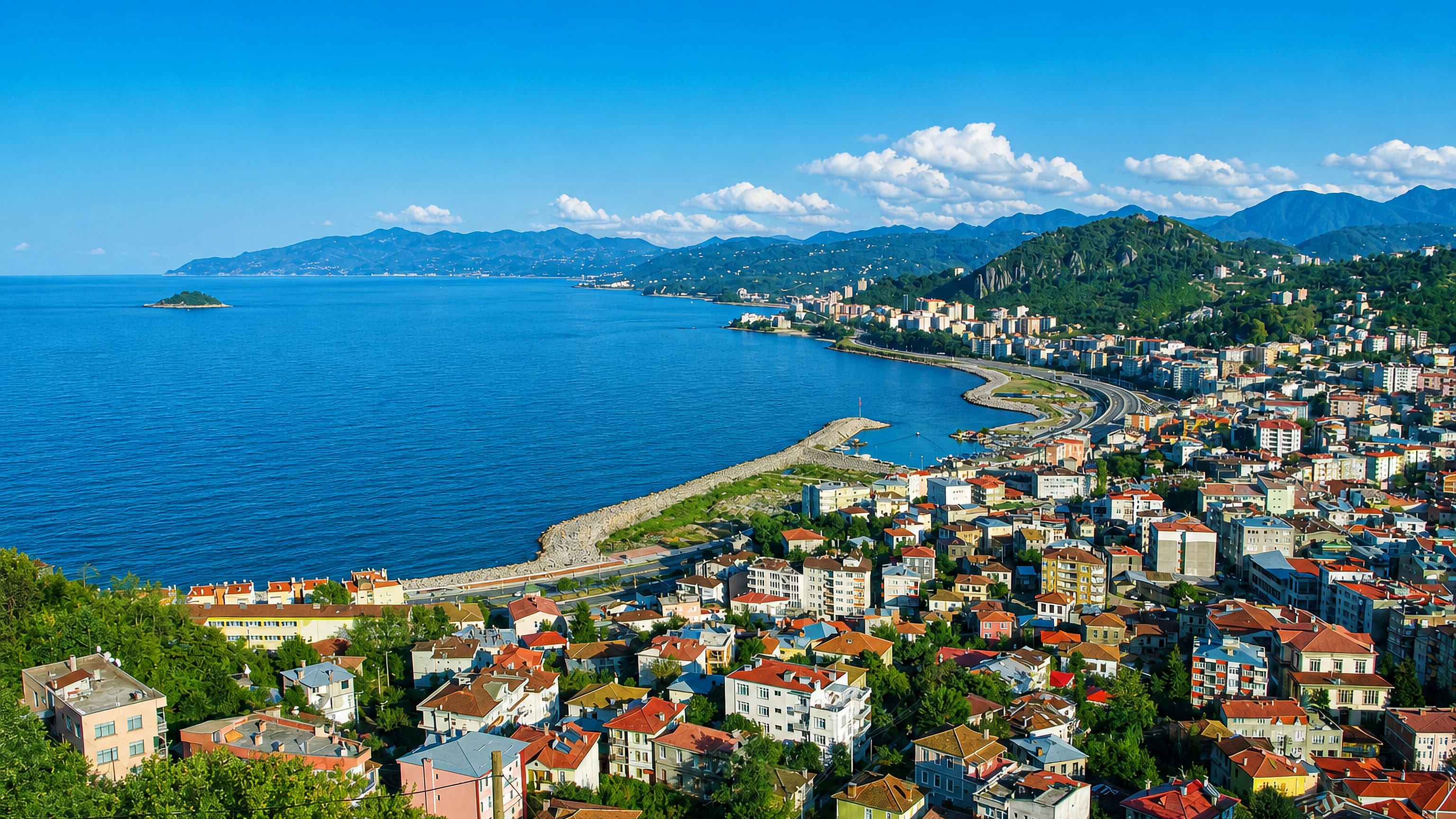
The capital sits on a wooded cape above the Black Sea, its Byzantine castle looking down on the harbour. Steep hazelnut orchards climb the slopes behind, and highland pastures open above the tree line.
Where is Giresun?
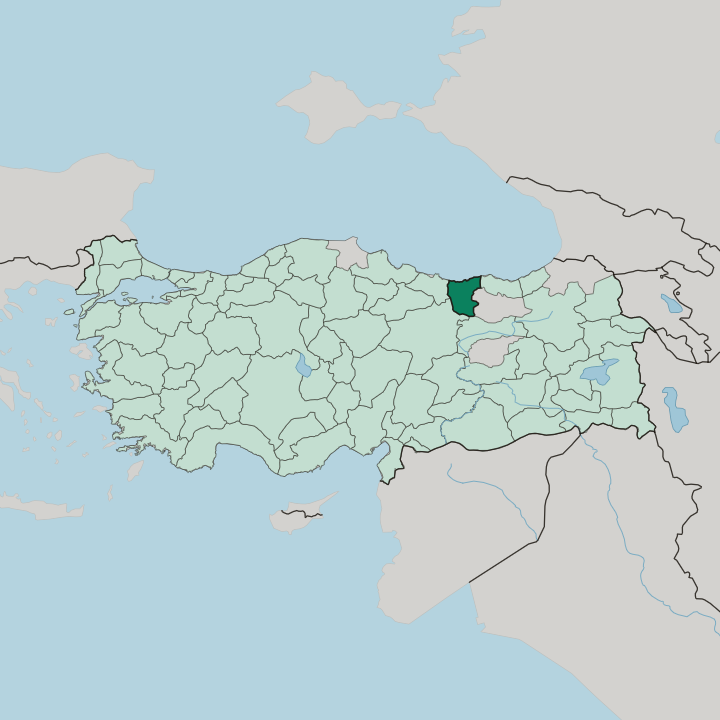
Giresun lies on the eastern stretch of Turkey's Black Sea coast, midway along the shore that runs toward the Georgian border. Ordu adjoins it to the west and Trabzon to the east, with Gümüşhane over the mountains to the south-east and the inland provinces of Sivas and Erzincan beyond the watershed. The coast is narrow.
Behind a thin ribbon of shore the land climbs at once into the Pontic Mountains, the barrier of green ridges that shuts the Black Sea off from the Anatolian interior. The Giresun Mountains form the local crest of that range. Rivers such as the Aksu cut short, steep valleys down to the sea, and hazelnut orchards cover almost every slope that faces the water.
Above the orchards the mountains open into broad summer pastures. The yayla country around Kümbet, Bektaş, and Kulakkaya draws highland herders and, in the warm months, city families escaping the muggy shore. Offshore lies a rarity.
Giresun Island, a rocky islet crowned with ruins, is the only major island in the Turkish Black Sea, sitting just east of the capital. Deeper inland the land changes character altogether, and the fortress town of Şebinkarahisar stands among dry crags on the far side of the range, where the streams drain inland toward the Kelkit rather than straight down to the coast.
What is Giresun like?
Life here follows the rhythms of the Black Sea coast. The music is fast and driven. Men dance the horon in tight lines, shoulder to shoulder, quivering to the reedy sound of the kemençe, the small upright fiddle that Görele made famous across the region.
Drums and the shrill zurna carry the older village tunes. Every spring the capital holds the Aksu Festival at the mouth of the Aksu stream, a celebration rooted in an old rite of rowing out to Giresun Island and circling it for luck and fertility. The hazelnut governs the working year, and whole families still climb to the highland yayla when the coast turns muggy in high summer.
Turkish is the common language, spoken in a broad Black Sea accent that coastal Turks recognise at once. The kitchen leans on what the wet hills give. Hazelnuts turn up in everything from breakfast to sweets, cornbread stands in for wheat, and dark cabbage cooked slow with beans anchors the winter table.
Faith, trade, and migration have all left marks on the towns. Yet the strongest thread is the sea itself, and the hardy, outward-looking temperament of people who have always lived between steep mountains and deep water.
What is the history of Giresun?
The coast was Greek first. The port here was Kerasous, a town of the Kingdom of Pontus. Around 183 BC its king Pharnaces I seized the place and renamed it Pharnacia after himself; the older name Kerasous returned only under Rome, in 64 AD, its root the Greek word for the cherry, which Latin would carry into half the languages of Europe.
Rome, then Byzantium, held the harbour for centuries. The castle on the headland was raised by the Komnenoi in 1302. Ottoman rule brought the hazelnut trade that still defines the province, shipping the crop out through Black Sea ports to markets far inland and abroad.
What is the climate of Giresun?
Giresun is wet. The Pontic Mountains trap the damp air rolling in off the Black Sea, so rain falls in every season and the hills stay a deep, dripping green. Summers are warm and sticky rather than hot.
Winters on the shore are cool and grey, seldom bitter, though heavy snow piles up on the yayla and the passes inland. The mountain wall makes the difference, holding the mild sea air along the coast while the interior around Şebinkarahisar runs drier and colder behind it.
How do you get to Giresun?
Most visitors fly in over the sea. The regional airport sits on a man-made island off the coast between Giresun and Ordu, built out into the Black Sea near Piraziz, and shuttle buses run the short hop to the city. No rail line serves Giresun.
The coastal highway does the rest, threading every town along the shore from Ordu in the west through Bulancak and Tirebolu toward Trabzon in the east. Long-distance coaches follow that road, and dolmuş minibuses climb the valleys inland to the mountain towns and the yayla.
Common questions
What is the best area to stay in Giresun?
Giresun: a first base on the Black Sea coast. Bulancak: the shore west of the capital. The Giresun Mountains yayla: cool highland summers. Şebinkarahisar: the mountainous interior.
Good for
More regions in Turkey
Updated October 2026