South Africa
Northern Cape, South Africa — Towns & Travel Guide
The Northern Cape is South Africa's largest and emptiest province, reaching from the Orange River across the red Kalahari to the daisies of Namaqualand.
Hotel links are affiliate links: booking through them may earn us a commission, at no extra cost to you. It never affects how places are ranked. How this works


Towns & cities in Northern Cape
Pick a town or city — each links to where to stay.

 South Africa
Kimberley
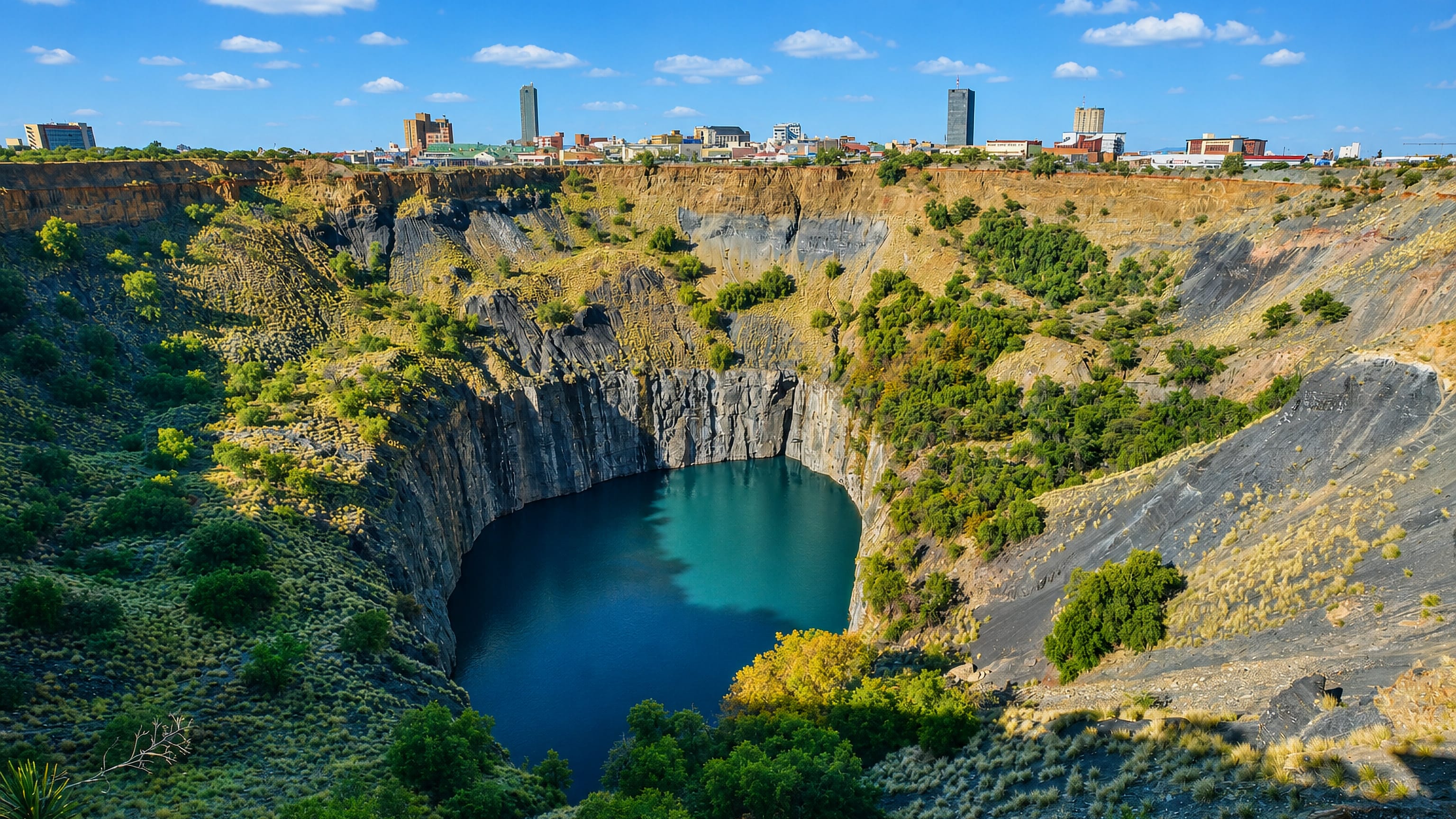
Kimberley is a city of the Northern Cape in South Africa, the old diamond-rush town, built around the great pit that miners dug by hand for diamonds.Where to stay →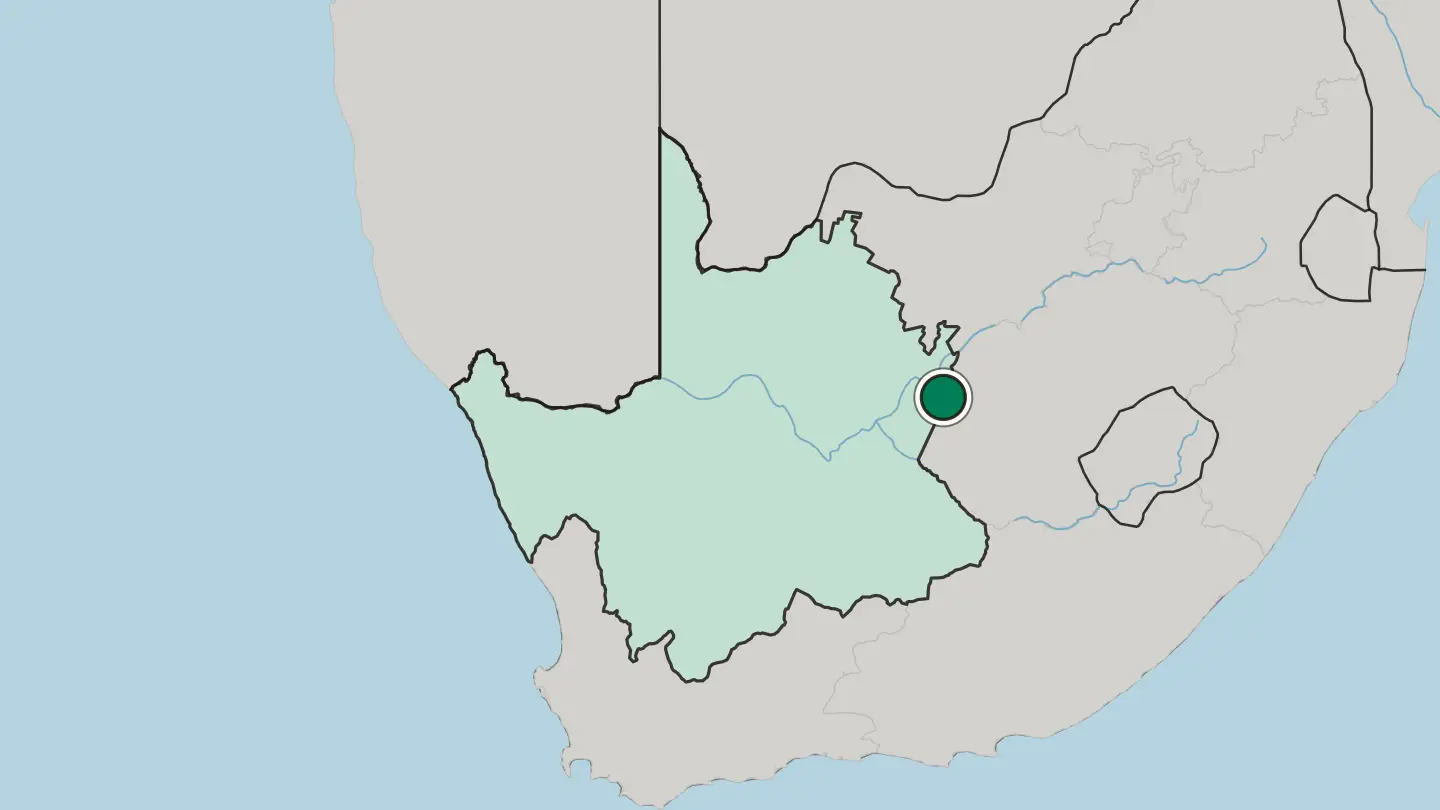 South Africa
Upington
Upington stands on the banks of the Orange River in South Africa's Northern Cape, a town founded in 1873 and named for Sir Thomas Upington.Where to stay →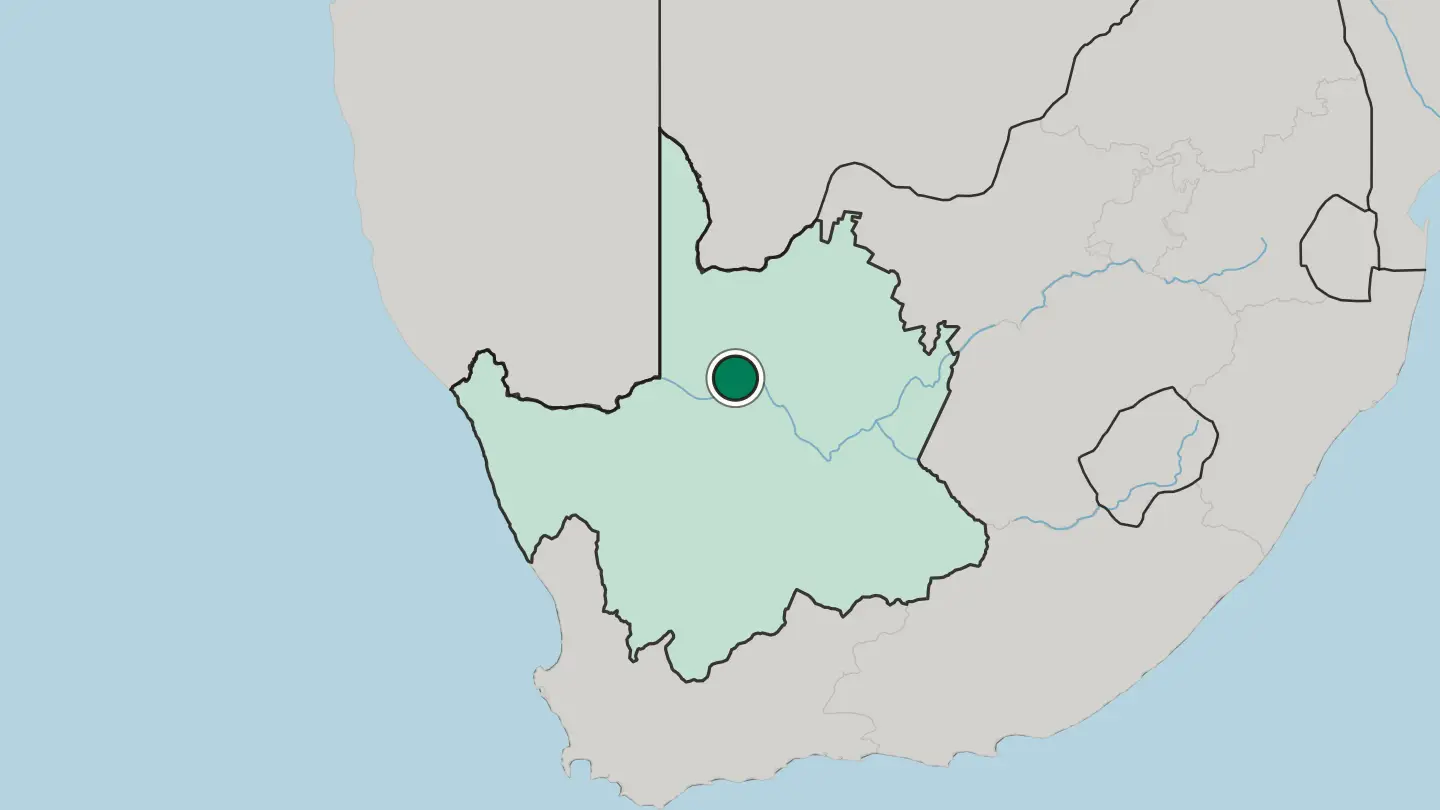
Hotel links are affiliate links: booking through them may earn us a commission, at no extra cost to you. It never affects how places are ranked. How this works
About Northern Cape
Diamonds built it.
What is Northern Cape known for?
Kimberley, the capital, grew around the Big Hole, the pit hand-dug during the diamond rush that began at Hopetown in 1867. Beyond the mining country the province thins out into desert and semi-desert, and the distances between towns turn enormous. The Orange River threads west toward the 56-metre curtain of the Augrabies Falls, while the red dunes of the Kalahari roll north into the Kgalagadi Transfrontier Park shared with Botswana.
Where is Northern Cape?
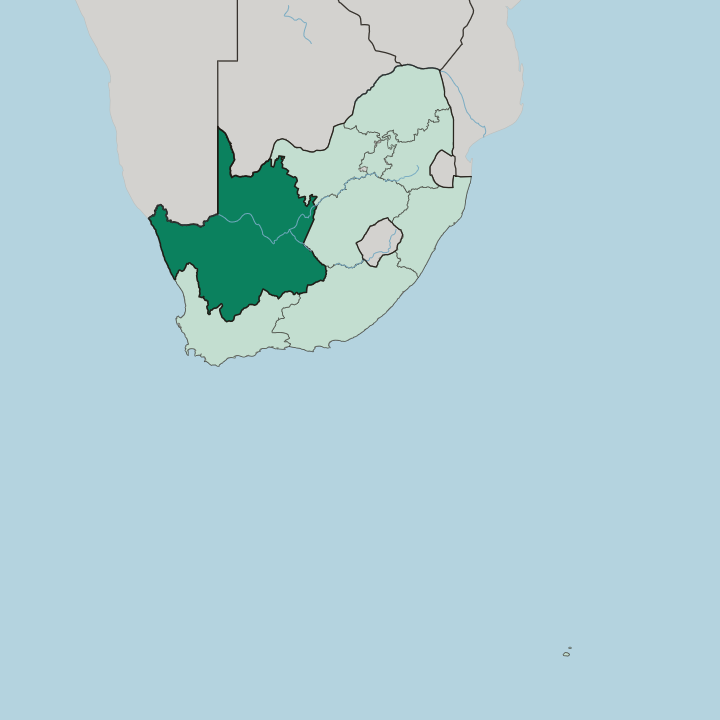
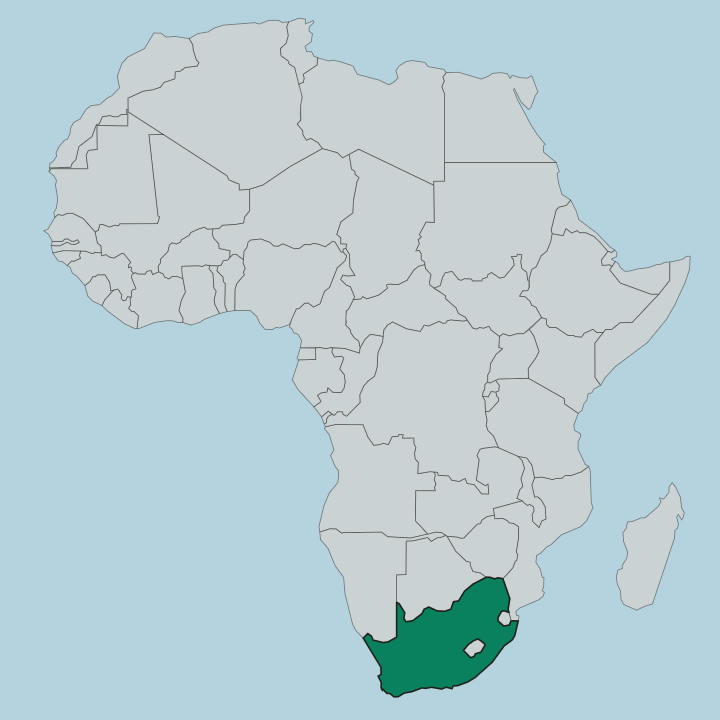
The Northern Cape fills the arid north-west corner of South Africa, and it is the country's biggest province by far. It is bigger than Germany. Yet almost nobody lives here, and the towns sit far apart across a vast, dry interior.
The Orange River draws the northern edge, separating the province from Namibia before it runs on toward the Atlantic. In the north the land rises into the red sand dunes of the Kalahari, thorn savanna crossed by the Kgalagadi Transfrontier Park on the border with Botswana. The centre and south belong to the Karoo, a high, rock-strewn semi-desert plateau of open scrubland and flat-topped hills.
Westward the country drops toward the coast through Namaqualand, the strip of dry hill country that erupts into wildflowers after the winter rains. The Orange River is the one constant. It cuts across the whole province and gathers speed at the Augrabies Falls, where it splits into channels and drops 56 metres through a granite gorge.
Water is the exception here, not the rule. Everything about the province follows from how little of it there is.
What is Northern Cape like?
This is the one province of South Africa where Afrikaans-speakers form the majority. More than half the people give Afrikaans as their first language, and roughly a third speak Setswana, so the two tongues carry most of daily life across the towns and farms. The deep past belongs to older peoples still.
Khoikhoi and San groups lived across these deserts long before the diamond diggers arrived, and their rock engravings survive out on the plains, gathered for visitors at places like the Wildebeest Kuil Rock Art Centre near Kimberley. Culture here is shaped by scale and dryness rather than by crowds. Sheep and game farms stretch for kilometres between settlements, and life gathers around the river, the mine, and the church.
Kimberley keeps the memory of the diamond boom that once drew people from around the world to a single hill of blue ground. Out west the calendar turns on the weather. When the winter rains reach Namaqualand, whole hillsides flower at once, and the quiet farming towns fill with people who come only for those few weeks.
The land sets the rhythm. Everything else follows the water and the seasons.
What is the history of Northern Cape?
Diamonds made this province's modern history. The find at Hopetown in 1867, and the far richer strike that followed at Kimberley, pulled tens of thousands of diggers to a dry patch of the interior almost overnight. They hacked out the Big Hole by hand and built a city on the profits.
The province itself is much younger, drawn up in 1994 when the old Cape Province was divided and the Northern Cape took the sparse, arid north with Kimberley as its capital.
What is the climate of Northern Cape?
The Northern Cape is a province of extremes. Summers here are brutally hot, and the Kalahari towns of Upington and Pofadder push into the high forties, while a record near Upington once topped 51 degrees. Winter nights, by contrast, drop toward freezing out on the open Karoo.
Rain is scarce and unreliable across most of the interior, but along the western coast at Namaqualand the little that falls comes in winter, and it is that cool-season rain that triggers the spring flowers. Clear skies are the norm.
How do you get to Northern Cape?
Most visitors drive in. The province is enormous and thinly served, so a car is close to essential, and the long tar roads from Cape Town and Johannesburg are the usual way in. Kimberley and Upington both have airports for those who fly, with Upington the gateway for the Kalahari and the Augrabies Falls.
Once here, expect distance. Hundreds of kilometres can separate one town from the next, and you plan fuel and water around that emptiness.
Common questions
What is the best area to stay in Northern Cape?
Kimberley: diamond history and the Big Hole. Upington: the Orange River and Kalahari trips. Springbok: the Namaqualand wildflower season.
More regions in South Africa
Updated September 2026