Austria
Niederösterreich, Austria — Towns & Travel Guide
Niederösterreich is Austria's largest state, wrapped around Vienna where the Danube crosses from Melk to Krems.
Hotel links are affiliate links: booking through them may earn us a commission, at no extra cost to you. It never affects how places are ranked. How this works


Towns & cities in Niederösterreich
One town here has its own guide — it links to where to stay.
 Austria
Wiener Neustadt
Wiener Neustadt is a self-governed city of Niederösterreich, roughly 50 kilometres south of Vienna, holding two cathedrals and Burg Wiener Neustadt.Where to stay →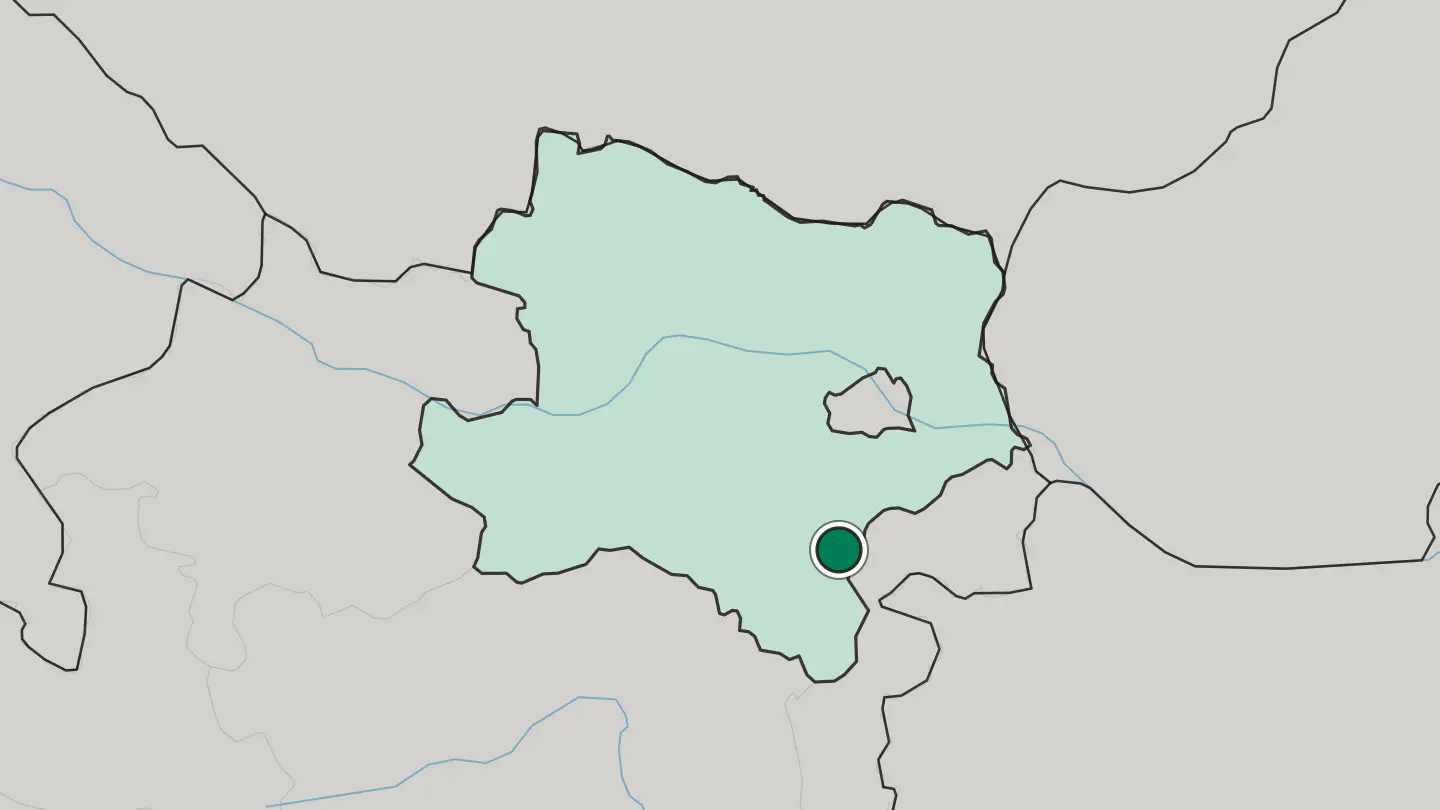
Hotel links are affiliate links: booking through them may earn us a commission, at no extra cost to you. It never affects how places are ranked. How this works
About Niederösterreich
Wine and the river define it.
What is Niederösterreich known for?
Niederösterreich is Austria's largest state, and the Danube cuts straight across it from Melk in the west to Krems in the east, through the terraced Wachau where Grüner Veltliner and Riesling grow on drystone-walled slopes. Melk Abbey stands over the water on its rock. Sankt Pölten is the seat of government.
Vienna sits entirely enclosed by the state yet governs itself, so travellers often base there and reach the vineyards, the abbey, and the Schneeberg out on day trips.
Where is Niederösterreich?
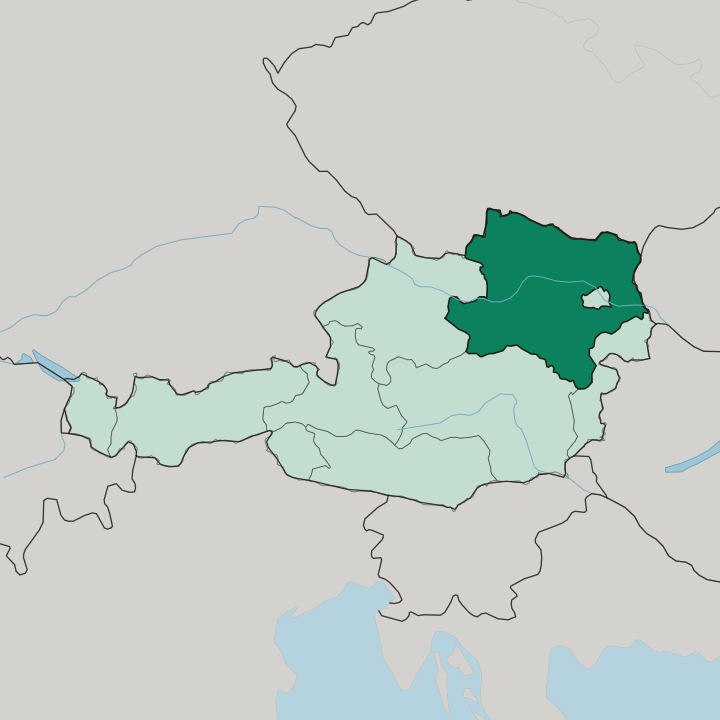
Niederösterreich fills the north-eastern corner of Austria. It is the country's largest state by area, and it wraps entirely around Vienna, which sits in its own right at the centre and governs itself. The Danube bisects the state from west to east, and nearly all of Niederösterreich drains toward that river.
North of the water the land divides into two of the state's four quarters. The Waldviertel is a granite plateau of forest and cold nights in the north-west, and the Weinviertel is the rolling wine country that slopes north-east toward the Marchfeld plain and the Slovak border. South of the river lie the other two.
The Mostviertel climbs into the limestone foothills of the Alps in the south-west, and the Industrieviertel spreads across the Vienna basin and up to the eastern edge of the mountains. Those mountains rise to the Schneeberg. Its Klosterwappen summit reaches 2,076 metres, the easternmost and northernmost peak in the whole Alps to clear two thousand.
Beyond the state's own edges, Niederösterreich borders three fellow Austrian states, Upper Austria to the west, Styria to the south, and Burgenland to the south-east. Its long outer frontier runs along the Czech Republic to the north and Slovakia to the east. The Danube ties the whole thing together.
What is Niederösterreich like?
This is wine country before it is anything else. Niederösterreich pours out most of Austria's white wine, and Grüner Veltliner and Riesling from the terraced Wachau slopes carry the state's name onto tables far beyond its borders. The vineyards are worked in narrow tiers held up by drystone walls that climb the gneiss and schist above the Danube.
Heurige, the growers' own seasonal taverns, pour the new vintage in the villages of the Weinviertel and the valley. The building heritage runs just as deep. Melk Abbey crowns the western Wachau in Baroque yellow and gold, one of the great Benedictine houses of the Danube, and the ruined castles and walled towns of the river valley trace back to the Babenberg margraves who ruled this land in the Middle Ages.
Sankt Pölten answers all that history with hard-edged modern architecture in its government quarter. The stretch of the Danube between Melk and Krems is protected as a cultural landscape, its terraces and villages recognised together as one unbroken scene. German is the language, spoken in the Austrian way.
The rhythm of the wine year still sets the calendar in much of the countryside.
What is the history of Niederösterreich?
This was the cradle of Austria itself. In 976 the emperor granted the Eastern March along the Danube to the Babenberg family, who pushed its frontier north and east and ruled the land for nearly three centuries. They founded Melk Abbey on its rock above the river in 1089 and were buried within it.
Vienna served as the seat of the province for centuries, until it split off as its own state in 1921. Government finally settled at Sankt Pölten in 1986. From a border march to Austria's largest state, the story followed the Danube.
What is the climate of Niederösterreich?
The weather splits with the land. Warm, dry Pannonian air pushes in from the east across the Weinviertel and the Marchfeld, where the Danube plain sees little rain and the summers run hot before cold nights fall off the Waldviertel forests. Westward and south the Alpine foothills catch far more Atlantic rain, and the granite plateau of the Waldviertel is a cold, high country of hard winters.
Snow lingers late on the Schneeberg. That swing between dry eastern warmth and cool mountain air is exactly what ripens the wine.
How do you get to Niederösterreich?
Almost everyone comes through Vienna. The Wien-Schwechat airport sits just south-east of the capital, on Niederösterreich's own doorstep, and it is the country's main international gate. From there fast trains and the motorways fan out along the Danube to Sankt Pölten, Melk and Krems, and south toward the Schneeberg.
River cruises work the Wachau between Melk and Krems in the warmer months. The state wraps around Vienna, so a train ride of an hour or less reaches most of it.
Common questions
What is the best area to stay in Niederösterreich?
Vienna: a base with everything on the doorstep. Krems an der Donau: the wine valley itself. Melk: the abbey and the western Wachau. Sankt Pölten: the state capital.
Good for
More regions in Austria
Updated September 2026