Austria
Burgenland, Austria — Towns & Travel Guide
Burgenland is Austria's easternmost state, a flat wine country along the Hungarian border around shallow Lake Neusiedl.
Hotel links are affiliate links: booking through them may earn us a commission, at no extra cost to you. It never affects how places are ranked. How this works


Towns & cities in Burgenland
One town here has its own guide — it links to where to stay.
 Austria
Eisenstadt
Eisenstadt is the capital of Burgenland, the smallest of Austria's state capitals, standing at the foot of the Leitha Mountains around Schloss Esterházy.Where to stay →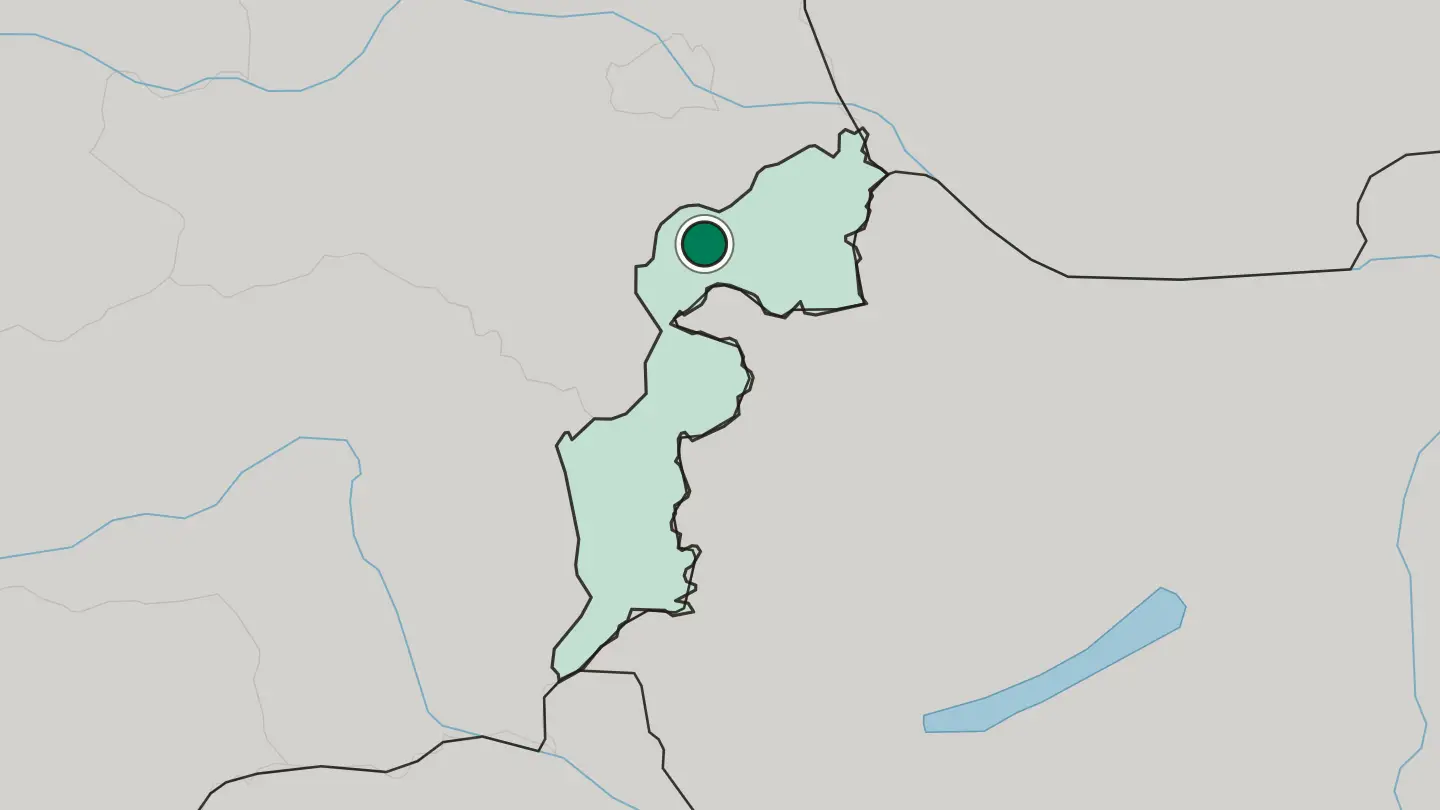
Hotel links are affiliate links: booking through them may earn us a commission, at no extra cost to you. It never affects how places are ranked. How this works
About Burgenland
Wine and water.
What is Burgenland known for?
Burgenland is Austria's warmest and easternmost wine country, and its reds built the reputation. The Blaufränkisch grape ripens dark and spicy on the slopes above the Hungarian border, while noble-rot sweet wines come from the little free city of Rust. The other draw is Lake Neusiedl, a broad reed-fringed shallow that Burgenland shares with Hungary and the only steppe lake of its kind in this corner of Europe.
Eisenstadt, the small capital, adds the music of Joseph Haydn.
Where is Burgenland?
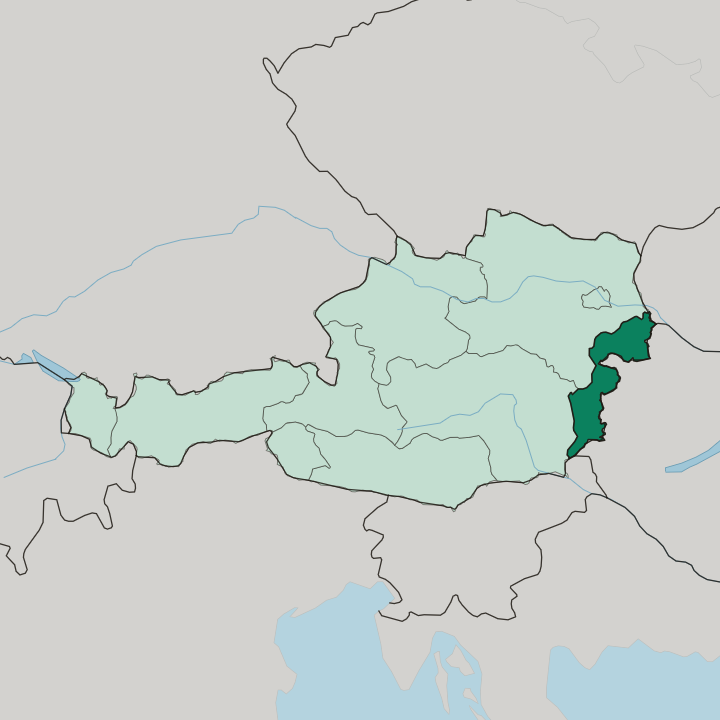
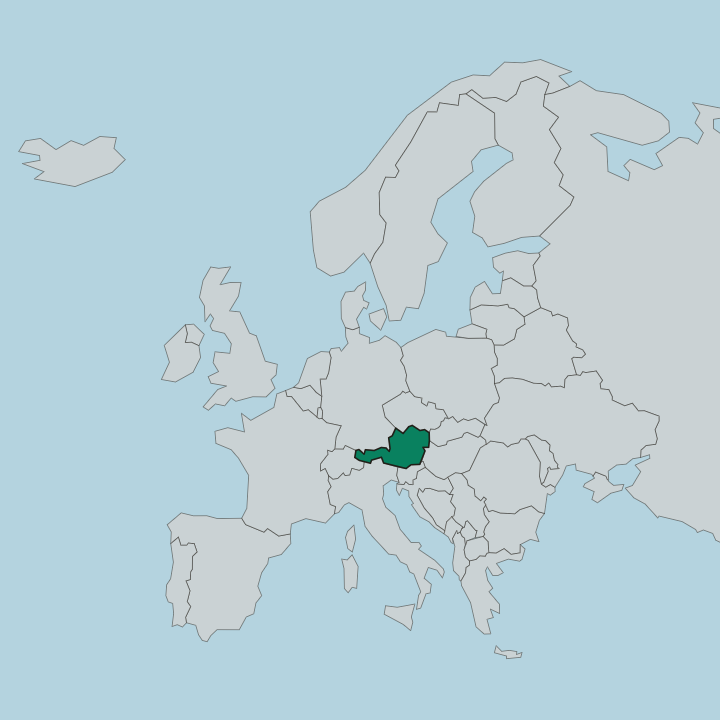
Burgenland is the far eastern edge of Austria, a long thin strip pressed against Hungary. It runs far from north to south but stays narrow from west to east, so no point sits far from the Hungarian line. To the west it meets two Austrian neighbours, Lower Austria in the north and Styria in the south.
Short borders touch Slovakia in the north and Slovenia in the south. This is the western rim of the Pannonian Basin, the great lowland that spreads east into Hungary. The land is mostly flat.
In the north it opens onto the Seewinkel plain and the wide, shallow bowl of Lake Neusiedl, the largest of its kind in this part of Europe and shared with Hungary across the water. Reed beds fringe most of its edge, and the average depth is barely more than knee-high in places. The Leitha hills rise low behind Eisenstadt, carrying vineyards on their slopes.
Southward the state narrows and lifts into gentle hills toward Styria. Only in that far south does the plain give way to real rolling country.
What is Burgenland like?
Burgenland lives on the seam of two worlds. German is the everyday language, but the eastern border has kept older tongues alive alongside it. Croatian families settled here in the sixteenth century, fleeing the Ottoman advance, and their descendants still speak Burgenland Croatian in villages across the state.
A Hungarian-speaking minority holds on in the southern districts around Oberwart. Bilingual signs mark that inheritance. Music is the other thread that runs through the state.
Joseph Haydn spent much of his working life at the Esterházy court in Eisenstadt, and the capital still fills its Baroque halls with his work. Beyond the concerts, the culture is agricultural and unhurried, tied to the vineyard year and the lake. Wine taverns open their courtyards through the warm months.
Storks nest on the chimneys of Rust each spring, a sight so bound up with the town that it appears on its crest. Life here bends toward the border and the harvest rather than toward Vienna.
What is the history of Burgenland?
Burgenland is Austria's youngest state. For centuries this strip belonged to the Hungarian half of the empire, western Hungary rather than Austria proper. That changed only after the First World War: the Treaty of Trianon and the Treaty of Saint-Germain handed the German-speaking western fringe to Austria, and Burgenland formally joined the republic in 1921.
The capital shifted to Eisenstadt once the intended capital, Sopron, voted to stay Hungarian. A border drawn in 1921 still shapes the whole state.
What is the climate of Burgenland?
Burgenland gets Austria's driest weather. It sits in the rain shadow of the Alps on the western rim of the Pannonian Basin, so the air here is dry and continental rather than mountain-cool. Summers turn hot over the flat land around Lake Neusiedl, and the shallow water itself moderates the shore, warming early and holding its heat late.
Winters are cold and often clear. Long, sunny autumns ripen the Blaufränkisch reds the state is known for.
How do you get to Burgenland?
Most travellers come through Vienna. The Austrian capital and its airport sit just north-west of Burgenland, and the northern half of the state is an easy drive or train ride away. Eisenstadt has its own rail link toward Vienna, while the lake villages spread out along quiet roads that make a car the simplest way around.
The Hungarian border runs close along the whole eastern side, so crossings into Hungary are frequent and short. Cyclists reach the region on the flat lakeside paths ringing Lake Neusiedl.
Common questions
What is the best area to stay in Burgenland?
Eisenstadt: Baroque town and Haydn concerts. Around Lake Neusiedl: birdwatching and lakeside cycling. Rust: sweet wine and nesting storks. The southern hills: quiet hills and thermal spas.
Good for
More regions in Austria
Updated September 2026