Germany · Nordrhein-Westfalen
Where to Stay in Hilden, Nordrhein-Westfalen
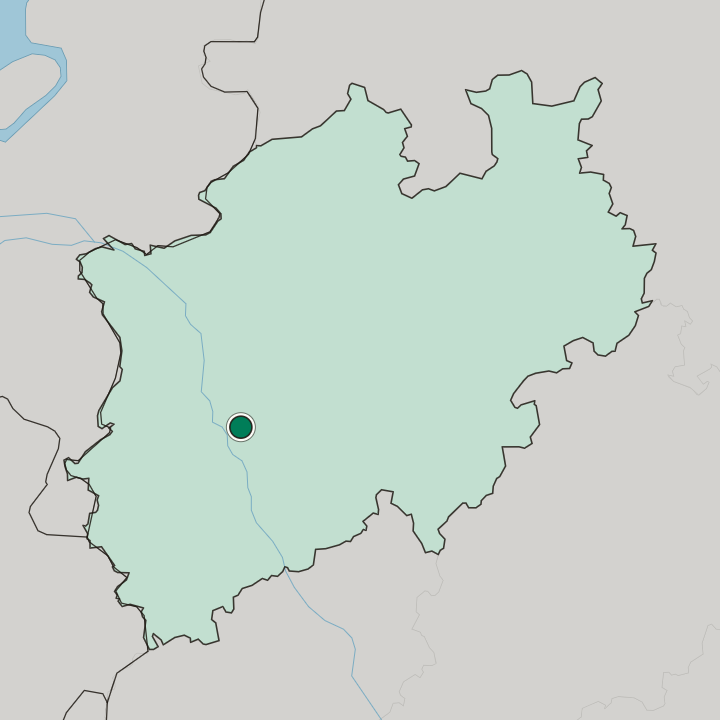
Hilden lies between Düsseldorf and Solingen on the right side of the Rhine, an industrial town of the Mettmann district with a forest of its own.
Hotel links are affiliate links: booking through them may earn us a commission, at no extra cost to you. It never affects how places are ranked. How this works


Where to stay in Hilden
How the choice of base plays out on the ground.
The old town is where a short stay belongs. St Jakobus, the Reformationskirche, and the Wilhelm-Fabry-Museum stand within a few streets of each other, with the Historische Kornbrennerei on the same round, so a night in the middle covers the whole of what Hilden shows. Erlöserkirche and Friedenskirche fill in the quieter corners, and St Marien takes another.
Traffic thins after the shops close. A middle-sized town keeps the distances short, and the centre of Hilden asks for nothing more than a pair of shoes. Out towards the forest, Holterhöfchen and the trees give the other kind of stay, quieter than the centre and better for you if the green rather than the shops is the reason for coming.
Few places rent a room that far out. Hilden also serves as a base for the two cities on either side, since Düsseldorf lies fifteen kilometres west and Solingen ten kilometres east, and the Solinger Vogel- und Tierpark is an easy addition to a day spent that way. Erkrath sits close on another side, and the Rhine runs past the whole District of Mettmann a short way off.
Haus Horst gives the older name in a town otherwise built for work.
Find hotels in Hilden
Direct booking searches for these neighbourhoods.
The old town by St Jakobus
St Jakobus, the Reformationskirche, and the Wilhelm-Fabry-Museum share the same central streetsFind hotels in The old town by St JakobusMornings that begin in the Hilden woods rather than the shopsHolterhöfchen and the forest edge
Holterhöfchen and the town forest lie clear of the industrial streets. Rooms are few around here — worth securing early.Find hotels in Holterhöfchen and the forest edgeAnyone using Hilden as a quieter base for the two citiesThe Düsseldorf and Solingen edges
Düsseldorf sits fifteen kilometres west and Solingen ten kilometres east of the same townFind hotels in The Düsseldorf and Solingen edgesHotel links are affiliate links: booking through them may earn us a commission, at no extra cost to you. It never affects how places are ranked. How this works
Things to do in Hilden
Ranked by global recognition; descriptions from Wikidata (CC0).
Museums & Galleries
1- Historische Kornbrennerei
Churches & Religious Sites
5- St. Jakobus Heritage
- Reformationskirche Heritage
- Erlöserkirche Heritage
- St. Marien Heritage
- Friedenskirche Heritage
Castles & Historic Sites
2- Haus Horst Heritage
- Holterhöfchen Heritage
worth knowingacross 3 categories in Hilden
About Hilden
The town earns its living from manufacturing.
What is Hilden known for?
Hilden is a middle-sized industrial town in the District of Mettmann, set between Düsseldorf and Solingen, and its attractions are the kind a local would list: the Wilhelm-Fabry-Museum, the Historische Kornbrennerei, and the forest. St Jakobus and the Reformationskirche hold the middle of the old town. Holterhöfchen adds green.
What are the main landmarks in Hilden?
Two buildings carry the local collections: the Wilhelm-Fabry-Museum and the Historische Kornbrennerei, a preserved grain distillery. Churches take the rest of the list, six of them in all, among them St Jakobus, the Reformationskirche, St Marien, the Erlöserkirche, and the Friedenskirche. Haus Horst is older.
Holterhöfchen and the Jaberg-Tower belong to the green side of Hilden, and the Mourning Woman stands among the memorials.
What is the history of Hilden?
Hilden grew on the right side of the Rhine, on the flat ground between Düsseldorf and Solingen, and the shape of the place has been set by that position more than by any single event. St Jakobus marks the old parish. Around it the town kept a compact centre, and Haus Horst survives from the era when houses of that kind stood clear of the built-up streets.
The Reformationskirche names the split that produced it. Work came with the industrial century. Hilden turned into a middle-sized industrial town, and the Historische Kornbrennerei is the piece of that production the town kept standing.
The Wilhelm-Fabry-Museum carries the name of Wilhelm Fabry and holds the local collection. The District of Mettmann gave the town its administrative home, ten kilometres from Solingen and fifteen from Düsseldorf. Six church buildings stand in Hilden, the Erlöserkirche, the Friedenskirche, and St Marien among them, each with a congregation behind it.
The Mourning Woman stands among the memorials. Düsseldorf and Solingen remained the neighbours, and Hilden kept its forest through all of it. Holterhöfchen belongs to the same green inheritance, and the Jaberg-Tower stands with it.
Where is Hilden?
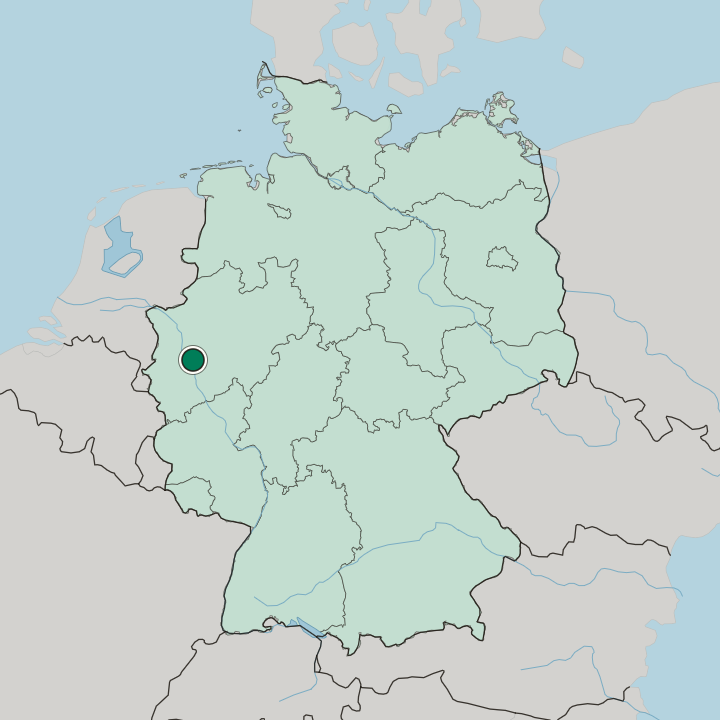
Hilden keeps to the right side of the Rhine, on flat ground in the District of Mettmann, ten kilometres west of Solingen and fifteen east of Düsseldorf. The forest is the surprise. A wooded belt survives inside the municipal area, and Holterhöfchen adds more green than an industrial description would suggest.
Erkrath and the other Mettmann towns close in on the edges, and there is no great distance between any of them.
What is the climate of Hilden?
The Rhine lowland sets the terms. Air coming up the flat from the west reaches Hilden without meeting anything higher than the trees, so the temperate year runs mild at both ends and wet enough to keep the forest dark. Frost is occasional rather than fixed, and the streets between Düsseldorf and Solingen see more grey than snow.
How do you get to Hilden?
Getting in means passing a neighbour. Düsseldorf lies fifteen kilometres west and Solingen ten kilometres east, so most arrivals in Hilden come through one of them, and the District of Mettmann roads carry the rest of the traffic in from the towns between. The old town is the obvious target, with St Jakobus and the Wilhelm-Fabry-Museum on the same streets.
Distances stay in single figures.
Common questions
What is the best area to stay in Hilden?
The old town by St Jakobus: Walkers taking the Reformationskirche and the shops in one loop. Holterhöfchen and the forest edge: Mornings that begin in the Hilden woods rather than the shops. The Düsseldorf and Solingen edges: Anyone using Hilden as a quieter base for the two cities.
Good for
More cities in Nordrhein-Westfalen
Updated October 2026