Egypt
Muḩāfaz̧at al Minūfīyah, Egypt — Towns & Travel Guide
Muḩāfaz̧at al Minūfīyah is a farming heartland of the Nile Delta, birthplace of two Egyptian heads of state, centred on Shibīn al-Kawm.
Hotel links are affiliate links: booking through them may earn us a commission, at no extra cost to you. It never affects how places are ranked. How this works


Towns & cities in Muḩāfaz̧at al Minūfīyah
One town here has its own guide — it links to where to stay.

 Egypt
Egypt
Shibīn al Kawm
Shibīn al Kawm is the capital of the Monufia Governorate, a city of Egypt's Nile Delta and the seat of Muḩāfaz̧at al Minūfīyah.Where to stay →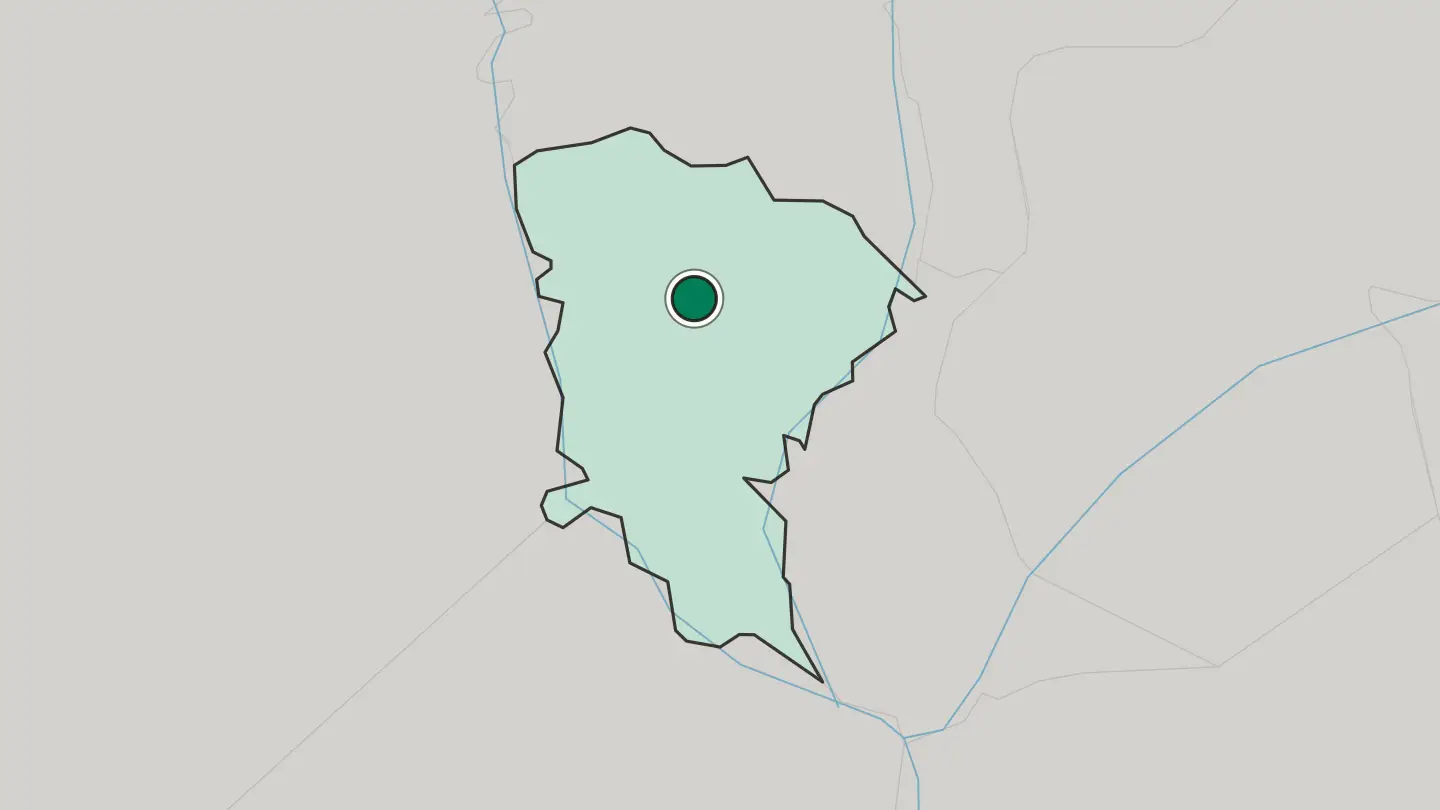
Hotel links are affiliate links: booking through them may earn us a commission, at no extra cost to you. It never affects how places are ranked. How this works
About Muḩāfaz̧at al Minūfīyah
This is president country.
What is Muḩāfaz̧at al Minūfīyah known for?
Anwar Sadat was born in the village of Mīt Abū al-Kawm, and Hosni Mubarak in nearby Kafr al-Musaylḩa, so a small delta province has sent more leaders to Cairo than almost anywhere else in Egypt. Farming defines the rest of it. The soil between the two Nile branches grows cotton and wheat, along with maize, potatoes and green beans, much of it for export.
Shibīn al-Kawm anchors the province as its capital and the seat of Menoufia University.
Where is Muḩāfaz̧at al Minūfīyah?
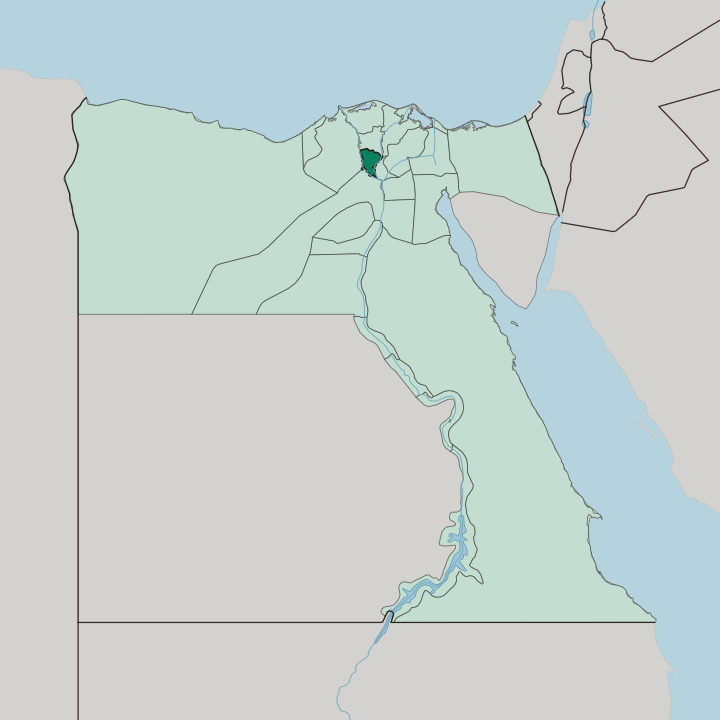
Muḩāfaz̧at al Minūfīyah lies in the southern Nile Delta, a wedge of flat, irrigated farmland between Cairo and the wider delta to the north. Most of it sits between the two great arms of the river. The Rosetta branch runs down its western side and the Damietta branch its eastern, and the land in between is some of the most intensively cultivated in Egypt.
There are no hills here. The whole province is a green plain laced with canals drawn off the Nile, broken only by villages, market towns and the odd factory zone. Gharbia lies to the north, Qalyubia to the east, and Beheira across the Rosetta branch to the west.
Southward the delta narrows toward Cairo, where the single Nile splits into its two delta branches. One district breaks the pattern. Sadat City stands west of the Rosetta branch, out on the desert edge where reclaimed land gives way to sand, unlike the eight older districts hemmed between the rivers.
Covering some 2,499 square kilometres, it is among the smallest of Egypt's provinces by area yet one of the most densely farmed and peopled. Nothing in Minūfīyah escapes the water. The branches, and the canals fed from them, decide where crops grow and where towns sit.
What is Muḩāfaz̧at al Minūfīyah like?
Minūfīyah has a reputation across Egypt for producing hard workers, careful savers and public men. Its name is said to come from the ancient Egyptian word for good land, and the province wears that agricultural identity plainly. Life turns on the fields.
Cotton was long the cash crop that tied these villages to the mills and the wider economy, and rural custom still runs strong in the small towns between the canals. Two museums fix the province's modern story. At Mīt Abū al-Kawm, the village museum keeps the home and belongings of Anwar Sadat, who rose from a delta childhood to sign peace with Israel and win the Nobel Peace Prize.
The Denshawai Museum, further out, marks the 1906 clash between British soldiers and villagers that hardened Egyptian feeling against the occupation and became a national grievance. Both sit in ordinary farming settlements rather than tourist towns. The provincial capital, Shibīn al-Kawm, gives the region a university and an educated professional class that has long fed Egypt's civil service and army officer corps.
That current of ambition is part of the local character. Arabic is the language of the province, as across Egypt. What sets Minūfīyah apart is less any single monument than a self-image: a plain, productive delta land that keeps sending its sons to run the country.
What is the history of Muḩāfaz̧at al Minūfīyah?
Menouf gave the province its name and was its capital for centuries, one of the delta's continuously inhabited old towns. Under Muḩammad ʿAlī the seat shifted to Shibīn al-Kawm in 1826, and the modern governorate took shape around it. It reached the national stage twice.
In 1906 the Denshawai incident, a deadly quarrel between British soldiers and pigeon-farming villagers, inflamed Egyptian opinion against colonial rule. Decades later it gave the republic two of its rulers. Anwar Sadat and Hosni Mubarak were both born in Minūfīyah villages and went on to lead Egypt for forty unbroken years between them.
What is the climate of Muḩāfaz̧at al Minūfīyah?
Minūfīyah has a hot desert climate softened a little by its place in the delta. Rain barely falls. Summers are long and very hot, with July afternoons around Shibīn al-Kawm climbing into the high thirties Celsius, while winter days settle to a mild low twenties and nights can drop near freezing.
What keeps the province green is not the sky but the Nile, whose branches and canals irrigate the fields the rain never waters. The pleasant stretch runs through the delta winter, from roughly November to March.
How do you get to Muḩāfaz̧at al Minūfīyah?
Cairo is the way in. The nearest airport is the capital's own, and from there Minūfīyah is a short run north into the delta by road or rail. Trains on the Cairo-to-Alexandria delta line call at Shibīn al-Kawm and other towns, and the desert road passes Sadat City in the west.
Most people who come are visiting family, doing business in the farm and factory towns, or making the day trip out to the Sadat and Denshawai museums. There is no separate airport of its own; the province leans on Cairo for the long haul.
More regions in Egypt
Updated September 2026