United Kingdom · England
Where to Stay in Basingstoke, England
Basingstoke is a Hampshire market town at the source of the River Loddon, rebuilt as a new town and the county's largest settlement without city status.
Hotel links are affiliate links: booking through them may earn us a commission, at no extra cost to you. It never affects how places are ranked. How this works


Where to stay in Basingstoke
Each area has its own feel; here's who each one suits.

 BasingstokeUnited KingdomDrivers avoiding the roundabout runs twice daily
Chineham
Christ Church Chineham and Daneshill House mark a quieter edge with parking. Rooms are few around here — worth securing early.Chineham →BasingstokeUnited KingdomEastrop
Eastrop is a district of Basingstoke whose landmarks run from the Willis Museum to May's Bounty and the Church of the Holy Ghost.Where to stay →BasingstokeUnited KingdomWinklebury
Winklebury is a Basingstoke suburb two miles north-west of the centre, recorded alongside Manydown and site of the Milestones Living History Museum.Where to stay →BasingstokeUnited KingdomBuckskin
Buckskin is a residential district of Basingstoke, known in the record mainly through Worting House and the Church of St Thomas A Becket.Where to stay →Hotel links are affiliate links: booking through them may earn us a commission, at no extra cost to you. It never affects how places are ranked. How this works
Find hotels in Basingstoke
Direct booking searches for these neighbourhoods.
Old Basing
Basing House and the Church of St Mary, Old Basing keep a village apart from the rebuilt town. Few places to stay nearby — book ahead.Find hotels in Old BasingStopovers walking to the Willis MuseumBasingstoke town centre
The Willis Museum, St Michael's Church and the Church of the Holy Ghost fall inside one circuitFind hotels in Basingstoke town centreDownland afternoons rather than a planned baseWorting and Cliddesden
Worting House and Cliddesden Down House name hamlets with almost nothing to bookFind hotels in Worting and CliddesdenHotel links are affiliate links: booking through them may earn us a commission, at no extra cost to you. It never affects how places are ranked. How this works
Things to do in Basingstoke
Ranked by global recognition; descriptions from Wikidata (CC0).
Museums & Galleries
2- Basing House Heritage
- Willis Museum Heritage
Churches & Religious Sites
8- St Michael's Church, Basingstoke Heritage
- Church of the Holy Ghost Heritage
- Church of St Mary, Old Basing Heritage
- Ruins Of Chapel Of The Holy Trinity Heritage
- Church of St. Andrew Heritage
Show 3 more →
- Church of St Leonard Heritage
- Church of St Mary Heritage
- Church of St Thomas A Becket Heritage
Castles & Historic Sites
1- Site revealed by air photography at Catern crossroads Heritage
Stadiums & Sports
1- May's Bounty
Landmarks & Notable Places
8- Daneshill House Heritage
- Worting House Heritage
- Church Cottage House Heritage
- Chute House Heritage
- Cliddesden Down House Heritage
Show 3 more →
- Edernish House Heritage
- Golding House Heritage
- Lower Mill House Heritage
worth knowingacross 5 categories in Basingstoke
About Basingstoke
Roundabouts made the joke.
What is Basingstoke known for?
What the town actually holds is Basing House at Old Basing, the Willis Museum in the middle of the streets and the Milestones Living History Museum, a set that survived the decades when Basingstoke was written off as a dull place with nothing for a visitor. The Domesday Book already knew it as a market town. No settlement in Hampshire is larger without city status.
The River Loddon rises here.
What are the main landmarks in Basingstoke?
Basing House anchors everything. Its ruins at Old Basing, with the Church of St Mary, Old Basing beside them, hold more of the past than the rebuilt centre does, and the Willis Museum and the Milestones Living History Museum take on the job of explaining it. Older fabric survives in the Church of the Holy Ghost, the Chapel of the Holy Trinity, St Michael's Church, Basingstoke and the Church of St Andrew.
After that come the houses. Worting House, Daneshill House, Golding House, Winton House and Chute House carry names from the parishes, and May's Bounty keeps its own.
What is the history of Basingstoke?
The town is older than its reputation. The Domesday Book already records it, and for centuries afterwards Basingstoke worked as a market town for this part of Hampshire, with Basing House at Old Basing as the great house of the surrounding country and parish churches, the Church of the Holy Ghost, St Michael's Church, Basingstoke, the Church of St Mary, Old Basing, the Church of St Andrew, marking the settlements that fed it. Winchester, the county town and a former capital, lies 20 miles south-west.
Chineham, Worting and Cliddesden were farming ground. Then came the new town. In the nineteen-fifties Basingstoke was picked as one of several places built up to take overspill from London, and the scale of that rebuilding is what produced both the modern street plan and the roundabouts the town has never lived down.
For two decades afterwards it carried a joke reputation, dismissed as dull, offered to visitors as somewhere with little beyond trainspotting and traffic islands, and the claim that no town in the United Kingdom has more roundabouts for its size is still repeated more often than it is checked. The borough of Basingstoke and Deane now carries the name outward. The Willis Museum keeps the long version.
Where is Basingstoke?
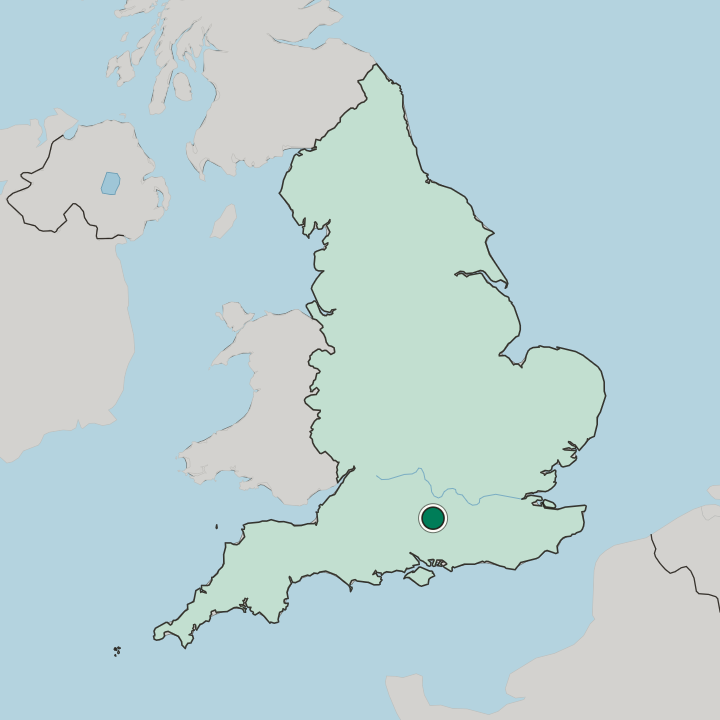
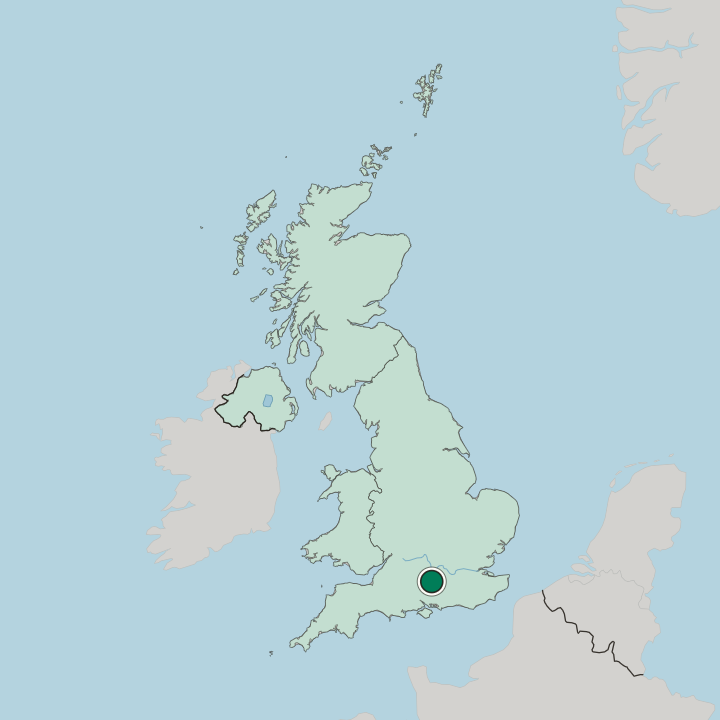
A valley carries the town. Basingstoke lies across it at the source of the River Loddon, on the western edge of the North Downs, and the rest of Hampshire reads outward from that point in plain distances. Reading is 22 miles north and Guildford 27 miles east.
London lies 48 miles north-east, Southampton 30 miles south-west and Winchester 20 miles south-west, which leaves the town inland of the coast and short of the capital by a comfortable margin. Old Basing, Chineham, Worting and Cliddesden ring the built ground.
What is the climate of Basingstoke?
Nothing here sharpens the weather. Basingstoke sits in the temperate band of the northern hemisphere, and its setting does little to complicate that: the valley at the source of the River Loddon is inland ground, the sea off Southampton is 30 miles away, and the western edge of the North Downs is hill country rather than mountain. Seasons turn without extremes.
Old Basing and Chineham get the same weather as the centre, so the calendar matters more to a visit than the choice of quarter.
How do you get to Basingstoke?
Roundabouts meet every arrival. London lies 48 miles north-east, Reading 22 miles north, Guildford 27 miles east, Southampton 30 miles south-west and Winchester 20 miles south-west, which puts Basingstoke within an easy run of all five and makes it a common stop rather than a destination. Chineham and Old Basing are minutes out.
The traffic pattern that earned the town its joke also makes driving in straightforward once it is read.
Common questions
What is the best area to stay in Basingstoke?
Old Basing: Nights beside the ruins of Basing House. Basingstoke town centre: Stopovers walking to the Willis Museum. Chineham: Drivers avoiding the roundabout runs twice daily. Worting and Cliddesden: Downland afternoons rather than a planned base.
Good for
More cities in England
Updated September 2026