United Kingdom · England
Where to Stay in Canterbury, England
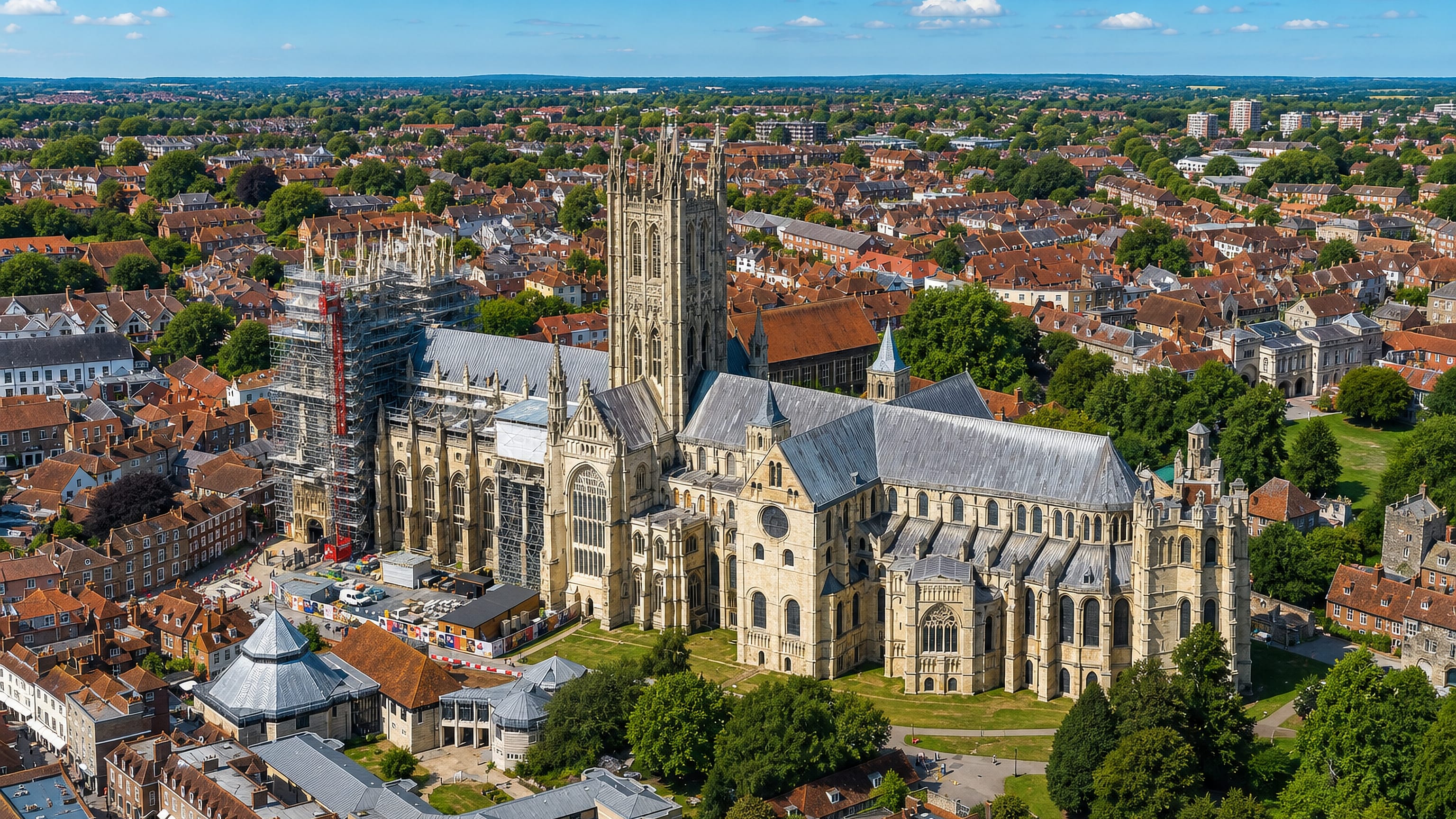
Old walls trace the River Stour at Canterbury, a cathedral city in Kent, a UNESCO World Heritage Site known for Canterbury Castle and its Roman past.
Hotel links are affiliate links: booking through them may earn us a commission, at no extra cost to you. It never affects how places are ranked. How this works




Where to stay in Canterbury
One neighbourhood here has its own guide — here's what it is best for.
 CanterburyUnited Kingdom
Hales Place
Hales Place is a residential quarter of Hackington parish, north of the city of Canterbury in Kent, near the University of Kent.Where to stay →Hotel links are affiliate links: booking through them may earn us a commission, at no extra cost to you. It never affects how places are ranked. How this works
Find hotels in Canterbury
Direct booking searches for these neighbourhoods.
Within the walls
The walled core gathers Canterbury Castle, the West Gate Towers Museum, and The Beaney within a walk of the medieval streets along the River Stour.Find hotels in Within the wallsHistory walkers near the Canterbury Roman Museum in CanterburySt Dunstan's and the Roman quarter
West of the walls St Dunstan's and the Canterbury Roman Museum trace the old approach and the Roman town of Durovernum Cantiacorum along the Stour.Find hotels in St Dunstan's and the Roman quarterQuieter riverside toward the Stour's mouth near CanterburyBeyond the gates
The calmer edges beyond the gates follow the River Stour out of Canterbury toward its mouth on the Strait of Dover, away from the walled crowds.Find hotels in Beyond the gatesHotel links are affiliate links: booking through them may earn us a commission, at no extra cost to you. It never affects how places are ranked. How this works
Things to do in Canterbury
Ranked by global recognition; descriptions from Wikidata (CC0).
Museums & Galleries
3- The Beaney
- Canterbury Roman Museum
- British Cartoon Archive
Churches & Religious Sites
8- St. Dunstan's, Canterbury Heritage
- Church of the Holy Cross Heritage
- Church of St Mildred Heritage
- Church of St Mary the Virgin, Fordwich Heritage
- St Nicholas' Church, Sturry Heritage
Show 3 more →
- St Michael and All Angels Church Heritage
- The Old Leper Church of St Nicholas Heritage
- Church of St Stephen Heritage
Castles & Historic Sites
2- Canterbury Castle Heritage
- Durovernum Cantiacorum
Stadiums & Sports
1- St Lawrence Ground
Landmarks & Notable Places
6- Conquest House Heritage
- Lavatory Tower Heritage
- Tudor House Heritage
- Watergate Cottage Watergate House Heritage
- House Of The White Swan Heritage
Show 1 more →
- Orchard House, 1 Duck Lane Heritage
worth knowingacross 5 categories in Canterbury
About Canterbury
What is Canterbury known for?
Canterbury is known as an ancient cathedral city and UNESCO World Heritage Site in the county of Kent. The walls still stand. Within them the River Stour threads past Canterbury Castle and the medieval West Gate Towers Museum, while the Canterbury Roman Museum and the museum of the old Roman town of Durovernum Cantiacorum keep the deep history of a city set near the Strait of Dover.
What are the main landmarks in Canterbury?
Canterbury holds landmarks that reach from Roman walls to medieval streets. Canterbury Castle guards the old approach. Its Norman keep stands within the walls, while the West Gate Towers Museum crowns the last of the city gates, the Canterbury Roman Museum and the site of Durovernum Cantiacorum keep the Roman town below ground, and The Beaney and the Museum of Canterbury gather the city's art and story along the River Stour.
What is the history of Canterbury?
Canterbury began as the Roman town of Durovernum Cantiacorum on the River Stour in Kent. Rome laid the first streets. The town grew at a crossing near the Strait of Dover, its ordered grid remembered by the finds beneath the modern city and kept by the Canterbury Roman Museum, which holds the mosaics and walls of the settlement that became Canterbury over the centuries.
From the Roman ground the medieval city rose, walled and gated, a UNESCO World Heritage Site by later reckoning. Canterbury Castle held the Norman power and the West Gate guarded the road, while churches such as St Dunstan's and the Church of St Mildred served the townsfolk. Through every age the Stour ran on.
From Durovernum Cantiacorum to the walled city of Kent, Canterbury kept the layers of its long history.
Where is Canterbury?
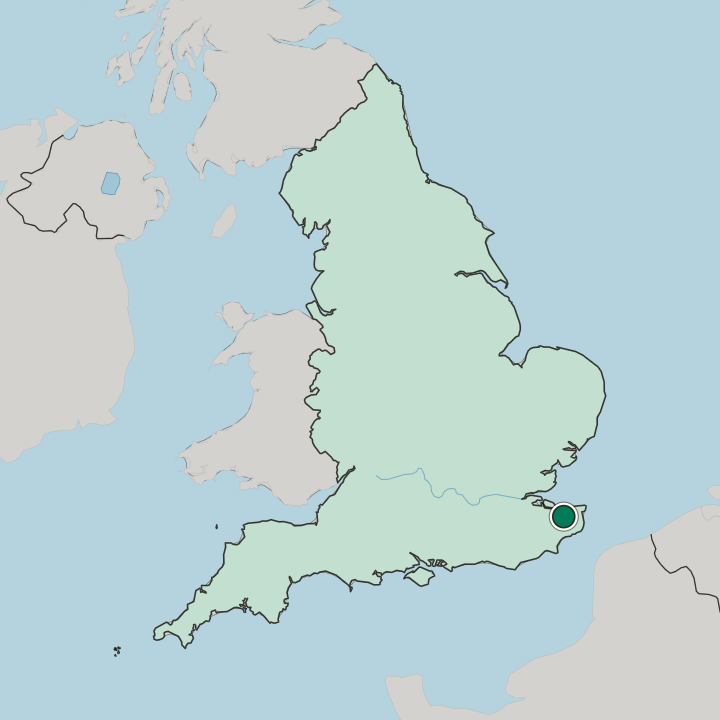
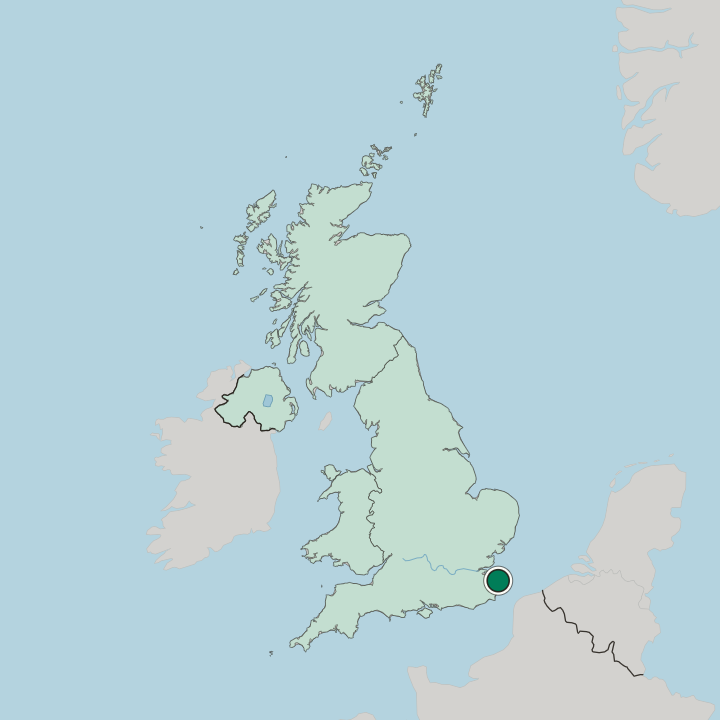
Canterbury lies in eastern Kent, England, on the River Stour not far from its mouth on the Strait of Dover. The river shapes the setting. The old walled city gathers along the Stour where it braids through the centre, low chalk country rolling around it toward the coast, the river running on past the walls toward the sea that marks the edge of England near the Strait of Dover.
What is the climate of Canterbury?
Canterbury has a mild oceanic climate, tempered by its place near the Strait of Dover. Winters stay soft here. Weather off the sea keeps the seasons even over the valley of the River Stour through the year, holding summers warm rather than hot, while the low chalk country of Kent leaves the city open to the mild airs that cross the coast.
How do you get to Canterbury?
Canterbury is reached by road and rail across eastern Kent. Almost everyone reaches Canterbury by road or rail. Rail lines and roads run in from across the county and up from the coast near the Strait of Dover, carrying visitors into the walled city and the streets along the River Stour.
Common questions
What is the best area to stay in Canterbury?
Within the walls: First-time visitors near Canterbury Castle and the West Gate. St Dunstan's and the Roman quarter: History walkers near the Canterbury Roman Museum in Canterbury. Beyond the gates: Quieter riverside toward the Stour's mouth near Canterbury.
Good for
More cities in England
Updated September 2026