United Kingdom · England
Where to Stay in Derby, England
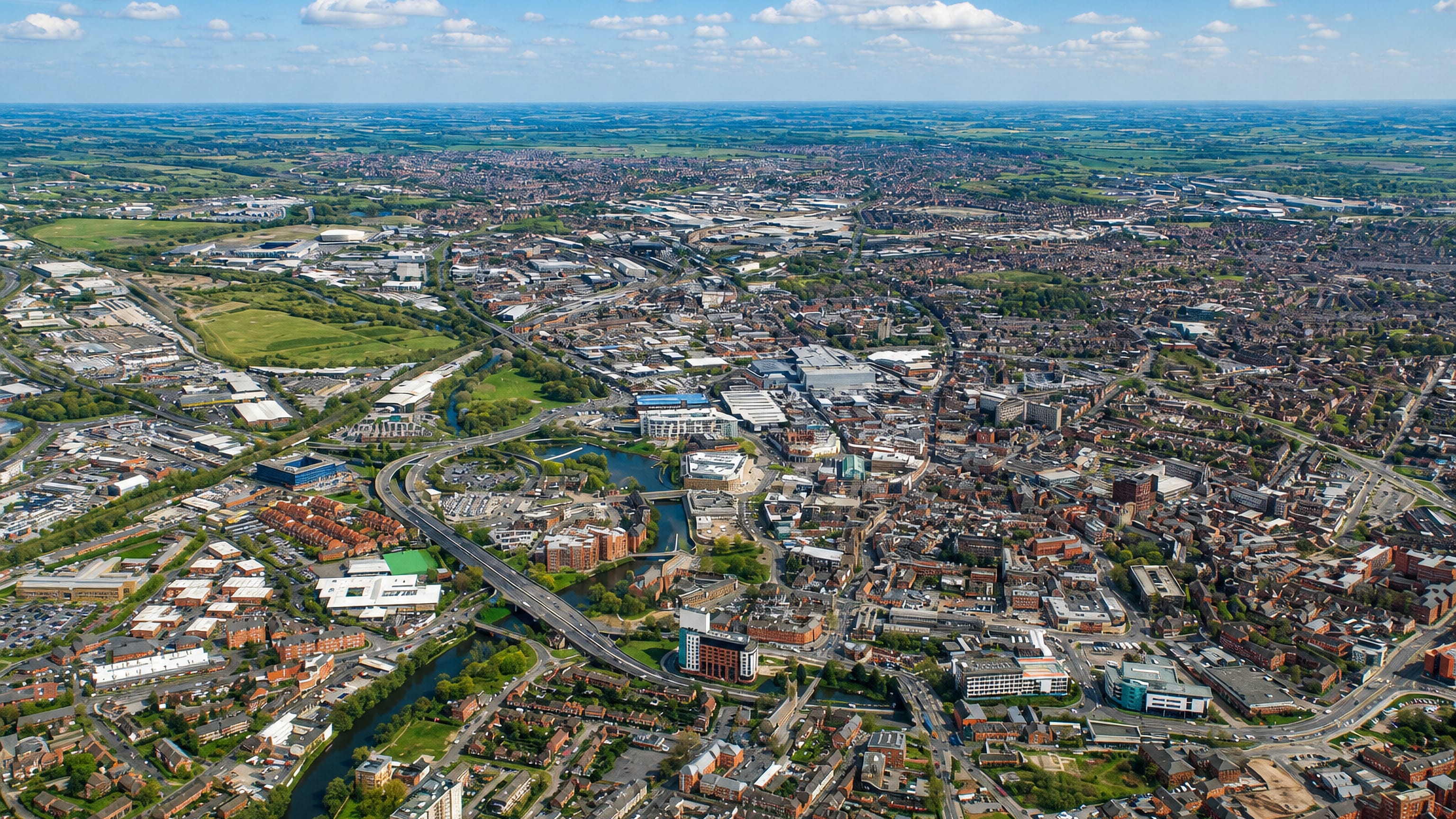
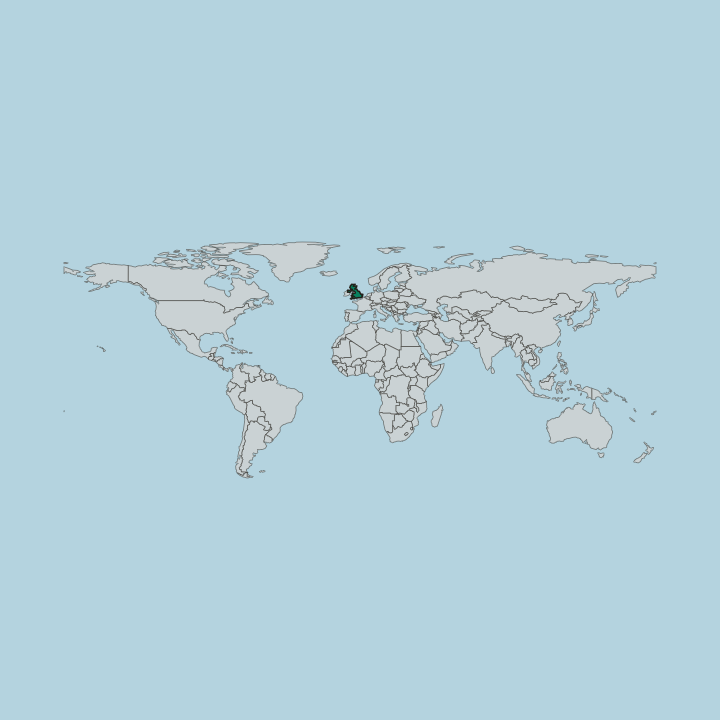
Derby is a cathedral city on the River Derwent in Derbyshire, England, the county town that gave Derbyshire its name.
Hotel links are affiliate links: booking through them may earn us a commission, at no extra cost to you. It never affects how places are ranked. How this works


Where to stay in Derby
The right area depends on your trip — here's what each neighbourhood is best for.

 DerbyUnited Kingdom
Little Chester
Little Chester is an area of Derby whose ground carries the Littlechester Roman site and the Little Chester Heritage Centre.Where to stay →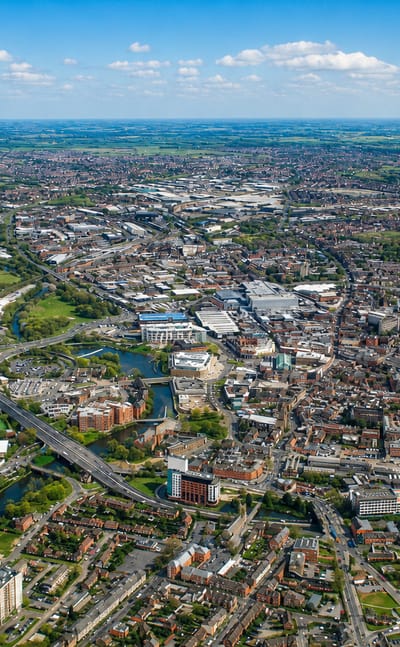 DerbyUnited Kingdom
Litchurch
Litchurch is an area of Derby holding the Royal Crown Derby Museum, the Derby Arena and the Parish Church of St James.Where to stay → DerbyUnited Kingdom
Markeaton
Markeaton is a suburban village and former civil parish within Derby, keeping St Nicholas Church and a Former Toll House on its record.Where to stay → DerbyUnited Kingdom
Shelton Lock
Shelton Lock is an area of Derby, in England, where Saint Edmund's Parish Church and the Church of St Peter are the named buildings.Where to stay →Hotel links are affiliate links: booking through them may earn us a commission, at no extra cost to you. It never affects how places are ranked. How this works
Find hotels in Derby
Direct booking searches for these neighbourhoods.
The Derwent riverside and silk-mill quarter
The old mill streets beside the River Derwent, holding the Museum of Making and the shops behind it.Find hotels in The Derwent riverside and silk-mill quartermuseums and old frontages on footThe Georgian cultural streets
The inland core around the Derby Museum and Art Gallery and Pickford's House, among the town's Georgian houses.Find hotels in The Georgian cultural streetsa short stay before the Peak DistrictThe station edge
The ground by Derby's railway station, a straightforward walk from the centre and handy for the Derbyshire moors.Find hotels in The station edgeHotel links are affiliate links: booking through them may earn us a commission, at no extra cost to you. It never affects how places are ranked. How this works
Things to do in Derby
Ranked by global recognition; descriptions from Wikidata (CC0).
Museums & Galleries
1- Derby Museum and Art Gallery Heritage
Churches & Religious Sites
8- St Mary's Church, Derby Heritage
- St Werburgh's Church, Derby Heritage
- St Peter's Church Heritage
- St. Luke's Church, Derby Heritage
- St Mary's Church, Chaddesden Heritage
Show 3 more →
- Church of St Anne Heritage
- Serbian Orthodox Church Of Apostles St Peter And St Paul, Derby Heritage
- Church of St John the Evangelist Heritage
Castles & Historic Sites
2- Strutt's Park Roman fort
- Derby Racecourse Roman settlement
Stadiums & Sports
1- Derby Arena
Landmarks & Notable Places
8- Engine House Heritage
- Church House Heritage
- Cedar House Heritage
- 38, Ashbourne Road Heritage
- Beechwood House Heritage
Show 3 more →
- Eborn House Heritage
- Former Toll House Heritage
- Old School House Heritage
worth knowingacross 5 categories in Derby
About Derby
Derby made things.
What is Derby known for?
The Museum of Making tells that story inside an old mill on the River Derwent, and the Derby Museum and Art Gallery holds the city's collections a short walk away. Derbyshire takes its name from the city, its original county town, though Derby now runs its own affairs. Travellers use it as a base for the Peak District to the north-west, where the county's high moors begin.
Pickford's House, a preserved Georgian home, rounds out the older core.
What are the main landmarks in Derby?
The River Derwent ties the sights together. The Museum of Making occupies a historic mill on its bank, while the Derby Museum and Art Gallery holds the city's paintings and finds nearby. Pickford's House keeps a Georgian interior intact.
On the edge of town, the Derby Arena hosts cycling and events under one roof. Older still are the Roman traces at the Strutt's Park Roman fort and the Derby Racecourse Roman settlement, laid out here long before the mills.
What is the history of Derby?
Derby began with the Romans. They laid out a fort at Strutt's Park and a settlement at the Derby Racecourse Roman settlement on the River Derwent, guarding the crossing before any town took shape. The place grew slowly over the centuries that followed.
By the medieval period it had become the county town of Derbyshire, the seat from which the county took both its name and its early government. Then the river turned it into a maker. The mills along the Derwent put Derby among the first places in the country to spin by machine, and the trade that grew from them shaped the whole town.
That inheritance now stands preserved in the Museum of Making, set inside one of the old mill buildings. Older houses survived alongside the works, among them the Georgian Pickford's House, kept as it once was. In time the city took charge of itself as a unitary authority, administratively separate from the surrounding Derbyshire County Council.
The Derwent still runs through the middle of it all.
Where is Derby?
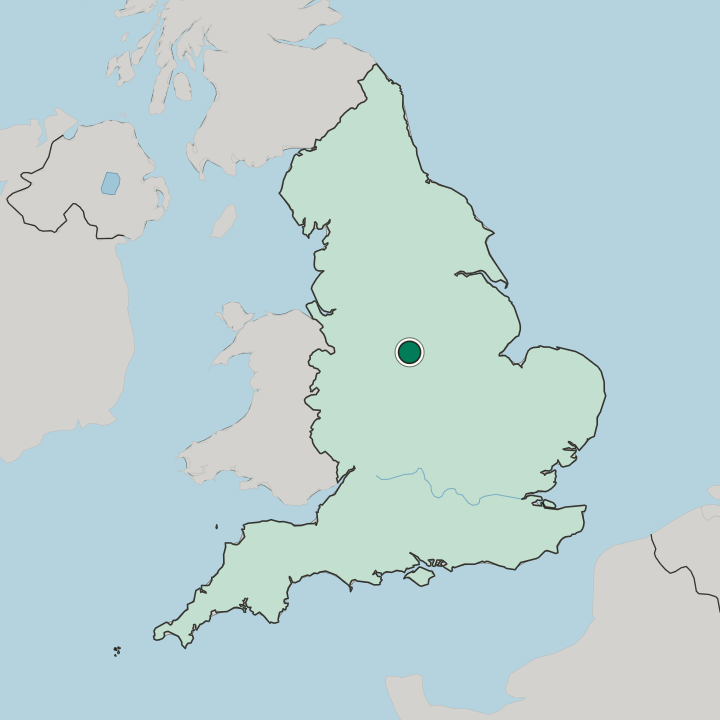
Derby stands on the River Derwent in Derbyshire, England, near the point where the river comes down off the hills and spreads out onto the lowland plain. The Derwent flows through the middle of it. That water rises in the high country to the north-west, in the Peak District, whose moors climb a short way beyond the built edge of the town.
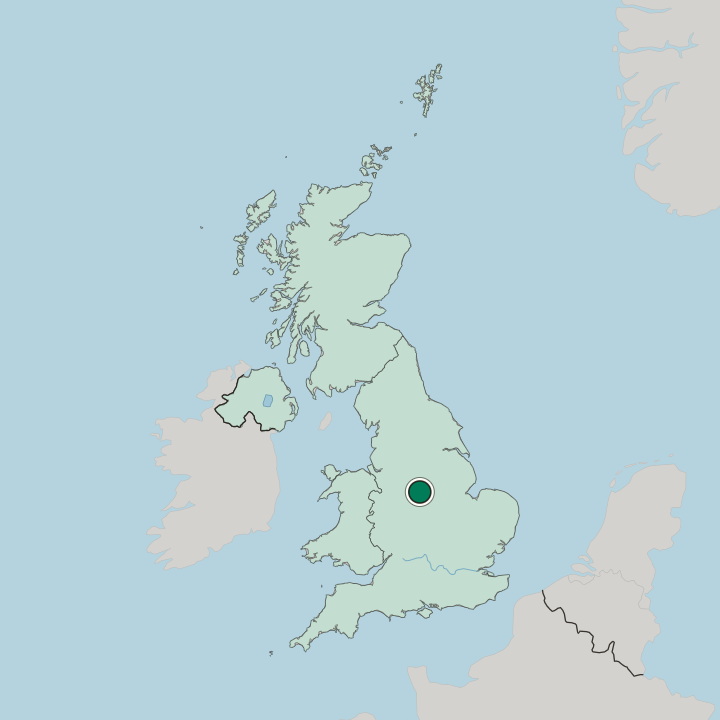
Derby sits far inland. Derbyshire wraps around it on every side.
What is the climate of Derby?
Derby has a mild, temperate climate shaped by its inland position. Sitting well away from the sea, it swings a little more between warm and cool than the coast does, though never far. Winters are cool and damp, with hard frosts uncommon along the sheltered valley of the Derwent.
Summers stay warm rather than hot. Rain that gathers over the Peak District to the north-west often drifts down across the city.
How do you get to Derby?
Derby is easy to reach. Its central position within England puts it on the main lines between the north and the south, and trains call at the city station from several directions. Roads meet here too, drawing traffic in from across Derbyshire and beyond.
Many arrive on their way to the Peak District, whose moors lie a short drive north-west. From the station the compact centre and the River Derwent are both a short walk away.
Common questions
What is the best area to stay in Derby?
The Derwent riverside and silk-mill quarter: the Museum of Making and the market. The Georgian cultural streets: museums and old frontages on foot. The station edge: a short stay before the Peak District.
Good for
More cities in England
Updated October 2026