United Kingdom · England
Where to Stay in Folkestone, England
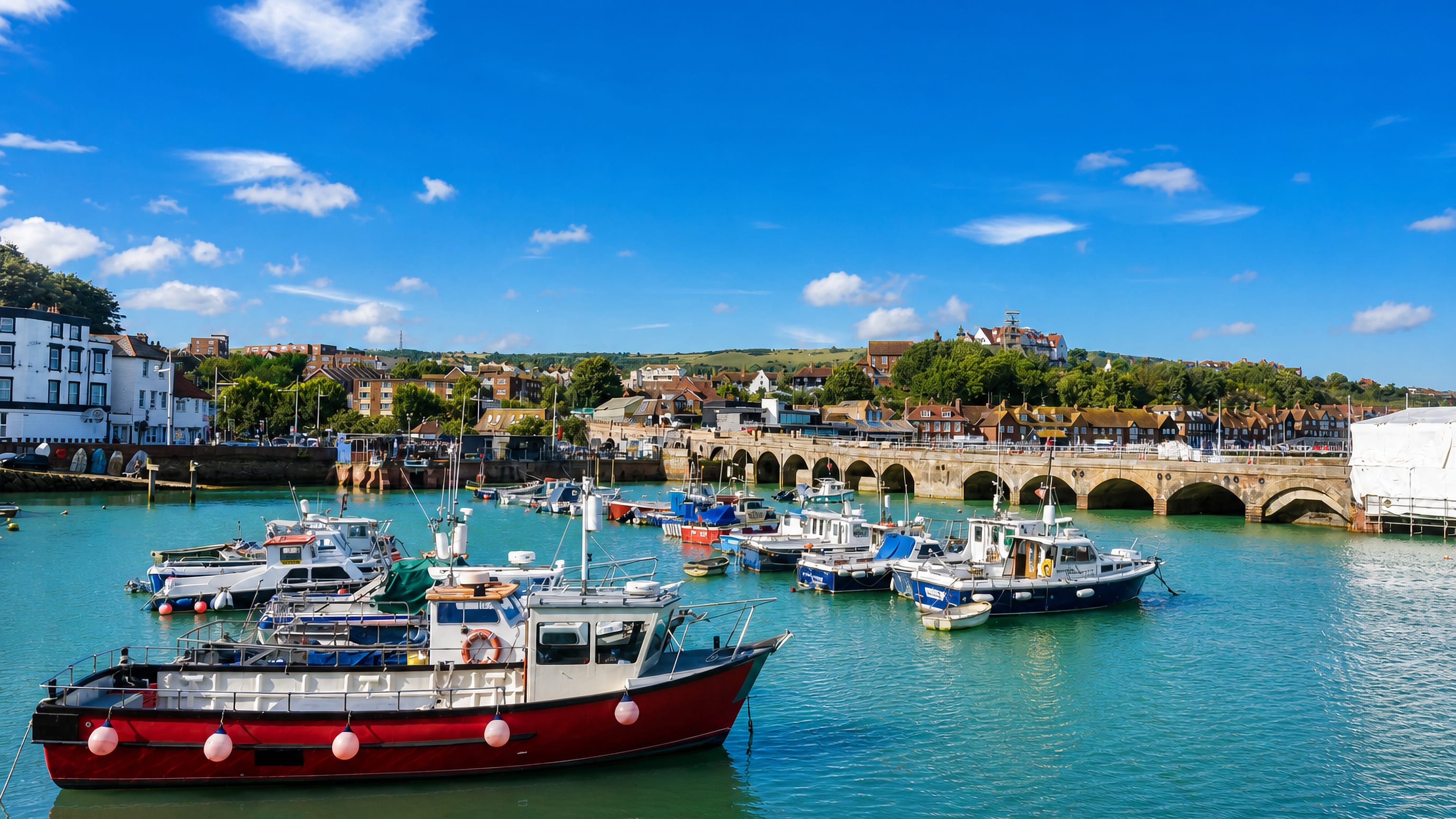
Folkestone is a Kent coastal town on the English Channel, in a valley between two cliffs at the southern edge of the North Downs.
Hotel links are affiliate links: booking through them may earn us a commission, at no extra cost to you. It never affects how places are ranked. How this works


Where to stay in Folkestone
One neighbourhood here has its own guide — here's what it is best for.

 FolkestoneUnited KingdomInland beds near the Church of St Martin, Cheriton
Cheriton
Cheriton Road and Shorncliffe Lodge mark the inland quarter, well back from the cliffs. Lodging is scarce in this area; reserve in advance.Cheriton →Hotel links are affiliate links: booking through them may earn us a commission, at no extra cost to you. It never affects how places are ranked. How this works
Find hotels in Folkestone
Direct booking searches for these neighbourhoods.
The harbour
Harbour Church and the Trinity House Pilot Station stand at the working end of the seafrontFind hotels in The harbourHigh ground beside the two Martello towersEast Cliff
East Cliff carries its Martello towers above the beaches at the town's edge. Beds are limited here, so book early.Find hotels in East CliffBeach days around Sandgate Castle and Spade HouseSandgate
Sandgate Castle sits on the shore with Spade House on the slope behind it. Lodging is scarce in this area; reserve in advance.Find hotels in SandgateVisits centred on the Battle of Britain MemorialCapel-le-Ferne
Capel Battery and the Battle of Britain Memorial, Capel-le-Ferne stand outside Folkestone altogether. Rooms are few around here — worth securing early.Find hotels in Capel-le-FerneHotel links are affiliate links: booking through them may earn us a commission, at no extra cost to you. It never affects how places are ranked. How this works
Things to do in Folkestone
Ranked by global recognition; descriptions from Wikidata (CC0).
Museums & Galleries
2- Capel Battery
- Folkestone Museum
Churches & Religious Sites
8- The Parish Church of St Mary and St Eanswythe Heritage
- Tower Theatre Heritage
- Church of St Martin, Cheriton Heritage
- United Reformed Church Heritage
- Church of the Holy Trinity Heritage
Show 3 more →
- Church of St Michael Heritage
- Church of St Peter Heritage
- Church of St Paul Heritage
Castles & Historic Sites
3- Sandgate Castle Heritage
- Folkestone Castle Heritage
- Two Martello towers, East Cliff Heritage
Stadiums & Sports
2- Cheriton Road
- Sandgate Hill Ground
Landmarks & Notable Places
5- Shorncliffe Lodge Heritage
- Spade House Heritage
- Priory House Heritage
- The Manor House Heritage
- Coolinge House Heritage
worth knowingacross 5 categories in Folkestone
About Folkestone
Art and beaches draw people.
What is Folkestone known for?
Artworks are scattered through the streets, and the harbour that once shipped passengers across the English Channel still shapes a coastline the resort trade made fashionable through the 19th century. Folkestone Museum tells that story. Two Martello towers stand on East Cliff, and the Battle of Britain Memorial, Capel-le-Ferne keeps watch along the same coast.
What are the main landmarks in Folkestone?
A pair of castles comes first. Folkestone Castle and Sandgate Castle answer for the defences, with Capel Battery and the two Martello towers on East Cliff carrying that work into later centuries. The Parish Church of St Mary and St Eanswythe is the oldest of the churches.
Spade House, Priory House, The Manor House and Shorncliffe Lodge are the named houses, while Folkestone Museum, the Tower Theatre and the Trinity House Pilot Station close the list.
What is the history of Folkestone?
The Romans left a villa. The Villa rustica of Folkestone is the earliest named survival here, and the Parish Church of St Mary and St Eanswythe carries the medieval record forward from a saint whose name it still bears. Folkestone Castle came later.
Sandgate Castle took the shoreline, while Priory House and The Manor House stand from the centuries when this was a harbour town rather than a resort. Resort money arrived in the 19th century. Folkestone worked as an important harbour, shipping port and fashionable coastal resort for most of the 19th and mid-20th centuries, and its churches multiplied alongside that trade: St George's Church, the Church of St Michael, the Church of the Holy Trinity, the Church of St Paul, the Church of St Peter and the Church of All Souls.
War left its own marks. Two Martello towers on East Cliff, Capel Battery and the Battle of Britain Memorial, Capel-le-Ferne record the defence of this stretch of the Kent coast, while Shorncliffe Lodge stands inland from them. Spade House belongs to none of that.
The Tower Theatre, the United Reformed Church, Harbour Church and Folkestone Museum fill out what the town kept.
Where is Folkestone?
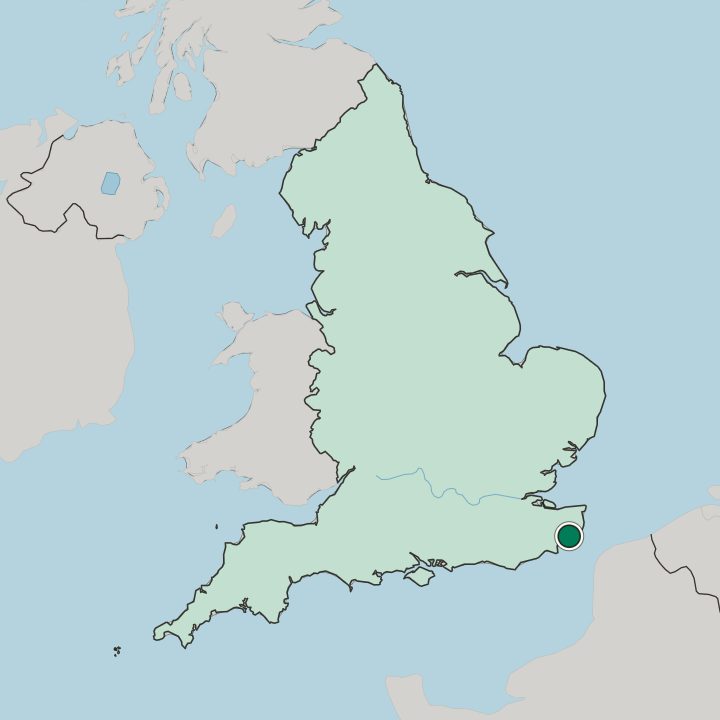
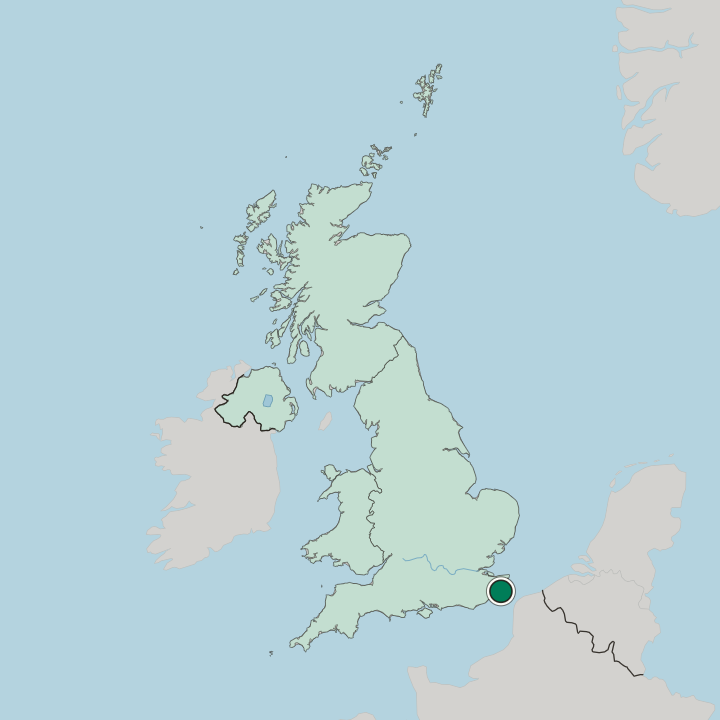
Cliffs frame the town. Folkestone occupies a valley between two of them at the southern edge of the North Downs, facing the English Channel from the Kent coast in south-east England, with Sandgate along the shore and Cheriton back inland. East Cliff rises at one end.
Capel-le-Ferne lies beyond it.
What is the climate of Folkestone?
The Channel does the moderating. Folkestone takes its weather off the English Channel, and the North Downs at its back leave the town open to the water rather than sheltered from it, which keeps the year temperate and the wind honest. Beach days need the light.
Folkestone Museum, the Tower Theatre and the Parish Church of St Mary and St Eanswythe cover the days that lack it.
How do you get to Folkestone?
The harbour was the old door in. Folkestone worked as a shipping port for most of the 19th and mid-20th centuries, and arrivals by water came ashore where the Trinity House Pilot Station still stands, though approaches by land through Cheriton carry the traffic instead. Cheriton Road runs through that side.
Sandgate and Capel-le-Ferne lie along the coast either way from the centre.
Common questions
What is the best area to stay in Folkestone?
The harbour: Mornings on the quay beside Harbour Church. East Cliff: High ground beside the two Martello towers. Sandgate: Beach days around Sandgate Castle and Spade House. Cheriton: Inland beds near the Church of St Martin, Cheriton. Capel-le-Ferne: Visits centred on the Battle of Britain Memorial.
Good for
More cities in England
Updated September 2026