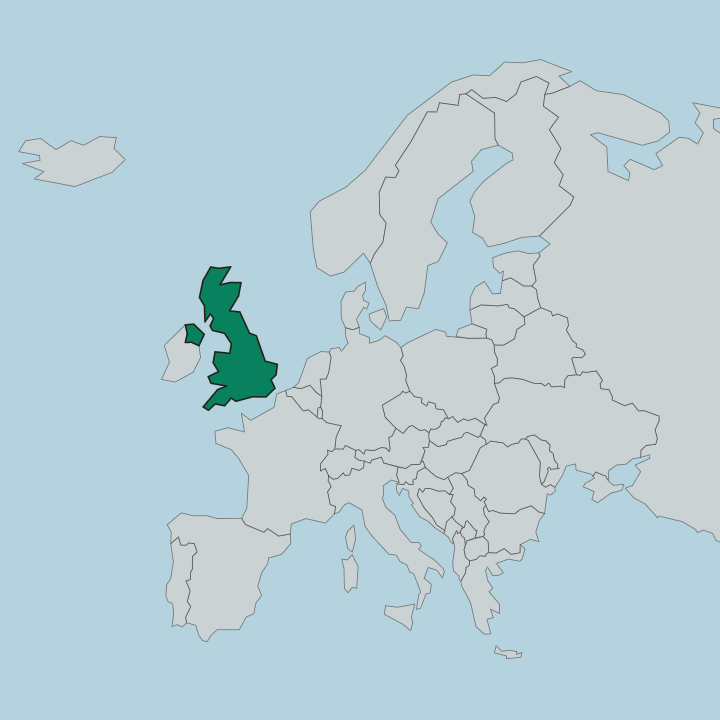
United Kingdom · England
Where to Stay in Kingston upon Hull, England
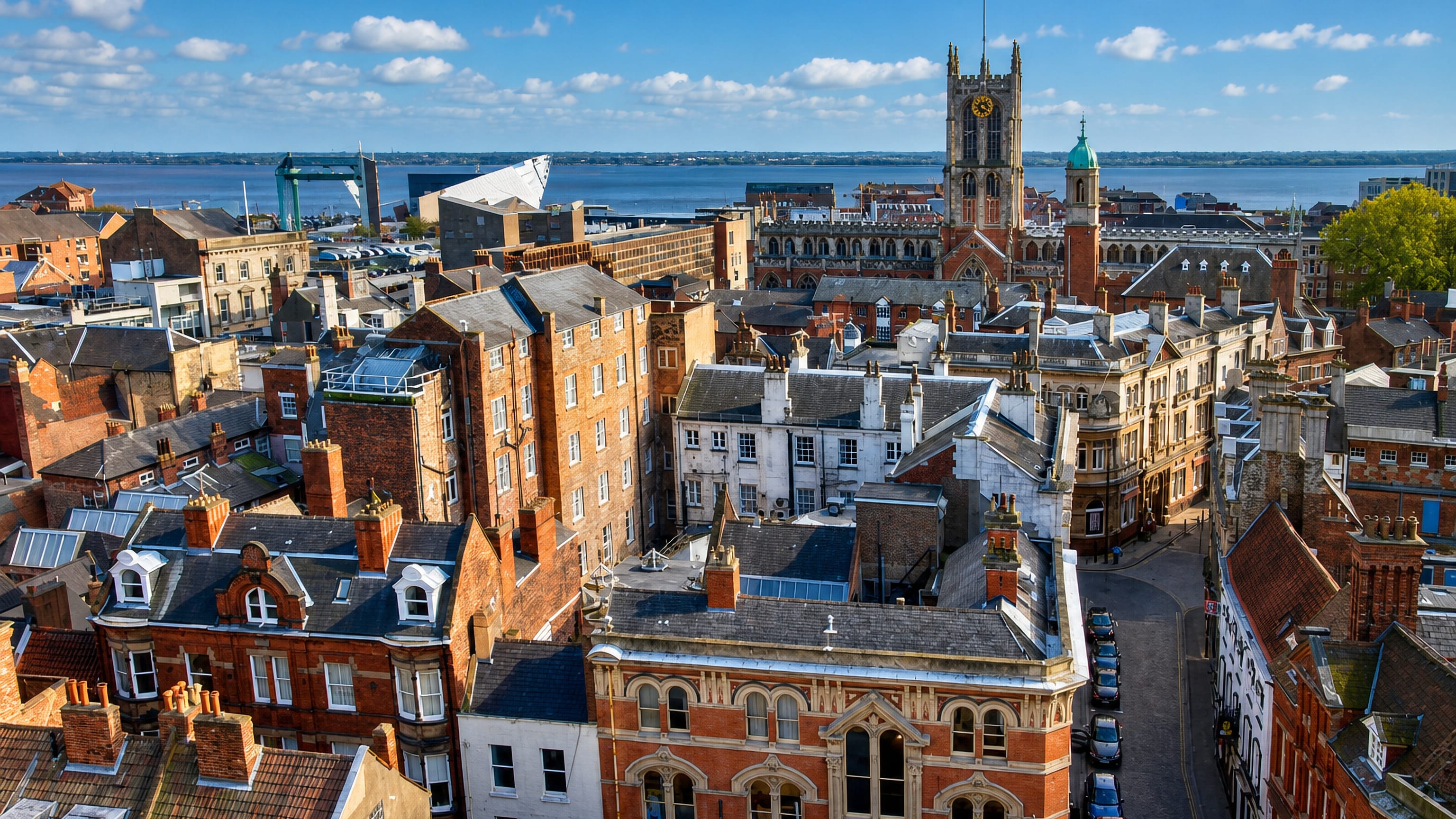
Kingston upon Hull, or Hull, is a port city where the River Hull meets the Humber Estuary in the East Riding of Yorkshire, England.
Hotel links are affiliate links: booking through them may earn us a commission, at no extra cost to you. It never affects how places are ranked. How this works



Where to stay in Kingston upon Hull
Where you base yourself shapes the visit — here's the character of each area.
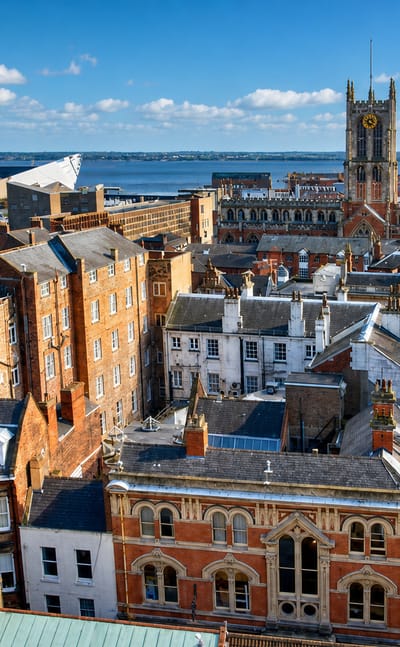
 Kingston upon HullUnited Kingdom
Drypool
Drypool is a district of Kingston upon Hull with The Deep, Hull Minster and the Arctic Corsair among the landmarks on its record.Where to stay →Kingston upon HullUnited KingdomSculcoates
Sculcoates is a district of Kingston upon Hull whose listed addresses include Stepney Station House, Rockliffe House and the Church of St Mary.Where to stay →Kingston upon HullUnited KingdomSummergangs
Summergangs is the Kingston upon Hull suburb of The Garden Village and East Park, with St Columba's Church among its landmarks.Where to stay →Kingston upon HullUnited KingdomStoneferry
Stoneferry is a district of Kingston upon Hull, in England, carrying no listed landmark of its own in the record.Where to stay →Kingston upon HullUnited KingdomDairycoates
Dairycoates is a district of Kingston upon Hull marked by the Hydraulic Tower and Pump House beside St Andrews Dock and by the Fishermens Memorial.Where to stay → Kingston upon HullUnited Kingdom
Gipsyville
Gipsyville is a district of Kingston upon Hull, in England, and its named buildings amount to Pickering Hall and St Nicholas.Where to stay →Kingston upon HullUnited KingdomBransholme
Bransholme is a housing estate on the north side of Kingston upon Hull, its name taken from an old Scandinavian word for Brand's water meadow.Where to stay → Kingston upon HullUnited Kingdom
Sutton Ings
Sutton Ings is a Kingston upon Hull suburb beside Sutton-on-Hull, keeping the Church of St James and Sutton House among its named buildings.Where to stay → Kingston upon HullUnited Kingdom
East Ella
Three parish churches mark East Ella out inside Kingston upon Hull: the Church of The Ascension, St Martin's and The Church of St Thomas.Where to stay →Kingston upon HullUnited KingdomAnlaby Park
Anlaby Park is a small Kingston upon Hull suburb pinned between Anlaby Road and Boothferry Road, with St Mark its one named building.Where to stay →Hotel links are affiliate links: booking through them may earn us a commission, at no extra cost to you. It never affects how places are ranked. How this works
Find hotels in Kingston upon Hull
Direct booking searches for these neighbourhoods.
The Old Town
The cobbled historic core around Hull Minster, Wilberforce House and the Hull Maritime Museum, near the Ferens Art Gallery.Find hotels in The Old Townan evening over the HumberThe marina and estuary front
The reworked docks where the River Hull meets the Humber Estuary, by The Deep and the moored Arctic Corsair.Find hotels in The marina and estuary frontthe art collection and city shopsThe central gallery quarter
The streets around the Ferens Art Gallery in the middle of Hull, a short flat walk from the Old Town.Find hotels in The central gallery quarterHotel links are affiliate links: booking through them may earn us a commission, at no extra cost to you. It never affects how places are ranked. How this works
Things to do in Kingston upon Hull
Ranked by global recognition; descriptions from Wikidata (CC0).
Museums & Galleries
2- Ferens Art Gallery Heritage
- Hull and East Riding Museum
Churches & Religious Sites
8- Hull Minster Heritage
- St Mary's Church Heritage
- Church of St John Newland Heritage
- Church of Saint Matthew and Boundary Wall Heritage
- Church of St James and Boundary Wall Heritage
Show 3 more →
- Trafalgar Street Church Heritage
- Church of St Mary Heritage
- Church of St John the Baptist Heritage
Castles & Historic Sites
1- Wilberforce Monument Heritage
Stadiums & Sports
2- Hull Arena
- Town Cricket Club Ground
Landmarks & Notable Places
8- Blaydes House Heritage
- The Townhouse Heritage
- Cogan House Heritage
- Commercial Chambers Roland House Heritage
- Regent House Heritage
Show 3 more →
- Salop House Heritage
- Sutton House Heritage
- Former Garden Village Club House Heritage
worth knowingacross 5 categories in Kingston upon Hull
About Kingston upon Hull
Hull is a city of the sea.
What is Kingston upon Hull known for?
Its trawlers once sailed from here to the far north, a story told at the Hull Maritime Museum and aboard the trawler Arctic Corsair by the water. The Deep, a landmark aquarium, stands out where the River Hull runs into the Humber Estuary. Wilberforce House marks the birthplace of the man who led the fight against the slave trade.
The Ferens Art Gallery holds the city's paintings in the centre.
What are the main landmarks in Kingston upon Hull?
The Deep dominates the estuary front. The aquarium stands over the water where the River Hull joins the Humber Estuary. In the Old Town, Hull Minster raises its great medieval bulk, and Wilberforce House keeps the abolitionist's birthplace close by.
The Hull Maritime Museum and the moored Arctic Corsair tell the fishing story between them. Older still is the Hull and East Riding Museum with its Roman finds, while the Ferens Art Gallery and the Streetlife Museum of Transport fill out the rest.
What is the history of Kingston upon Hull?
Hull began as a medieval port. A settlement grew where the River Hull runs into the Humber from around the year 1101, and its name, the king's town on the Hull, records how it later passed into the hands of the crown. The Humber carried it from the start.
Trade flowed out through the estuary to the North Sea, and the town prospered on wool, wine and, in time, the great fishing fleets that made its name. The sea shaped everything that followed. Hull sent its trawlers to the northern grounds, and the old fleet is remembered now at the Hull Maritime Museum and on the moored Arctic Corsair.
The town raised Hull Minster over its centre and left grand merchants' houses like Blaydes House along the water. Here too was born William Wilberforce, whose home survives as Wilberforce House and whose stand against the slave trade the city still marks with the Wilberforce Monument. When the fishing faded, the estuary front was rebuilt around The Deep.
The Humber runs past it all, the reason the town exists.
Where is Kingston upon Hull?
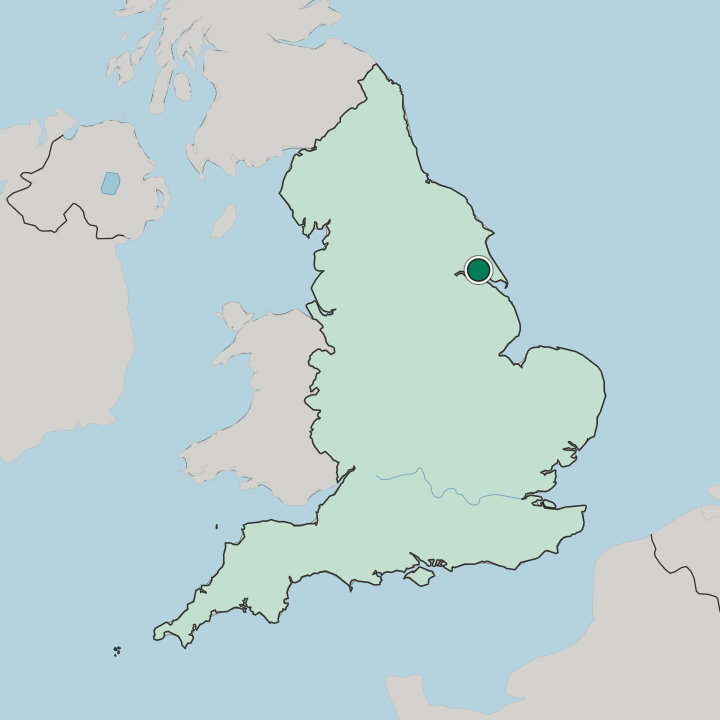
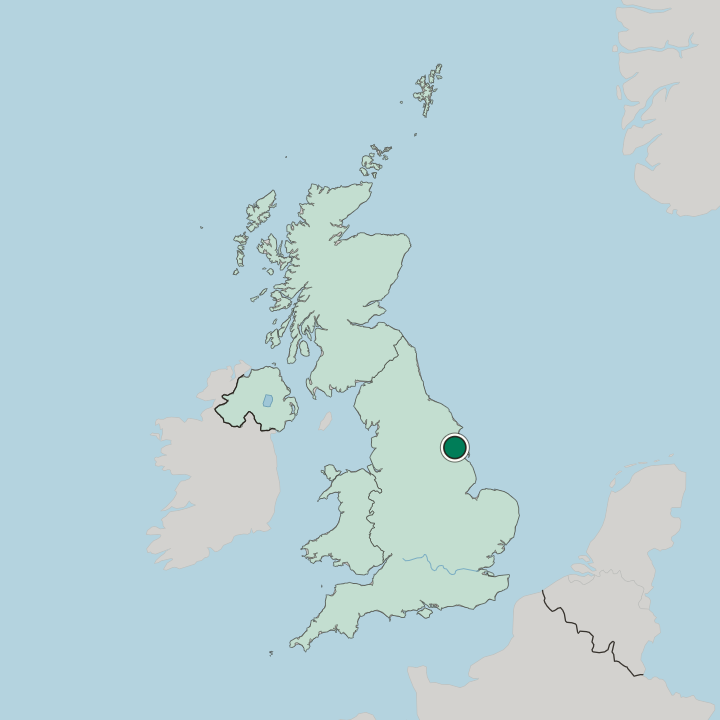
Hull stands where the River Hull meets the Humber Estuary, in the East Riding of Yorkshire, England. The city sits on the north bank of the wide Humber, a short way inland from where the estuary opens into the North Sea. Flat, low country spreads around it, the drained land of the East Riding of Yorkshire reaching back from the water.
The tidal Humber is broad here. The river gives the city both its harbour and its name.
What is the climate of Kingston upon Hull?
Hull has a mild, fairly dry maritime climate on its estuary. Sheltered somewhat inland from the open North Sea up the Humber, it sees less rain than the west of England, though the east coast brings its share of grey, raw days. Winters are cool with few hard frosts, tempered by the tidal water; summers stay warm rather than hot.
Sea fret can roll in off the Humber. The estuary keeps the air moving.
How do you get to Kingston upon Hull?
Hull sits at the end of its own lines. Railways run in from the west across Yorkshire to the city's terminus near the centre, and the roads follow the north bank of the Humber Estuary to reach it. By sea, the port keeps its links across the North Sea from the estuary docks, a route it has long worked.
This is the far corner of the East Riding of Yorkshire, reached across flat and open land. The approach is level throughout. From the station the Old Town and the waterfront are a short walk apart.
Common questions
What is the best area to stay in Kingston upon Hull?
The Old Town: the minster and museums on foot. The marina and estuary front: an evening over the Humber. The central gallery quarter: the art collection and city shops.
Good for
More cities in England
Updated October 2026