United Kingdom · England
Where to Stay in Northampton, England
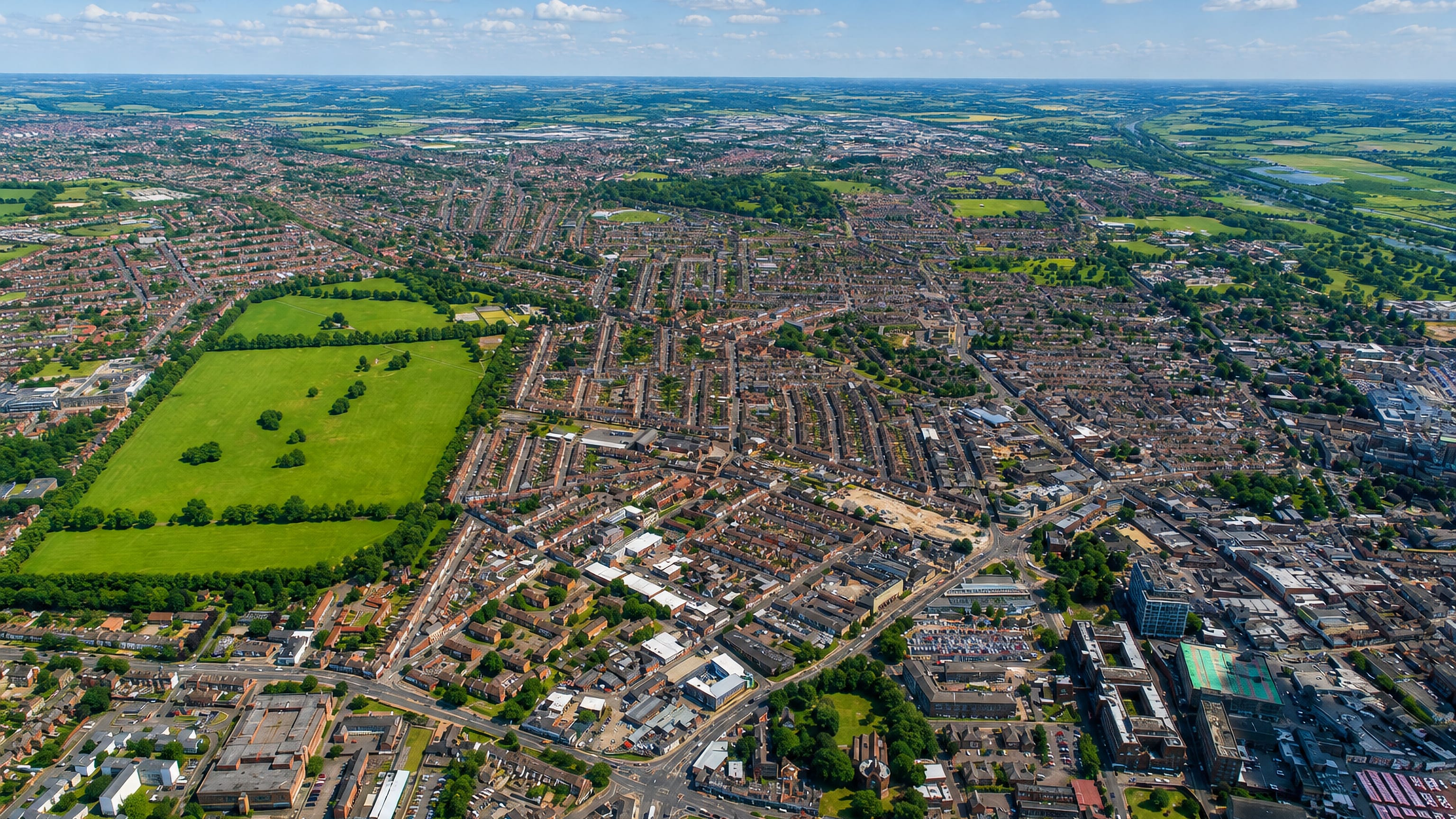
Northampton is a market town of England, its old core gathered around All Saints' Church and the earthworks of Northampton Castle.
Hotel links are affiliate links: booking through them may earn us a commission, at no extra cost to you. It never affects how places are ranked. How this works



Where to stay in Northampton
Where you base yourself shapes the visit — here's the character of each area.
 NorthamptonUnited Kingdom
Far Cotton
Far Cotton is a village and neighbourhood of Northampton whose named buildings run to Delapre Abbey, Park House and Briar Hill House.Where to stay →NorthamptonUnited KingdomAbington
Abington Abbey and the County Cricket Ground anchor this district of Northampton, which also holds four churches and a regimental museum.Where to stay → NorthamptonUnited Kingdom
Duston
A suburb of Northampton and a civil parish in its own right, Duston holds Duston House, three churches and a recorded Roman settlement.Where to stay →NorthamptonUnited KingdomWeston Favell
The Weston Favell Memorial Cross, the Church of Saint Peter and Emmanuel Church are the named fabric of this Northampton district.Where to stay →Hotel links are affiliate links: booking through them may earn us a commission, at no extra cost to you. It never affects how places are ranked. How this works
Find hotels in Northampton
Direct booking searches for these neighbourhoods.
Market-square core
the streets fanning out from the portico of All Saints' Church, with the market square and the Derngate theatres at the doorFind hotels in Market-square coredesign and theatre visitorsDerngate quarter
the streets around 78 Derngate, the Charles Rennie Mackintosh House, close to the concert and theatre venuesFind hotels in Derngate quartertravellers after the town's older fabricThe medieval streets
the ground between the round Holy Sepulchre and the earthworks of Northampton Castle, where the medieval town survives. Rooms are few around here — worth securing early.Find hotels in The medieval streetsa quieter base away from the centreAbington and the eastern parishes
the older parishes toward Abington, marked by the Church of St Giles east of the market core. Lodging is scarce in this area; reserve in advance.Find hotels in Abington and the eastern parishesHotel links are affiliate links: booking through them may earn us a commission, at no extra cost to you. It never affects how places are ranked. How this works
Things to do in Northampton
Ranked by global recognition; descriptions from Wikidata (CC0).
Museums & Galleries
2- Abington Abbey Heritage
- Northampton Museum and Art Gallery
Churches & Religious Sites
8- The Holy Sepulchre, Northampton Heritage
- All Saints' Church, Northampton Heritage
- St Peter's Church, Northampton Heritage
- St Matthew's Church, Northampton Heritage
- St Michael's Church, Upton Heritage
Show 3 more →
- Church of St John the Baptist Heritage
- Doddridge United Reformed Church Heritage
- St Peter and St Paul's Church, Abington Heritage
Castles & Historic Sites
3- Northampton Castle Heritage
- Bradlaugh Monument Heritage
- Duston Roman settlement
Stadiums & Sports
1- County Cricket Ground, Northampton
Landmarks & Notable Places
6- Hazelrigg House Heritage
- Quaker Meeting House Heritage
- Briar Hill House Heritage
- Delapre Abbey Heritage
- Duston House Heritage
Show 1 more →
- Park House Heritage
worth knowingacross 5 categories in Northampton
About Northampton
What is Northampton known for?
Northampton is a town of England long tied to shoemaking and to a cluster of old churches. All Saints' Church anchors the centre, its portico facing the market square. Two rarer buildings set the place apart.
The Holy Sepulchre is one of only a handful of round churches left standing in the country, and 78 Derngate, the Charles Rennie Mackintosh House, holds the designer's single English interior. Cricket keeps its own ground at the County Cricket Ground, and the Northampton Museum and Art Gallery gathers the trade's history under one roof.
What are the main landmarks in Northampton?
Northampton's landmarks run from round church to cricket ground. All Saints' Church stands at the centre behind its columned portico, and the Holy Sepulchre keeps its rare circular nave a short walk north. Design draws visitors to one address. 78 Derngate, the Charles Rennie Mackintosh House, preserves the architect's only interior in England.
The Northampton Museum and Art Gallery holds the shoe collection, the County Cricket Ground stages the summer game, and the older parishes keep the Church of St Giles, St Peter's Church and St Matthew's Church among the town's medieval and Victorian towers.
What is the history of Northampton?
Northampton grew as a walled town of medieval England. Northampton Castle rose beside the crossing and gave the place its early weight, holding parliaments and royal councils through the Middle Ages before its slow ruin. The round church came early too.
The Holy Sepulchre was raised in the twelfth century in imitation of Jerusalem, one of the few of its kind to survive in the country, and the parish churches of St Giles and St Peter took shape around the same medieval streets. Fire and trade remade the town. A great blaze swept the centre in the seventeenth century, and the rebuilding left the classical portico of All Saints' Church over the market square.
Shoemaking then carried Northampton for generations, its workshops and factories supplying armies and markets far beyond England, a trade whose record the Northampton Museum and Art Gallery still keeps. The town's newer chapters left their own marks, among them the arts-and-crafts interior of 78 Derngate, the Charles Rennie Mackintosh House.
Where is Northampton?
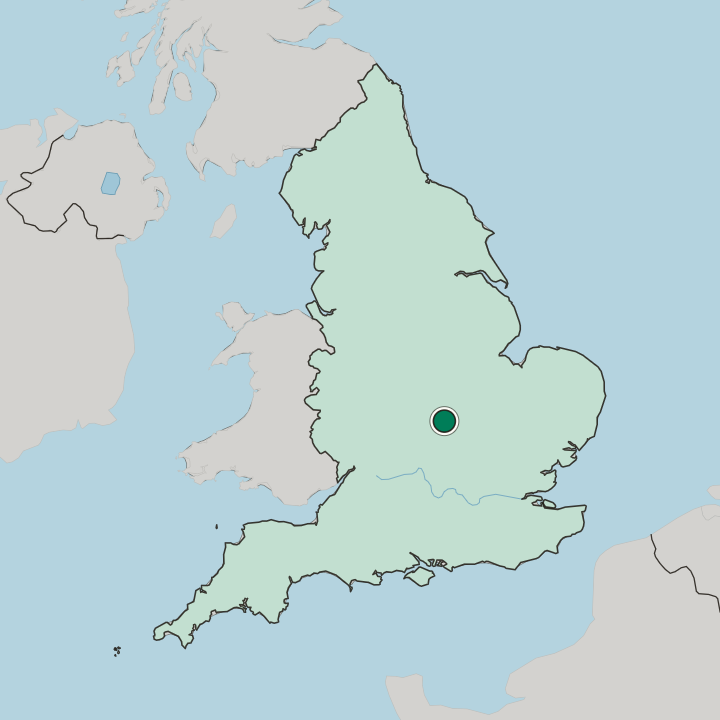
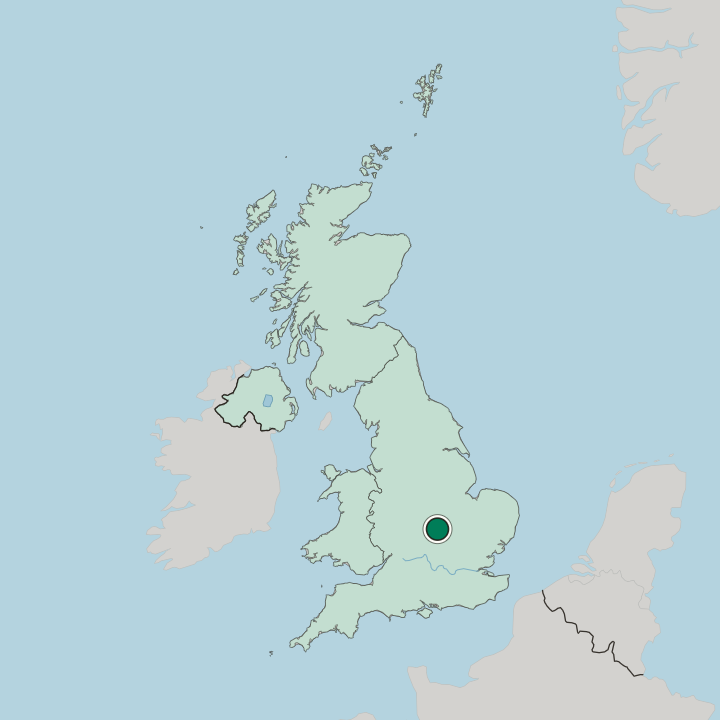
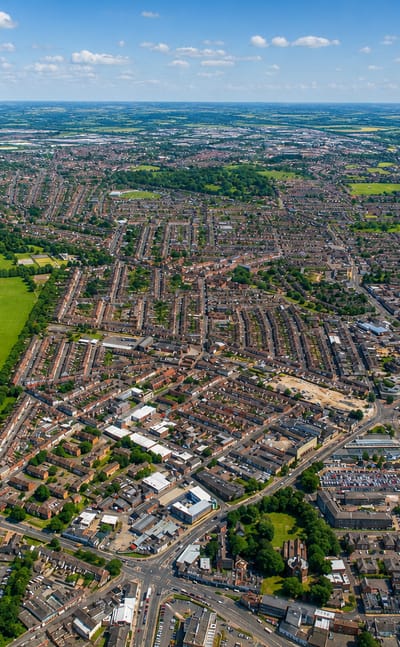
Northampton sits inland in central England, one of the larger market towns away from the coast. The old core gathers on rising ground around All Saints' Church and the market square, with the ruined ground of Northampton Castle marking the western edge of the medieval town. The built-up area spreads out from there.
Older parishes reach toward Abington and Upton on the fringes, where the churches of St Giles and St Michael mark villages long since absorbed into the growing town.
What is the climate of Northampton?
Northampton has the mild, damp climate common to inland England. Held well away from the coast, the town runs a little cooler and drier than the western hills, with grey changeable weather blown across the country from the Atlantic. Winters are cool rather than hard.
Summers stay warm without much heat, rain falls in every season, and frost settles over the market square and the parish churchyards through the colder months.
How do you get to Northampton?
Northampton lies on the road and rail network of central England. Trains run south to London and north to the larger cities from the town's station on the western edge of the centre, and a motorway passes close by to link the town with the capital and the north. Almost everyone arrives by train or motorway.
The nearest large airports serve the wider region rather than the town itself, so the train or the road carries the bulk of arrivals from across England to the streets around All Saints' Church.
Common questions
What is the best area to stay in Northampton?
Market-square core: walking to the town's shops and theatres. Derngate quarter: design and theatre visitors. The medieval streets: travellers after the town's older fabric. Abington and the eastern parishes: a quieter base away from the centre.
Good for
More cities in England
Updated October 2026