United Kingdom · England
Where to Stay in Preston, England
Preston is a Lancashire city on the north bank of the River Ribble, the county's administrative centre and the site of the Harris Museum.
Hotel links are affiliate links: booking through them may earn us a commission, at no extra cost to you. It never affects how places are ranked. How this works



Where to stay in Preston
Not every neighbourhood fits every trip — here's what each one is good for.

 PrestonUnited Kingdomriverside streets still on the Preston bank
Ashton-on-Ribble
St Michael and All Angels Church and St Andrew's Church mark a thinly bedded stretch of the same north bank. Lodging is scarce in this area; reserve in advance.Ashton-on-Ribble → PrestonUnited Kingdom
Fishwick
Fishwick is a Preston district whose record is a short roll of churches, a chapel and the Museum of Lancashire.Where to stay →PrestonUnited KingdomRibbleton
Ribbleton is a suburb and ward east of Preston's city centre in Lancashire, held between New Hall Lane and Longridge Road.Where to stay →PrestonUnited KingdomLarches
Larches is a district of Preston in Lancashire, a ward of post-war estates north-west of the city centre, taking in Savick and Ashton Park.Where to stay →PrestonUnited KingdomIngol
Ingol is an electoral ward and suburb of Preston in Lancashire, sharing the civil parish of Ingol and Tanterton with the district next door.Where to stay →PrestonUnited KingdomLea
Lea is a village within the City of Preston in Lancashire, England, joined with Cottam and Lea Town in the civil parish of Lea and Cottam.Where to stay →Hotel links are affiliate links: booking through them may earn us a commission, at no extra cost to you. It never affects how places are ranked. How this works
Find hotels in Preston
Direct booking searches for these neighbourhoods.
Preston city centre
The Harris Museum, Preston Guild Hall and the Church of St Walburge all fall inside one walkable core.Find hotels in Preston city centredrivers who want the river between them and the centrePenwortham
Penwortham Castle and St Mary's Church anchor a base on the far bank of the Ribble. Beds are limited here, so book early.Find hotels in Penworthama quieter base around St Leonard's ChurchWalton-le-Dale
Sits inside the borough of South Ribble rather than the city, at the St Leonard's Church end of the built-up area. Lodging is scarce in this area; reserve in advance.Find hotels in Walton-le-DaleHotel links are affiliate links: booking through them may earn us a commission, at no extra cost to you. It never affects how places are ranked. How this works
Things to do in Preston
Ranked by global recognition; descriptions from Wikidata (CC0).
Museums & Galleries
2- Harris Museum Heritage
- Museum of Lancashire
Churches & Religious Sites
8- Church of St. Walburge, Preston Heritage
- Syro-Malabar Cathedral of St Alphonsa, Preston Heritage
- Church of St Thomas of Canterbury and the English Martyrs, Preston Heritage
- St Wilfrid's Church, Preston Heritage
- Church of St George the Martyr, Preston Heritage
Show 3 more →
- St Mark's Church, Preston Heritage
- St Mary's Church, Penwortham Heritage
- St Leonard's Church, Walton-le-Dale Heritage
Castles & Historic Sites
2- Penwortham Castle Heritage
- Preston Castle, Lancashire
Stadiums & Sports
1- Preston Guild Hall
Landmarks & Notable Places
6- Arkwright House Heritage
- The Guild Heritage
- Canal Bridge Number 17 Valentine House Bridge Heritage
- Canal Bridge Number 19 Quaker's Bridge Heritage
- Clock House Heritage
Show 1 more →
- Larches House Heritage
worth knowingacross 5 categories in Preston
About Preston
Cotton and engineering built the place.
What is Preston known for?
Mills drew workers into Preston through the nineteenth century, and the town later turned to aircraft manufacture, work that continues alongside the university and the Lancashire county administration. City status arrived in 2002, making Preston England's fiftieth city in the fiftieth year of Queen Elizabeth II's reign. The Guild and Preston Guild Hall keep an older civic word in everyday use.
What are the main landmarks in Preston?
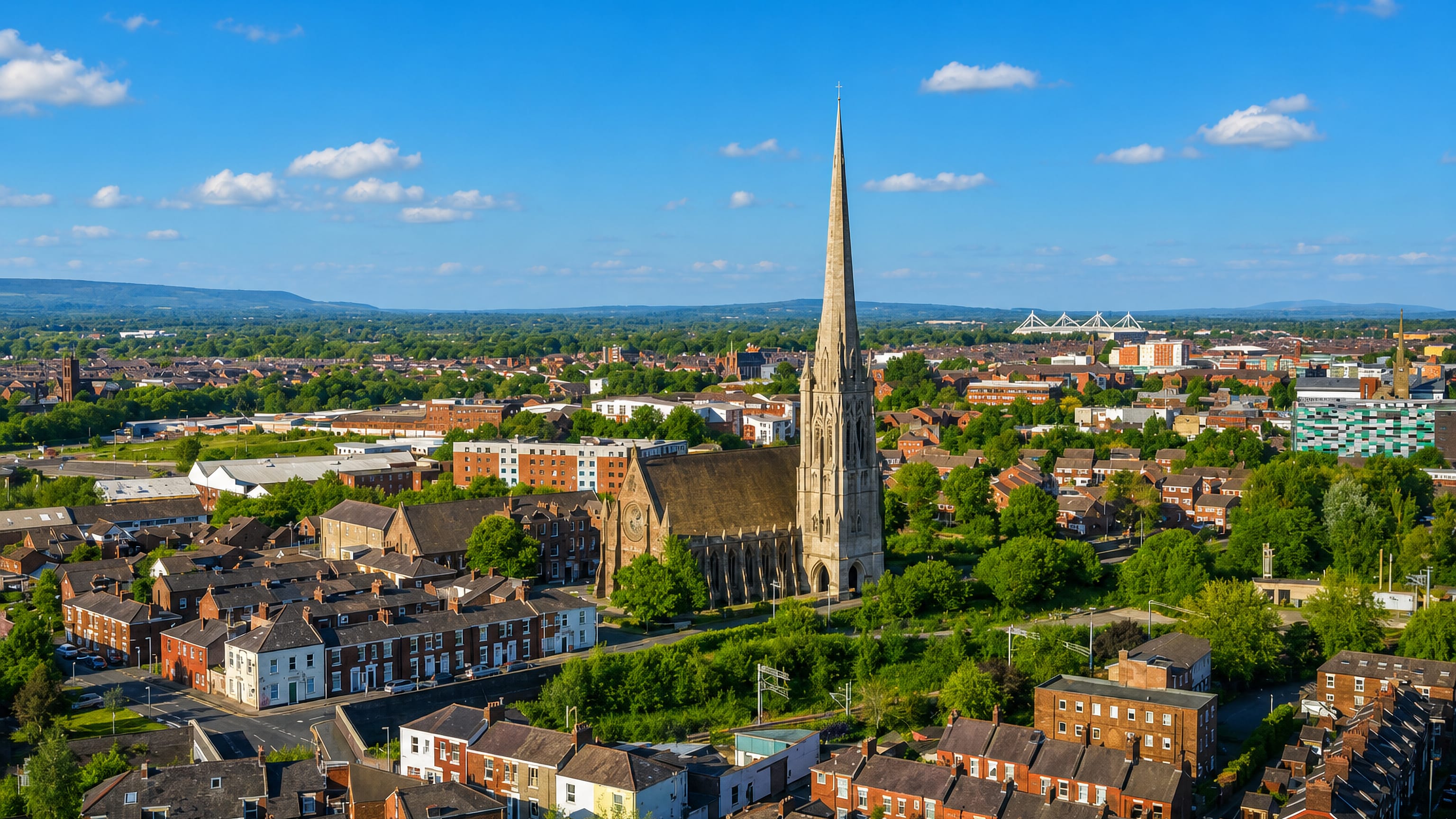
The Church of St Walburge is the landmark most people fix on. Inside the centre, the Harris Museum and the Museum of Lancashire hold the collections, while Preston Guild Hall takes the concerts and the civic occasions. Arkwright House stands among them.
Newer congregations have their own anchors, from City Mosque Preston to the Syro-Malabar Cathedral of St Alphonsa, and the parish churches of St Mark's and St Joseph's still mark out the older neighbourhoods.
What is the history of Preston?
Castles come first in the record. Penwortham Castle and Preston Castle name a layer of the past that predates every mill in the district. Churches followed, and they remain the densest historical layer the town has: St Mary's Church, St Wilfrid's Church, the Minster Church of Saint John the Evangelist, and St Leonard's Church out at Walton-le-Dale.
Each one marks a parish. Read together, they map how far the settlement had spread on both banks of the River Ribble before industry arrived, and they explain why so much of Preston's built heritage is ecclesiastical rather than civic. Cotton and engineering then made the modern town, and that economy left its marks in Arkwright House and in the Harris Museum.
Textiles went. Engineering stayed in a changed form, since aircraft work continues here, and the Lancashire county administration and a university stand alongside it. The boundary tells its own story: the south bank grew into the Preston urban area but stayed administratively apart as the borough of South Ribble.
In 2002 the district was granted city status, making Preston England's fiftieth city in the fiftieth year of Queen Elizabeth II's reign. The title is ceremonial. What it recognised was a place that had already been running the county's official business for generations, and that keeps the Museum of Lancashire and Preston Guild Hall as the public face of it.
Where is Preston?
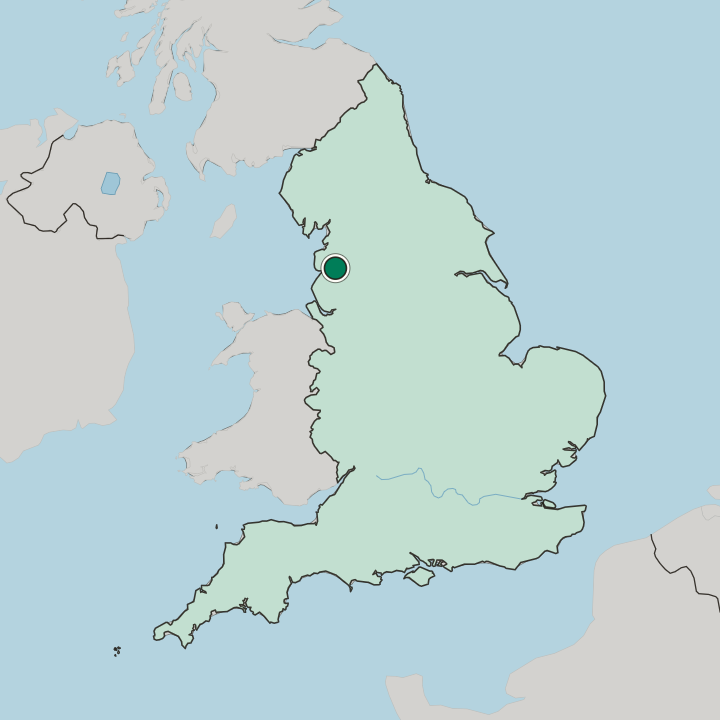
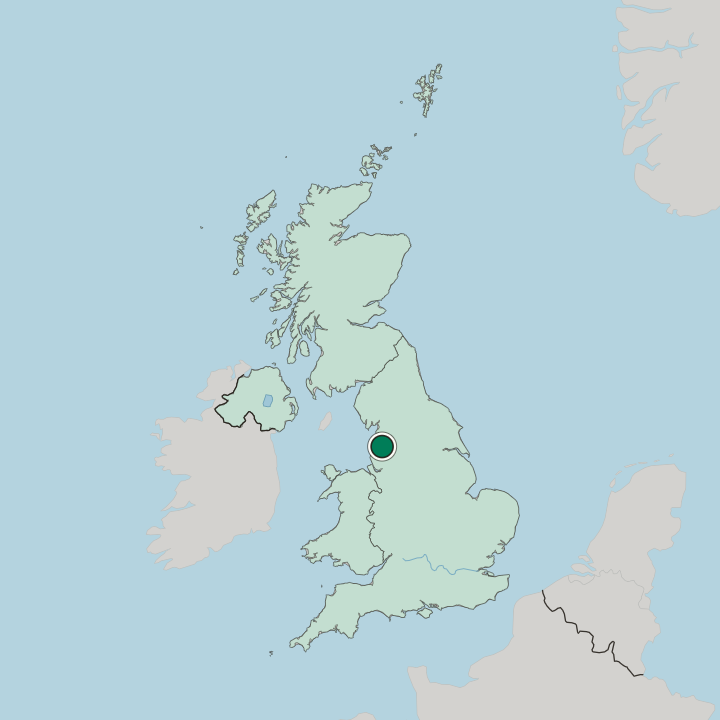
The River Ribble does the dividing. Preston sits on its north bank, with Penwortham and Walton-le-Dale facing it across the water in the separately governed borough of South Ribble, so the built-up area spans a boundary that only the river explains. Ashton-on-Ribble carries the built-up edge along the same bank.
The City of Preston district spreads well past that core, into Lancashire farmland.
What is the climate of Preston?
Temperate is the whole story. Winters run cool rather than severe and summers stay moderate, the even northern-hemisphere pattern that leaves the River Ribble banks green through most months of the year. Rain comes in spells rather than seasons.
Wet afternoons send people to the Harris Museum, Preston Guild Hall, or the Museum of Lancashire.
How do you get to Preston?
Everything funnels to the Ribble crossings. Approaches from the far bank reach the city over a handful of bridges, which is why movement between Preston and the separately governed borough of South Ribble concentrates on so few points. The centre is small on foot.
Once across, the Harris Museum, Preston Guild Hall, and the Lancashire county offices sit within a few streets of each other, and Walton-le-Dale, Penwortham, and Ashton-on-Ribble are all short local runs.
Common questions
What is the best area to stay in Preston?
Preston city centre: museum days and the county's civic buildings. Penwortham: drivers who want the river between them and the centre. Walton-le-Dale: a quieter base around St Leonard's Church. Ashton-on-Ribble: riverside streets still on the Preston bank.
Good for
More cities in England
Updated October 2026