United Kingdom · England
Where to Stay in Royal Tunbridge Wells, England
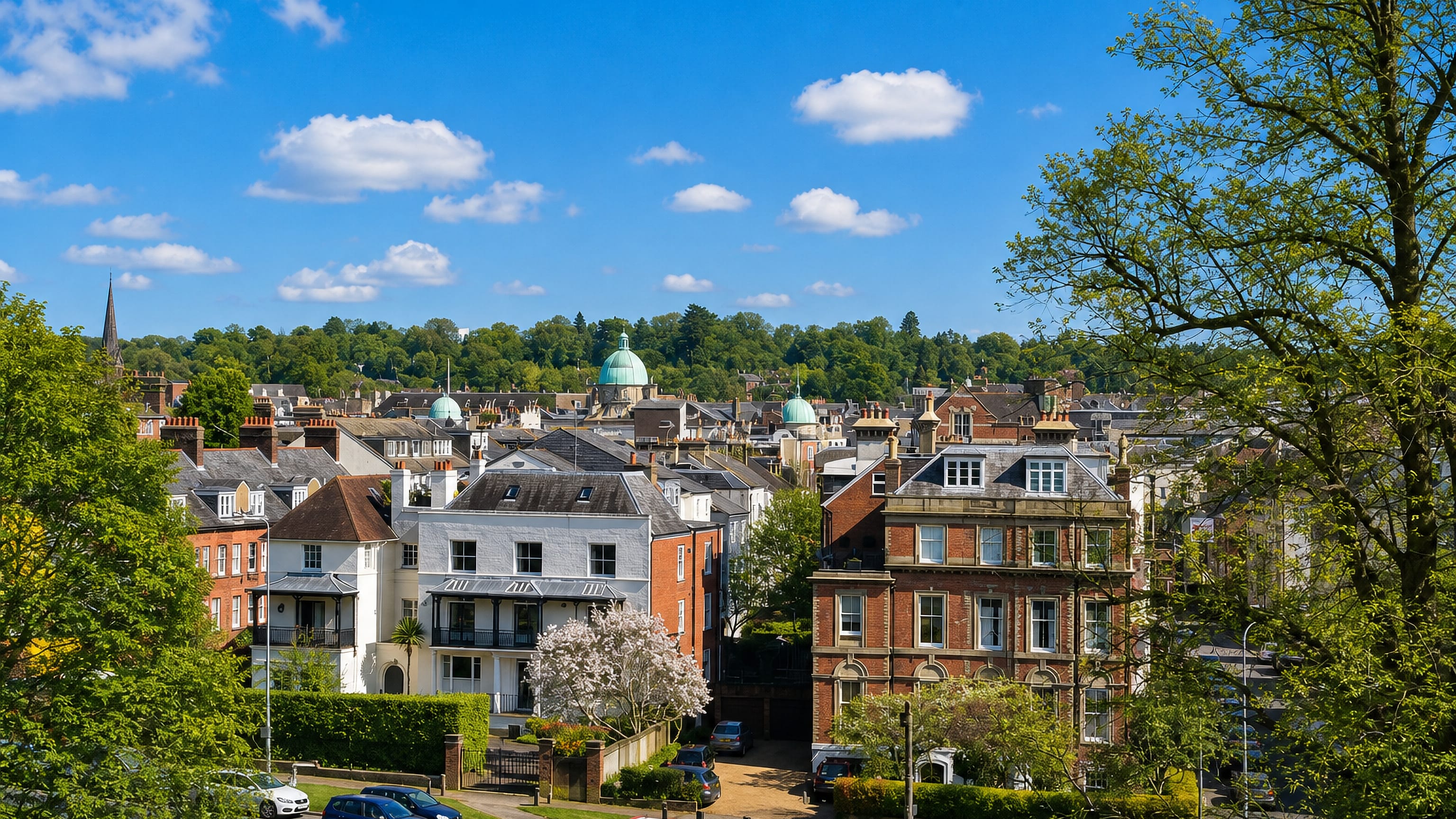
Royal Tunbridge Wells is a Kent spa town on the northern edge of the High Weald, built around the Pantiles and its chalybeate spring.
Hotel links are affiliate links: booking through them may earn us a commission, at no extra cost to you. It never affects how places are ranked. How this works



Where to stay in Royal Tunbridge Wells
The right area depends on your trip — here's what each neighbourhood is best for.

 Royal Tunbridge WellsUnited Kingdom
Broadwater Down
Broadwater Down is a district of Royal Tunbridge Wells whose record runs to named houses, the Nevill Ground and the Spa Valley Railway.Where to stay → Royal Tunbridge WellsUnited Kingdom
High Brooms
High Brooms is a suburb of Royal Tunbridge Wells with its own railway station and train links to London and Hastings.Where to stay →Hotel links are affiliate links: booking through them may earn us a commission, at no extra cost to you. It never affects how places are ranked. How this works
Find hotels in Royal Tunbridge Wells
Direct booking searches for these neighbourhoods.
The Pantiles
The Pantiles and its chalybeate spring are why the town exists, with King Charles the Martyr alongside.Find hotels in The Pantilesthe London Road side of the townMount Pleasant
68 London Road and the Lecture Hall Mount Pleasant Congregational Church line this stretch.Find hotels in Mount Pleasantcricket weekends at the Nevill GroundNevill
The Nevill Ground sets the tone on this side, well away from the Pantiles crowds. Few places to stay nearby — book ahead.Find hotels in NevillHigh Weald sandstone and the Spa Valley RailwayHigh Rocks
High Rocks and the Spa Valley Railway pull out of town into the High Weald sandstone. Beds are limited here, so book early.Find hotels in High RocksHotel links are affiliate links: booking through them may earn us a commission, at no extra cost to you. It never affects how places are ranked. How this works
Things to do in Royal Tunbridge Wells
Ranked by global recognition; descriptions from Wikidata (CC0).
Churches & Religious Sites
8- Church of King Charles the Martyr, Royal Tunbridge Wells Heritage
- St Mark's Church, Royal Tunbridge Wells Heritage
- St Paul's Church Heritage
- The Parish Church of St Alban Heritage
- Lecture Hall Mount Pleasant Congregational Church Heritage
Show 3 more →
- Church of St John Heritage
- Parish Church of St Barnabas Heritage
- Church of St James Heritage
Stadiums & Sports
1- Nevill Ground
Landmarks & Notable Places
8- 79, Mount Ephraim Heritage
- 68 London Road Heritage
- Vale Towers Heritage
- Belgrove House Heritage
- Temple House Heritage
Show 3 more →
- Caxton House Heritage
- Jerningham House Heritage
- Hanover Lodge Heritage
worth knowingacross 3 categories in Royal Tunbridge Wells
About Royal Tunbridge Wells
Water made the reputation.
What is Royal Tunbridge Wells known for?
A chalybeate spring drew visitors to take the waters, the Pantiles gave them somewhere to walk, and Beau Nash turned the place into a fashionable resort long before sea bathing pulled that crowd away. King Edward VII added the prefix. Royal Tunbridge Wells is one of only three towns in England to carry the title, and the Church of King Charles the Martyr remains its best-known building.
What are the main landmarks in Royal Tunbridge Wells?
The Pantiles carries the name. Its chalybeate spring is what the resort was built on, and the Church of King Charles the Martyr is the building most visitors pair with it. High Rocks is the natural set piece.
Sandstone of the High Weald surfaces there in formations the town has borrowed as an attraction, while the Spa Valley Railway makes the journey out part of the day. Salomons Museum, the Nevill Ground and Vale Towers cover the rest.
What is the history of Royal Tunbridge Wells?
The spring came first. A chalybeate spring turned a patch of the High Weald into a spa during the Restoration, and the Pantiles drew the visitors who wished to take the waters. Beau Nash finished the job.
Under him the town became a fashionable resort, and the Church of King Charles the Martyr served those who came. Sea bathing broke the spell. The spa's popularity waned once the coast took that trade, but tourism stayed, and the churches that followed, St Mark's Church, the Parish Church of St Barnabas, the Church of St John, the Church of St Thomas and the Church of St James, show a town that kept growing anyway.
The Canon Hoare Memorial and the Parish Church of St Alban date from that expansion. King Edward VII granted the prefix in 1909. Only three towns in England carry the Royal title, and this is one, sitting in Kent close to the East Sussex border.
Salomons Museum, the Spa Valley Railway and the Nevill Ground belong to the later town, and Vale Towers, Hanover House and Jerningham House stand from the same stretch of building.
Where is Royal Tunbridge Wells?
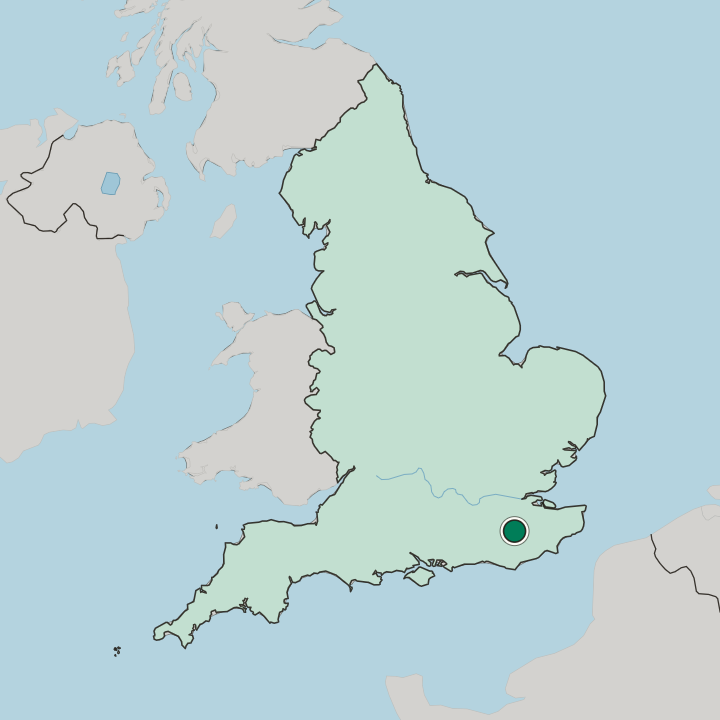
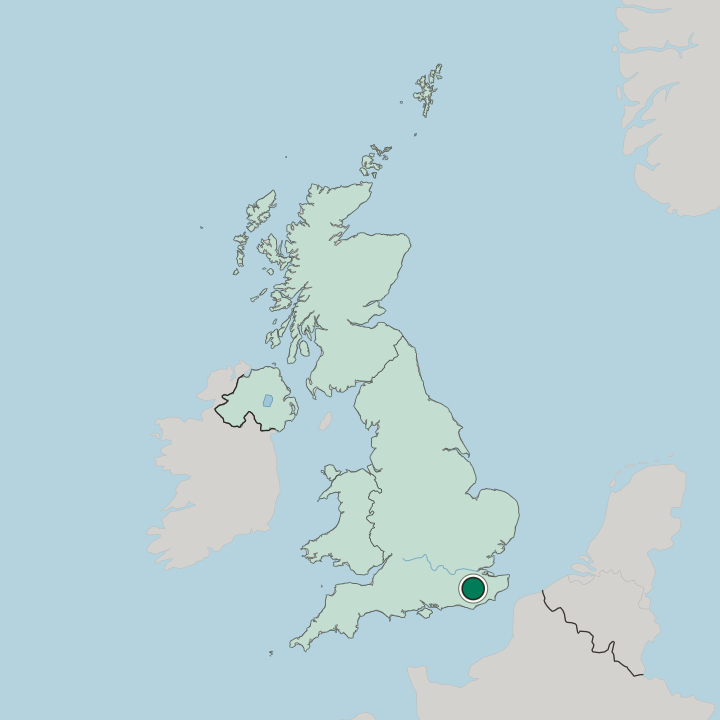
The High Weald sets the ground. Royal Tunbridge Wells sits on its northern edge, where sandstone comes to the surface at High Rocks, and the ground around the town follows that geology rather than any river. Kent ends nearby.
The East Sussex border runs close to the town, and Central London lies 30 miles northwest, far enough to keep the Weald countryside intact between them.
What is the climate of Royal Tunbridge Wells?
The High Weald does the shaping. Higher ground on the ridge catches more rain than the country toward the coast, and the sandstone at High Rocks holds damp in the shaded hollows well after the open fields have dried. Winters are moderate.
The Pantiles and Salomons Museum work in any weather, while the Spa Valley Railway and the Nevill Ground want a clear day.
How do you get to Royal Tunbridge Wells?
Central London is 30 miles off. The capital lies northwest, which makes Royal Tunbridge Wells an easy run out for anyone approaching from that side, and the East Sussex border is close enough that arrivals come from both counties. London Road carries the traffic in.
The Spa Valley Railway works the other direction, out through the High Weald, and it is a day out rather than a way to arrive.
Common questions
What is the best area to stay in Royal Tunbridge Wells?
The Pantiles: the chalybeate spring and the spa walk. Mount Pleasant: the London Road side of the town. Nevill: cricket weekends at the Nevill Ground. High Rocks: High Weald sandstone and the Spa Valley Railway.
Good for
More cities in England
Updated October 2026