United Kingdom · England
Where to Stay in Scarborough, England
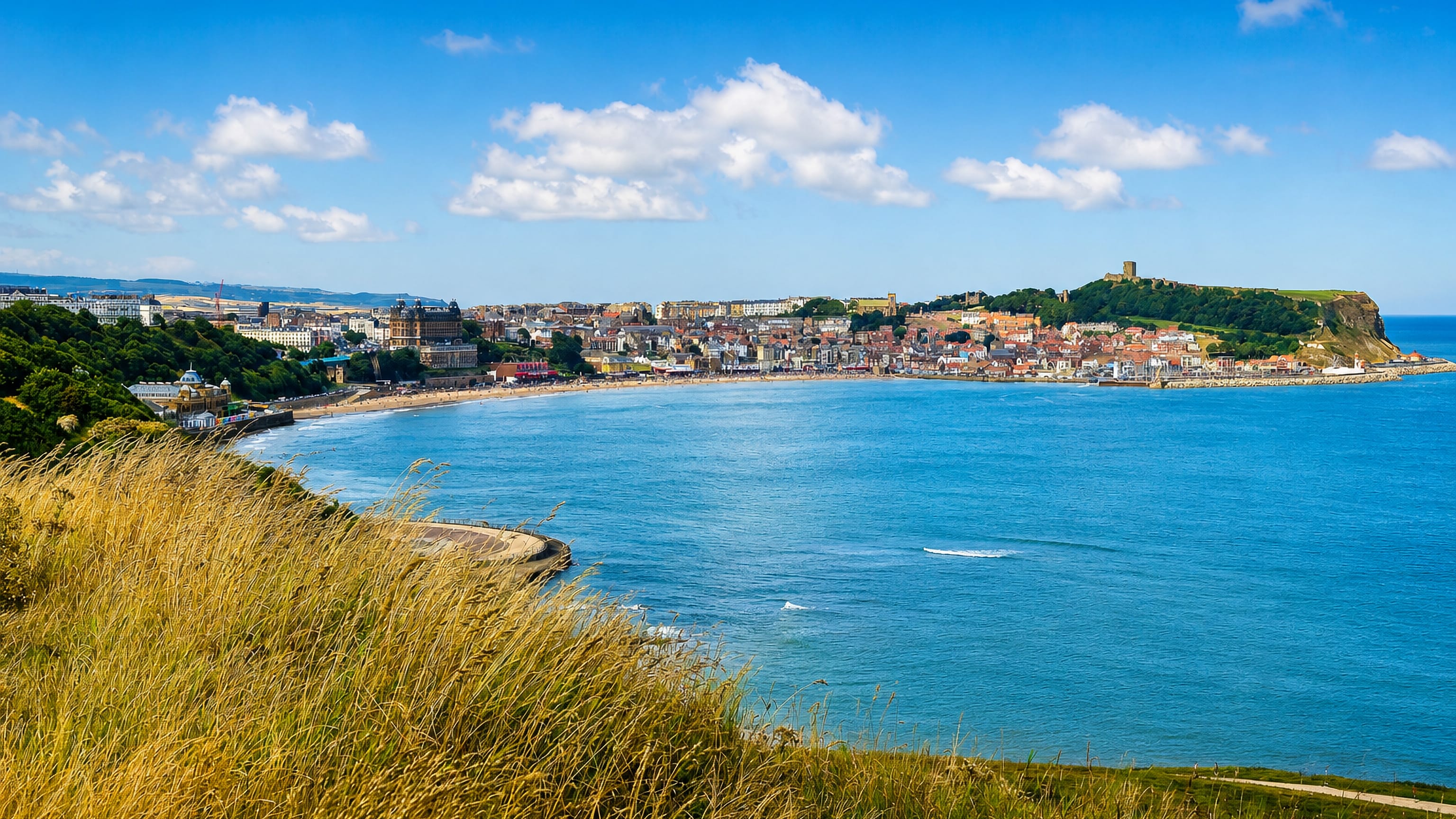
Scarborough is a seaside town on the North Yorkshire coast, with two sandy bays divided by the headland that carries Scarborough Castle.
Hotel links are affiliate links: booking through them may earn us a commission, at no extra cost to you. It never affects how places are ranked. How this works



Where to stay in Scarborough
One neighbourhood here has its own guide — here's what it is best for.

 ScarboroughUnited Kingdom
Newby
Newby is a district of Scarborough where St Mark, St Luke and the Church of St Laurence stand, with Scalby Manor listed alongside them.Where to stay →Hotel links are affiliate links: booking through them may earn us a commission, at no extra cost to you. It never affects how places are ranked. How this works
Find hotels in Scarborough
Direct booking searches for these neighbourhoods.
The harbour and castle headland
The Scarborough Maritime Heritage Centre and the Harbour Commissioners Lighthouse Museum sit at the foot of the castle climb.Find hotels in The harbour and castle headlandVictorian sea-facing rooms a step from the sands and North Marine Road GroundCliff terraces above the bays
St Martin-on-the-Hill, St Saviour's Church and the Woodend Museum of Natural History fill the streets behind the hotel fronts.Find hotels in Cliff terraces above the baysDays that begin in Raincliffe Woods rather than on the sandsScalby and the woods
Scalby Manor stands past the built-up edge, with the linear earthworks on Row Brow running into the trees. Few places to stay nearby — book ahead.Find hotels in Scalby and the woodsReaching the three barrows at Seamer Beacon and Baron Albert's Tower on footSeamer side
Seamer Moor Hill carries a section of prehistoric linear boundary within sight of Beacon Farm. Lodging is scarce in this area; reserve in advance.Find hotels in Seamer sideHotel links are affiliate links: booking through them may earn us a commission, at no extra cost to you. It never affects how places are ranked. How this works
Things to do in Scarborough
Ranked by global recognition; descriptions from Wikidata (CC0).
Museums & Galleries
3- Rotunda Museum Heritage
- Woodend Museum of Natural History Heritage
- Scarborough Art Gallery
Churches & Religious Sites
8- St Mary's Church Heritage
- St Martin-on-the-Hill, Scarborough Heritage
- Albemarle Baptist Church and attached schoolroom Heritage
- St James with Holy Trinity Church, Scarborough Heritage
- Church of St Columba Heritage
Show 3 more →
- Church of St Laurence Heritage
- Church of St Andrew (united Reformed) Heritage
- Former Holy Trinity Church Heritage
Castles & Historic Sites
6- Scarborough Castle Heritage
- Ruins and below ground remains of St Mary's medieval church Heritage
- Section of linear earthwork on Seamer Moor Hill Heritage
- Three barrows at Seamer Beacon and the ruins of Baron Albert's Tower Heritage
- Two linear earthworks on Row Brow which extend into Raincliffe Woods Heritage
Show 1 more →
- Two segments of a prehistoric linear boundary 530m north and 200m north east of Beacon Farm Heritage
Stadiums & Sports
1- North Marine Road Ground, Scarborough
Landmarks & Notable Places
3- Trinity House Heritage
- Cliff End House Heritage
- Melbourne House Heritage
worth knowingacross 5 categories in Scarborough
About Scarborough
Two bays, one castle headland.
What is Scarborough known for?
Scarborough Castle holds the ridge between them, and below it the harbour keeps the Scarborough Maritime Heritage Centre and the Harbour Commissioners Lighthouse Museum, both given over to the fishing and shipping the town lived on. Beyond the shore, Scarborough turns to museums. The Rotunda Museum, the Scarborough Art Gallery and the Woodend Museum of Natural History hold the collections, and Alpamare Scarborough answers for the resort side of a wet afternoon.
North Marine Road Ground stages the cricket.
What are the main landmarks in Scarborough?
Scarborough Castle takes the headland. St Mary's Church stands below it, beside the ruins of St Mary's medieval church, and the Rotunda Museum, the Scarborough Art Gallery and the Woodend Museum of Natural History carry the town's collections between them. North Marine Road Ground stages the cricket.
St Martin-on-the-Hill, St Saviour's Church, the Church of St Laurence and St James with Holy Trinity Church account for much of the Victorian building, while Trinity House, Cliff End House and Scalby Manor survive from the same run of years. Alpamare Scarborough came much later.
What is the history of Scarborough?
Earthworks came first. Two linear earthworks on Row Brow run into Raincliffe Woods, a section of the same kind of boundary survives on Seamer Moor Hill, and two further segments lie near Beacon Farm, which together put people on this ground long before any town was laid out. Three barrows stand at Seamer Beacon.
Beside them are the ruins of Baron Albert's Tower, a far later addition to a hill that had been marked out for burial and boundary for a very long time already. Scarborough Castle holds the headland above the harbour, and the ruins and below-ground remains of St Mary's medieval church lie on the slope beneath it, with St Mary's Church still standing nearby. The sea paid for the rest.
Fishing and shipping built the harbour that the Scarborough Maritime Heritage Centre and the Harbour Commissioners Lighthouse Museum now record, and the resort trade that followed lined the cliffs with confident Victorian hotels. Churches multiplied with the crowds. St Martin-on-the-Hill, St Saviour's Church, the Church of St Laurence, the Church of St Columba, the Church of St Andrew, Albemarle Baptist Church and St James with Holy Trinity Church stand across the town, a set of foundations that outnumbers anything the medieval parish left behind, and the Former Holy Trinity Church marks where the building stopped.
Trinity House and Cliff End House come from the same stretch. The Rotunda Museum, the Scarborough Art Gallery and the Woodend Museum of Natural History keep what the town has collected since.
Where is Scarborough?
Two sandy bays, divided by a headland, make the shape of the town. Scarborough Castle stands on that headland, with the harbour tucked under one side and sand running out from both. The ground climbs quickly inland.
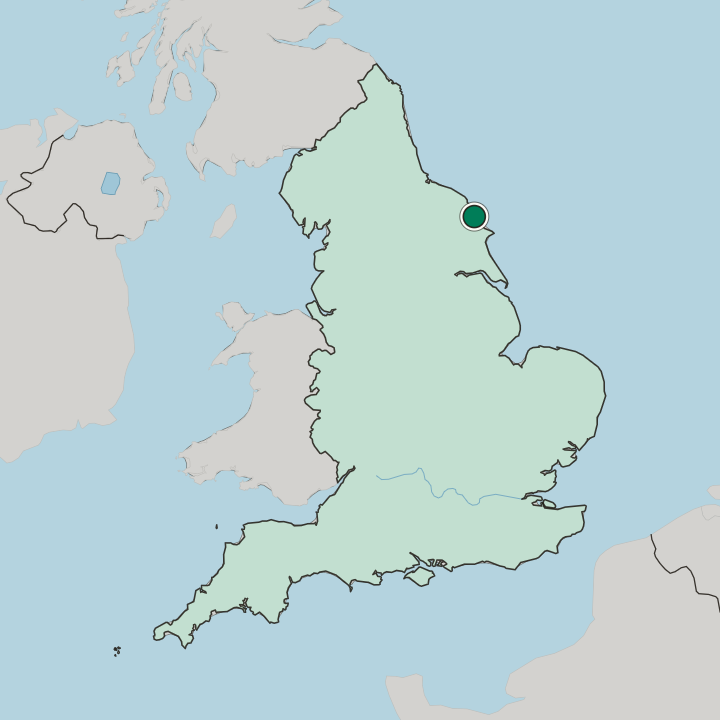
Raincliffe Woods, Row Brow and Seamer Moor Hill rise behind the built-up edge, and Scalby Manor and Beacon Farm mark how far the town's ground reaches before the moor takes it. It is the largest town on the Yorkshire Coast.
What is the climate of Scarborough?
Water sets the terms on this coast, cooling the two bays through summer and keeping frost off the cliffs longer than it stays on the higher ground behind Seamer Moor Hill. The wind comes off the sea. Scarborough sits in the temperate band of the northern hemisphere, which gives it a wide swing of daylight between midwinter and midsummer and a beach season measured in weeks rather than months.
Rain spreads through the year.
How do you get to Scarborough?
Every approach comes over higher ground. Roads from inland cross the rising country behind Raincliffe Woods and Seamer Moor Hill before dropping to the bays, so Scarborough Castle and its headland appear all at once rather than by degrees. Sea traffic came first.
The Scarborough Maritime Heritage Centre and the Harbour Commissioners Lighthouse Museum record the shipping that once mattered more to the town than any road, and the harbour under the castle is still where visitors gather to watch it work.
Common questions
What is the best area to stay in Scarborough?
The harbour and castle headland: Walking from the quays up to Scarborough Castle and St Mary's Church. Cliff terraces above the bays: Victorian sea-facing rooms a step from the sands and North Marine Road Ground. Scalby and the woods: Days that begin in Raincliffe Woods rather than on the sands. Seamer side: Reaching the three barrows at Seamer Beacon and Baron Albert's Tower on foot.
Good for
More cities in England
Updated September 2026