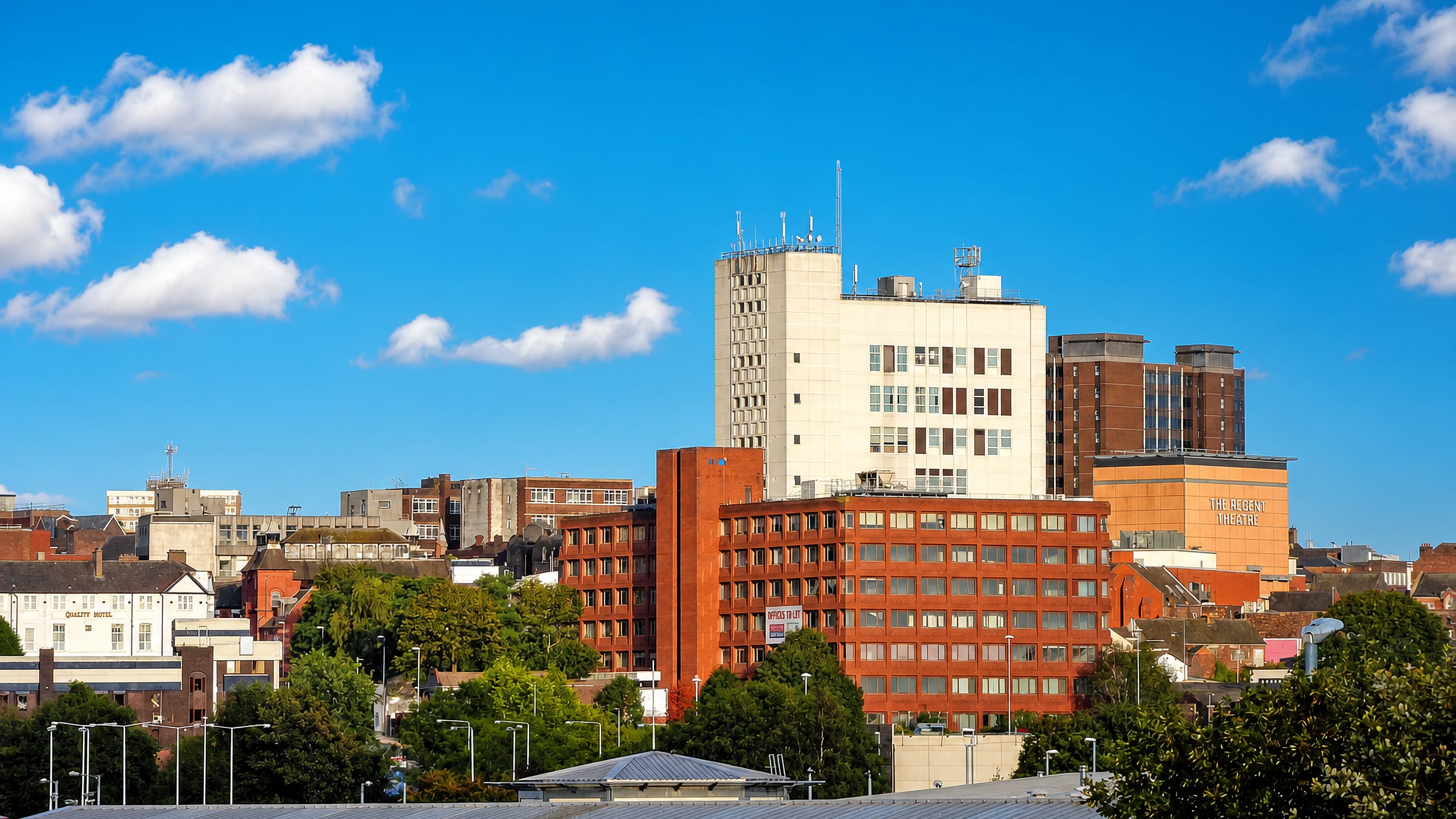
United Kingdom · England
Where to Stay in Stoke-on-Trent, England
Stoke-on-Trent is the pottery city of Staffordshire, England, a federation of six old towns around the kilns of the Potteries.
Hotel links are affiliate links: booking through them may earn us a commission, at no extra cost to you. It never affects how places are ranked. How this works




Where to stay in Stoke-on-Trent
The right area depends on your trip — here's what each neighbourhood is best for.

 Stoke-on-TrentUnited Kingdomshopping and the city's museums
Hanley
the central town and main shopping quarter, holding the Potteries Museum & Art Gallery and the Bethesda Methodist ChapelHanley → Stoke-on-TrentUnited Kingdom
Penkhull
Penkhull is a district of Stoke-on-Trent whose landmark roll runs from Stoke Minster to the Spode Museum and Elm Tree House.Where to stay →Stoke-on-TrentUnited KingdomBlurton
Blurton gathers four named areas, Hollybush, Old Blurton, Blurton Farm and Newstead, in the south of Stoke-on-Trent.Where to stay → Stoke-on-TrentUnited Kingdom
Hanford
Hanford is a district of Stoke-on-Trent in Staffordshire, listed with an Ice House and the Church of St Matthias among its named buildings.Where to stay →Stoke-on-TrentUnited KingdomAdderley Green
Adderley Green is a village in Staffordshire, England, taken into the town of Longton and known for its 19th-century mining.Where to stay → Stoke-on-TrentUnited Kingdom
Birches Head
Birches Head is an area within Stoke-on-Trent, Staffordshire, England, entered on the record chiefly for the church of St Matthew.Where to stay →Stoke-on-TrentUnited KingdomBentilee
Bentilee is a housing estate between Hanley and Longton in Stoke-on-Trent, with two moated sites on its record.Where to stay →Stoke-on-TrentUnited KingdomAbbey Hulton
Abbey Hulton takes its name from an abbey that stood between the 13th and 16th centuries, in Stoke-on-Trent.Where to stay →Stoke-on-TrentUnited KingdomSneyd Green
Sneyd Green sits in Stoke-on-Trent, and Ford Green Hall and the Moorcroft Museum are the two names its record carries first.Where to stay →Stoke-on-TrentUnited KingdomNormacot
Normacot forms part of Stoke-on-Trent, a district the record fixes by the Church of the Resurrection and the Church of the Holy Evangelists.Where to stay →Stoke-on-TrentUnited KingdomLightwood
Lightwood is a district of Stoke-on-Trent whose record runs to three churches: St Francis of Assisi, St Matthew and Saint Clare's.Where to stay →Stoke-on-TrentUnited KingdomWeston Coyney
Weston Coyney is a suburb on the south eastern edge of Stoke-on-Trent, bordering the Staffordshire Moorlands district.Where to stay →All neighbourhoods (17)
 Stoke-on-TrentUnited Kingdom
Smallthorne
Ford Green Hall gives Smallthorne its one visitor address, in a district of Stoke-on-Trent otherwise made of housing and parish churches.Where to stay →Stoke-on-TrentUnited KingdomNorton-in-the-Moors
Norton-in-the-Moors lies in the north-east of Stoke-on-Trent, mostly inside the city boundary with the rest in the Staffordshire Moorlands.Where to stay → Stoke-on-TrentUnited Kingdom
Norton Green
The record keeps Norton Green thin: a residential district of Stoke-on-Trent with no listed building and no landmark of its own.Where to stay →Stoke-on-TrentUnited KingdomSandyford
A former village taken into Stoke-on-Trent, Sandyford lies near Goldenhill and Tunstall, with the Churchill China factory on its ground.Where to stay → Stoke-on-TrentUnited Kingdom
Baddeley Green
One church, St Philip and St James, is what the record hands Baddeley Green, a residential district of Stoke-on-Trent.Where to stay →Hotel links are affiliate links: booking through them may earn us a commission, at no extra cost to you. It never affects how places are ranked. How this works
Find hotels in Stoke-on-Trent
Direct booking searches for these neighbourhoods.
Stoke and the minster
the old town around Stoke Minster, the original settlement that gave the whole city its name. Beds are limited here, so book early.Find hotels in Stoke and the minstervisitors here for the kilns and canalsThe pottery quarter
the streets by the Gladstone Pottery Museum and the Etruria Industrial Museum, where the bottle ovens and mills survive. Few places to stay nearby — book ahead.Find hotels in The pottery quartera quieter base beside the cityNewcastle-under-Lyme edge
the western fringe toward Newcastle-under-Lyme and Wolstanton, calmer than the six-town core. Beds are limited here, so book early.Find hotels in Newcastle-under-Lyme edgeHotel links are affiliate links: booking through them may earn us a commission, at no extra cost to you. It never affects how places are ranked. How this works
Things to do in Stoke-on-Trent
Ranked by global recognition; descriptions from Wikidata (CC0).
Museums & Galleries
2- Gladstone Pottery Museum
- Moorcroft Museum
Churches & Religious Sites
8- Stoke Minster Heritage
- Bethesda Methodist Chapel, Hanley Heritage
- Church of St James Heritage
- Christ Church, Tunstall Heritage
- Christ Church, Fenton Heritage
Show 3 more →
- Church of the Holy Trinity Heritage
- Church of St Mary and All Saints, Trentham Heritage
- Church of St John the Evangelist Heritage
Castles & Historic Sites
2- Lawn Farm moated site and two ponds Heritage
- Simfields moated site. Heritage
Nature & Outdoors
1- Westport Lake Heritage
Stadiums & Sports
2- Longton Cricket Club Ground
- County Ground, Stoke-on-Trent
Landmarks & Notable Places
2- Elm Tree House Heritage
- Ice House Heritage
worth knowingacross 6 categories in Stoke-on-Trent
About Stoke-on-Trent
What is Stoke-on-Trent known for?
Stoke-on-Trent is the home of English pottery, the largest settlement in Staffordshire and the heart of the Potteries. Its bottle kilns once smoked over a whole district of factories and workshops. Clay made the city.
The Gladstone Pottery Museum keeps a Victorian pottery works whole behind its bottle ovens, the Etruria Industrial Museum preserves a steam-powered bone and flint mill by the canal, and the Potteries Museum & Art Gallery holds the ceramics collection that tells the trade's long story.
What are the main landmarks in Stoke-on-Trent?
Stoke-on-Trent's landmarks are mostly the works and museums of the pottery trade. The Gladstone Pottery Museum survives whole behind its bottle ovens, a Victorian factory kept as it stood, and the Etruria Industrial Museum preserves a steam mill beside the canal. Ceramics fill the city's shelves.
The Potteries Museum & Art Gallery gathers the great collection of Staffordshire pottery in Hanley, while Stoke Minster marks the old parish church down by the river. The Bethesda Methodist Chapel stands among the chapels of Hanley, and Water World draws visitors to the northern edge of the city.
What is the history of Stoke-on-Trent?
Stoke-on-Trent grew out of the pottery industry that clustered along the clay and coal of north Staffordshire. Six separate towns, among them Hanley and Stoke, developed side by side as centres of the ceramic trade, their skylines crowded with the bottle kilns that fired the ware. The clay and coal lay together here.
Local seams fed the kilns, canals such as the one past Etruria carried the finished goods away, and the district became the heart of English pottery, the Potteries whose name it still carries. The six towns joined into one. In 1925 they were federated as a single city, drawing Hanley, Stoke and the others into one authority across the conurbation.
Industry has since faded from most of the old works. The Gladstone Pottery Museum and the Etruria Industrial Museum keep the trade's memory whole, the Potteries Museum & Art Gallery holds its ceramics, and Stoke Minster still marks the historic parish that gave the city its name.
Where is Stoke-on-Trent?
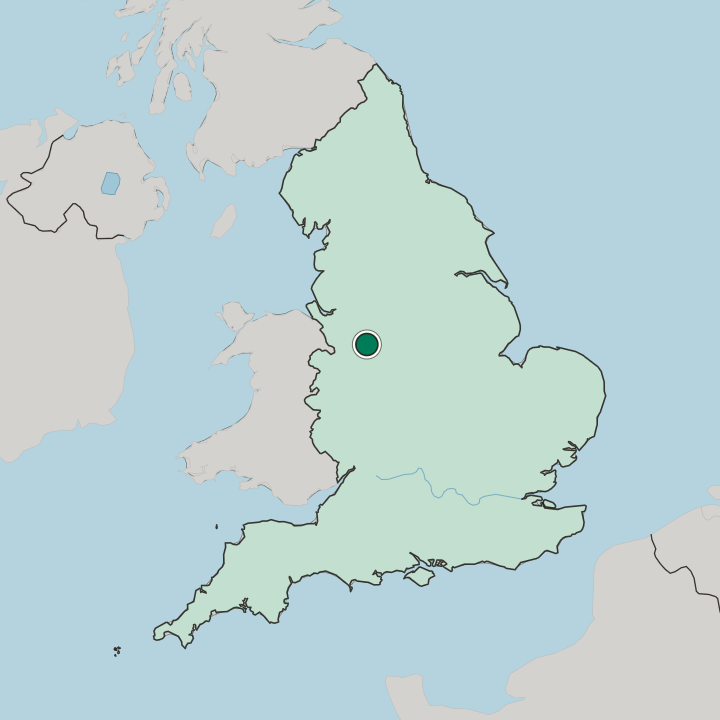
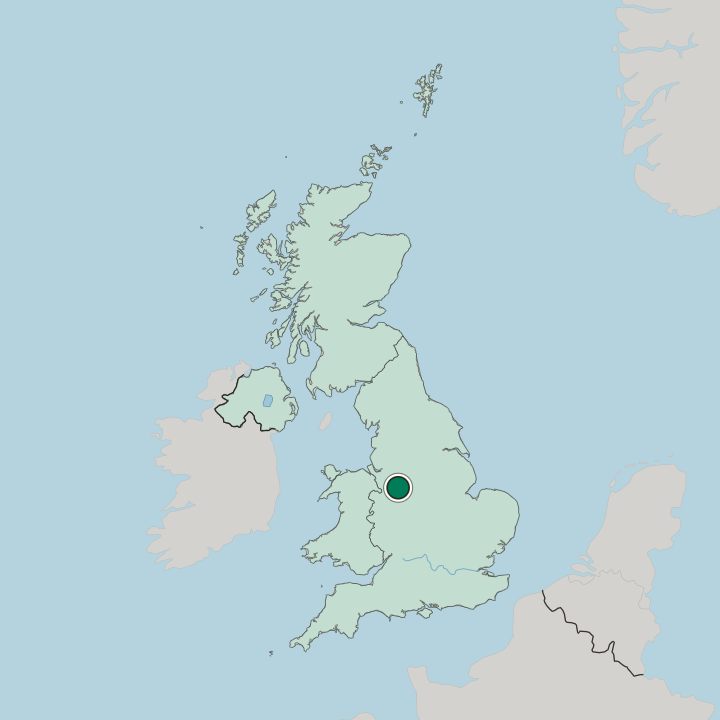
Stoke-on-Trent sits inland in Staffordshire, England, spread across a group of hills and valleys in the Midlands. The city is a conurbation rather than a single centre, its six towns running in a line from Hanley through Stoke toward the northern edge. Newcastle-under-Lyme presses against its western side.
Around it stand the surrounding towns of Kidsgrove, Biddulph, Cheadle, Alsager and Stone, and the canals and the River Trent thread through the old pottery district that gives the place its name.
What is the climate of Stoke-on-Trent?
Stoke-on-Trent has the cool, damp climate of the inland Midlands. Held on higher ground away from the coast, the city catches more cloud and rain than the drier eastern lowlands, with changeable Atlantic weather crossing Staffordshire through much of the year. Winters are cool and grey.
Summers stay mild rather than hot, showers fall in every season, and the higher edges of the conurbation see their share of frost and damp through the colder months.
How do you get to Stoke-on-Trent?
Stoke-on-Trent lies on the main rail line through the Midlands. Fast trains reach the station in Stoke from London and the northern cities, and the M6 motorway runs close by the western edge of the conurbation near Newcastle-under-Lyme. Most visitors reach the Potteries overland, by train or the M6.
The station sits within reach of Hanley and the pottery museums, so the train from London or the north carries the bulk of arrivals into the heart of the Potteries.
Common questions
What is the best area to stay in Stoke-on-Trent?
Hanley: shopping and the city's museums. Stoke and the minster: the historic core by the river. The pottery quarter: visitors here for the kilns and canals. Newcastle-under-Lyme edge: a quieter base beside the city.
Good for
More cities in England
Updated October 2026