United Kingdom · England
Where to Stay in Sunderland, England
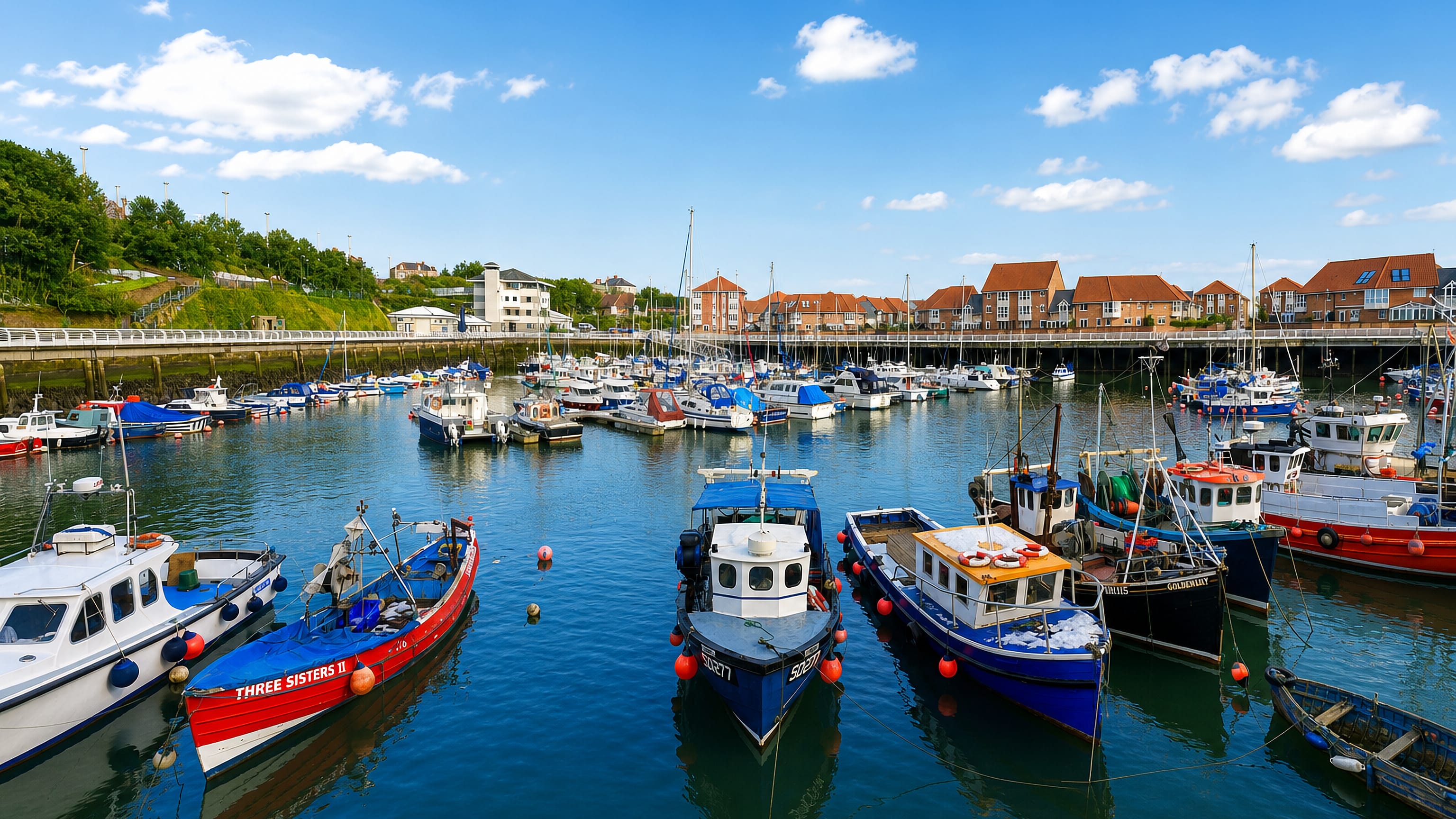
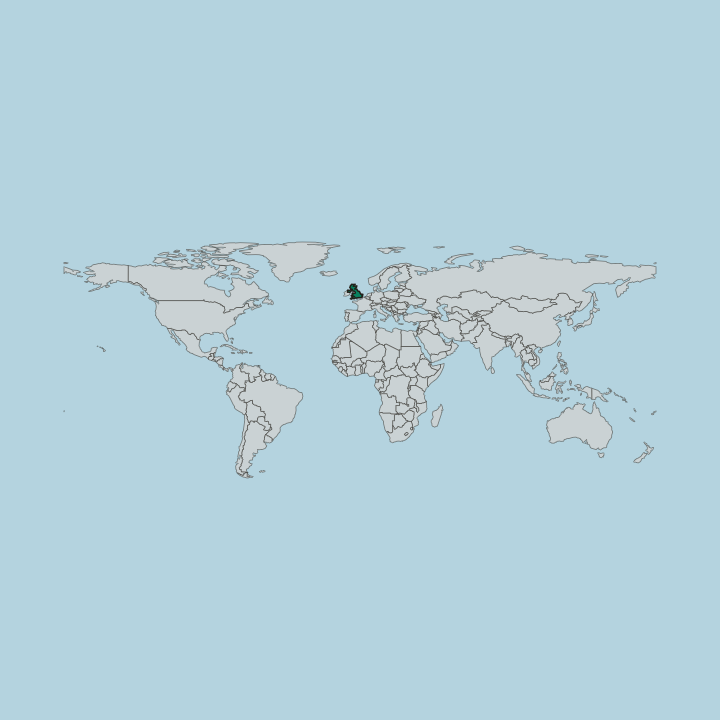
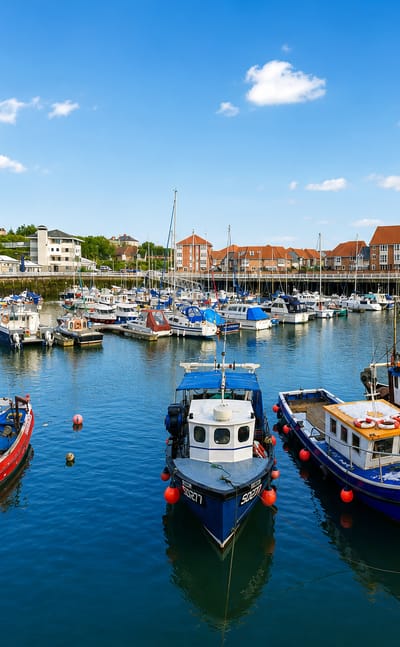
The River Wear meets the North Sea at Sunderland, a port city in England known for the National Glass Centre and the twin churches at Monkwearmouth.
Hotel links are affiliate links: booking through them may earn us a commission, at no extra cost to you. It never affects how places are ranked. How this works


Where to stay in Sunderland
Where you base yourself shapes the visit — here's the character of each area.
 SunderlandUnited Kingdom
Monkwearmouth
Monkwearmouth is a Sunderland district at the mouth of the River Wear, with St Peter's Church founded there in 674.Monkwearmouth →SunderlandUnited KingdomPallion
Pallion is a district of Sunderland whose landmark list runs to five churches and the Victoria Hall Disaster Memorial.Pallion →SunderlandUnited KingdomSouthwick
Southwick is a former village, now a suburb on the north banks of the River Wear in Sunderland, with a green at its middle.Southwick → SunderlandUnited Kingdom
Roker
The Bede Memorial and St Andrew's Church stand in Roker, a resort quarter of Sunderland on the coast north of the River Wear.Roker → SunderlandUnited Kingdom
Seaburn
Seaburn is a seaside resort on the northeastern edge of Sunderland, with the village of Whitburn just along the shore.Seaburn →SunderlandUnited KingdomDoxford Park
A Sunderland suburb of housing and offices, Doxford Park covers old Silksworth township land to the south-west of the city centre.Doxford Park →SunderlandUnited KingdomBiddick
Biddick appears on Sunderland's district list in Tyne and Wear, an entry with a name, a parent city and no landmark beside it.Biddick →SunderlandUnited KingdomFatfield
Fatfield is one of the areas that make up Washington, inside the City of Sunderland, and St George's Church is its named landmark.Fatfield →SunderlandUnited KingdomLambton
Lambton is an area of Washington in the City of Sunderland, tied to the Lambton family, Lambton Castle and the legend of the Lambton Worm.Lambton →SunderlandUnited KingdomOxclose
Oxclose is an area of Washington, in the City of Sunderland, Tyne and Wear, England. Three A-roads box it in.Oxclose →SunderlandUnited KingdomBlackfell
Blackfell is a district of Sunderland holding the Washington 'F' Pit Museum and, beside it, the F Pit Winding House.Blackfell →SunderlandUnited KingdomSpringwell
Springwell Village is a village inside the City of Sunderland, standing on the boundary with Gateshead a few miles from Newcastle upon Tyne.Springwell →Hotel links are affiliate links: booking through them may earn us a commission, at no extra cost to you. It never affects how places are ranked. How this works
Things to do in Sunderland
Ranked by global recognition; descriptions from Wikidata (CC0).
Museums & Galleries
3- National Glass Centre
- Art Arena
- Fans Museum
Churches & Religious Sites
8- St Peter's Church Heritage
- Sunderland Minster Heritage
- St Andrew's Church, Roker Heritage
- Holy Trinity Church, Sunderland Heritage
- St Mary's Church, Sunderland Heritage
Show 3 more →
- All Saints' Church Heritage
- St George's Church, Sunderland Heritage
- Church of Holy Trinity Heritage
Castles & Historic Sites
1- Monkwearmouth Anglo-Saxon monastery and medieval priory Heritage
Landmarks & Notable Places
7- Doxford House Heritage
- Burdon House Heritage
- Carlton House Heritage
- F Pit Winding House Heritage
- Ivy House Heritage
Show 2 more →
- Langham Tower (Sunderland High School) Heritage
- Silkworth Hall Heritage
worth knowingacross 4 categories in Sunderland
About Sunderland
Sunderland is known for glass.
What is Sunderland known for?
The National Glass Centre keeps that trade alive beside the River Wear, where furnaces once shipped their work down the North Sea coast to markets across England. Older still is the Monkwearmouth Anglo-Saxon monastery and medieval priory, one of the oldest church sites in the country, with St Peter's Church rooted in the same early Christian ground. St Andrew's Church at Roker draws people for its Arts and Crafts interior.
The Sunderland Museum and Winter Gardens gathers the city's story under one roof.
What are the main landmarks in Sunderland?
Sunderland's landmarks trace glass, worship, and the sea. Sunderland Minster and Holy Trinity Church mark the old parish core, while St Mary's Church and St George's Church stand among the city's Victorian foundations. The National Glass Centre and the Sunderland Museum and Winter Gardens hold the industrial and civic collections.
On the coast, St Andrew's Church, Roker is prized for its interior. Monkwearmouth and St Peter's Church carry the Anglo-Saxon thread through it all.
What is the history of Sunderland?
Sunderland grew from three settlements strung along the River Wear. Chief among them was Monkwearmouth, where an Anglo-Saxon monastery was founded in the seventh century on the north bank. St Peter's Church still stands from that early foundation, one of the first stone churches raised in England, and the monastery gave the region a place in the story of English learning.
The mouth of the Wear did the rest. It made a natural harbour. Coal and glass turned the river into a working artery.
Glassmaking took hold beside the water, and the trade left its mark in the National Glass Centre that now keeps the craft. Shipbuilding followed the coal downstream, and the yards along the Wear grew into some of the busiest in England. Churches rose with the population, among them Sunderland Minster, Holy Trinity Church, and St Mary's Church.
The Sunderland Museum and Winter Gardens later drew these threads of glass, sea, and faith into a single civic record, north and south of the river alike.
Where is Sunderland?
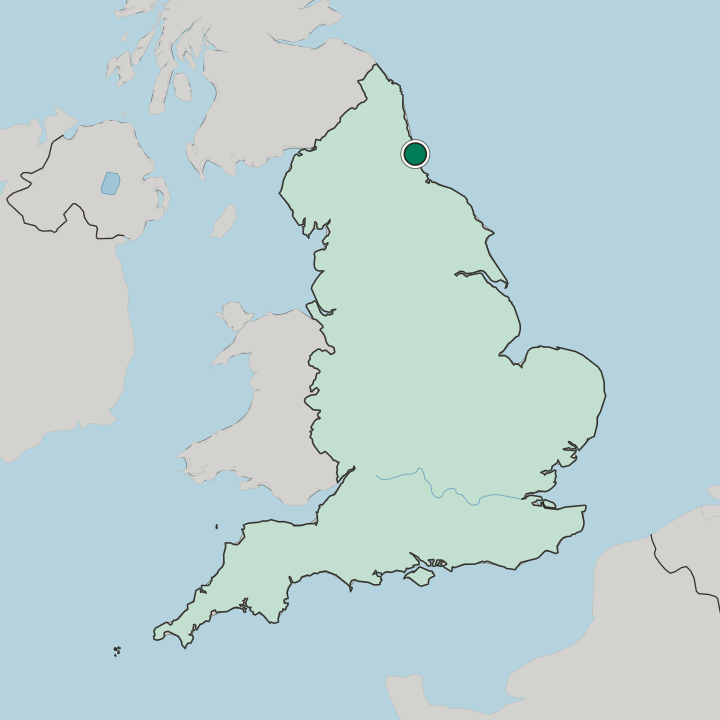
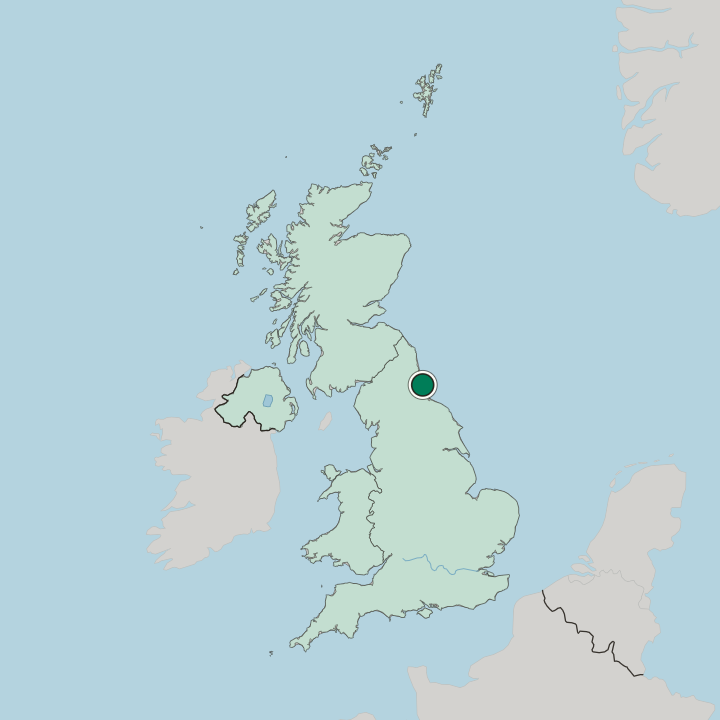
Sunderland sits where the River Wear reaches the North Sea, on the coast of England. The river divides it. The old centre keeps to the south bank while Monkwearmouth holds the north, and the outfall between them forms the harbour that first shaped the settlement.
North of the mouth the coast runs into the sands at Roker and Seaburn. Inland the ground rises gently from the water toward Mowbray Park.
What is the climate of Sunderland?
Sunderland has the cool, changeable weather of the English North Sea coast. Winters are long and grey, rarely severe, tempered by the sea that flanks the River Wear. Summers stay mild.
Wind off the North Sea keeps the seafront at Roker fresh even in the warmer months, and rain arrives in every season without settling into extremes. The water moderates the city year round.
How do you get to Sunderland?
Sunderland is reached by rail, road, and the Tyne and Wear Metro. The Metro links it north to Newcastle, running through Monkwearmouth on the far bank of the River Wear before it reaches the North Sea coast. National rail joins the East Coast line.
Roads follow the river inland from the harbour, and the coast road ties Roker and Seaburn into the centre for arrivals from across England.
Good for
More cities in England
Updated October 2026