India · West Bengal
Where to Stay in Dārjiling, West Bengal
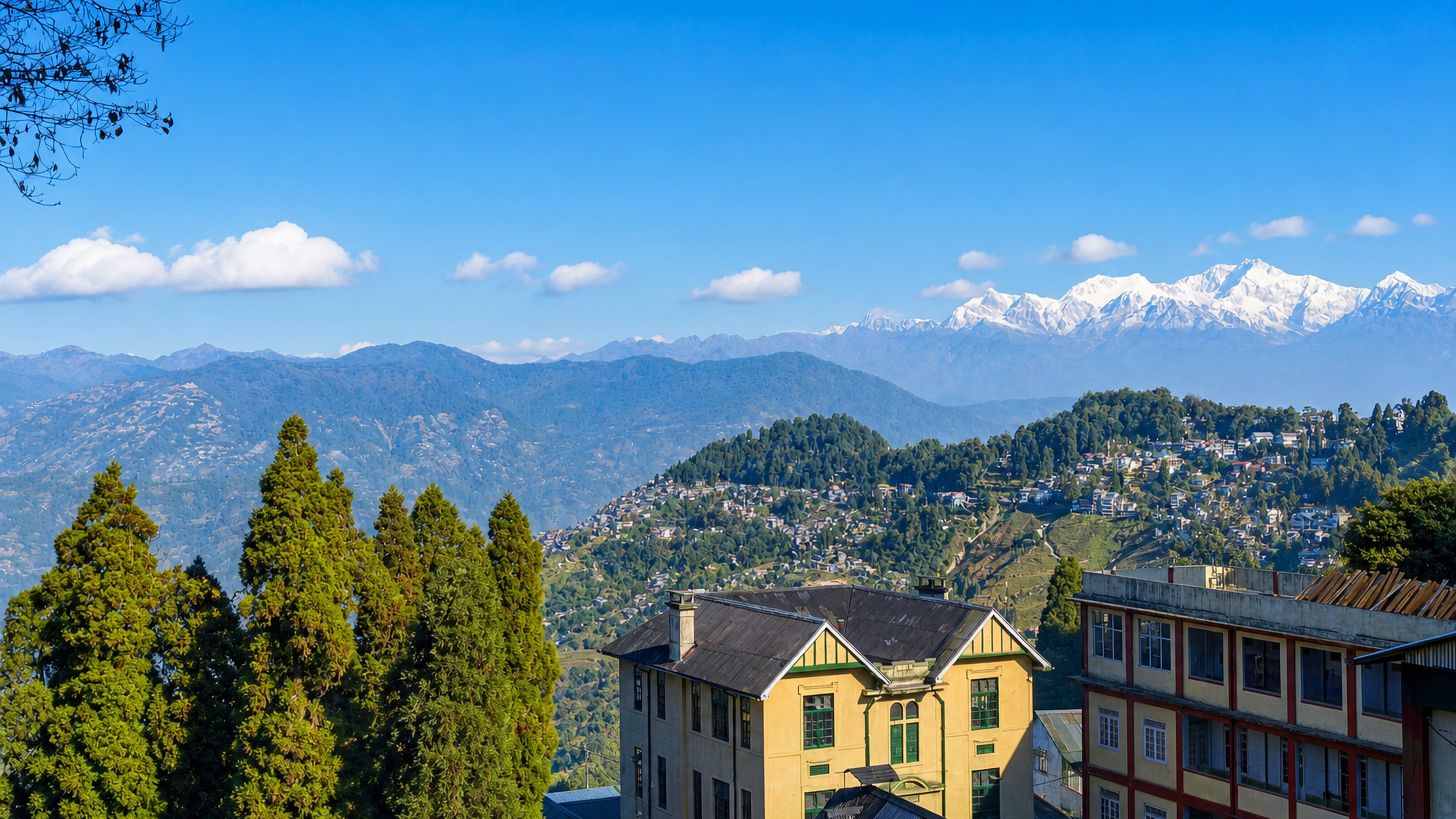
Kangchenjunga rises north of Dārjiling, a Himalayan hill station in West Bengal known for tea, the Darjeeling Himalayan Railway, and Chowrasta square.
Hotel links are affiliate links: booking through them may earn us a commission, at no extra cost to you. It never affects how places are ranked. How this works


Where to stay in Dārjiling
The practical side of choosing where to sleep.
Where to stay in Dārjiling turns on how close you want to be to Chowrasta, the pedestrian square at the heart of the old Victorian town. Stay near the square for the mall, the ridge walks, and the shortest reach to the viewpoints. It suits first-timers.
The lanes here climb steeply, so a room near the top saves the daily haul uphill and puts the morning views within a few steps of the door. Lower down, the slopes toward the tea gardens and the Padmaja Naidu Himalayan Zoological Park trade the crowd for quiet and for longer views across the valley. Pick this side for the peaks.
The stretch near Ghum and the Himalayan Mountaineering Institute puts you close to the railway and the museums, a practical base for anyone using the town as a jumping-off point for Sikkim to the north.
Find hotels in Dārjiling
Direct booking searches for these neighbourhoods.
Chowrasta and the Mall
The pedestrian square at the heart of the old Victorian town, steps from the mall and the shortest reach to the viewpoints.Find hotels in Chowrasta and the Malltravellers who want quiet and long valley viewsThe lower tea-garden slopes
The slopes toward the Padmaja Naidu Himalayan Zoological Park trade the crowd for still mornings facing Kangchenjunga.Find hotels in The lower tea-garden slopesHotel links are affiliate links: booking through them may earn us a commission, at no extra cost to you. It never affects how places are ranked. How this works
Things to do in Dārjiling
Ranked by global recognition; descriptions from Wikidata (CC0).
Museums & Galleries
3- Step Aside Heritage
- Bengal Natural History Museum
- Himalayan Tibet Museum
Churches & Religious Sites
2- St. Andrew's Church
- Union Church
worth knowingacross 2 categories in Dārjiling
About Dārjiling
What is Dārjiling known for?
Dārjiling is known as a hill station in the Eastern Himalayas and as one of the great tea districts of West Bengal. The narrow-gauge Darjeeling Himalayan Railway climbs to the town past Ghum, and the DHR Ghum Museum tells its story. Days here turn on the mountains.
On clear mornings Kangchenjunga fills the sky to the north, while Tibetan and Nepali communities give the streets around Chowrasta their distinct character, drawing visitors as much as the ridgetop views themselves.
What are the main landmarks in Dārjiling?
The main landmarks in Dārjiling gather around the ridge and the railway that made the town. Its Darjeeling Himalayan Railway still climbs from the plains below, and the DHR Ghum Museum sits at its highest station, where the line turns above the roofs of the old hill town. Higher up, the Himalayan Mountaineering Institute honours the peaks.
The Padmaja Naidu Himalayan Zoological Park keeps high-altitude wildlife on the same slopes, while St. Andrew's Church and the square at Chowrasta anchor the old colonial centre. Each holds a thread.
What is the history of Dārjiling?
Dārjiling grew as a colonial-era hill station on the ridges of the Eastern Himalayas, a summer refuge whose Victorian streets still trace the square at Chowrasta and the church at St. Andrew's. The tea came first. Estates were planted across the surrounding slopes, and the leaf of the district became known far beyond West Bengal, tying the town's fortunes to the gardens below it.
The railway followed, and it changed the scale of everything. The Darjeeling Himalayan Railway hauled its narrow-gauge line up from the plains through Ghum, linking the isolated ridge to the rest of the province and carrying both tea and travellers. Later waves of settlement layered onto the Nepali communities already here.
Tibetan families arriving in the middle of the twentieth century founded institutions such as the Tibetan Refugee Self Help Centre, and their presence, alongside the older Nepali population, still shapes the culture of the town.
Where is Dārjiling?
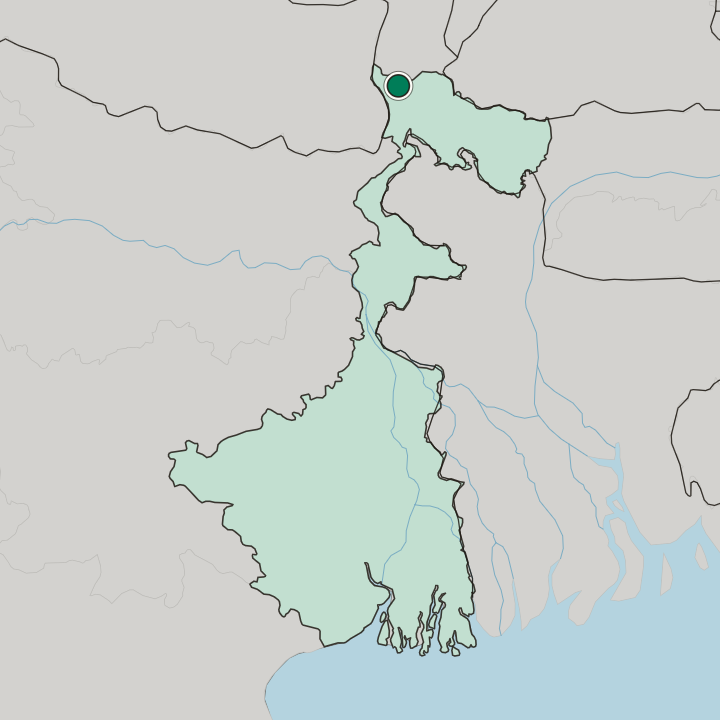
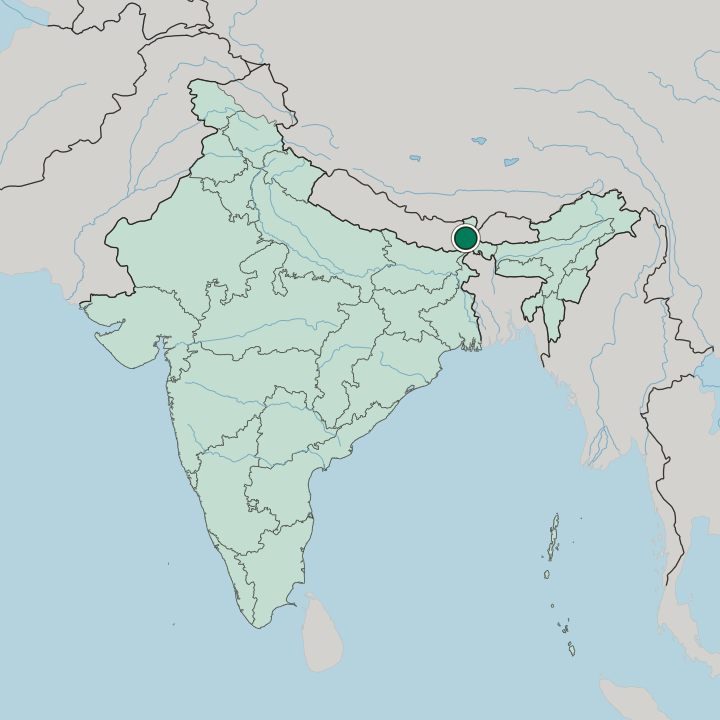
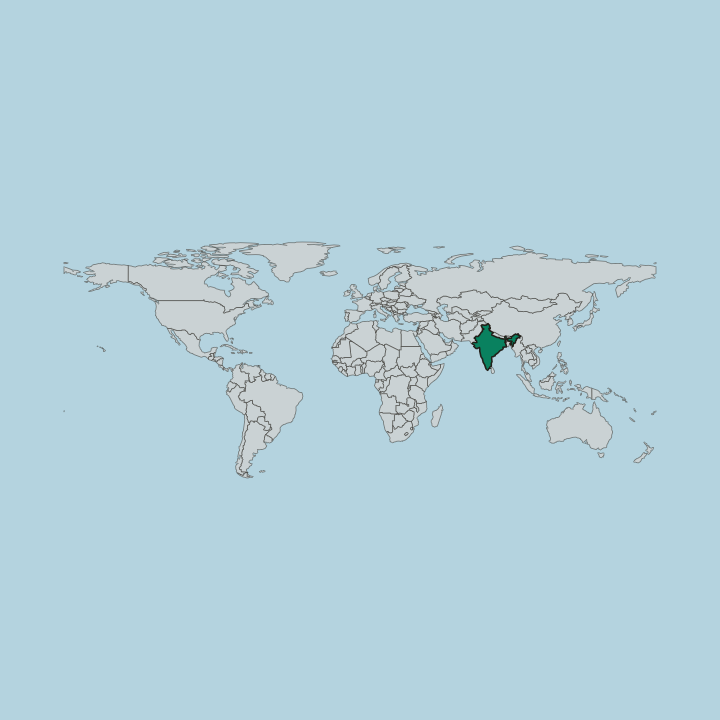
Dārjiling sits high on a ridge in the Eastern Himalayas, in the northern reach of West Bengal. Nepal lies to the west and Bhutan to the east, with Sikkim to the north and the plains of Bengal falling away to the south. Kangchenjunga dominates the skyline. The town's steep slopes carry tea gardens down toward the valleys, and the thin mountain air, the ridgeline, and the great peak to the north set the frame for everything built here.
What is the climate of Dārjiling?
Dārjiling has a cool, misty mountain climate set by its high perch in the Eastern Himalayas. Cloud rolls in often. The monsoon brings heavy rain to the slopes in summer, feeding the tea gardens and wrapping the ridge in fog, while winters turn cold and clear enough that Kangchenjunga stands sharp against the sky.
Spring and autumn are the crispest seasons, the best time for the long views north over West Bengal's hill country.
How do you get to Dārjiling?
Reaching Dārjiling means climbing from the plains of West Bengal into the Eastern Himalayas. Most travellers arrive by road up the winding hill routes, or aboard the narrow-gauge Darjeeling Himalayan Railway, which threads through Ghum on its slow ascent. The nearest railhead and airport lie down in the lowlands.
From there the road bends steadily upward toward the ridge, and many use the town as a jumping-off point for Sikkim to the north.
Common questions
What is the best area to stay in Dārjiling?
Chowrasta and the Mall: first-time visitors who want the ridge walks at their door. The lower tea-garden slopes: travellers who want quiet and long valley views.
Good for
More cities in West Bengal
Updated September 2026