Japan · Ōsaka-fu
Where to Stay in Moriguchi, Ōsaka-fu
Moriguchi is a small city of Osaka Prefecture in Japan, sharing its prefecture with the museums and towers of Osaka.
Hotel links are affiliate links: booking through them may earn us a commission, at no extra cost to you. It never affects how places are ranked. How this works


Where to stay in Moriguchi
Where visitors usually base themselves, and why.
Beds in Moriguchi are the practical kind. The city is small and closely built, so rooms here are chosen for their place inside Ōsaka-fu rather than for a view, and travellers who book them are usually working, visiting family, or breaking a longer route through Japan. Distances from Moriguchi stay short.
A stay here puts the Osaka Museum of History, the Osaka Science Museum, and the Museum of Oriental Ceramics, Osaka within the reach of an ordinary day out. Nakanoshima is the other pull. The National Museum of Art, Osaka and the Nakanoshima Museum of Art, Osaka carry that name on the prefecture's list, and a room booked toward that side of Ōsaka-fu trades quiet for gallery hours.
Tsūtenkaku marks a third choice. Around it the older parts of Osaka spread, and the Tennōji Zoo and the Osaka City Museum of Fine Arts are counted among the same prefecture's draws. The Osaka International Peace Center and the Osaka Museum of Housing and Living give a wet afternoon somewhere to go, and the Mint Museum adds another.
Families often choose otherwise. Hirakata Park and the Tower of the Sun draw them out to the edges of the prefecture.
Find hotels in Moriguchi
Direct booking searches for these neighbourhoods.
Moriguchi itself
The compact built-up grid of Moriguchi, from which the Osaka Museum of History and the Osaka Science Museum are an ordinary local journey. Few places to stay nearby — book ahead.Find hotels in Moriguchi itselfdays built around the National Museum of Art, Osaka and the Nakanoshima Museum of Art, OsakaNakanoshima
The Nakanoshima side of Osaka, named on the prefecture list through the Nakanoshima Museum of Art, Osaka and the collections beside it.Find hotels in Nakanoshimaevenings under Tsūtenkaku with the Tennōji Zoo close byThe Tsūtenkaku side of Osaka
The older parts of Osaka gathered below Tsūtenkaku, with the Osaka City Museum of Fine Arts and the Tennōji Zoo on the same side of the city.Find hotels in The Tsūtenkaku side of OsakaHotel links are affiliate links: booking through them may earn us a commission, at no extra cost to you. It never affects how places are ranked. How this works
Things to do in Moriguchi
Ranked by global recognition; descriptions from Wikidata (CC0).
Museums & Galleries
3- Osaka City Museum of Fine Arts Heritage
- Nakanoshima Museum of Art, Osaka
- National Museum of Art, Osaka
Churches & Religious Sites
2- Grand Cathedral of the Virgin Mary of Osaka
- UCCJ Osaka Church
Castles & Historic Sites
1- Hōenzaka Site Heritage
Landmarks & Notable Places
2- HEP
- Kyoikuto
worth knowingacross 4 categories in Moriguchi
About Moriguchi
What is Moriguchi known for?
Moriguchi is known first as an Ōsaka-fu city rather than a destination in its own right. Its name reaches travellers mainly through the prefecture around it, where Tsūtenkaku rises above the streets, the Osaka Museum of History holds the regional record, and the Osaka Science Museum ranks among the larger collections. Moriguchi's own footprint is small.
Much of what draws visitors stands elsewhere in Ōsaka-fu: the Tower of the Sun, Hirakata Park, and the Museum of Oriental Ceramics, Osaka.
What are the main landmarks in Moriguchi?
Moriguchi keeps no monument of its own on the prefecture list. What the list holds instead belongs to Ōsaka-fu at large: Tsūtenkaku, the Church of the Light, the Fujita Art Museum, the Yuki Museum of Art, and the Hōenzaka Site among them. The range is wide.
Kyoikuto, the Grand Cathedral of the Virgin Mary of Osaka, and the Kawaguchi Christ Church Cathedral stand alongside the National Museum of Ethnology and the Osaka Science & Technology Center Exhibition Hall.
What is the history of Moriguchi?
Moriguchi became a city in 1946. Everything older about the ground it stands on is held by the museums and excavated sites of the surrounding prefecture rather than by Moriguchi itself. The gap is not unusual.
Small cities inside a large prefecture often keep their deeper history in collections held elsewhere, and Ōsaka-fu has more of those than most. Ōsaka-fu carries that older record. The Hōenzaka Site preserves excavated ground, the Osaka Museum of History sets out the region's long sequence, and the Osaka Museum of Housing and Living reconstructs how the streets of the district were once lived in. Other institutions narrow the focus.
The Mint Museum keeps the story of coinage, the Osaka International Peace Center takes up the twentieth century, and the Fujita Art Museum and Museum of Oriental Ceramics, Osaka hold what earlier centuries left behind. Moriguchi sits inside all of it. It is recent against that background, and the city reads as one more piece of a prefecture whose written and excavated record runs far deeper than any single municipality's.
Where is Moriguchi?
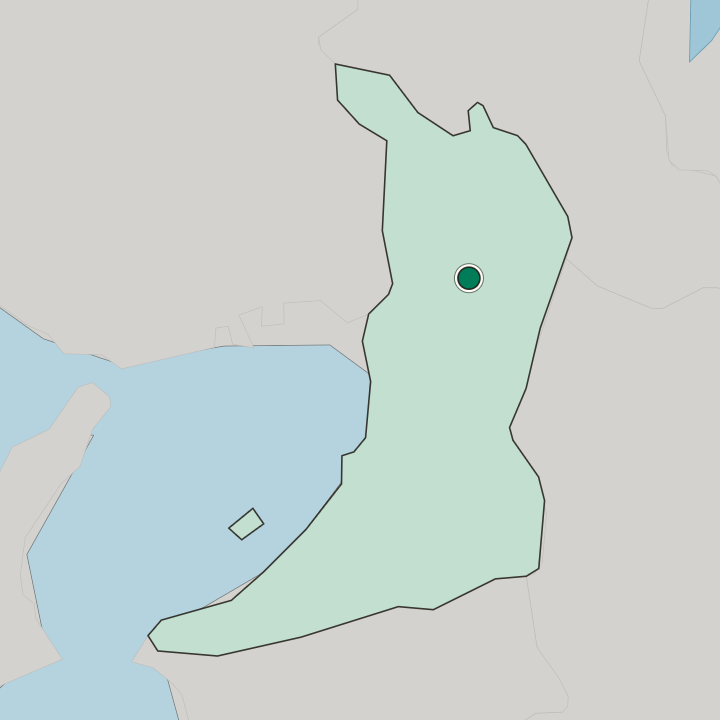
Moriguchi covers a small patch of Ōsaka-fu. The city occupies very little ground, which makes it one of the tighter municipalities in the prefecture, and what it holds is built up almost end to end rather than divided between town and open country. Open country is scarce.
Beyond the boundary the same continuous urban fabric carries on toward Osaka and the museums at Nakanoshima.
What is the climate of Moriguchi?
Moriguchi lies in the subtropical band, which gives it humid summers and winters that stay comparatively short and mild, the ordinary pattern for a city in this band. Summer is the hard season. Heat and humidity arrive together and stay, so the indoor collections across Ōsaka-fu at the Osaka Science Museum, the Museum of Oriental Ceramics, Osaka and the Osaka Museum of History become the practical way to spend an afternoon.
Winter asks much less of a visitor.
How do you get to Moriguchi?
Arrival is by way of Osaka. Moriguchi sits inside the commuter network of Ōsaka-fu, so the journey in is a short local one from the prefecture's central stations rather than anything a traveller plans around, and most visitors reach it as an extension of a day already spent in Osaka. The distances are minor.
Nakanoshima, Tsūtenkaku and Hirakata Park all fall within the same prefecture's reach.
Common questions
What is the best area to stay in Moriguchi?
Moriguchi itself: quiet nights inside Ōsaka-fu, away from the Tsūtenkaku end of the prefecture. Nakanoshima: days built around the National Museum of Art, Osaka and the Nakanoshima Museum of Art, Osaka. The Tsūtenkaku side of Osaka: evenings under Tsūtenkaku with the Tennōji Zoo close by.
Good for
More cities in Ōsaka-fu
Updated October 2026