Japan · Ōsaka-fu
Where to Stay in Neyagawa, Ōsaka-fu
Neyagawa, a city since 1951, is a densely built commuter town in Osaka Prefecture, with museums and amusement parks close on every side.
Hotel links are affiliate links: booking through them may earn us a commission, at no extra cost to you. It never affects how places are ranked. How this works


Where to stay in Neyagawa
How the choice of base plays out on the ground.
Hotel choice here is limited and practical. Neyagawa is a residential city rather than a destination, so the rooms that exist serve business visitors and families passing through, and the reason to book one is almost always sitting somewhere else on the map. Hirakata Park is the strongest of those reasons.
A family based in the city can be at the park for opening and at the Redhorse Osaka Wheel or Nifrel by the afternoon without ever moving its luggage. Two halves of the city read differently to a visitor. The ground around the Panasonic Kōnosuke Matsushita Museum is the working half, plain streets on the industrial side of Neyagawa, and it suits you if the manufacturing history recorded in that museum is what brought you here in the first place.
Nearer Hirakata Park the mood softens into housing and green space. Beds are scarce in both. A third option runs along the built-up fringe by the Moriguchi City Gymnasium, the most ordinary corner of the three, though it sits close to the transport that makes the whole arrangement work.
Anyone chasing the larger sights should think in terms of a base rather than a neighbourhood, because the Tower of the Sun, the Expo '70 Pavilion and the National Museum of Ethnology all stand far enough off that the journey rather than the address decides how the day goes. The Church of the Light and Ikoma Sanjō Amusement Park stretch that logic further still, one asking for quiet and the other for a climb, and neither is a reason to choose one Neyagawa street over another. Book ahead regardless.
Find hotels in Neyagawa
Direct booking searches for these neighbourhoods.
Panasonic Kōnosuke Matsushita Museum side
Plain working streets around the Panasonic Kōnosuke Matsushita Museum, where Neyagawa's industrial half is easiest to read. Few places to stay nearby — book ahead.Find hotels in Panasonic Kōnosuke Matsushita Museum sidefamilies opening and closing the day at Hirakata ParkToward Hirakata Park
The housing and green space of the city closest to Hirakata Park, with the rides a short ride away. Rooms are few around here — worth securing early.Find hotels in Toward Hirakata Parkshort stays that only need the transport to workMoriguchi City Gymnasium fringe
The continuous built-up edge by the Moriguchi City Gymnasium, ordinary but well connected across the plain. Beds are limited here, so book early.Find hotels in Moriguchi City Gymnasium fringeHotel links are affiliate links: booking through them may earn us a commission, at no extra cost to you. It never affects how places are ranked. How this works
About Neyagawa
Neyagawa earns little attention on its own.
What is Neyagawa known for?
What lies around it does the work, and the list is long: Hirakata Park and the Redhorse Osaka Wheel for a day out with children, the National Museum of Ethnology and the Japan Folk Crafts Museum, Osaka for a slower one, the Panasonic Kōnosuke Matsushita Museum for the manufacturing history it records. The city itself is compact and residential. Streets run tight.
Its own claim is convenience, a base within a short ride of a great many things worth a morning.
What are the main landmarks in Neyagawa?
Nothing inside the boundary outweighs what stands around it. The Tower of the Sun and the Expo '70 Pavilion remain from a world exposition, the National Museum of Ethnology, Nifrel and the Redhorse Osaka Wheel draw their crowds nearby, and Hirakata Park keeps a following entirely its own. Closer at hand sit the Panasonic Kōnosuke Matsushita Museum and the Moriguchi City Gymnasium.
The Ama Site holds older ground. Archaeology, industry and amusement rarely share one shortlist, and the Church of the Light adds a fourth register again, a small building whose reputation rests on how light enters it.
What is the history of Neyagawa?
Ancient ground underlies all of it. The Ama Site and the Nanao Tile Kiln Site record settlement and craft on this plain long before any municipal boundary was drawn, while the Imashirozuka Ancient History Museum and the Shiroato History Museum keep that older layer legible for anyone willing to travel a few stops for it. Neyagawa's own paperwork is recent by comparison.
Neyagawa-cho, the town of Neyagawa, took city status in 1951, a change of rank that measured how fast the plain was filling with houses. Manufacturing shaped the century around that date. The Panasonic Kōnosuke Matsushita Museum, which carries both a company's name and a man's, is the clearest marker of the industrial economy that pulled workers onto this part of Osaka Prefecture, and the housing built for them left very little open ground behind.
Growth was fast and unromantic. Neyagawa acquired density before it acquired anything a visitor would cross a country to see, which is a fair description of most of the cities packed along this plain. Then came 1970.
A world exposition left the Tower of the Sun and the Expo '70 Pavilion standing not far off, and the belt of museums and amusement parks now listed alongside the city, Hirakata Park, the National Museum of Ethnology, Nifrel, the Redhorse Osaka Wheel, has thickened around the same crowded ground since. Neyagawa took no monument from any of it. What the city kept instead was position, close enough to everything that its own modest profile stopped mattering very much.
Where is Neyagawa?
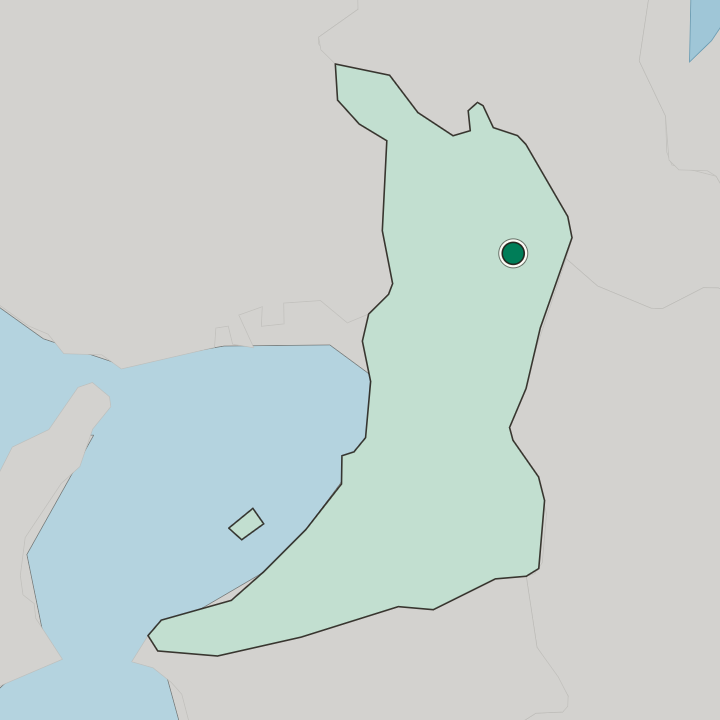
Neyagawa covers a small and tightly built patch of Osaka Prefecture. Little of it is open. Housing reaches the boundary on most sides, which is why the green space that matters to visitors, Hirakata Park, Shinkansen Park, the grounds holding the Tower of the Sun, lies out on the wider plain instead of inside the city.
Flat ground defines everything here, carrying an almost unbroken urban surface from one municipality into the next, with the ridge that carries Ikoma Sanjō Amusement Park rising well beyond the plain's edge.
What is the climate of Neyagawa?
Summer settles on the plain and stays. The subtropical band covering this part of Japan gives Neyagawa long humid months in which a dense low-rise city holds its heat well past sunset, followed by a short winter that rarely turns severe. Chasing shade becomes part of a Neyagawa summer.
Higher ground toward Ikoma Sanjō Amusement Park runs cooler than the flat streets below, and Hirakata Park offers the nearest thing to relief without leaving the plain at all.
How do you get to Neyagawa?
Rail handles nearly every trip here. Neyagawa sits on the commuter network lacing Osaka Prefecture together, and Hirakata Park, the Panasonic Kōnosuke Matsushita Museum and the Moriguchi City Gymnasium all fall within a ride short enough to make a car look like a liability rather than an asset. Reaching the Tower of the Sun, the Expo '70 Pavilion or the National Museum of Ethnology takes a change or two.
Ikoma Sanjō Amusement Park adds a climb. Parking, in a city built this tightly, is the harder half of any drive.
Common questions
What is the best area to stay in Neyagawa?
Panasonic Kōnosuke Matsushita Museum side: a visit built around the Panasonic Kōnosuke Matsushita Museum. Toward Hirakata Park: families opening and closing the day at Hirakata Park. Moriguchi City Gymnasium fringe: short stays that only need the transport to work.
Good for
More cities in Ōsaka-fu
Updated October 2026