Morocco
Dakhla-Oued Ed-Dahab, Morocco — Towns & Travel Guide
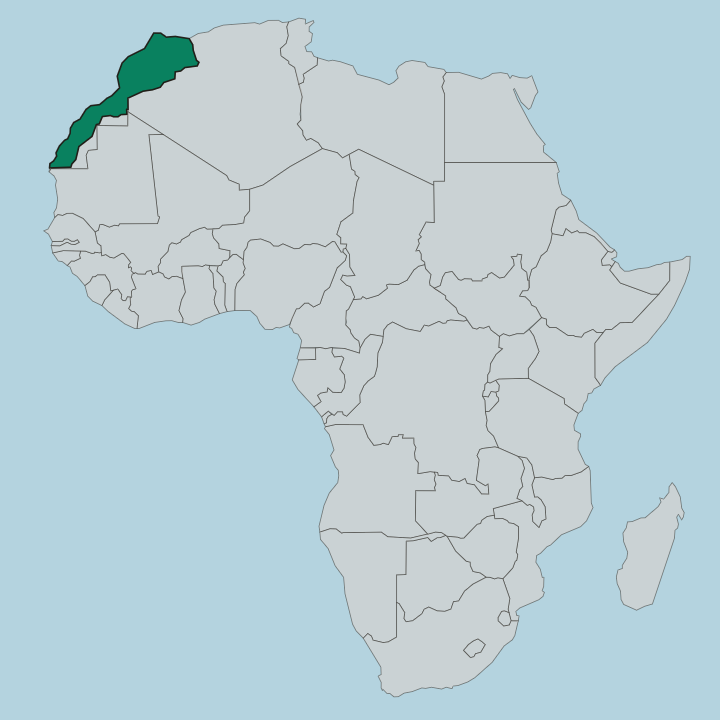
Dakhla-Oued Ed-Dahab is Morocco's southernmost region, a thread of Atlantic desert coast wrapped around a shallow lagoon at Dakhla.
About Dakhla-Oued Ed-Dahab


Towns & cities in Dakhla-Oued Ed-Dahab
One town here has its own guide — it links to where to stay.
 Morocco
Aousserd
Aousserd, also written Auserd, is a small town and rural commune of Aousserd Province in the Dakhla-Oued Ed-Dahab region of Western Sahara.Where to stay →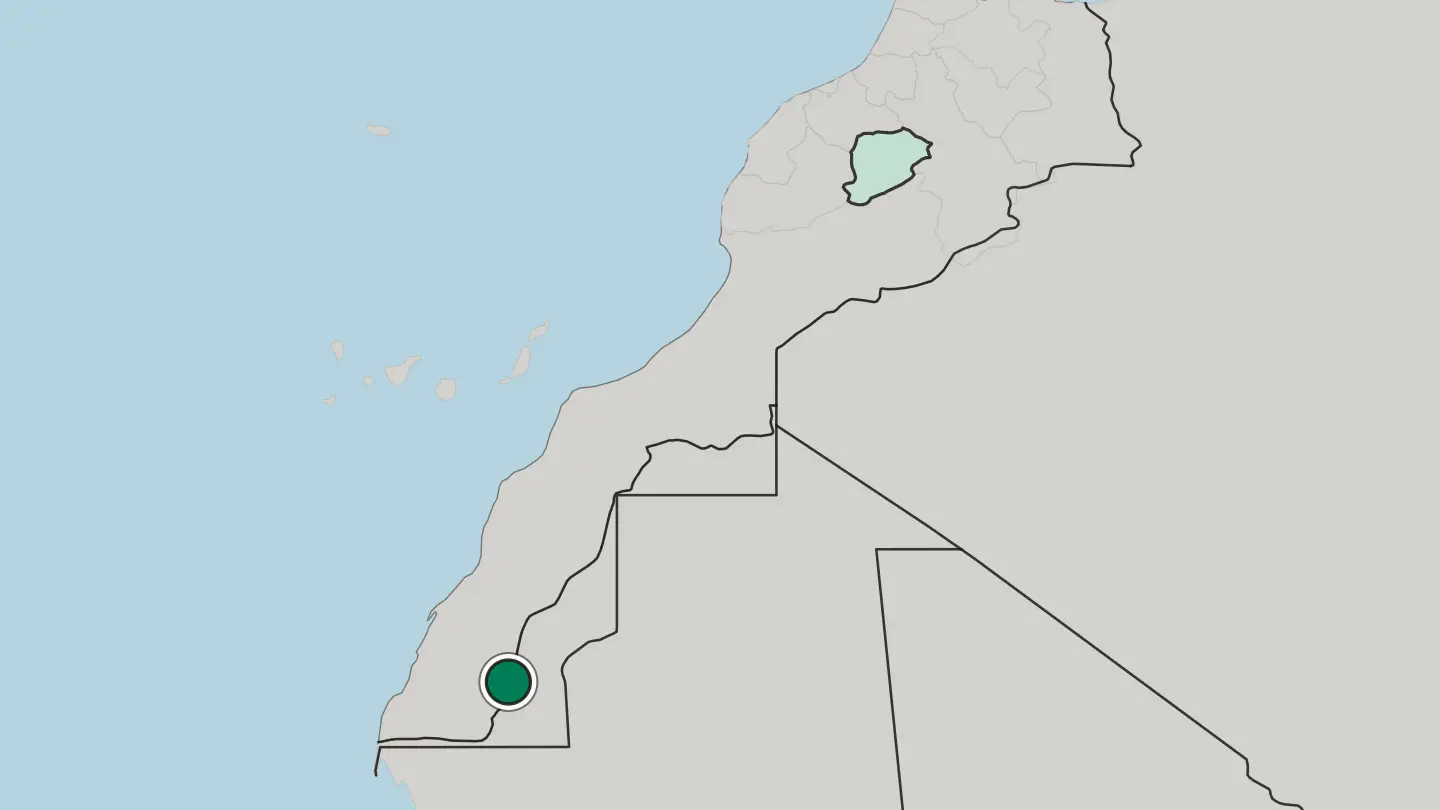
About Dakhla-Oued Ed-Dahab
One thing carries this region: wind.
What is Dakhla-Oued Ed-Dahab known for?
The city of Dakhla sits on a long finger of sand, the Río de Oro Peninsula, and behind it lies a flat-water lagoon that has turned the place into one of the Atlantic coast's best-known kitesurfing grounds. Fishing built the towns first, and boats still work these waters for the sardine and octopus that feed much of Morocco's catch. Oyster beds grow in the sheltered bay.
Beyond the water, the land is open Sahara, empty desert running east toward the frontier with Mauritania.
Where is Dakhla-Oued Ed-Dahab?
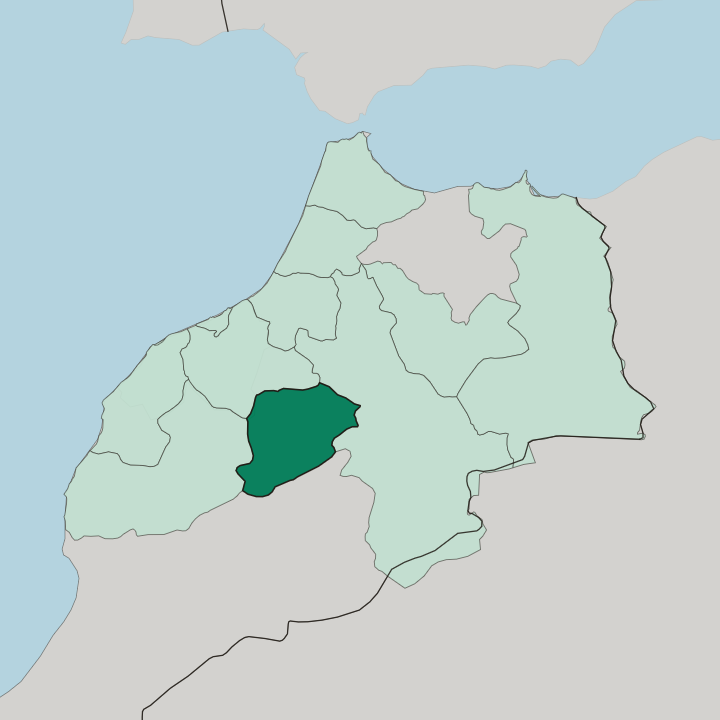
This is the far south of Morocco, a wedge of Saharan coast facing the Atlantic Ocean. The region takes in two provinces, Oued Ed-Dahab along the shore and Aousserd inland, and together they cover a huge, thinly peopled stretch of desert. Boujdour Province lies to the north.
Mauritania closes the region off to the south and the east, and the Atlantic runs the whole western edge. The defining shape is the Río de Oro Peninsula. It reaches roughly forty kilometres down the coast, a narrow spit only a few kilometres wide, and it shelters the long lagoon of Dakhla Bay behind it.
The city of Dakhla stands near the peninsula's tip, cut off from the open ocean by its own tongue of sand. That bay is the reason the place exists in the form it does. Its shallow, protected water made a harbour, then a fishing station, and later the flat playground that kitesurfers cross.
Inland from the coast the land climbs into dry, stony Sahara that stretches unbroken toward the Mauritanian border. Dunes meet the sea in places. Little rain reaches any of it.
What is Dakhla-Oued Ed-Dahab like?
The culture here is Saharan, not Mediterranean, and the difference is felt at once. This is the country of the Sahrawi, the desert people of the western Sahara, and the everyday speech is Hassaniya, the Arabic dialect of the nomads and of Mauritania just across the frontier. Tea is poured in three rounds, slow and sweet, the way it is across the desert.
Standard Arabic runs the offices and the schools, and French is widely used in business, a leftover of the wider Moroccan pattern. Dakhla itself pulls in a second, newer culture. Kitesurfers arrive from across Europe for the lagoon, and around them has grown a small world of camps, boards and evening bonfires that sits oddly beside the fishing quays and the desert.
The sea sets the table. Grilled fish, oysters raised in the bay, and the daily catch off the boats are what the town eats. Beyond the lights of Dakhla the region empties fast into open Sahara, where the old rhythms of herding and long travel still hold.
Two worlds share one coast.
What is the history of Dakhla-Oued Ed-Dahab?
Dakhla began as a Spanish outpost. Spain founded it in 1884 and called it Villa Cisneros, making it the seat of its Río de Oro colony on this stretch of Atlantic sand. It stayed Spanish for close to a century.
When Spain pulled out in 1976 the wider territory of Western Sahara passed into dispute, and Morocco has administered this southern coast since. The present region, drawing the two provinces of Oued Ed-Dahab and Aousserd together, was drawn up and renamed in 2015.
What is the climate of Dakhla-Oued Ed-Dahab?
The desert should make this place brutally hot, and the Atlantic keeps it from being so. The cold Canary Current runs down the coast off the Río de Oro Peninsula, and the sea breeze it drives holds Dakhla to mild, even temperatures across the year while the interior toward Aousserd bakes. Rain almost never comes.
What defines the coast instead is the steady wind, blowing most days, which is exactly what has drawn the kitesurfers to the lagoon.
How do you get to Dakhla-Oued Ed-Dahab?
Nearly everyone flies. Dakhla Airport is the region's gateway, and flights reach it from Casablanca and a handful of European cities, the usual routing being a short hop south after a connection in Morocco's north. The alternative is the long coast road, which runs south for some 550 kilometres from Laâyoune to reach the peninsula.
Once in Dakhla, distances stretch out fast, and the desert toward Aousserd and the Mauritanian border is crossed only by road.
More regions in Morocco
Updated September 2026