Nigeria
Enugu State, Nigeria — Towns & Travel Guide
Enugu State is the coal-country heart of Igboland in south-eastern Nigeria, ranged along the Udi escarpment.
Hotel links are affiliate links: booking through them may earn us a commission, at no extra cost to you. It never affects how places are ranked. How this works


Towns & cities in Enugu State
One town here has its own guide — it links to where to stay.

 Nigeria
Enugu
Enugu is a city of southeastern Nigeria, the old Coal City of the Igbo country, set below a green escarpment among wooded hills.Where to stay →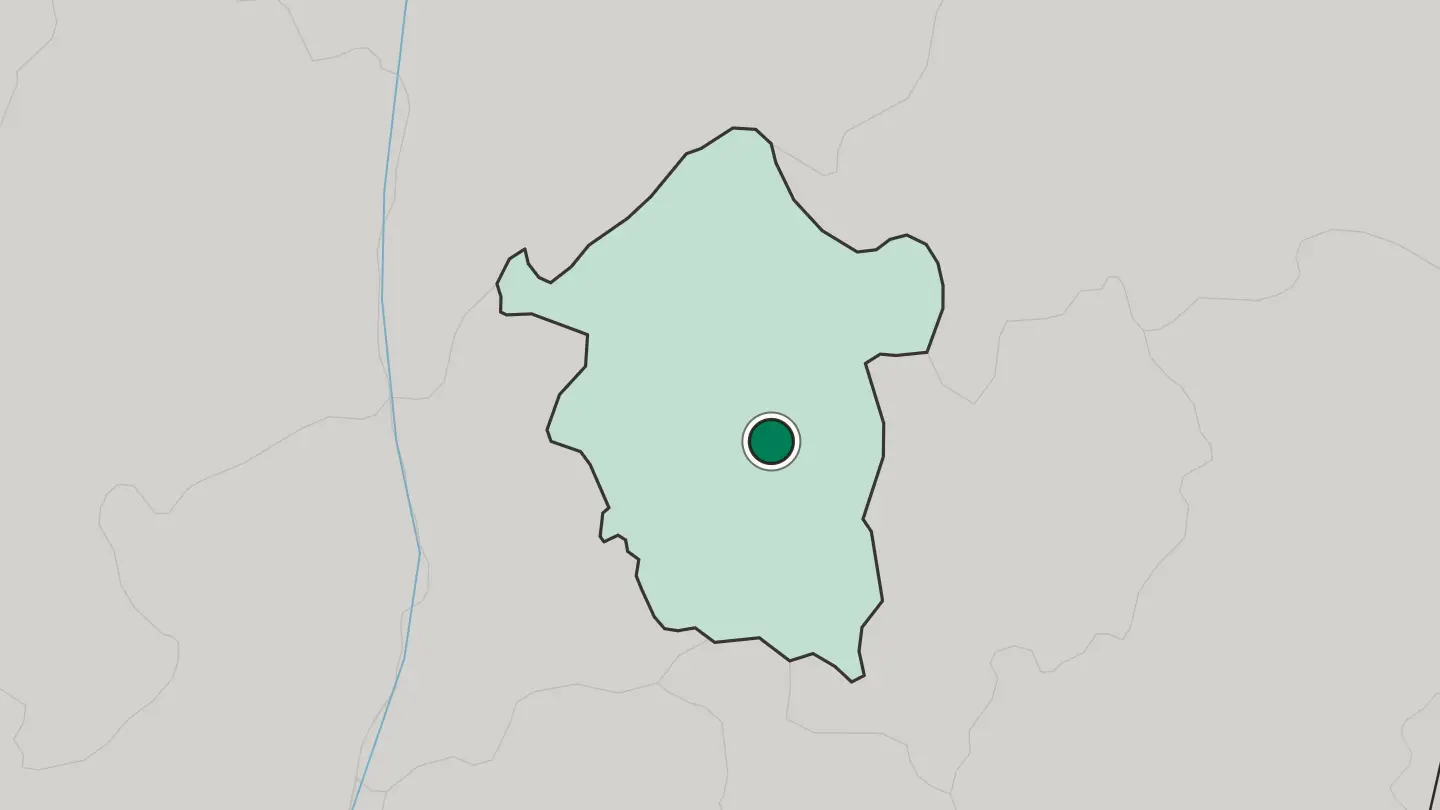
Hotel links are affiliate links: booking through them may earn us a commission, at no extra cost to you. It never affects how places are ranked. How this works
About Enugu State
Coal made this place.
What is Enugu State known for?
The capital, Enugu, grew from a mining camp after seams were struck under the Udi hills in 1909, and the railway that followed turned a cluster of pit villages into the busiest city in the south-east. People still call it the Coal City. Nsukka anchors the north, a university town built around the University of Nigeria.
Beyond the two cities the land is green farm country of yam, cassava and oil palm, worked by Igbo communities whose masquerade festivals and New Yam rites give the state much of its character.
Where is Enugu State?
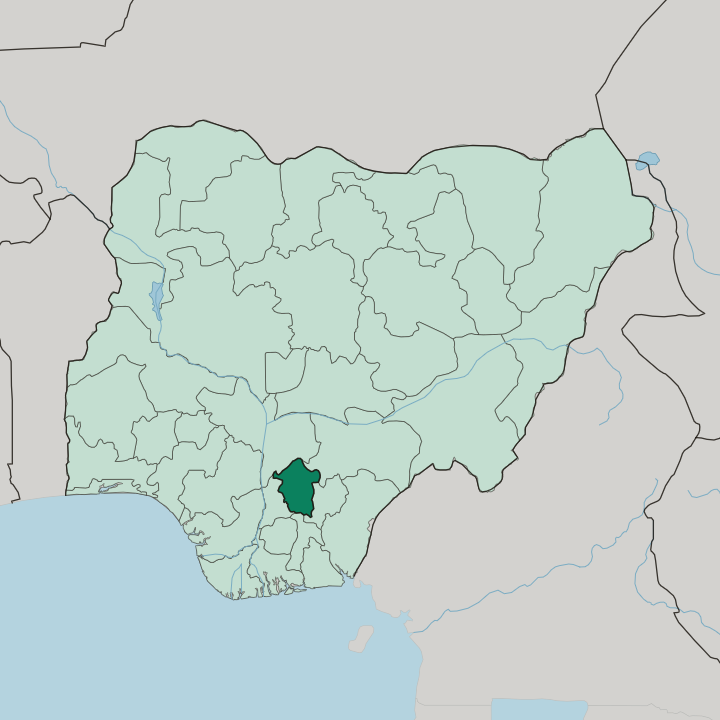
Enugu State sits in the South-East of Nigeria, inland and well away from the coast. Its spine is the Udi-Nsukka Plateau, a pair of near-joined highlands that rise above three hundred metres and run for scores of kilometres from Nsukka in the north down past Enugu in the south. The plateau's eastern edge falls away in a long escarpment, and it is at the foot of that scarp, not on a hilltop as the name Énú Ụ́gwụ́ would suggest, that the capital actually stands.
The Ekulu River rises inside Enugu itself and threads the city, the largest body of water in the built-up area and part of its domestic supply. Across the state the land tilts and changes. Higher, drier savanna and forest mosaic cover most of the state, giving way to wetter swamp forest in the far south. Anambra State borders it to the west and Ebonyi to the east and south-east, with Benue and Kogi to the north and Abia to the south.
No sea touches any of it. This is farm and mining country, its shape set by the plateau and the coal beneath it rather than by any shoreline.
What is Enugu State like?
Enugu State thinks of itself as the capital of Igboland, and the claim carries weight. This was the regional capital of Eastern Nigeria and, for a few months in 1967, the seat of the short-lived Republic of Biafra, so its sense of Igbo identity is bound up with that history. Masquerades run deep in the local calendar.
The Mmanwu festival brings masked spirits out into the streets of Enugu, while the Odo and Omabe traditions of the Nsukka country and the New Yam rite, Iri Ji, mark the farming year across the villages. Nsukka gives the state a second, quieter kind of prestige. The University of Nigeria there, the country's first indigenous university, has drawn students and writers from across Nigeria for generations and made the town a centre of Igbo scholarship and art.
Igbo is the language of daily life, English the language of school and office, and the two sit side by side. Yam, cassava, palm oil and pepper-soup define the table. Between the coal-town bustle of the capital and the study halls of Nsukka, the state balances industry against learning in a way few others in the south-east manage.
What is the history of Enugu State?
Coal wrote the modern history here. British prospectors struck workable seams beneath the Udi hills in 1909, a railway to the coast opened by 1916, and the mining camp of Enugwu-Ngwo grew into the town renamed Enugu in 1928. It became headquarters of the Eastern provinces and then, from 1951, the capital of the Eastern Region.
In 1967 it was declared the provisional capital of Biafra and was taken by federal troops that October. Enugu State itself was carved out in 1991, keeping the coal city as its capital.
What is the climate of Enugu State?
The state has a tropical wet-and-dry climate, split cleanly into two seasons. The rains run from about April to October, heaviest around July and September, when the plateau turns green and showers fall almost daily. Then comes the dry.
From November to March the skies clear over the Udi hills, rain nearly stops, and February brings the hottest, dustiest days of the year. It stays warm the year round; the difference is water, not temperature.
How do you get to Enugu State?
Air is the usual way in. Most travellers land at Akanu Ibiam International Airport on the edge of Enugu, which handles domestic routes from Lagos and Abuja alongside a thin schedule of international flights. The old colonial railway to the coast still ties the city to Port Harcourt, though roads carry most of the traffic now.
Enugu is the road hub of the whole south-east, linked by highway to Anambra in the west and Ebonyi in the east. From there, buses and shared taxis run out to Nsukka and the smaller plateau towns.
Common questions
What is the best area to stay in Enugu State?
Independence Layout: a first stay in the Coal City. Government Reservation Area: staying near the heart of Enugu. Nsukka: visiting the University of Nigeria.
More regions in Nigeria
Updated September 2026