Germany
Lower Saxony, Germany — Towns & Travel Guide
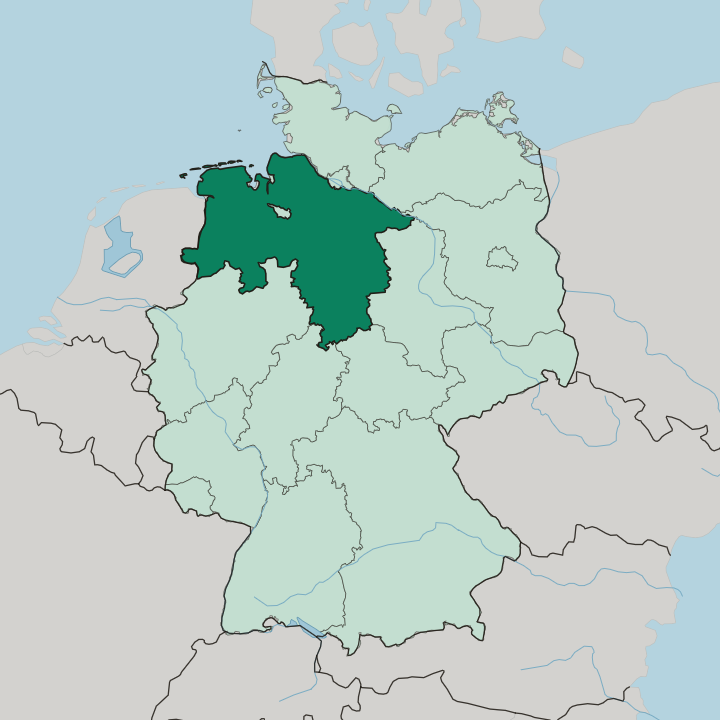
Lower Saxony sweeps across northwestern Germany, the only German state to hold both North Sea coast and Harz peaks.
Hotel links are affiliate links: booking through them may earn us a commission, at no extra cost to you. It never affects how places are ranked. How this works


Towns & cities in Lower Saxony
Pick a town or city — each links to where to stay.

 Germany
Hannover
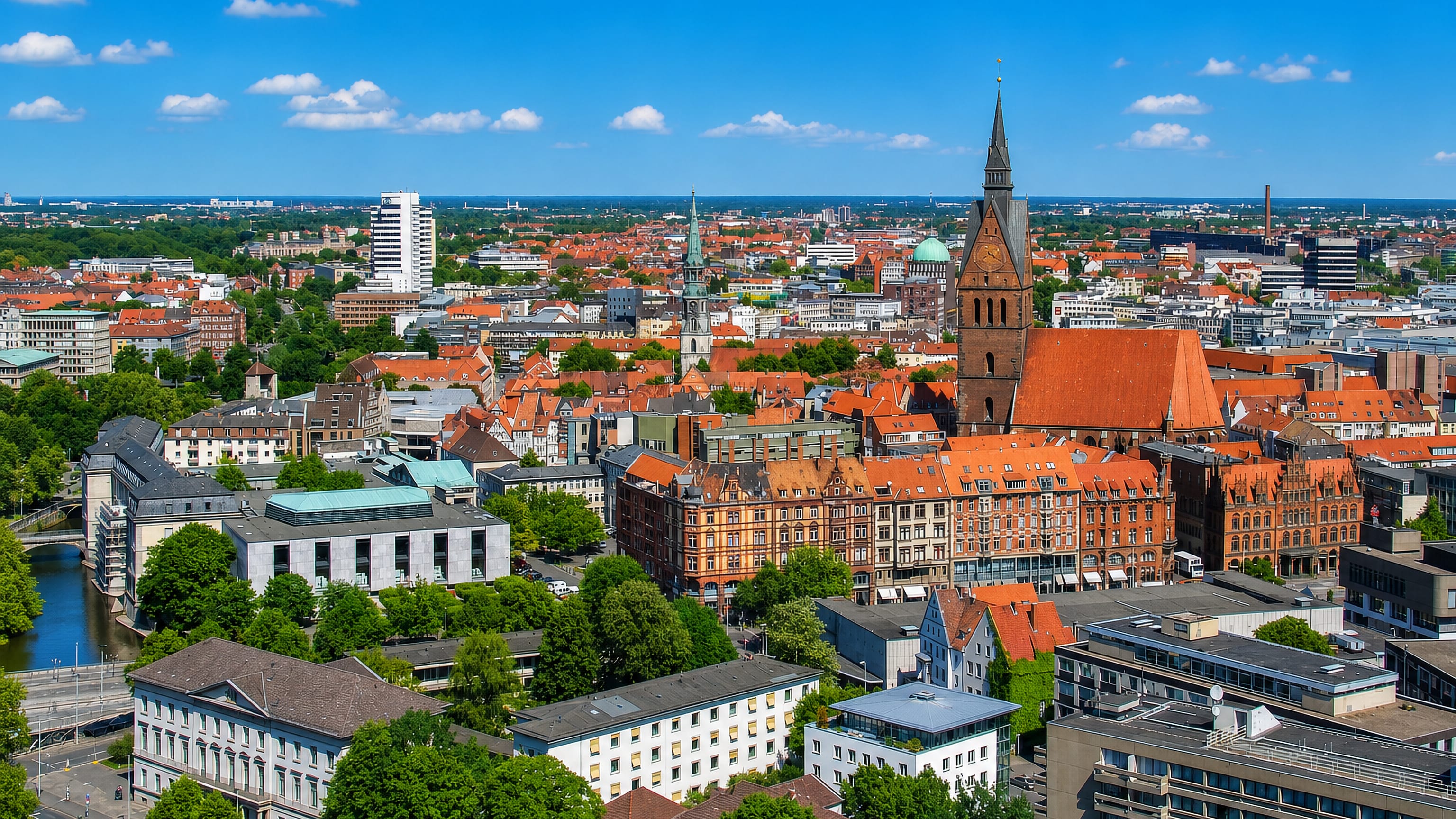
Red brick Gothic rises over the Leine at Hannover, capital of Lower Saxony, known for the baroque gardens at Herrenhausen and its trade fairs.Where to stay →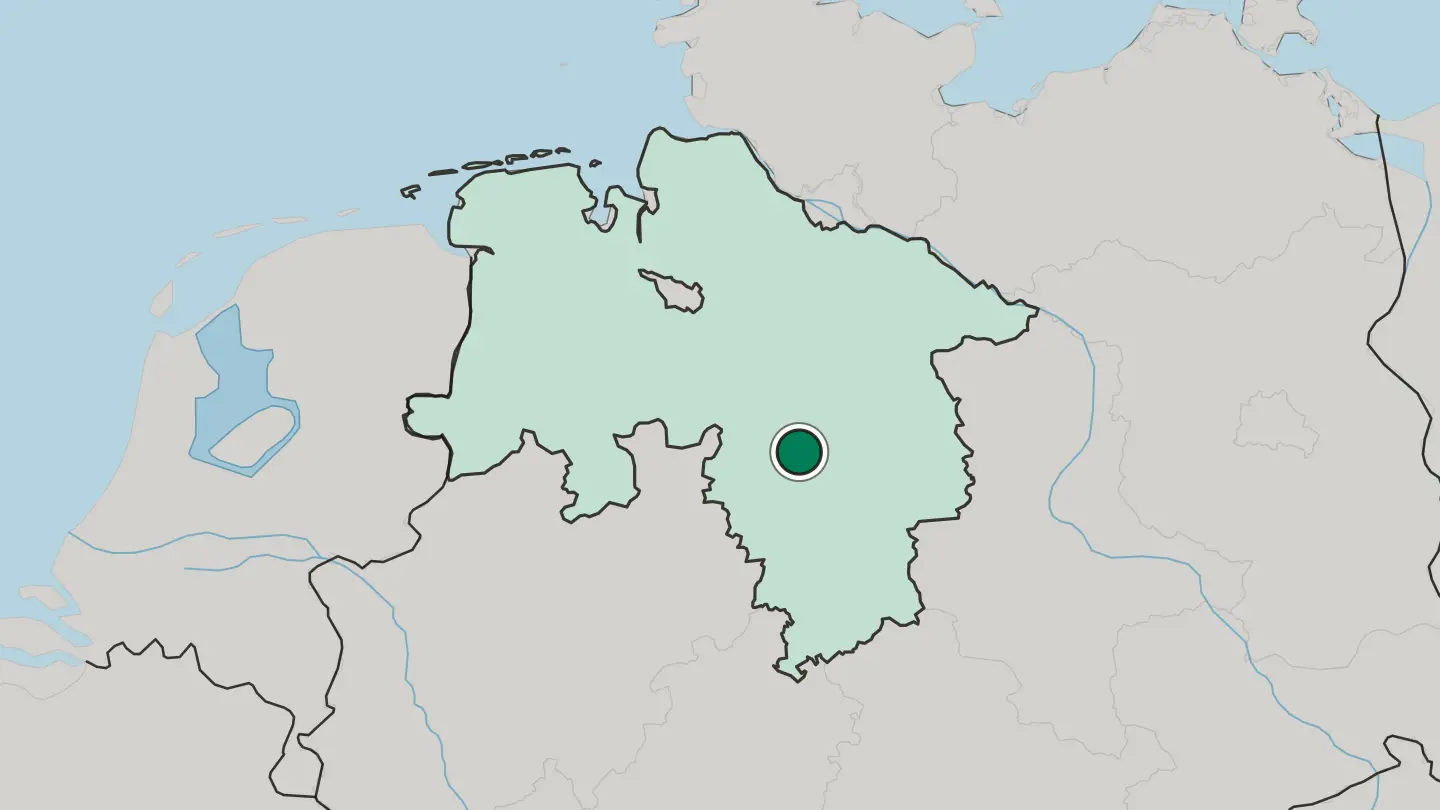
 Germany
Braunschweig
Braunschweig, or Brunswick, sits north of the Harz on the river Oker in Lower Saxony, a ducal city dated to 861 with Dankwarderode Castle at its core.Where to stay →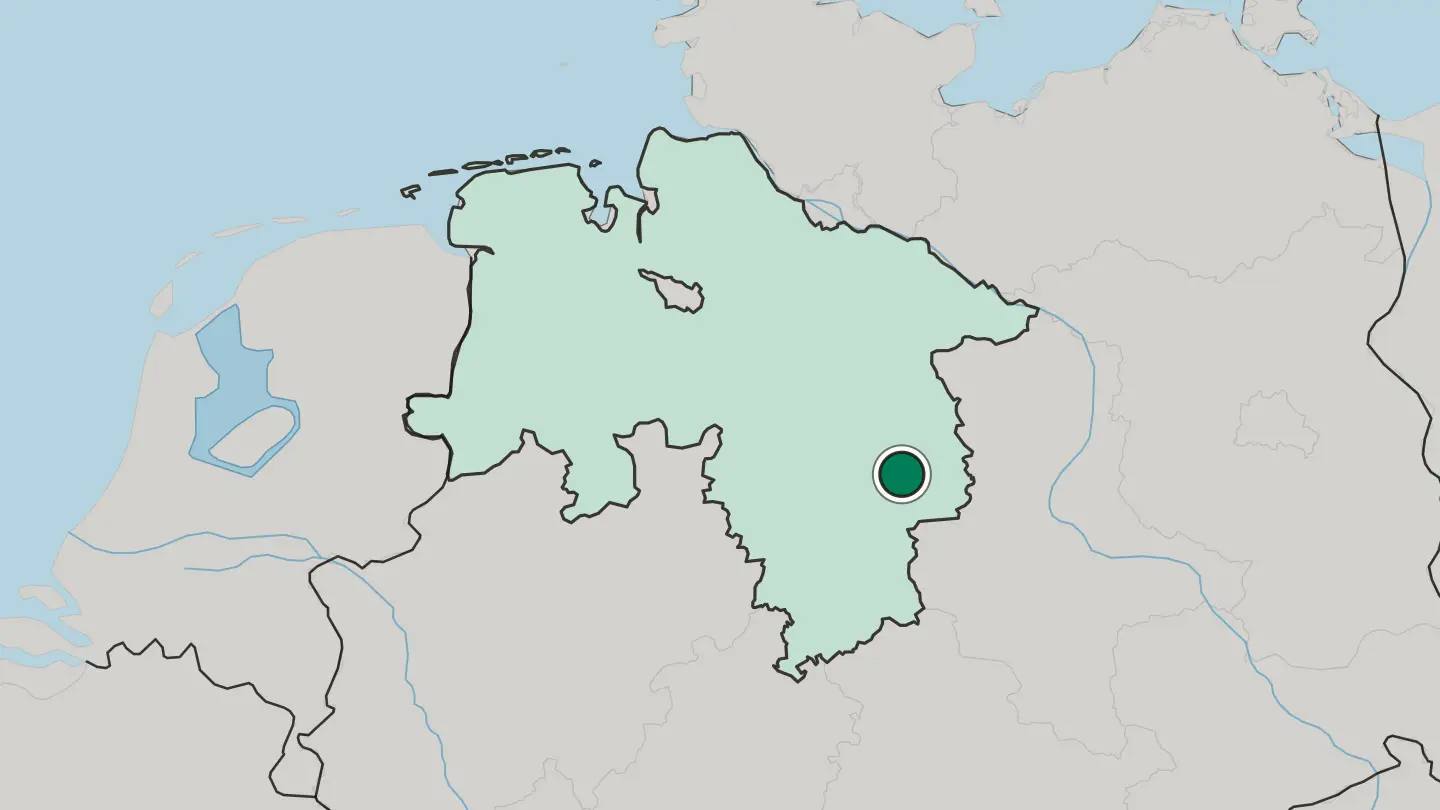
 Germany
Osnabrück
Osnabrück dates from 780 and stands on the Hase, in a valley between the Wiehen Hills and the Teutoburg Forest, under St. Peter's Cathedral.Where to stay →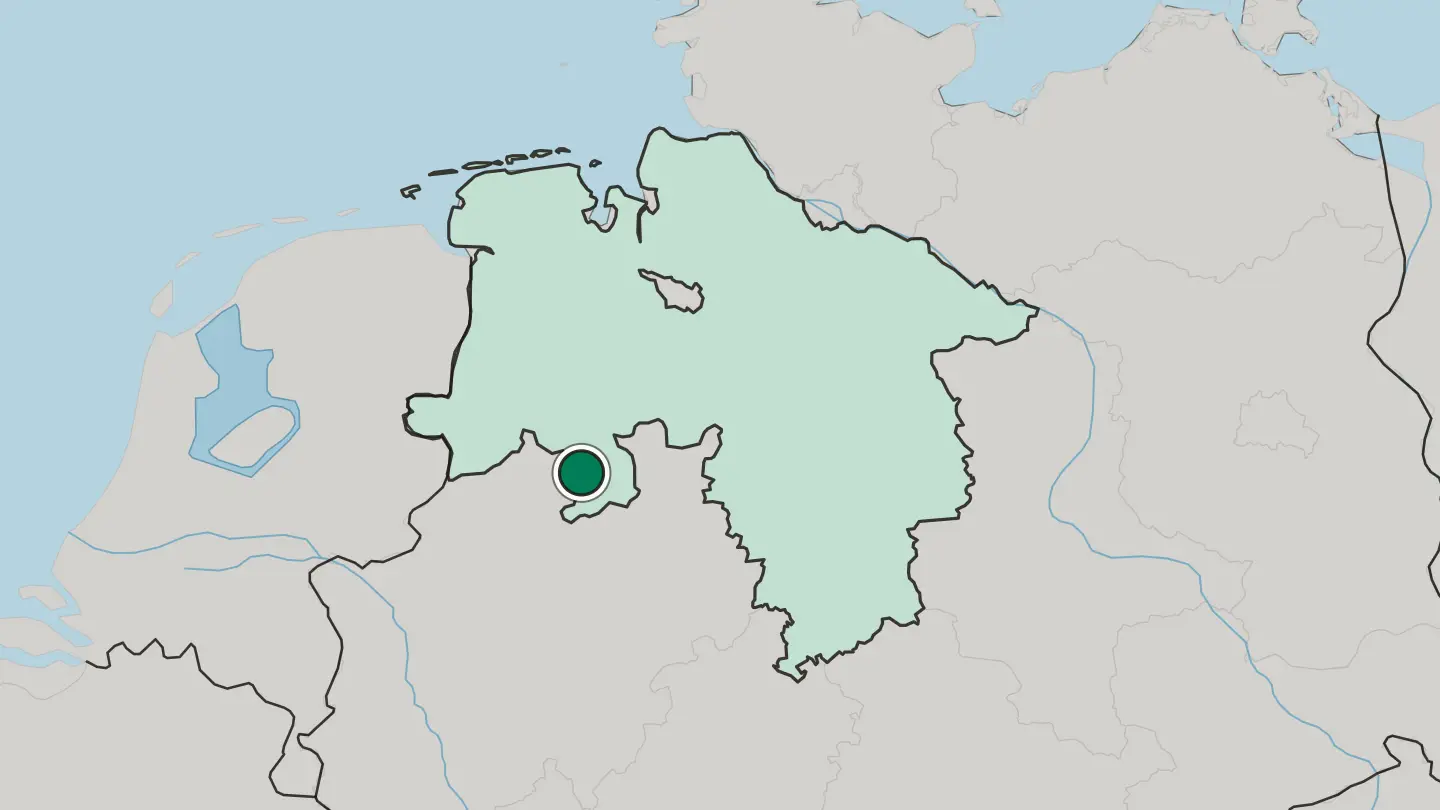
 Germany
Oldenburg
Oldenburg is an independent city in Lower Saxony between Bremen and the Netherlands, with the Lappan and St Lamberti Church over its old centre.Where to stay →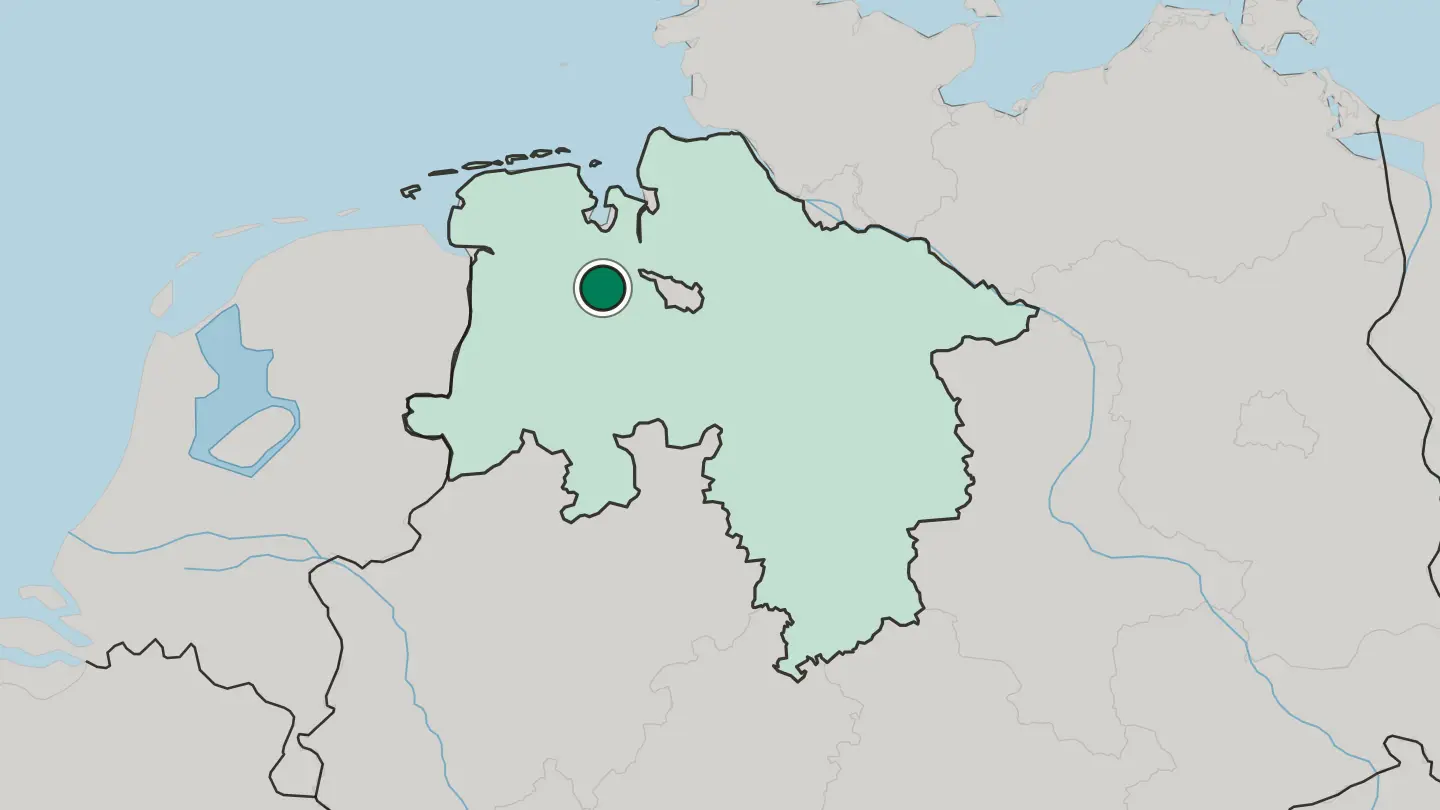
 Germany
Wolfsburg
Wolfsburg was founded in 1938 around the Volkswagen works on the Aller, with the Autostadt, the Phaeno Science Center and Wolfsburg Castle.Where to stay →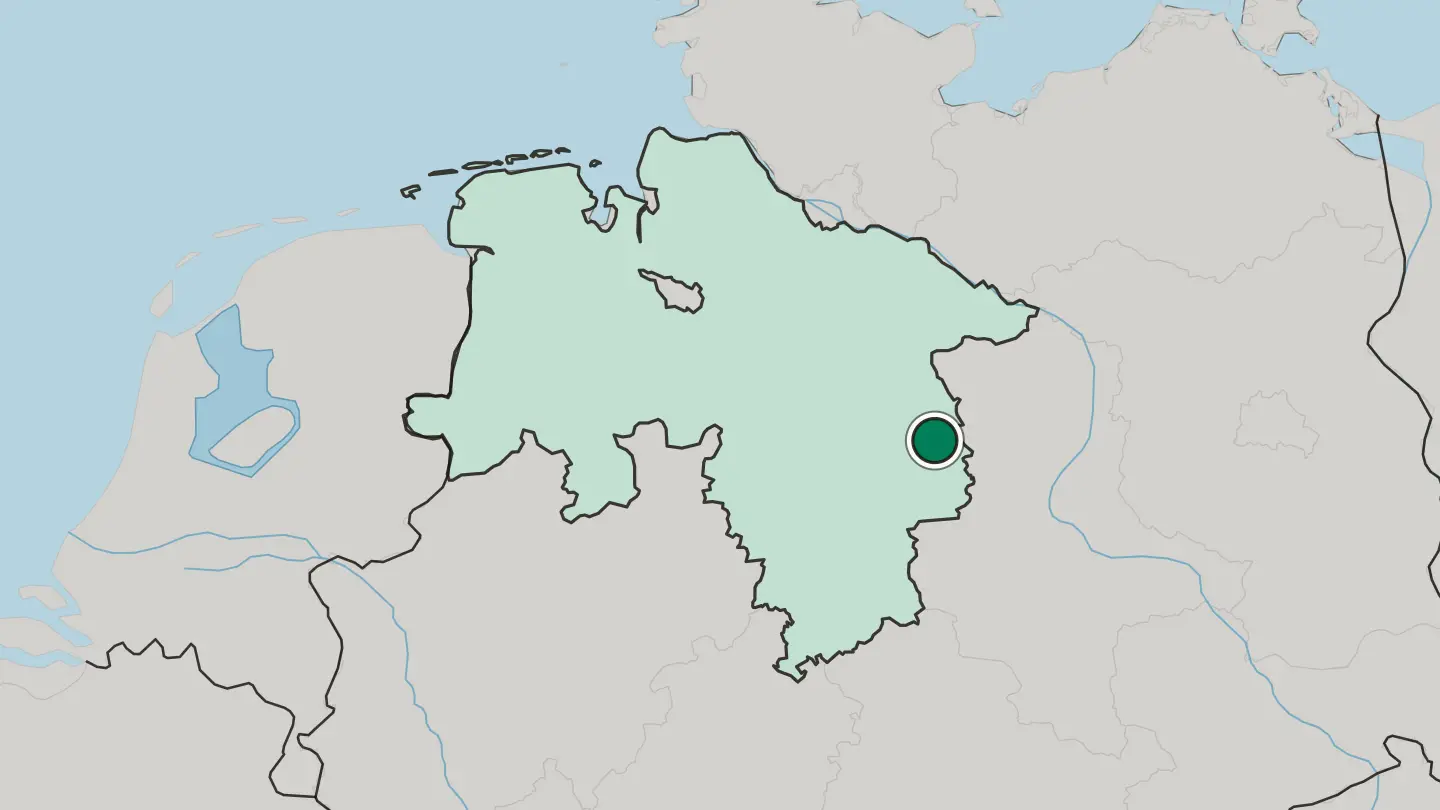
 Germany
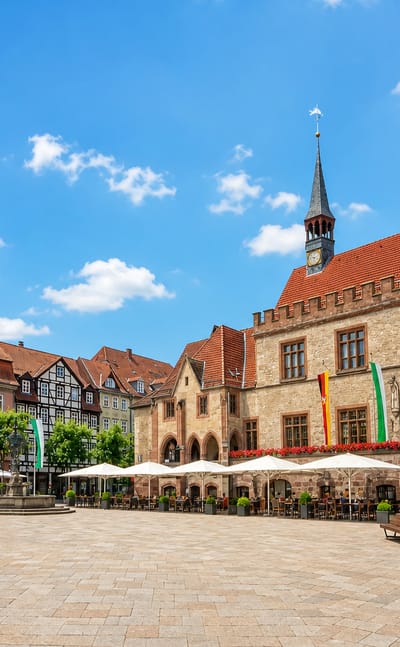
Göttingen
The River Leine threads through Göttingen, a university city in southern Lower Saxony known for the Georg-August University and its walled old town.Where to stay →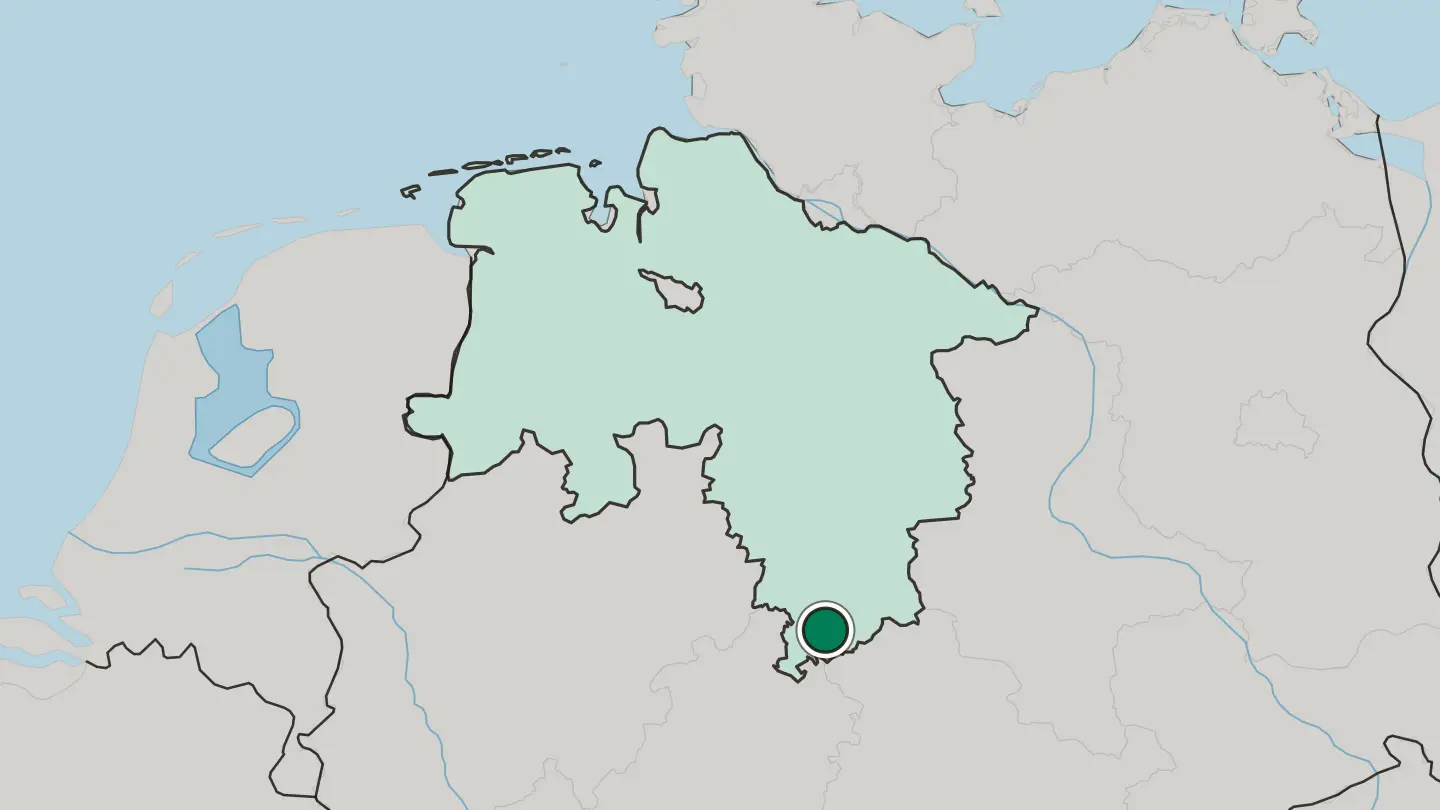
 Germany
Salzgitter
Salzgitter is an industrial city between Hildesheim and Braunschweig, drawn together in 1942 from seven towns. Open fields divide its boroughs.Where to stay →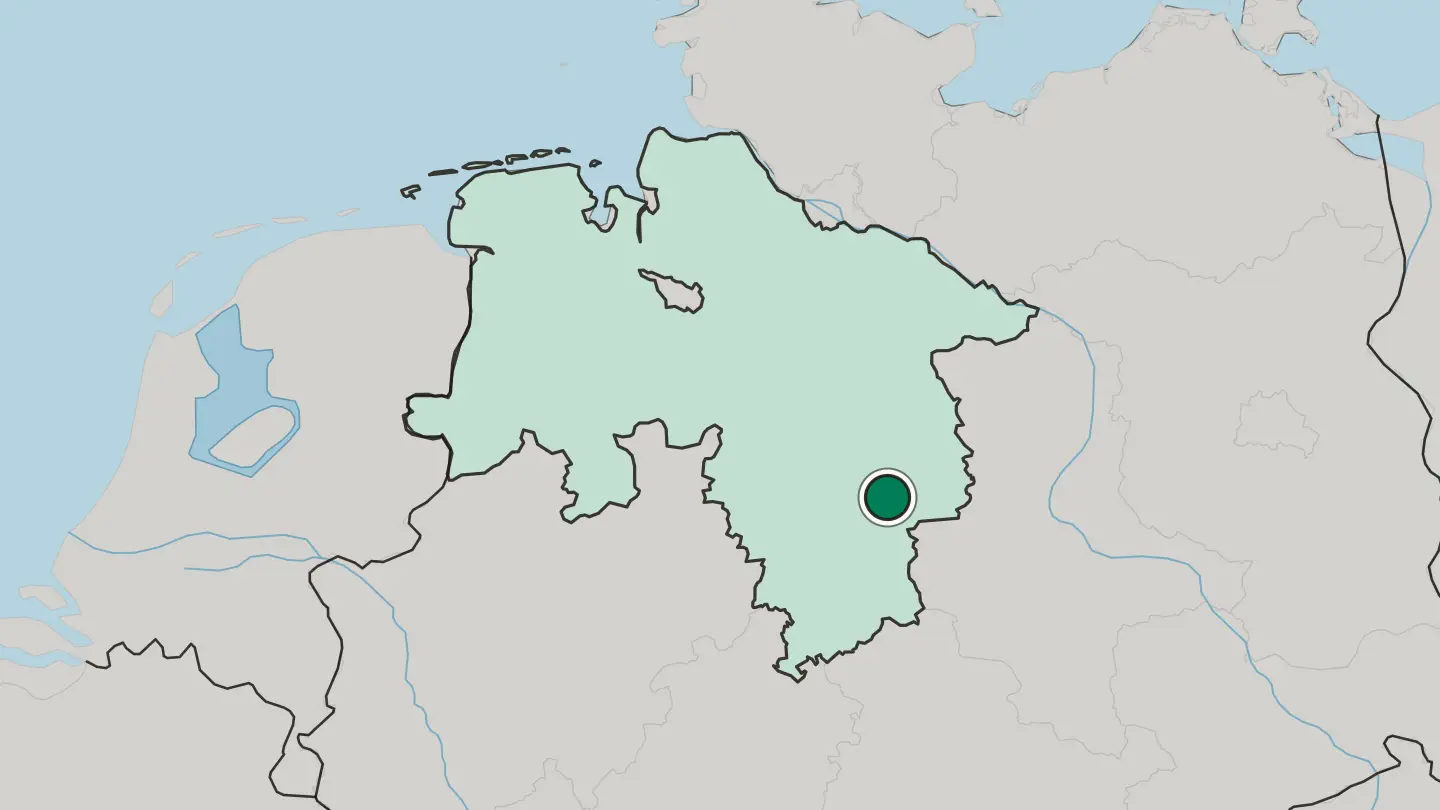
 Germany
Hildesheim
Hildesheim lies southeast of Hanover on the Innerste in Lower Saxony, a cathedral city built around St Mary's Cathedral and St Michael's Church.Where to stay →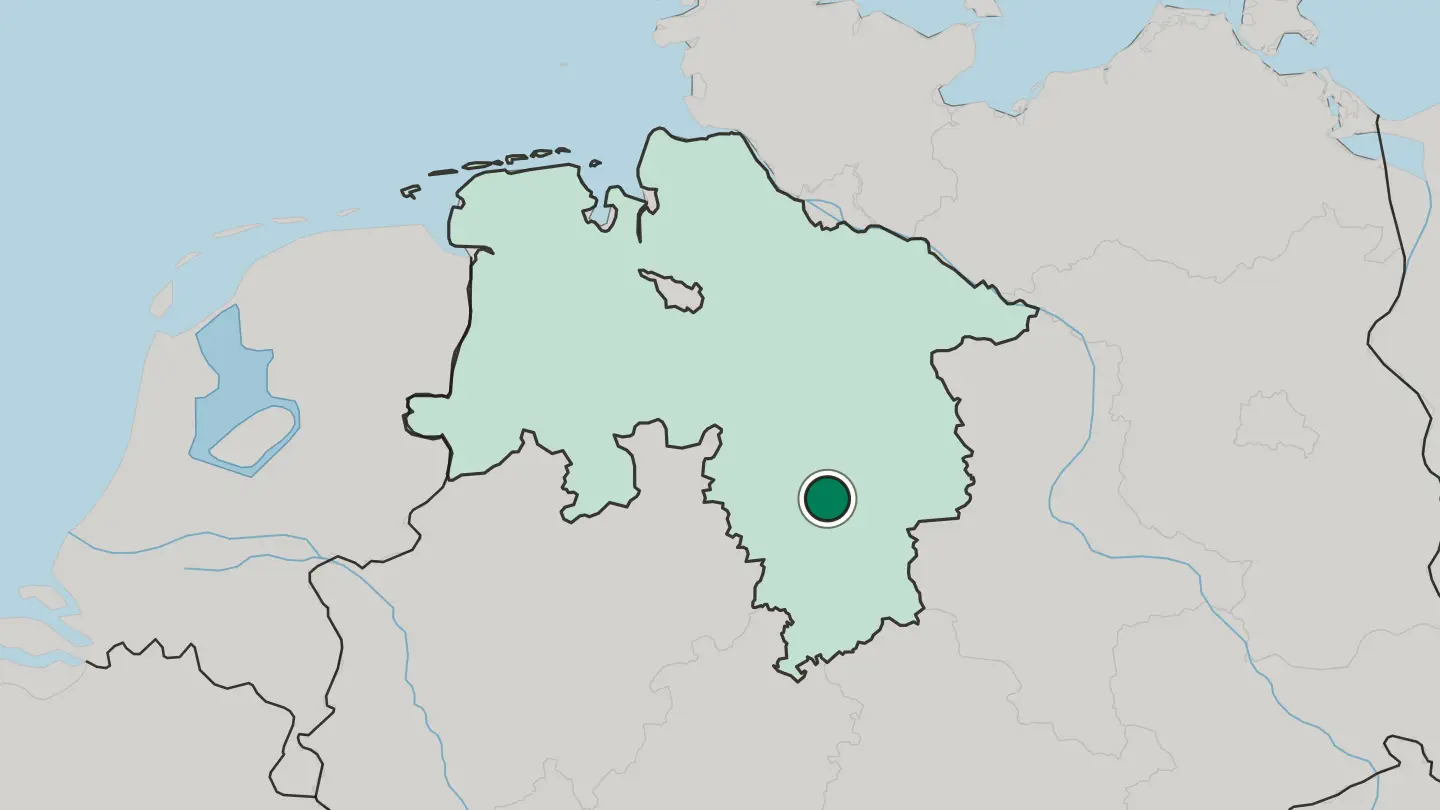
All towns & cities (19)
 Germany
Wilhelmshaven
Wilhelmshaven stands on the western shore of the Jade Bight, a naval town laid out from 1869. The North Sea sets its weather.Where to stay →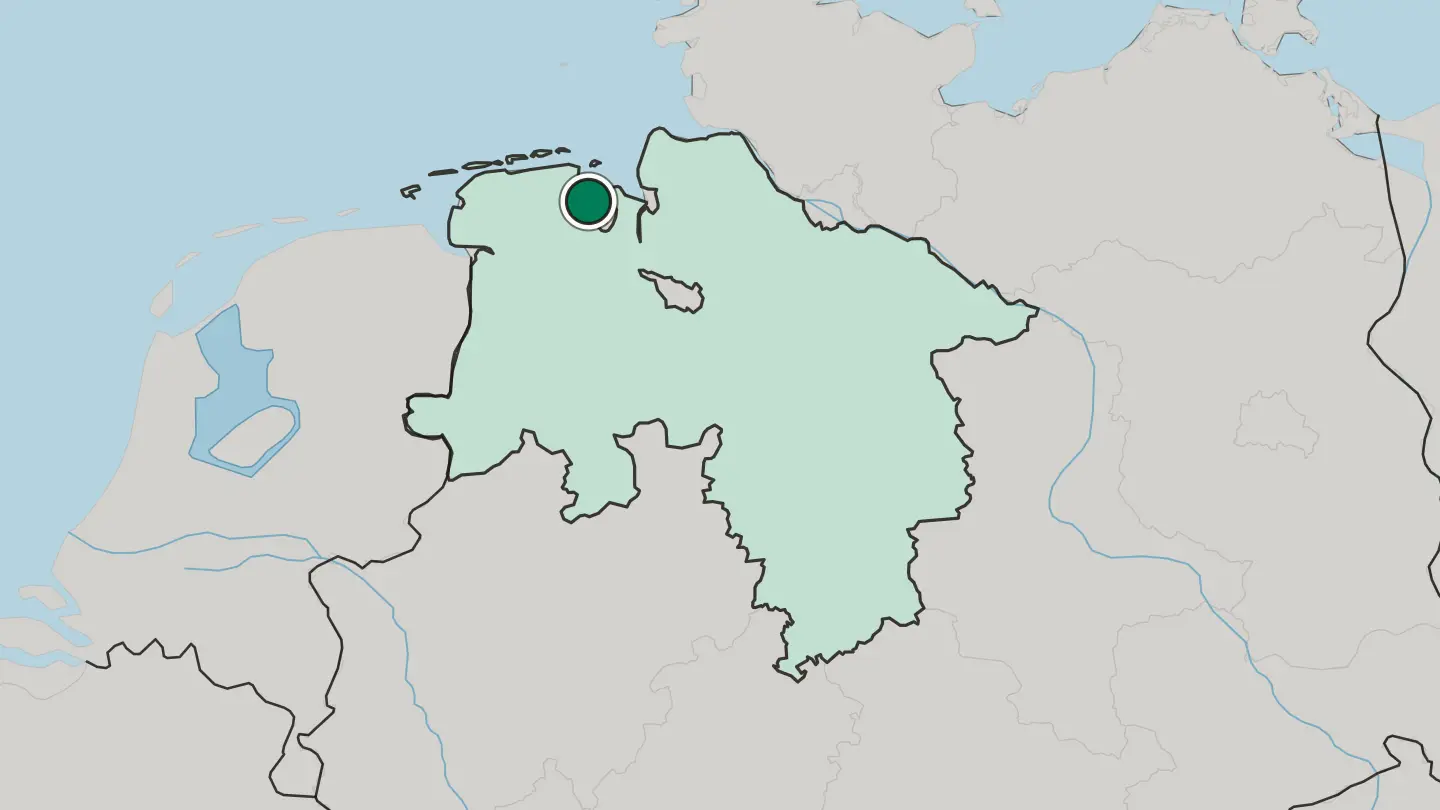
 Germany
Delmenhorst
Delmenhorst is an industrial city in Lower Saxony on Bremen's urban edge, first named in a document of 1247 and built up around the Nordwolle factory.Where to stay →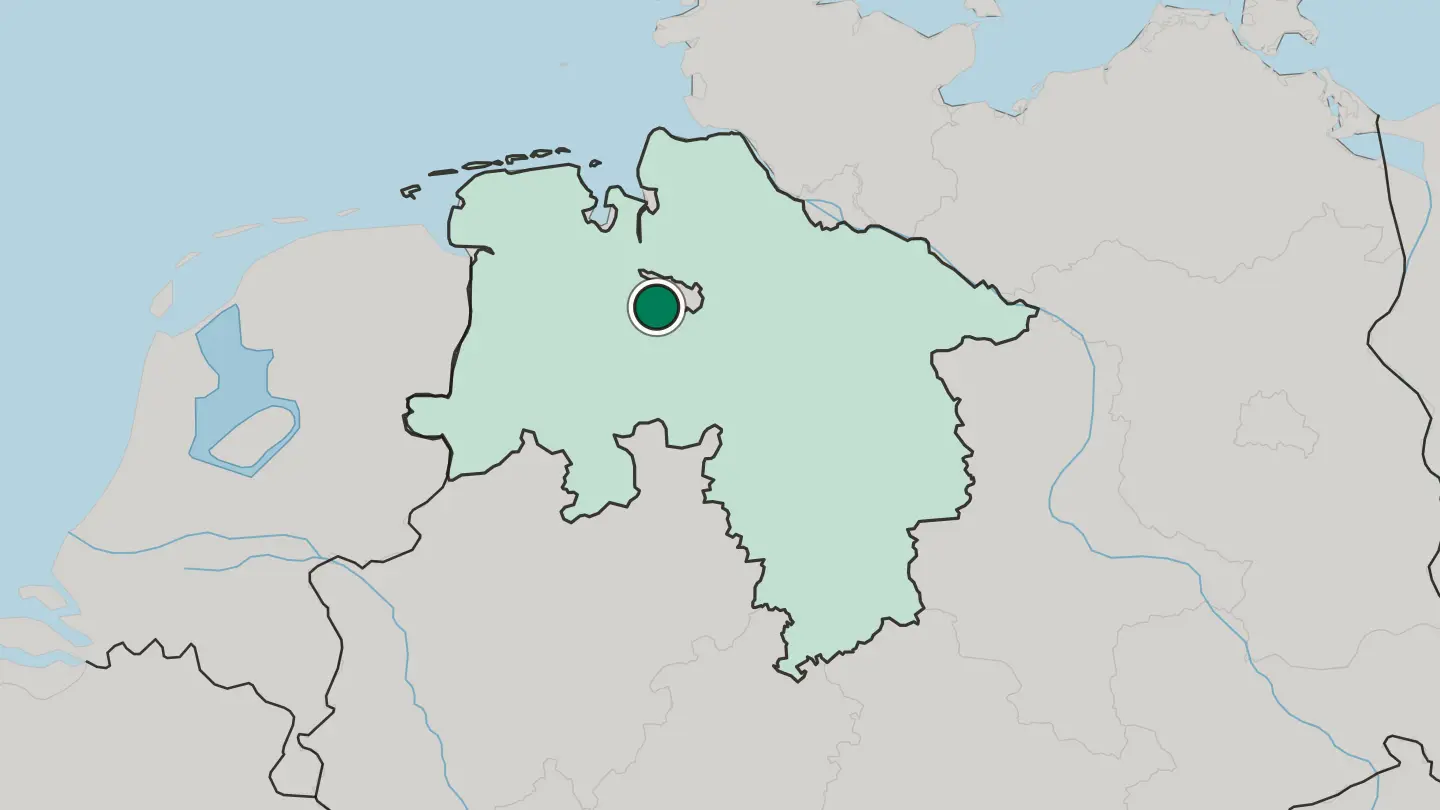
 Germany
Lüneburg
Lüneburg is a Hanseatic town on the Ilmenau in Lower Saxony, ringed by the Lüneburg Heath and known for the salt trade its museum records.Where to stay →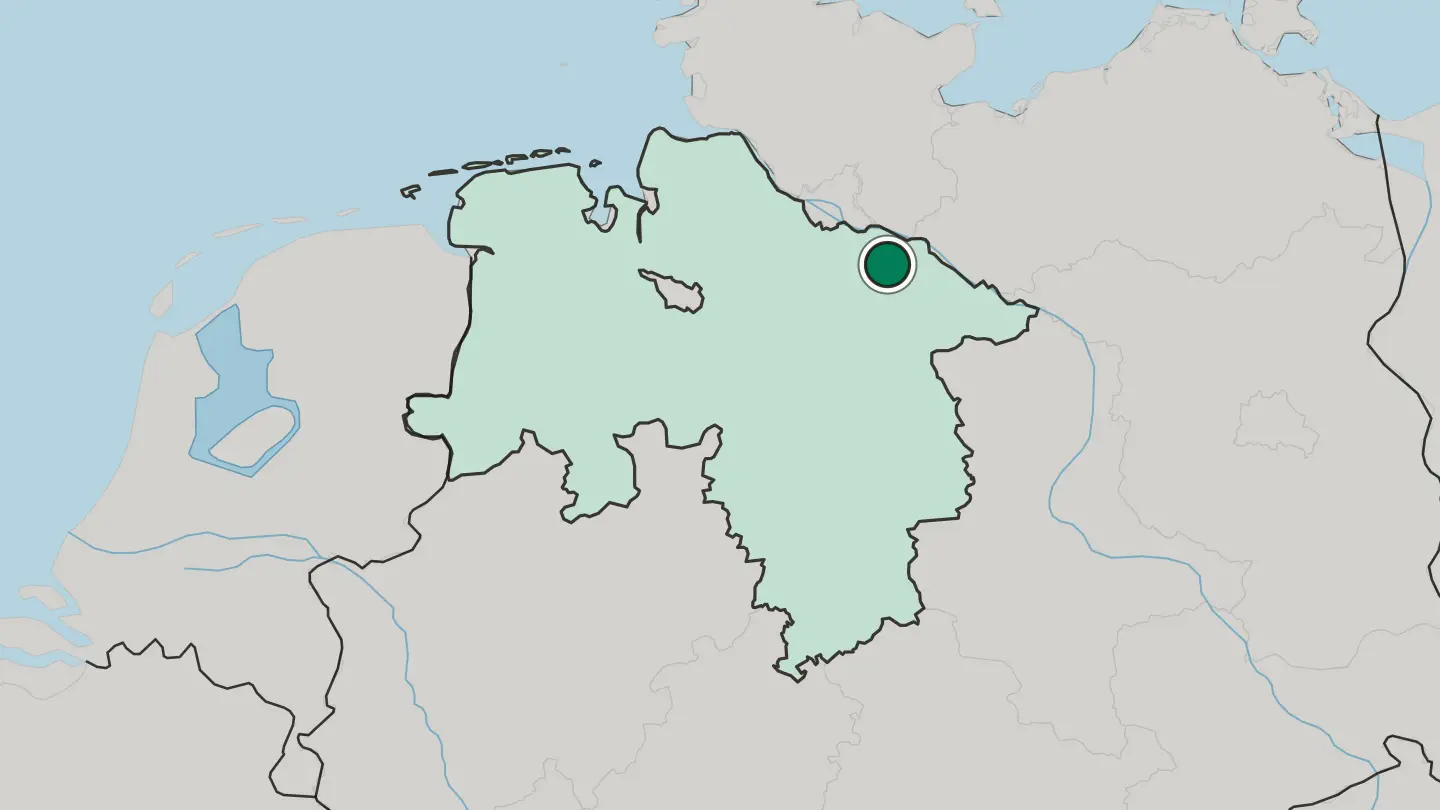
 Germany
Celle
Celle is a town on the Aller in Lower Saxony, its old centre a dense grid of timber-framed houses below the ducal palace.Where to stay →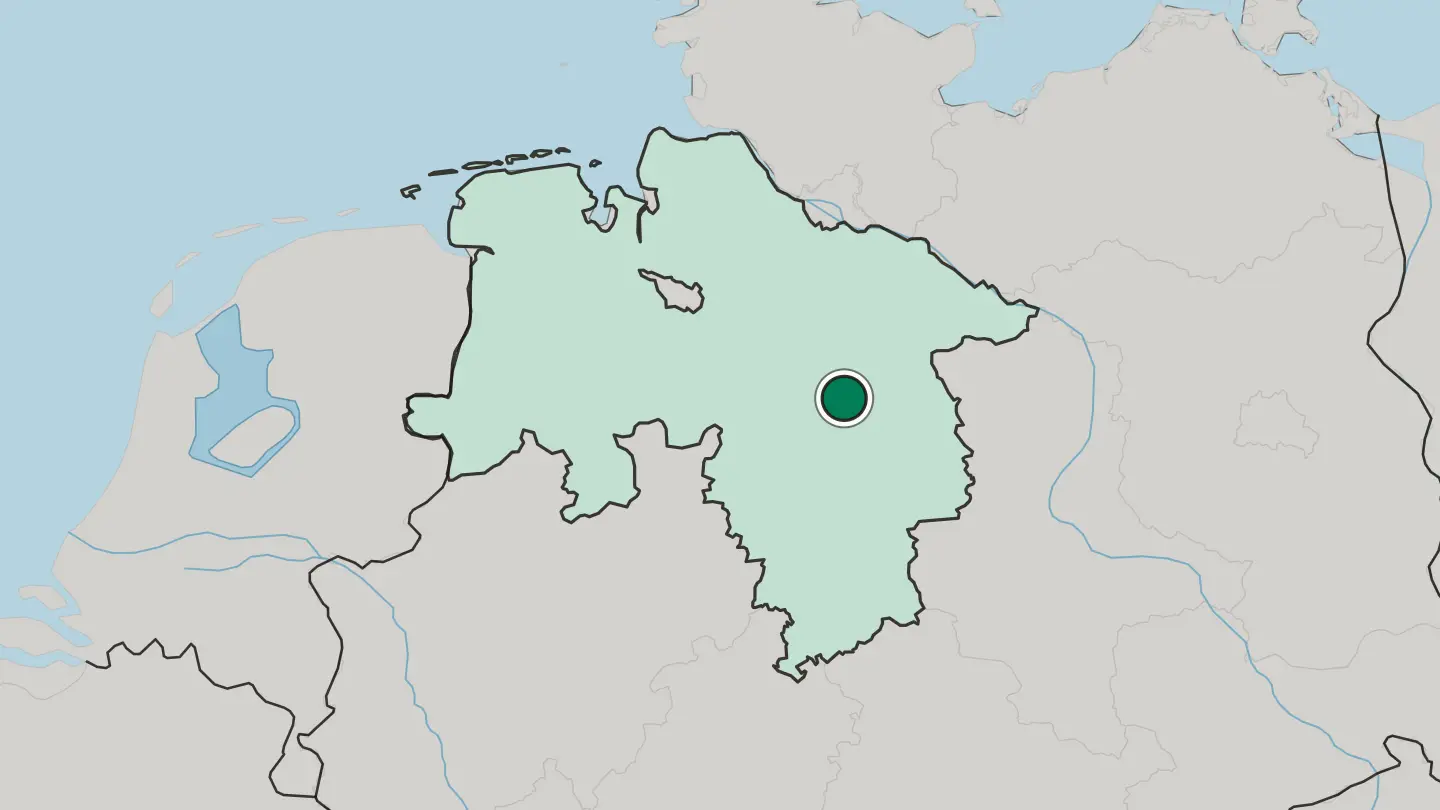
 Germany
Hameln
Hameln, or Hamelin, stands on the Weser southwest of Hanover, the town of the Pied Piper tale and the seat of the Hameln-Pyrmont district.Where to stay →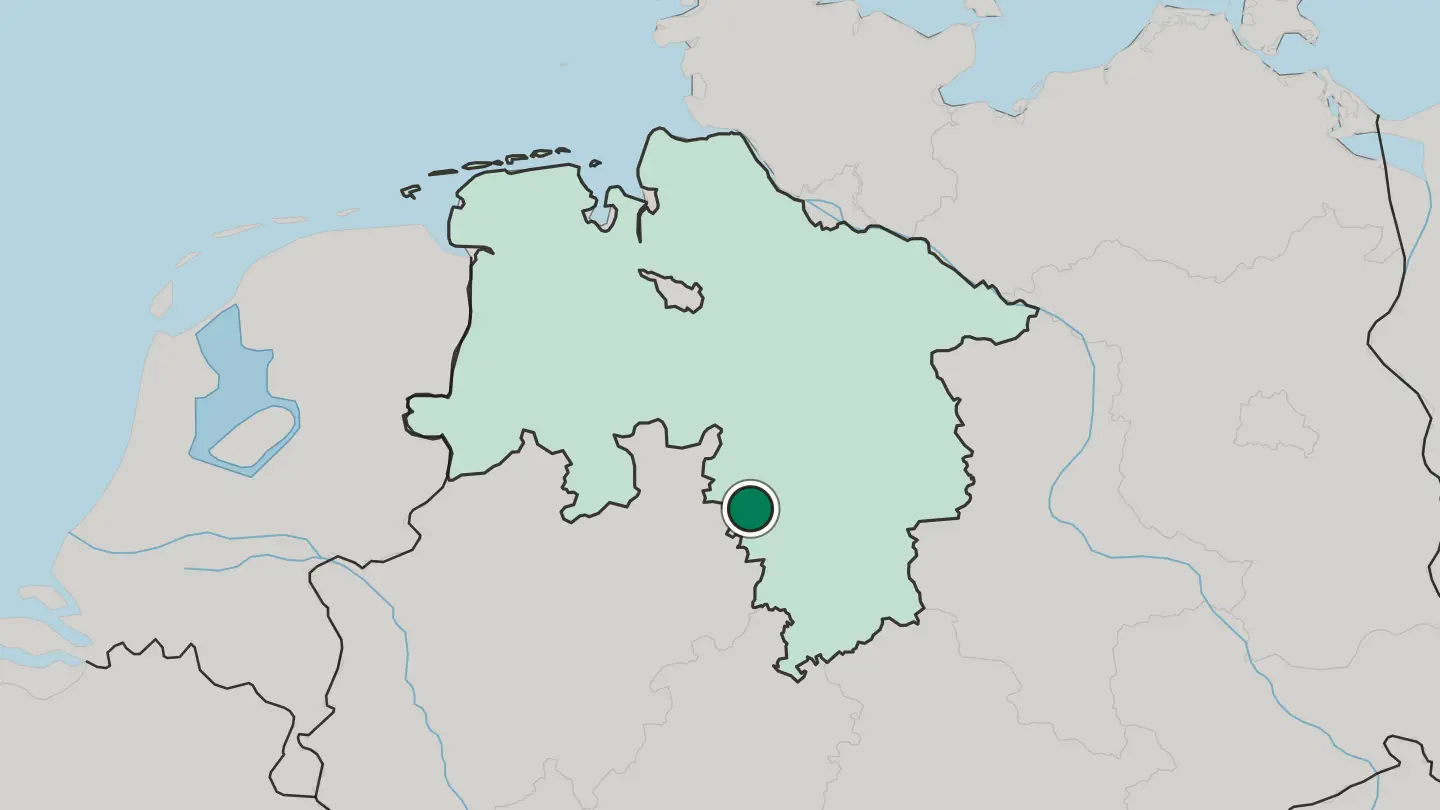
 Germany
Wolfenbüttel
Wolfenbüttel keeps the Herzog August Library and the largest run of timber-framed houses in Germany. Jägermeister is distilled here.Where to stay →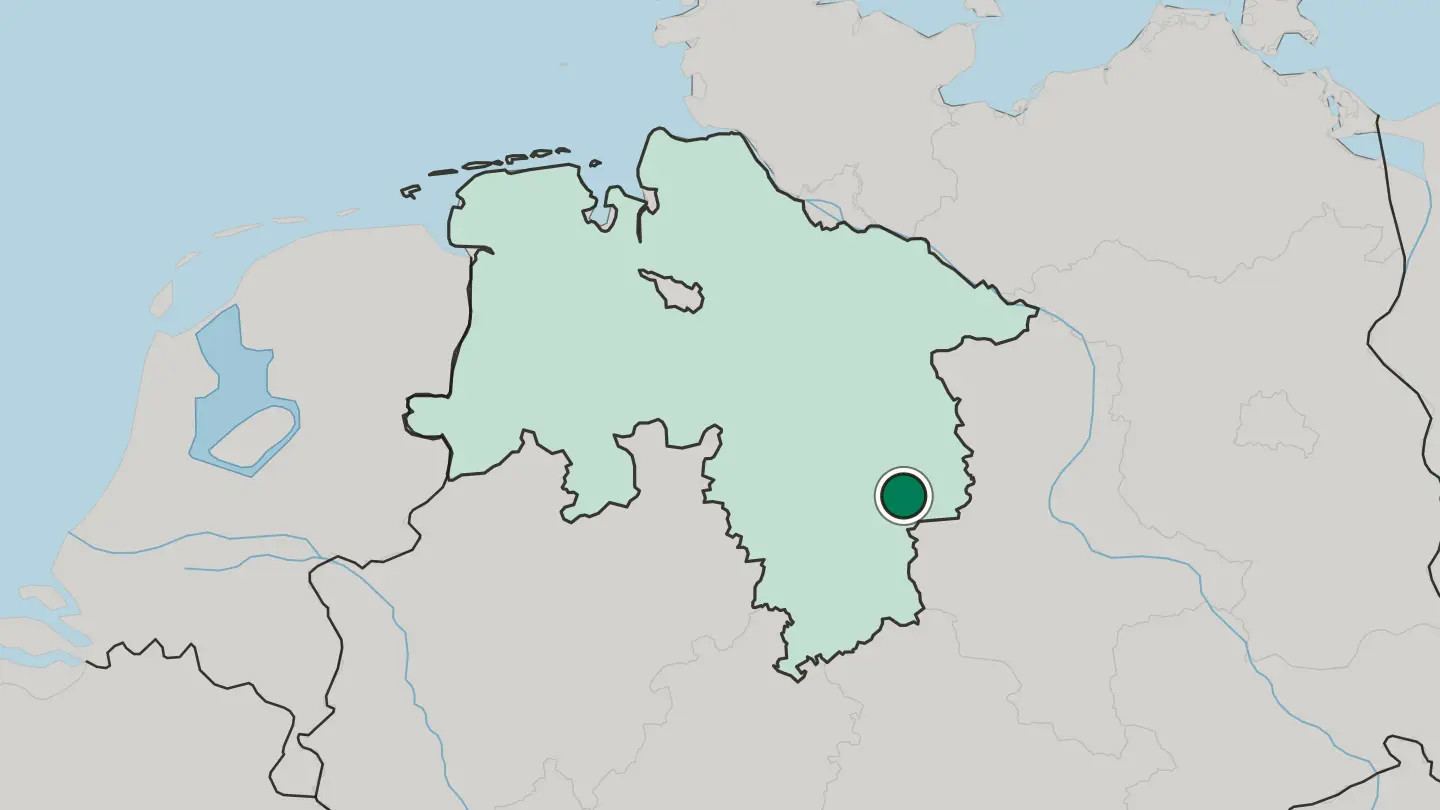 Germany
Nordhorn
Nordhorn is the seat of Grafschaft Bentheim in Lower Saxony, a Western Plains town of church towers, Tierpark Nordhorn and Kloster Frenswegen.Where to stay →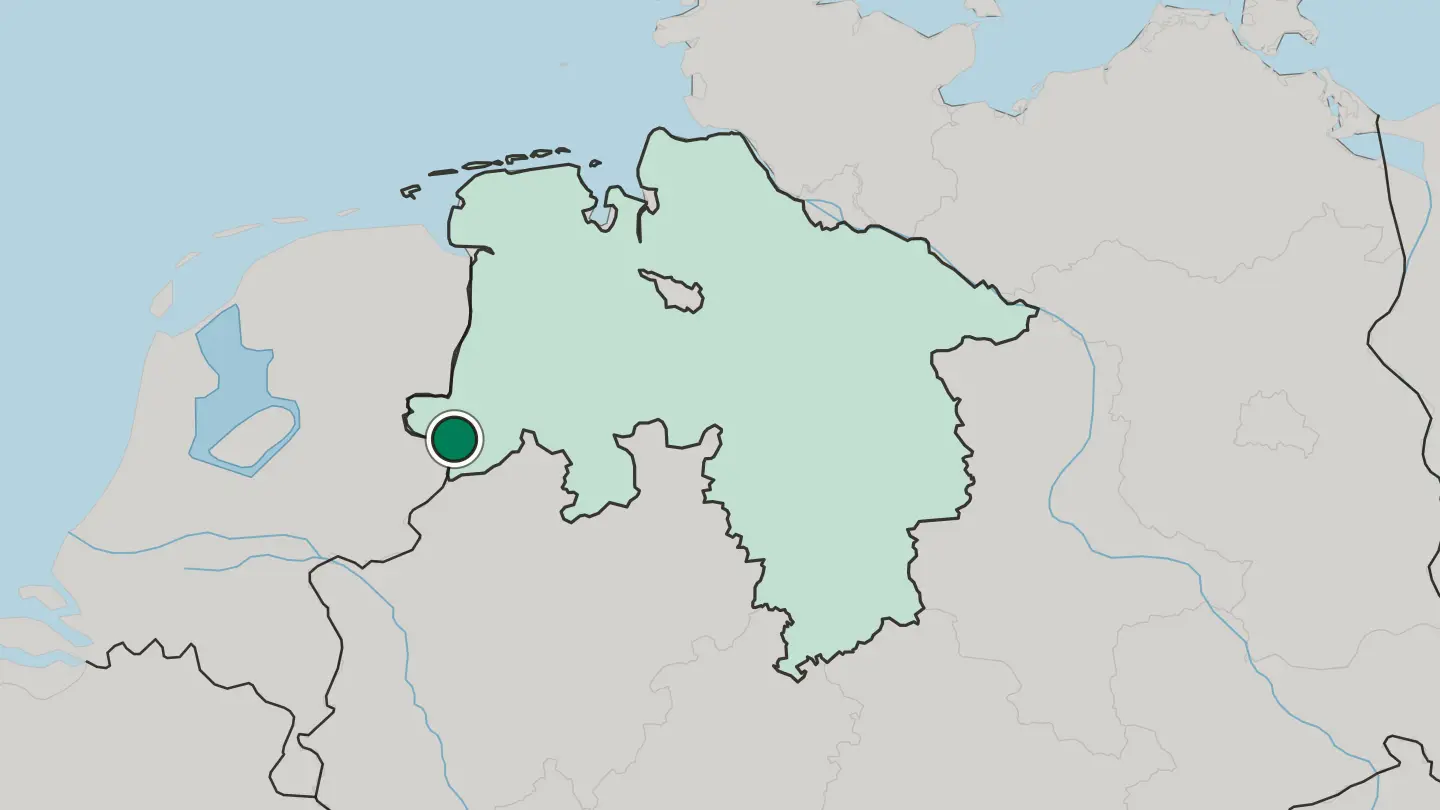
 Germany
Cuxhaven
Cuxhaven is a North Sea port and resort town at the mouth of the Elbe, with the Kugelbake beacon standing at its outermost point.Where to stay →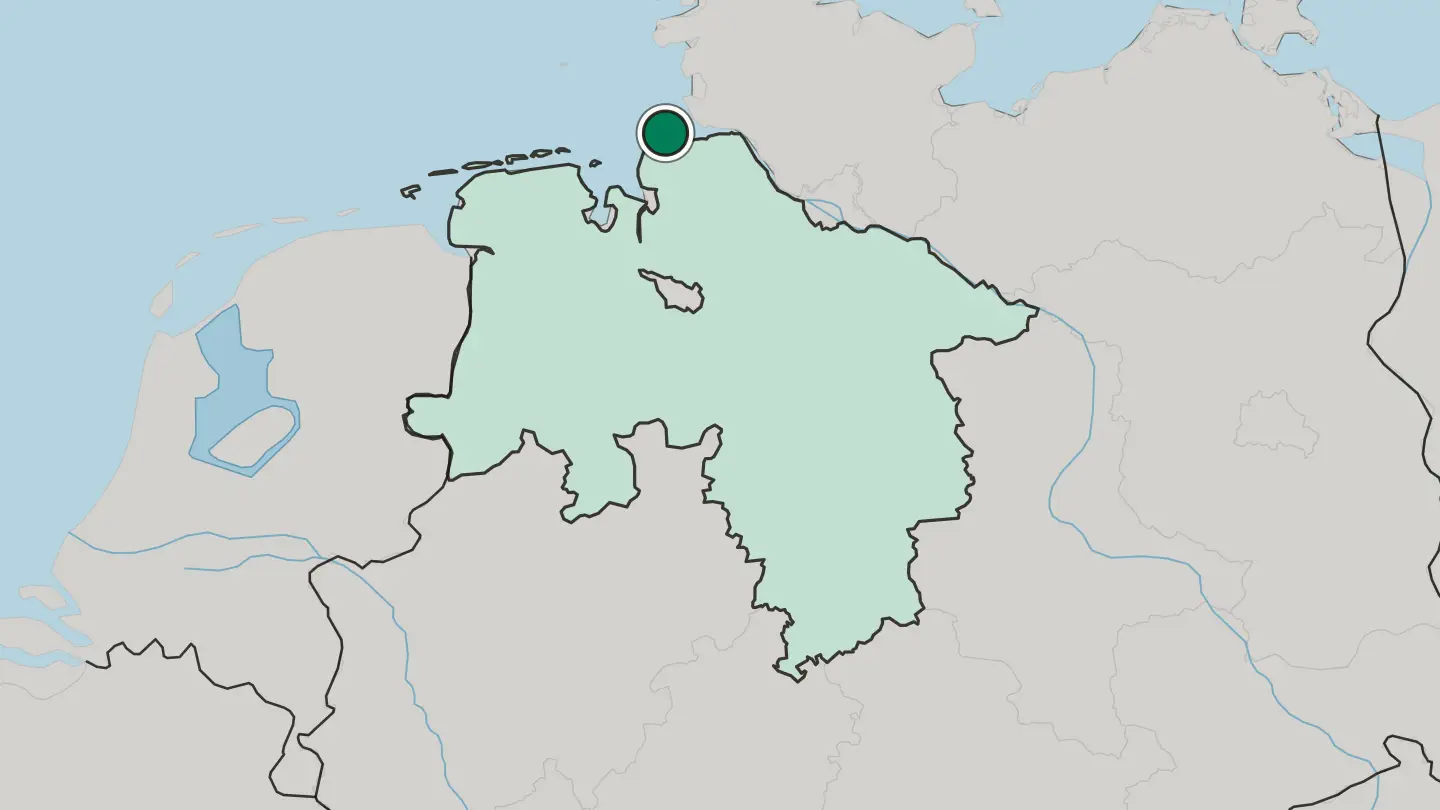
 Germany
Emden
Emden is the seaport of East Frisia, a brick town on the River Ems near the Netherlands border, cut through by canals and centred on the Große Kirche.Where to stay →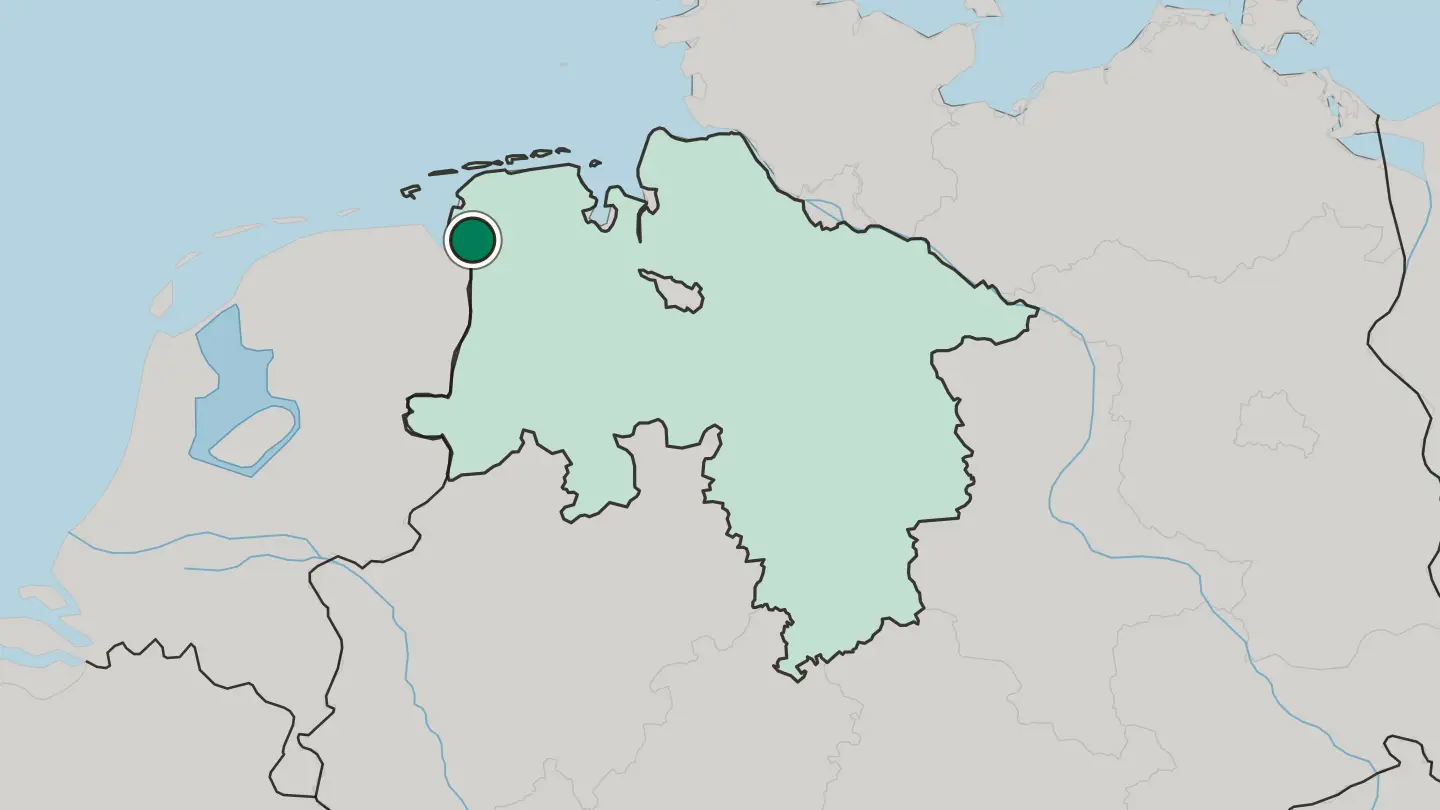 Germany
Lingen
Lingen (Ems) stands on the river Ems in the Emsland District of Lower Saxony, Germany, with Lingen Castle and the Pulverturm at its core.Where to stay →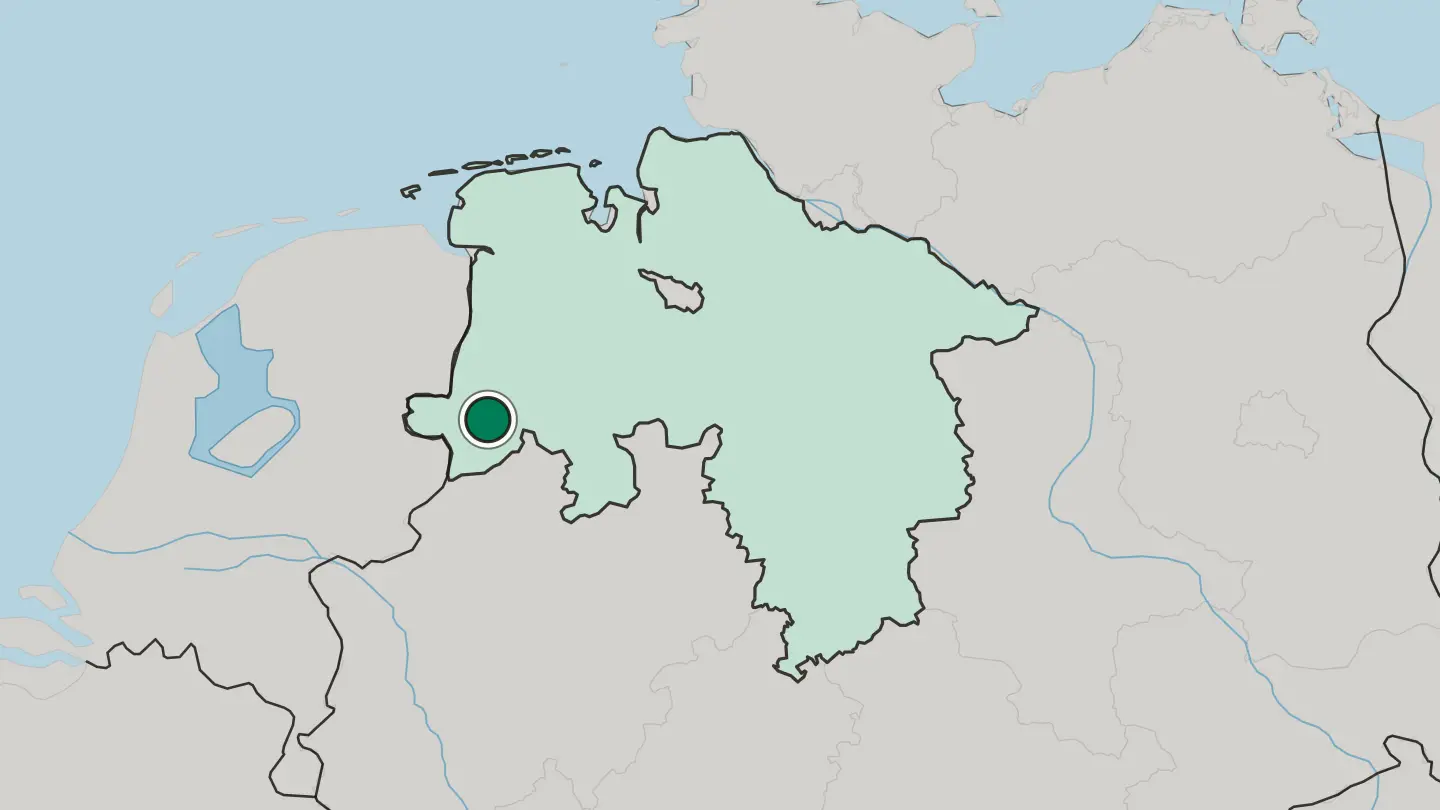
 Germany
Langenhagen
Langenhagen is a town of the Hanover district in Lower Saxony, marked by the Epiphaniaskirche, the Elia-Kirche and the Elisabeth Church.Where to stay →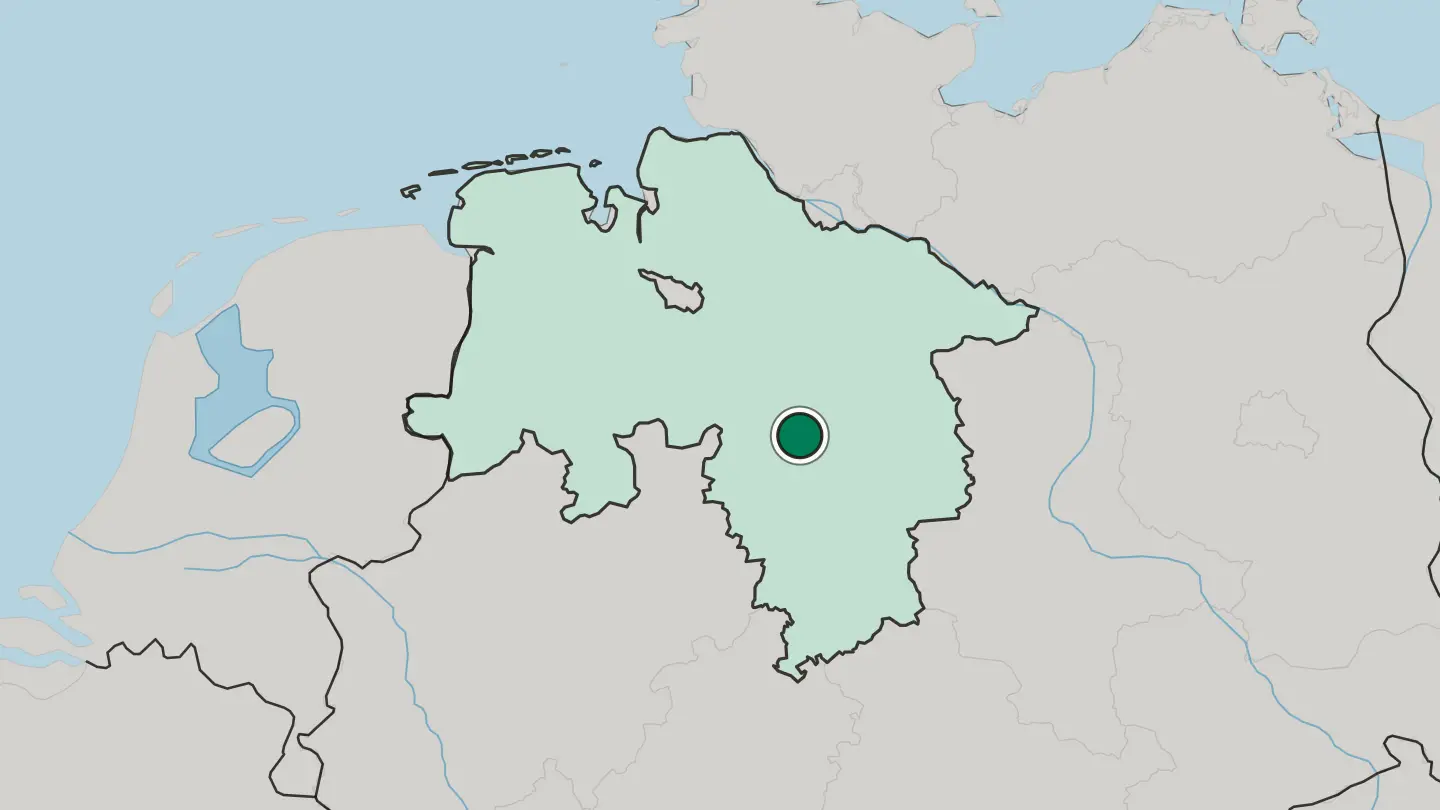
Hotel links are affiliate links: booking through them may earn us a commission, at no extra cost to you. It never affects how places are ranked. How this works
About Lower Saxony
What is Lower Saxony known for?
This is Germany's second-largest state by area, and it runs from tidal mudflats to wooded uplands. Hanover anchors it. The state capital hosts the world's largest trade-fair ground and the baroque Herrenhausen Gardens, and it sits on the river Leine near the middle of the state.
Off the northwest lie the East Frisian Islands and the Wadden Sea, while the Harz rises along the southeastern border with Saxony-Anhalt. Wolfsburg, built around Volkswagen, adds an industrial chapter that few other regions can claim.
Where is Lower Saxony?
Lower Saxony fills the northwest of Germany, the second-largest of the country's sixteen states by area. Most of it is flat. Three-quarters of the land belongs to the North German Plain, a low sweep of farmland, moor, and heath that tilts gently toward the sea.
The North Sea forms the entire northern edge. Off that coast lie the East Frisian Islands, a chain of barrier islands strung between the mouths of the Ems and the Weser, and between them and the mainland spread the tidal mudflats of the Wadden Sea. Rivers order the interior, nearly all of them running north.
The Weser rises where the Fulda and Werra meet at Hann. Münden and carries more than half the state's drainage down through the middle before reaching the sea near Bremerhaven. The Ems drains the west toward the Dollart, and the Elbe traces part of the eastern boundary.
Only the south breaks the flatness. There the Lower Saxon Hills and, further southeast, the Harz lift the ground toward Saxony-Anhalt, and the Wurmberg tops out at 971 metres as the highest peak lying wholly within the state. The Lüneburg Heath fills the northeast between the Weser country and the Elbe.
It is a land defined by water and edged by hills.
What is Lower Saxony like?
Lower Saxony wears its regional loyalties lightly stitched together. The state is young, assembled in 1946 from Hanover and three smaller lands, and a shared identity took decades to form over older attachments to Oldenburg, Brunswick, and East Frisia. Those older names still carry weight.
In the rural north and along the coast people speak Northern Low Saxon, a Low German dialect, and in the small Saterland corner Saterland Frisian survives as the last living form of East Frisian. Heritage sits in the towns. Half-timbered streets fill Goslar, Celle, and Hameln, the town that told the tale of the Pied Piper, and Braunschweig still keeps the lion monument that Henry the Lion raised there in the twelfth century.
Osnabrück carries its own weight in European history, one of the two cities where the Peace of Westphalia was signed to end the Thirty Years' War. Learning runs alongside the old stones. Göttingen's university has produced a long line of Nobel laureates in physics and mathematics, and its student life gives the south of the state a different rhythm.
Coast and hills each keep their own customs. The result reads less as one culture than as a federation of them, held together loosely under a single flag.
What is the history of Lower Saxony?
The state itself was born on 1 November 1946, when the British military government of occupied Germany merged the former Prussian Province of Hanover with the free states of Oldenburg, Brunswick, and Schaumburg-Lippe. Its roots run far deeper. Most of the territory had been the Kingdom of Hanover, tied to the British crown until Prussia absorbed it in 1866, and Braunschweig had been the seat of Henry the Lion's medieval duchy.
Hanover became the capital of the new state. Older kingdoms and duchies, one modern line drawn around them.
What is the climate of Lower Saxony?
The North Sea sets the terms. Along the coast and the East Frisian Islands the climate is temperate and maritime, damp and changeable, with rain spread through the year and no great swing between the seasons. Inland the weather grows a touch warmer and drier, and the sheltered south around the Harz sees the sharpest winters, where snow can settle on the higher ground above Goslar.
Sea breezes soften the coast year-round. Grey, mild, and wet more often than not.
How do you get to Lower Saxony?
Hanover is the main way in. Its airport carries most of the state's air traffic, and the city sits on the fast north-south rail line that links it to Berlin, Hamburg, and Frankfurt. Trains fan out from there to Braunschweig, Göttingen, Oldenburg, and the coast.
Reaching the East Frisian Islands means a short ferry across the Wadden Sea from mainland harbours like Norddeich. Roads run everywhere across the flat interior.
Common questions
What is the best area to stay in Lower Saxony?
Hanover: getting to know Lower Saxony for the first time. The East Frisian coast: North Sea beaches and mudflat walks. The Lüneburg Heath: walking the heather country. The Harz: hikers and winter visitors.
Good for
More regions in Germany
Updated September 2026