Russia
North Ossetia-Alania, Russia — Towns & Travel Guide
North Ossetia-Alania is a mountain republic of Russia on the northern flank of the Greater Caucasus, centred on Vladikavkaz.
Find your area →


Towns & cities in North Ossetia-Alania
One town here has its own guide — it links to where to stay.
 Russia
Vladikavkaz
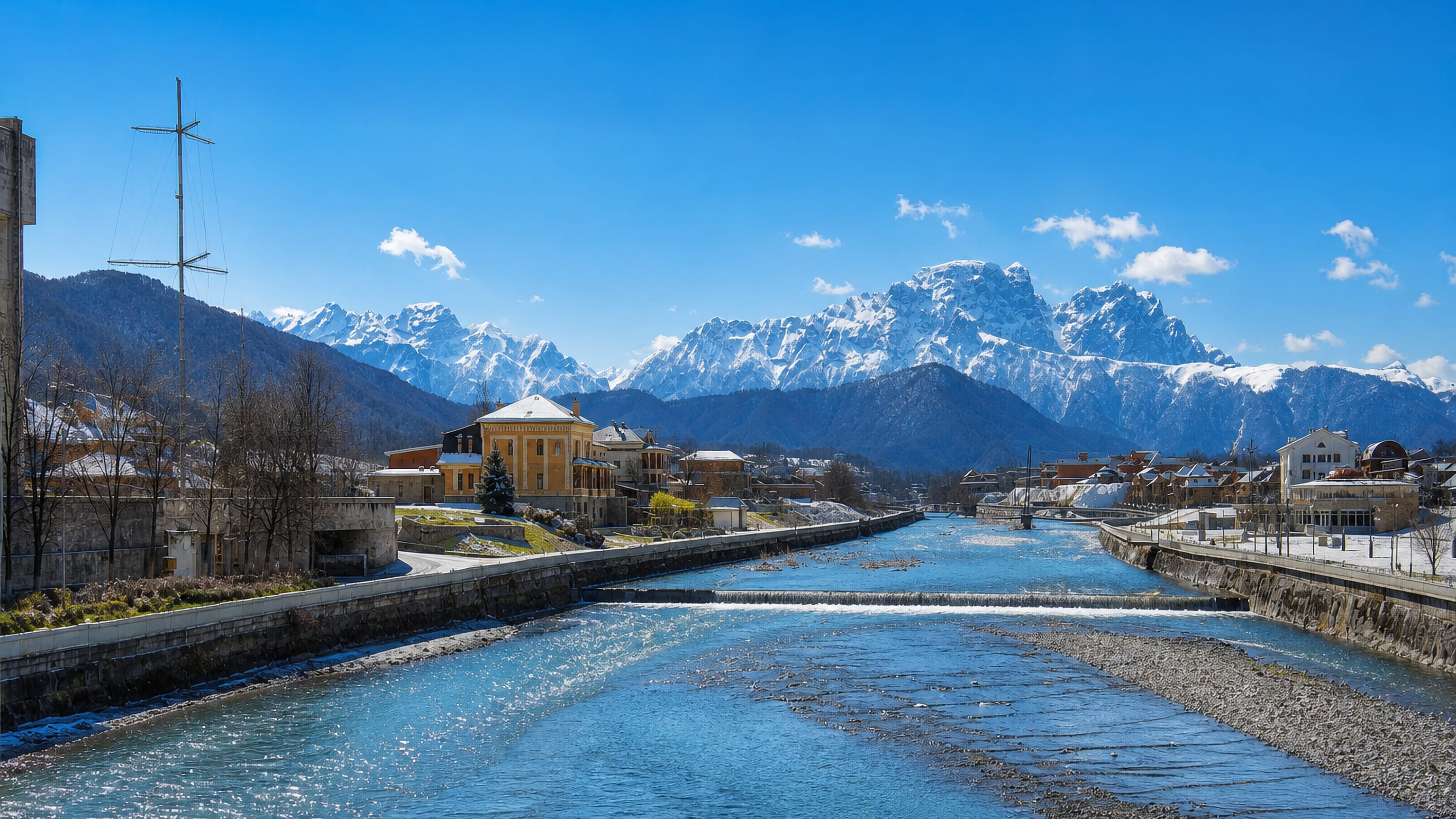
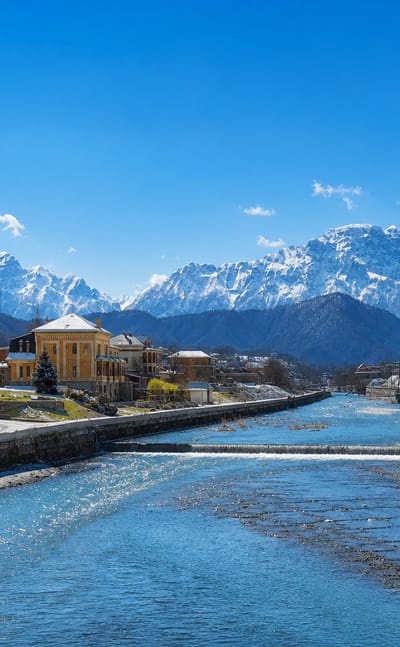
The Terek River runs from the Caucasus through Vladikavkaz, capital of North Ossetia-Alania, with the Mukhtarov Mosque and the Opera and Ballet Theater.Where to stay →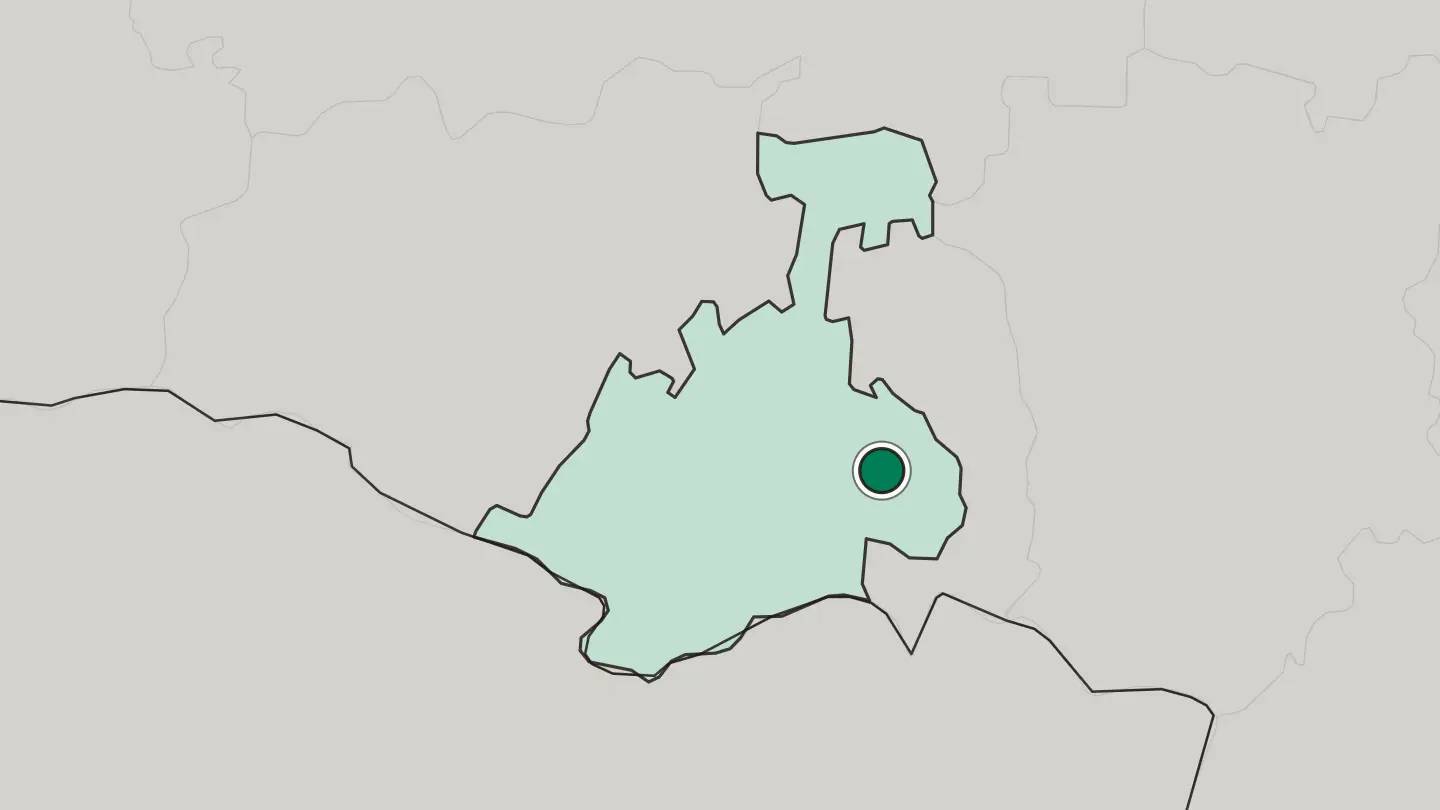
About North Ossetia-Alania
What is North Ossetia-Alania known for?
The Greater Caucasus gives North Ossetia-Alania its whole character. North Ossetia-Alania sits on the northern flank of the Greater Caucasus. Its southern edge climbs to the crest.
There Mount Kazbek marks the border with Georgia. Vladikavkaz, the capital, stands where the Terek River leaves the gorges for the plain. Deep valleys cut back into the range south of the city, and the necropolis of Dargavs, the Ossetian City of the Dead, fills one of them with stone crypts.
The people themselves are the other draw: the Ossetians, an Iranian people descended from the medieval kingdom of Alania.
Where is North Ossetia-Alania?
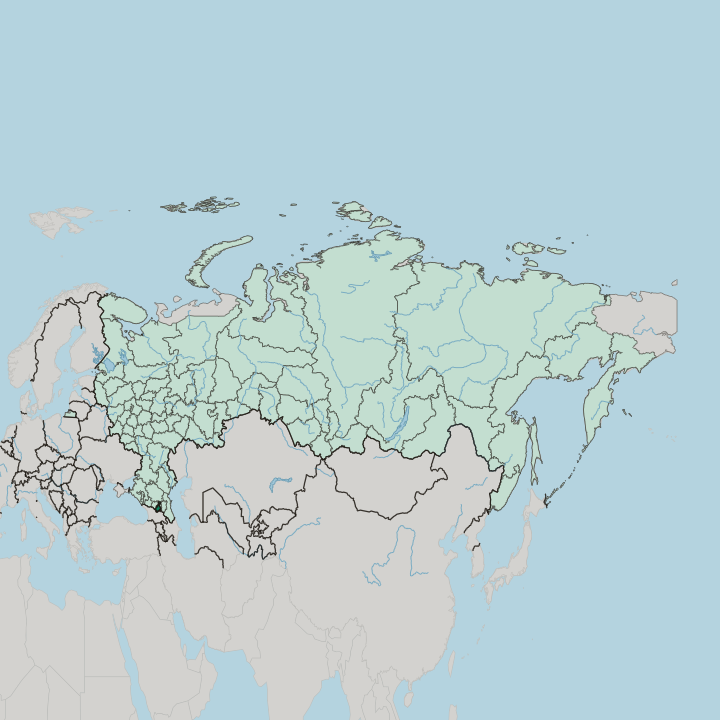
North Ossetia-Alania lies in the North Caucasus of southern Russia, on the northern flank of the Greater Caucasus range. The republic covers little ground. The land rises from a lowland plain in the north to a wall of high peaks along its southern edge, where the crest of the Greater Caucasus forms the border with Georgia.
Mount Kazbek stands on that watershed, one of the tallest summits in the whole range. Georgia lies to the south across the mountains, and four Russian neighbours ring the rest of it. Kabardino-Balkaria borders the republic to the west, Stavropol Krai to the north, Chechnya to the east and Ingushetia to the southeast.
The Terek River is the thread that ties the two halves together, running down out of the gorges past Vladikavkaz and out onto the plain toward the distant Caspian Sea. Behind the first ridge, long valleys reach south into the range. Tsey climbs to glaciers below the peaks near Mount Kazbek, Digoria opens through a slot canyon in the far west, and the Karmadon and Fiagdon valleys hold old stone villages and the crypts of Dargavs.
That contrast, flat farmland below and glaciated peaks above within a short drive, is the shape of the republic.
What is North Ossetia-Alania like?
The Ossetians set the republic apart from its neighbours. They are an Iranian people, not a Caucasian one, and they trace their line back through the medieval kingdom of Alania to the Scythians and Sarmatians of the steppe. Their tongue reflects that.
Ossetian is an eastern Iranian language, split between the Iron dialect of the east and the Digor dialect of the west, and it is unlike anything spoken in the mountains around it. Faith here runs along two channels at once. Most Ossetians belong to the Orthodox church, a legacy of the missionaries Byzantium sent to Alania more than a thousand years ago, yet many also keep the old Uatsdin, the indigenous belief the people call the True Faith, with its shrines and its ritual feasts on the high ground above the villages.
The Nart sagas carry the same inheritance. This cycle of tales about a race of giant heroes is shared across the Caucasus but rooted in the Ossetian world, and it survives in song and story. Stone speaks too.
The mountain valleys are studded with medieval towers, family shrines and the crypt-city of Dargavs, where the dead of the plague years were laid in beehive tombs. Hospitality is the daily face of all this, and a guest at an Ossetian table is treated as a gift.
What is the history of North Ossetia-Alania?
The story begins on horseback. Alans, an Iranian people off the steppe, settled the North Caucasus and by the ninth century had built the kingdom of Alania, a Christian state that controlled the mountain passes to Georgia and dealt on equal terms with Byzantium. Mongol armies shattered it in the thirteenth century, and the survivors retreated up into the gorges, where the modern Ossetians took shape.
Russia arrived later, absorbing Ossetia in the closing decades of the eighteenth century and founding Vladikavkaz as a fortress on the Terek in 1784 to guard the road south. Soviet rule made the region an autonomous republic, and in 1993 it became North Ossetia-Alania within the Russian Federation, adding the ancient name of the kingdom to its own.
What is the climate of North Ossetia-Alania?
The climate splits with the land. On the northern plain around Vladikavkaz it is moderately continental, with cold winters near freezing and warm summers that climb into the mid-twenties by late July. Climb toward the peaks and the weather turns on its head.
Rain and snow gather on the southern ranges, where the peaks above Tsey hold more than a metre of precipitation a year and glaciers persist under the summits near Mount Kazbek. The valleys turn to a long ski season in winter and cool green meadows in the walking months. Weather in the gorges shifts fast, and a clear morning can close over by afternoon.
How do you get to North Ossetia-Alania?
For most visitors the journey begins in the air. Beslan Airport, a short drive north of Vladikavkaz, is the republic's air gateway and links it to Moscow and other Russian cities. The overland alternative is old and dramatic: the Georgian Military Road runs south from Vladikavkaz up the valley of the Terek, threading the Darial Gorge where the river cuts the border into Georgia beneath Mount Kazbek.
Rail reaches Vladikavkaz from the north. From the capital, roads climb into each of the mountain valleys, and buses and shared cars are the usual way up to Tsey and Digoria.
Common questions
What is the best area to stay in North Ossetia-Alania?
Vladikavkaz: a first foothold in the republic.
Good for
More regions in Russia
Updated September 2026