Saudi Arabia
Al-Qassim Region, Saudi Arabia — Towns & Travel Guide
Al-Qassim is Saudi Arabia's date-country: a green farming province on the Najd plateau, split by the long Wadi al-Rummah.
Hotel links are affiliate links: booking through them may earn us a commission, at no extra cost to you. It never affects how places are ranked. How this works


Towns & cities in Al-Qassim Region
Pick a town or city — each links to where to stay.
 Saudi Arabia
Buraydah
Buraydah is a city of central Saudi Arabia on the Najd plateau, capital of the Qassim region, an old caravan town famed for its dates and camel market.Where to stay →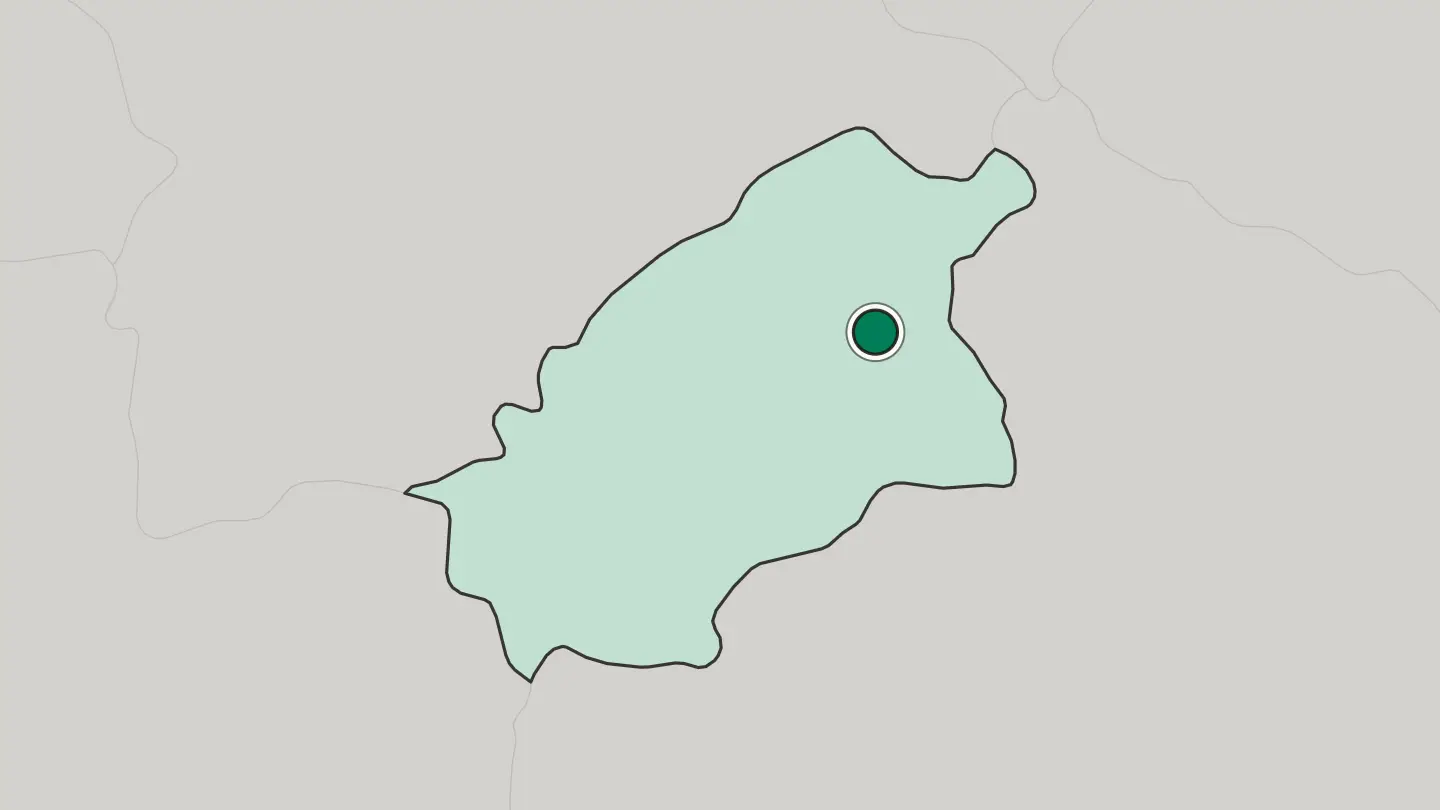 Saudi Arabia
Ar Rass
Ar Rass is a city of Al-Qassim Province in Saudi Arabia, southwest of Buraidah, marked by Al Shinana Tower and the Jadeah Museum.Where to stay →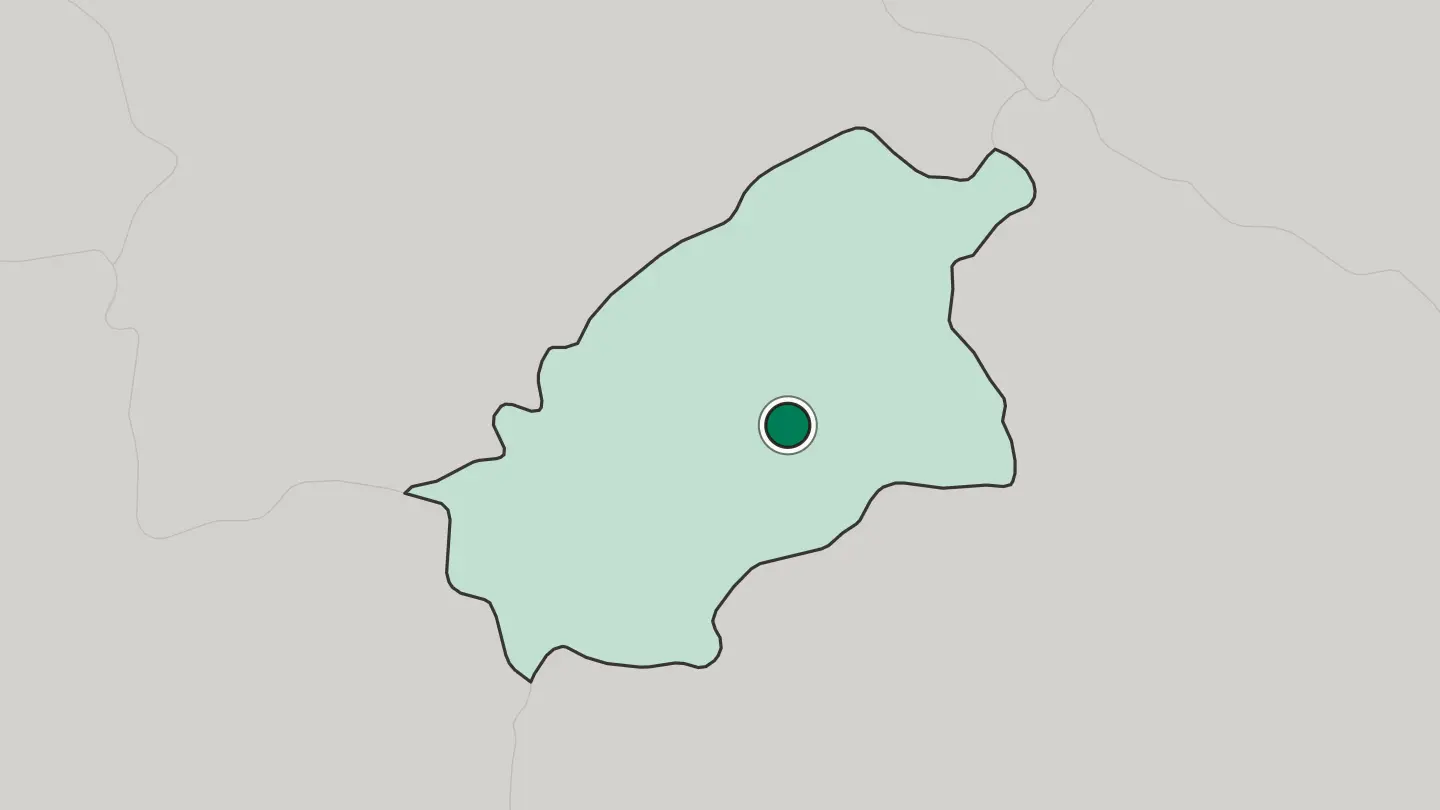
Hotel links are affiliate links: booking through them may earn us a commission, at no extra cost to you. It never affects how places are ranked. How this works
About Al-Qassim Region
Dates, above all.
What is Al-Qassim Region known for?
Al-Qassim sits near the geographic centre of the Arabian Peninsula, on the Najd plateau, and its irrigated palm groves make it one of the breadbaskets of Saudi Arabia. More than eight million date palms grow here, and Buraydah, the capital, runs a date market that draws buyers from across the Kingdom every autumn. Unaizah, the second city, is known instead for its restored old souq and Najdi mud-brick heritage.
Where is Al-Qassim Region?
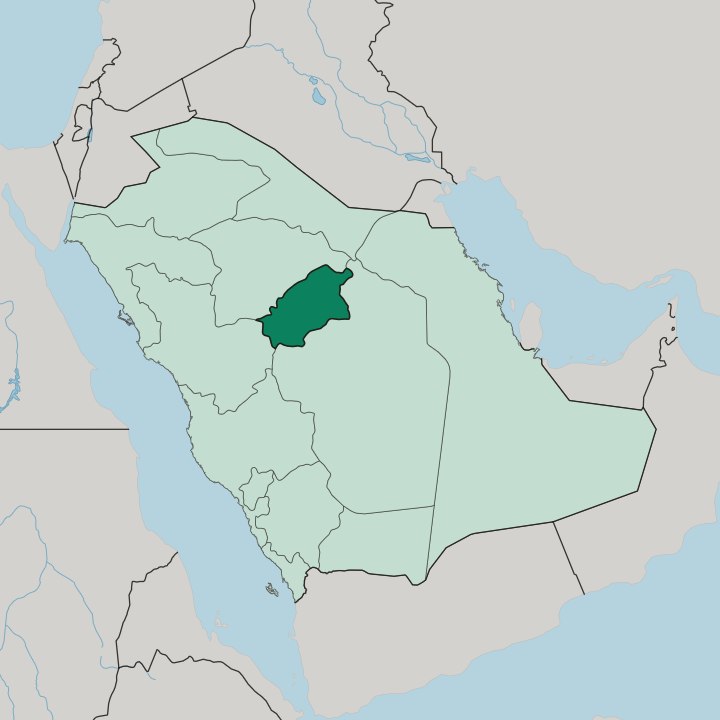
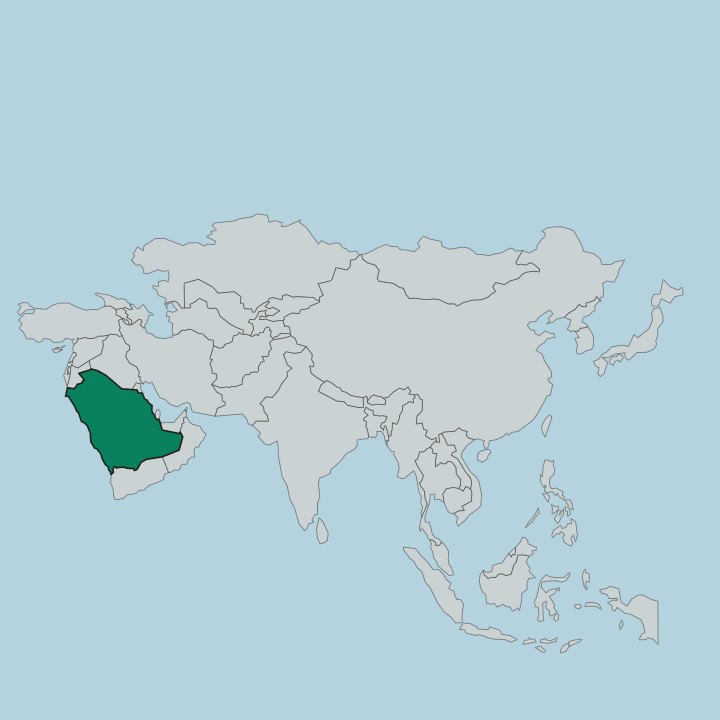
Al-Qassim sits at the heart of Saudi Arabia, on the Najd plateau near the geographic centre of the Arabian Peninsula. The land is high and dry. It lies north-west of Riyadh, the national capital, roughly a three-hundred-kilometre drive across open desert on the Najd tableland.
What defines the province is a single great watercourse: the Wadi al-Rummah, one of the longest river valleys on the whole Arabian Peninsula, running close to six hundred kilometres and cutting across Al-Qassim from the west toward the north-east before it fades into the dunes. The wadi is dry for most of the year and floods only after rain, but its broad basin is why anything grows here at all. Along its course lie the towns.
Buraydah stands beside it as the capital, Unaizah a short way south-west, Ar Rass out toward the desert margin. Between the settlements the country is a mix of sand, gravel plain, and the green thread of irrigated palm groves that follow the old channel. Away from the water it turns quickly to open desert.
This is inland Arabia at its most central, far from any coast.
What is Al-Qassim Region like?
Al-Qassim carries a reputation across Saudi Arabia as a conservative, deeply traditional heartland of the Najd. Farming shapes the calendar. When the harvest comes in, Buraydah's date carnival turns into the province's defining event, farmers and traders lining up more than forty varieties of Qassimi dates under one roof.
It runs for weeks. Food ties into all of it, from the fresh dates themselves to kleija, the spiced date-filled biscuit that Buraydah celebrates with its own festival. Unaizah tells the older story of the region.
The city was a stop for pilgrim caravans coming from Mesopotamia and Persia on the long road to Makkah, and a nineteenth-century traveller admired its architecture enough to call it the 'Paris of Najd'. Its restored Souq Musawkaf still fills in the evenings, when people gather over coffee, and the mud-built Al-Bassam Heritage House shows how the merchant families of old Najd once lived. Arabic is the language throughout, spoken in the plain-spoken Najdi dialect of the interior.
Poetry runs deep in that dialect. This is a land that measures itself by its groves and its markets, not by any coast or capital.
What is the history of Al-Qassim Region?
Al-Qassim's importance is old, and it comes from the road. Long before the Kingdom, the province lay on the caravan routes that carried trade and pilgrims across the Najd toward Makkah, and Unaizah in particular grew as a stopping point for travellers from Mesopotamia and Persia. Water and position made it.
Its towns are named in pre-Islamic Arabic poetry, and its merchants ranged far beyond the desert, so that Buraydah and Unaizah built up a trading class out of proportion to their size. The province was absorbed into Saudi Arabia in the early twentieth century and became one of the Kingdom's thirteen provinces.
What is the climate of Al-Qassim Region?
Al-Qassim has a hot desert climate, and the summers are punishing. From roughly June onward the days over Buraydah run well past forty degrees under a clear inland sky, with almost no rain to break the heat. Winters flip the picture.
Nights on the plateau can fall close to freezing, cold enough for frost under the same cloudless skies, while the days stay mild. What little rain the province gets arrives between late autumn and spring, and it is this scant, seasonal downpour that briefly fills the Wadi al-Rummah and feeds the palm groves for the year ahead.
How do you get to Al-Qassim Region?
Most travellers reach Al-Qassim through Buraydah. The provincial capital has the region's airport, Prince Naif bin Abdulaziz International, a short way north-west of the city and the main way in from the rest of Saudi Arabia. The other route is the road.
Al-Qassim lies a three-hundred-kilometre drive north-west of Riyadh across the open Najd, a straight run of desert highway that many make by car. From Buraydah the roads fan out to Unaizah, Ar Rass, and the smaller towns along the Wadi al-Rummah.
Common questions
What is the best area to stay in Al-Qassim Region?
Buraydah: the date markets and the regional airport. Unaizah: old Najdi town heritage over the capital's bustle. Ar Rass: a quieter stop out on the wadi.
More regions in Saudi Arabia
Updated September 2026