Thailand
Changwat Lop Buri, Thailand — Towns & Travel Guide
Changwat Lop Buri is a province of central Thailand where Khmer temples, a royal palace, and free-roaming macaques share one old railway town.
Hotel links are affiliate links: booking through them may earn us a commission, at no extra cost to you. It never affects how places are ranked. How this works


Towns & cities in Changwat Lop Buri
One town here has its own guide — it links to where to stay.

 Thailand
Lop Buri
Lop Buri is a historic provincial capital about 150 km north-east of Bangkok, a Chao Phraya Basin town with Khao Chan Daeng rising behind it.Where to stay →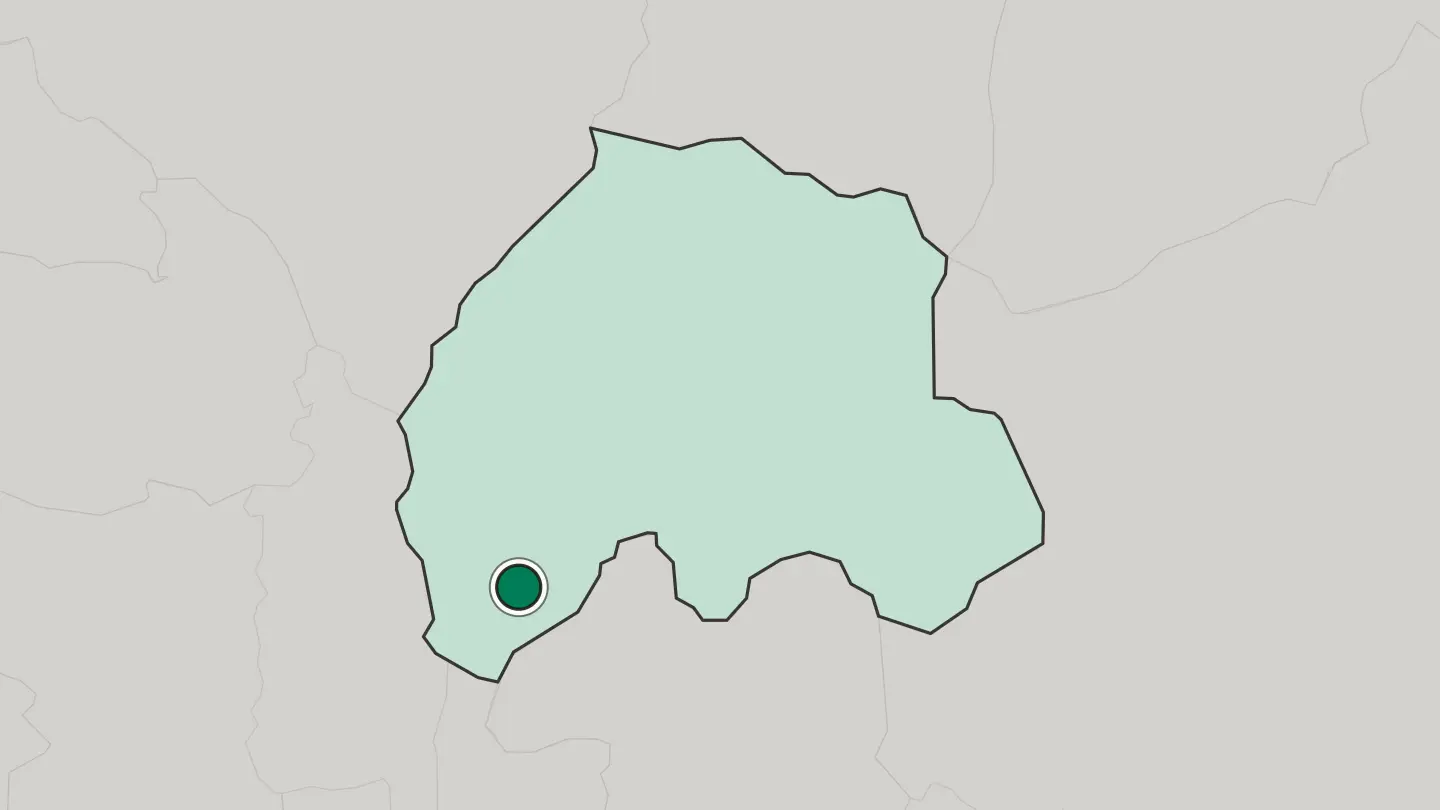
Hotel links are affiliate links: booking through them may earn us a commission, at no extra cost to you. It never affects how places are ranked. How this works
About Changwat Lop Buri
Monkeys made Lop Buri famous.
What is Changwat Lop Buri known for?
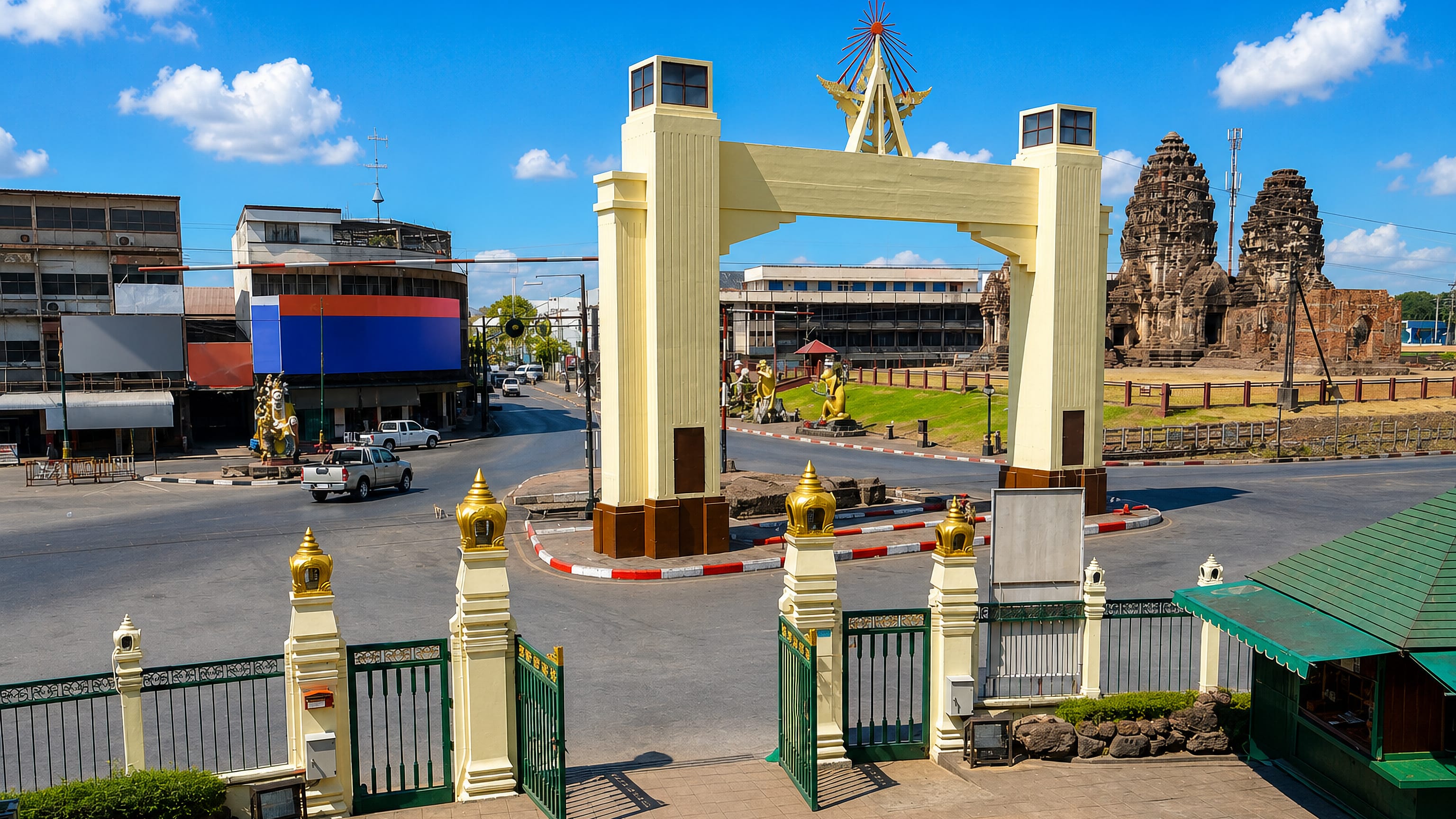
Long-tailed macaques overrun the old town, clambering across the three-spired Khmer sanctuary of Phra Prang Sam Yot and the nearby San Phra Kan shrine, and every November the town lays out a fruit banquet in their honour. Beyond the monkeys, this is one of Thailand's deepest layers of history, from the Lavo Kingdom through Khmer rule to King Narai, whose palace still stands behind the town walls. Rail travellers know it as the stop where trains slow past ruins.
Where is Changwat Lop Buri?
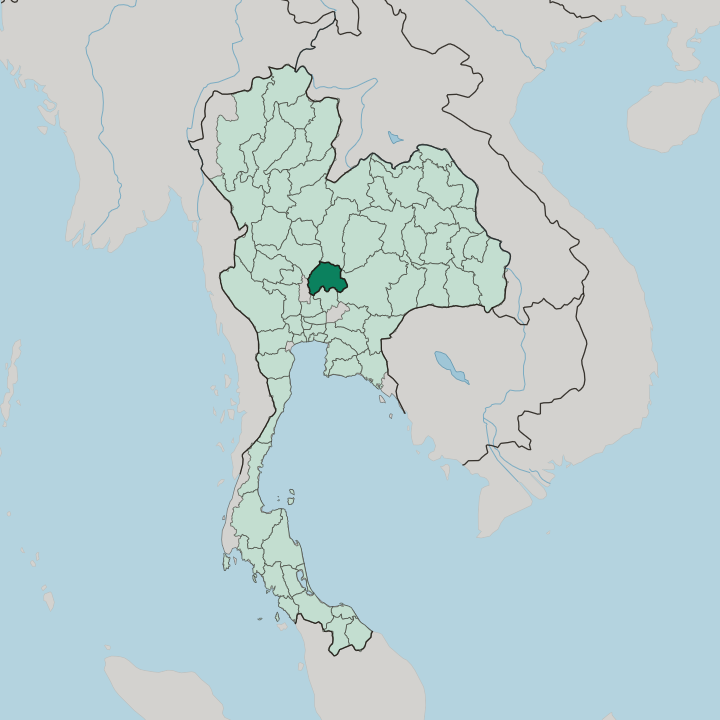
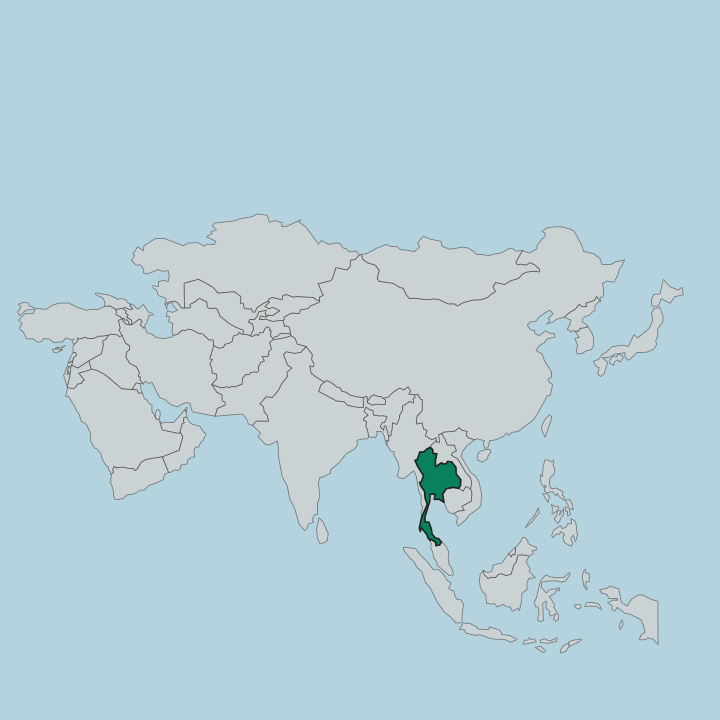
Changwat Lop Buri sits in central Thailand, on the east side of the Chao Phraya valley. Three rivers shape it. The Lopburi River marks the western side and threads past the old capital, the Pa Sak River drains the eastern uplands, and the wide Chao Phraya keeps to the plain west of the province, so the lowlands here are flat, wet paddy country cut by irrigation canals.
Move east and the ground changes. The plains give way to the foothills of the Phetchabun Mountains, the range that walls the province off from the Khorat Plateau beyond. Up in that broken country the Pa Sak was dammed to form the Pa Sak Jolasid Dam, the largest reservoir in central Thailand, crossed by a railway causeway that seems to float when the water runs high. Bangkok lies about 150 km to the south-west, close enough for a day trip yet far enough that the province keeps its own rhythm.
Six provinces close in around Lop Buri, with Saraburi and Sing Buri to the south and west, Nakhon Sawan across the north-west, the eastern districts leaning toward Nakhon Ratchasima, and Phetchabun up to the north. Saraburi lies to the south and Sing Buri to the west, Nakhon Sawan spreads across the north-west, and the eastern districts climb toward Nakhon Ratchasima, with Phetchabun province off to the north. Eleven districts make up the province.
The capital, Lop Buri, anchors the south-west near the river confluence, while the sunflower farms and reservoirs spread across Phatthana Nikhom to the east. It is a province of two halves, plain and hill.
What is Changwat Lop Buri like?
Two things define daily life here: the monkeys and the past. Long-tailed macaques hold the old town as if by ancient right, lounging on the laterite towers of Phra Prang Sam Yot and swinging along the wires above San Phra Kan, and each November the townspeople repay them with the Monkey Buffet Festival, piling fruit and sticky rice into pyramids for the troop. It is equal parts devotion and spectacle.
Layered beneath the monkeys is a startling depth of history. Khmer builders raised the province's oldest prangs, and in the 17th century King Narai turned the town into a second royal seat, receiving French envoys inside walls that still carry a European accent. His Greek minister, Constantine Phaulkon, lived and fell here, and the ruins of Ban Vichayen recall that brief opening to the wider world.
The province is also an army town. Artillery, aviation and special-forces units have long been garrisoned around the capital, giving it an orderly, uniformed character unusual for provincial Thailand. Faith runs through all of it, from working Buddhist wat to the Brahmin shrine of San Phra Kan.
Come December, the mood shifts outdoors, as fields of sunflowers open across the eastern districts. Old stones, bold monkeys, and open farmland share one province.
What is the history of Changwat Lop Buri?
Few Thai towns reach back so far. The site was Lavo, capital of the Lavo Kingdom, a Mon polity of the Dvaravati era that flourished long before the Thai kingdoms formed. Khmer power absorbed it next, and the great empire at Angkor left the province its laterite prangs.
Its second act came under Ayutthaya, when King Narai rebuilt the town as an alternative capital in the 17th century and welcomed embassies from Persia and France. The court left with him. After his death the palace fell quiet, and Lop Buri slept until a modern revival.
What is the climate of Changwat Lop Buri?
Lop Buri runs hot. Its climate is tropical savanna, split into three clear seasons. Cool, dry months settle in from November, when nights on the plain can turn surprisingly chilly and the sunflowers open.
Then the heat builds through April, the fiercest month, before the south-west monsoon breaks in May and rains sweep the paddy country into October. The wet season is warm rather than cold. Most of the year's rain falls in those months, leaving the reservoirs behind the Pa Sak Jolasid Dam brim-full for the dry season ahead.
How do you get to Changwat Lop Buri?
Most visitors come up from Bangkok. The northern railway runs straight to Lop Buri, and the ride takes only a couple of hours, ending with the celebrated moment when the train eases past Phra Prang Sam Yot in the heart of the old town. Trains carry on north toward Chiang Mai from here.
By road it is the Phahonyothin highway, with frequent buses from the capital. The airport lies south, in Bangkok. From there the train is the pleasure; the bus is the shortcut.
Common questions
What is the best area to stay in Changwat Lop Buri?
Lop Buri old town: temple-ringed heritage on foot. Lop Buri new town: modern rooms with a pool near the army camps. Phatthana Nikhom: sunflower season by the Pa Sak Jolasid Dam. Chai Badan: the eastern road into the Phetchabun foothills.
Good for
More regions in Thailand
Updated September 2026