Thailand
Changwat Chiang Mai, Thailand — Towns & Travel Guide
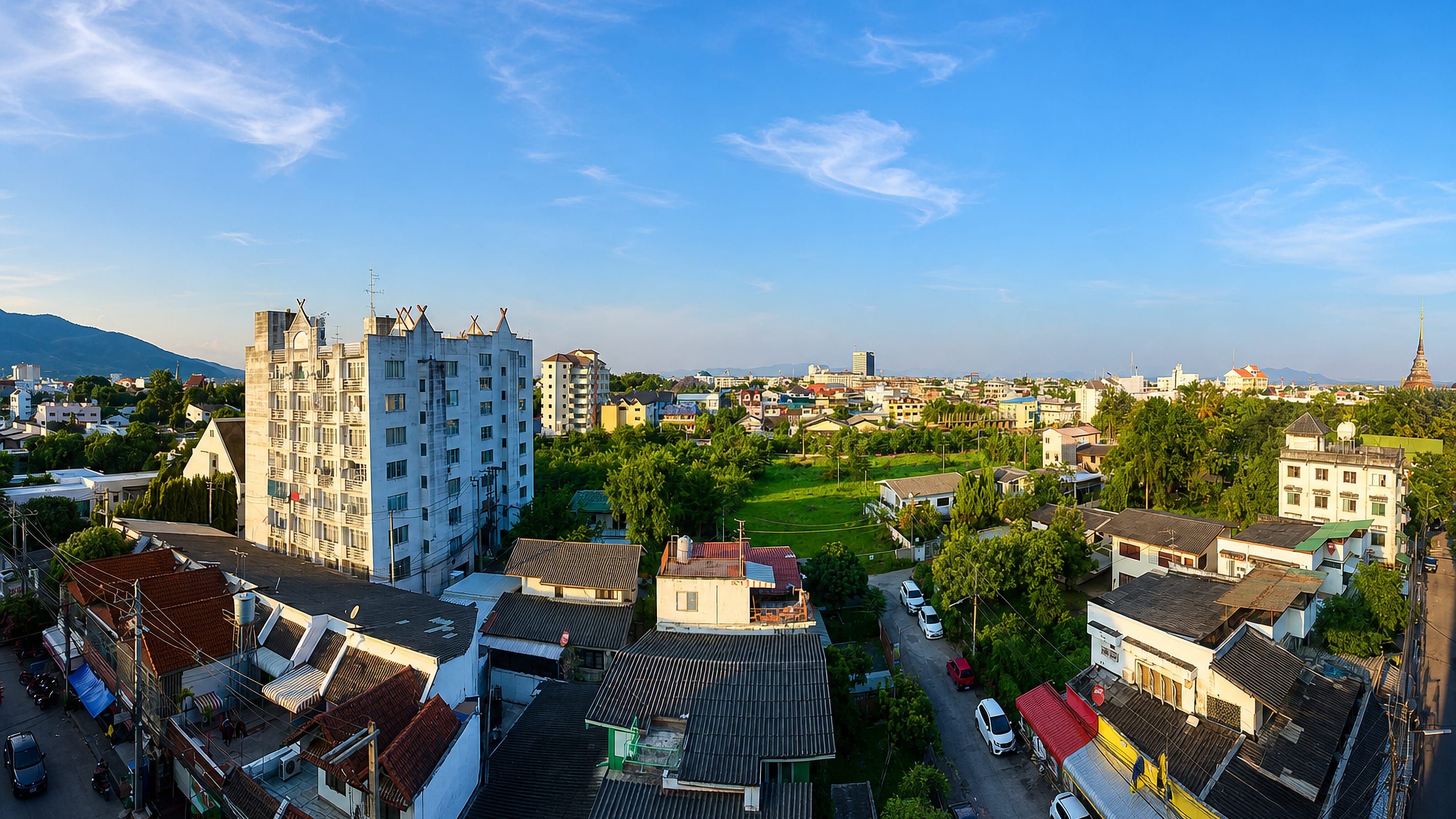
Changwat Chiang Mai fills the forested mountains of northern Thailand, ringing the old Lan Na capital of Chiang Mai near the Myanmar border.
Hotel links are affiliate links: booking through them may earn us a commission, at no extra cost to you. It never affects how places are ranked. How this works


Towns & cities in Changwat Chiang Mai
One town here has its own guide — it links to where to stay.
 Thailand
Chiang Mai
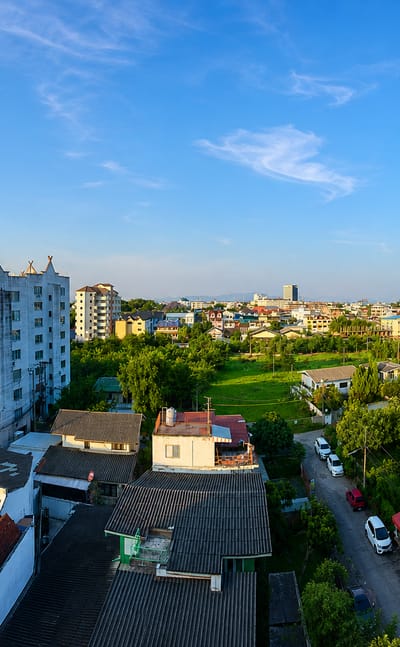
Mountains ring the plain around Chiang Mai, the largest city of the Thai highlands and capital of Chiang Mai province, founded in 1201 as the Lanna seat.Where to stay →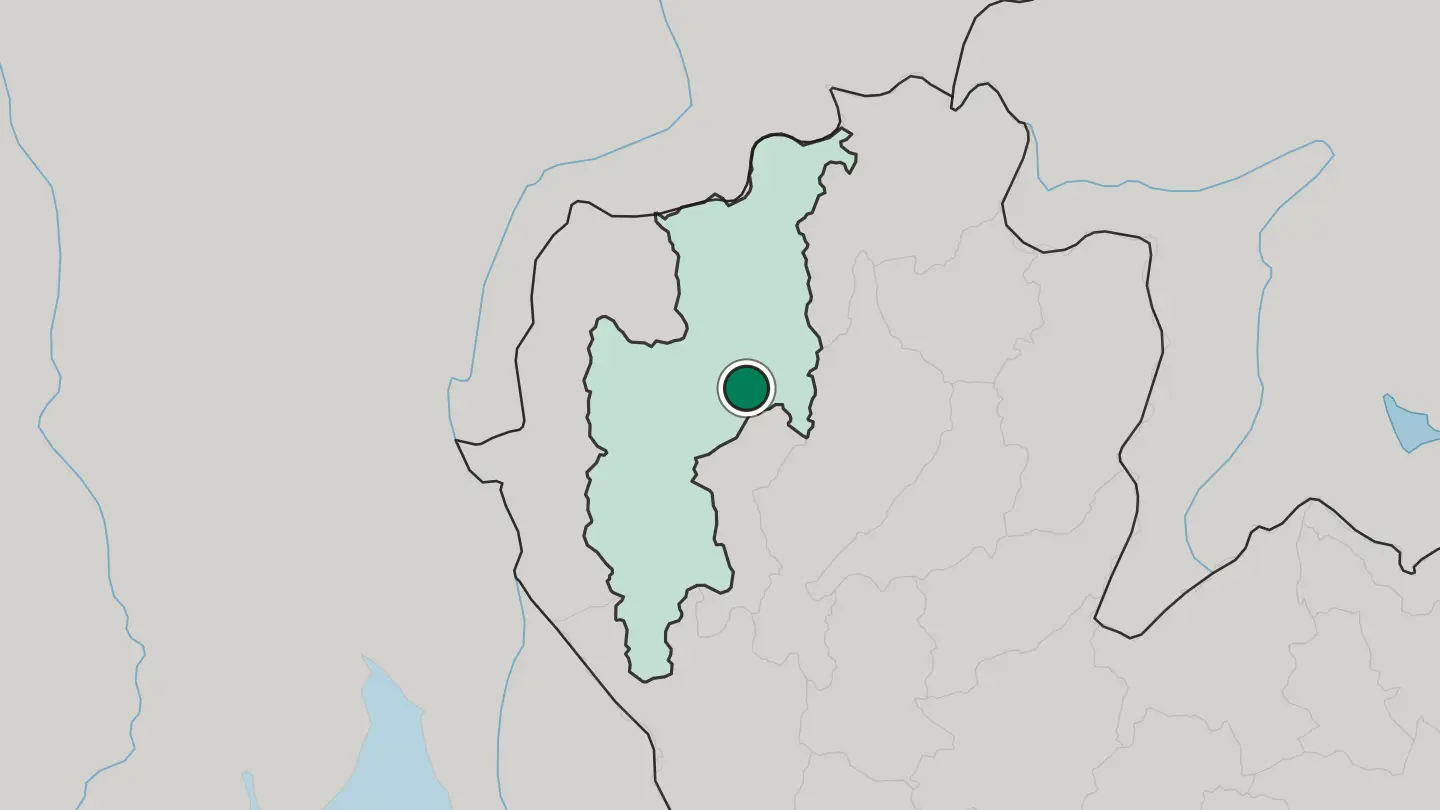
Hotel links are affiliate links: booking through them may earn us a commission, at no extra cost to you. It never affects how places are ranked. How this works
About Changwat Chiang Mai
The north announces itself here.
What is Changwat Chiang Mai known for?
Chiang Mai, the walled former capital of Lan Na, anchors a province of forested ridges, temple-topped peaks, and river valleys that run down toward the central plain. Doi Inthanon rises in the south, the highest mountain in Thailand. Hill tribes, night markets, and the lantern-lit festivals of Yi Peng draw travellers up from Bangkok.
Thailand has seventy-odd provinces, and this is the one people mean by 'the North'.
Where is Changwat Chiang Mai?
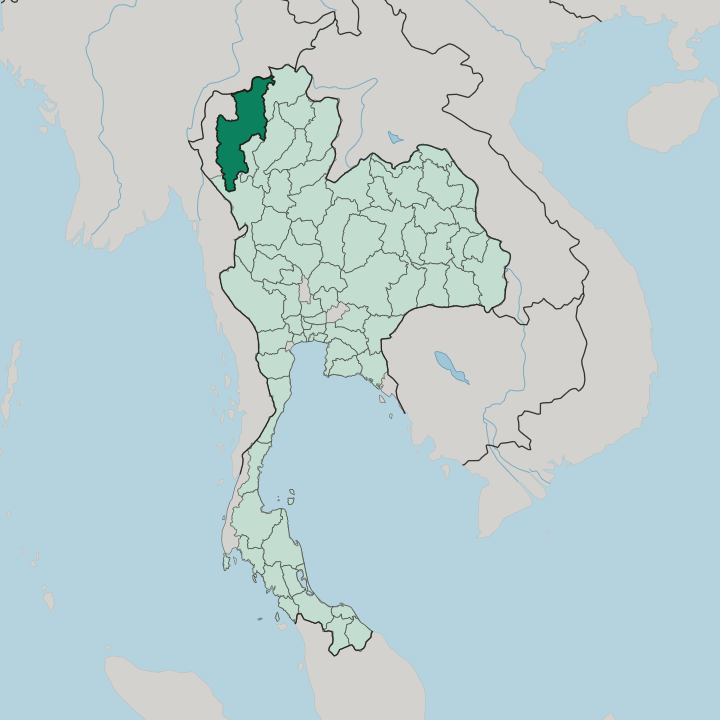
Changwat Chiang Mai spreads across the mountains of northern Thailand. It is the largest province in the north, and by land area one of the largest in the whole country, a broad sweep of forested ranges folded between narrow river valleys. The ridges run mostly north to south.
Doi Inthanon, the highest mountain in Thailand, crowns the Thanon Thong Chai range in the province's south. Between the ranges winds the Ping River, the valley that has carried life and trade through the north for centuries and still feeds the Chao Phraya far downstream. Borders here are mostly mountains.
The long ranges of Shan State, in Myanmar, close off the north and west, so the province meets the international frontier in mountain country. Chiang Rai lies to the northeast, Lamphun to the south, and Mae Hong Son over the ranges to the west. Chiang Mai, the province's hub, sits in a wide basin where the Ping valley opens out. From that basin the land climbs away in every direction, toward the pine forests, the hill-tribe villages, and the high border peaks that ring the province.
What is Changwat Chiang Mai like?
Chiang Mai keeps a culture of its own. Six centuries as the seat of Lan Na left the province with its own temple architecture, its own script and cooking, and a spoken language, Northern Thai, that locals still call Kham Mueang. The wats are everywhere.
Gilded, tiered roofs rise over the old walled town, and above the city Wat Phra That Doi Suthep sits on the flank of Doi Suthep. Monks climb its long stairway at dawn. The northern kitchen shows the same separateness, in dishes like khao soi, the coconut curry noodle.
Festivals mark the northern year. The lantern festival of Yi Peng floats thousands of paper lights into the November sky. Craft runs deep in the villages around the city.
Bo Sang paints its umbrellas, San Kamphaeng weaves silk, and silversmiths still work the old quarter by hand. Up in the hills, Hmong, Karen, and other peoples keep customs and dress apart from the lowland Thai world. That mix of temple, craft, and hill culture is what people come north to find.
What is the history of Changwat Chiang Mai?
The province grows out of one city's story. King Mangrai founded Chiang Mai in 1296 as the capital of Lan Na, laying it out on the Ping River plain after he absorbed the older Mon kingdom of Hariphunchai at Lamphun. Lan Na ruled the north for centuries.
Burmese armies took the kingdom in the sixteenth century and held it for roughly two hundred years, until Chiang Mai, backed by Siam, drove them out and returned as a tributary state. Only later did the north fold fully into the Thai kingdom as a province.
What is the climate of Changwat Chiang Mai?
The north keeps three seasons. From November into February a cool, dry spell settles over the valleys, with crisp mornings. Then comes the heat.
March through May turns hot and hazy, when farmers burn the stubble and the mountains vanish behind a smoky pall. The southwest monsoon washes the air clean from May to October, greening the hills and swelling the Ping River. Height tempers everything.
Chiang Mai stays milder than the plains, and on Doi Inthanon the highest ground can brush frost on a clear winter night.
How do you get to Changwat Chiang Mai?
Most arrivals fly in. Chiang Mai International Airport is northern Thailand's major airport, linking the city to Bangkok and cities across Asia a short ride from the old town. The railway climbs up from Bangkok too.
The Northern Line ends at Chiang Mai railway station after an overnight run through the central plains, with sleeper cars for the long haul. Roads make the same climb. Within the province, buses and rented trucks wind up the mountain routes toward Doi Suthep, Doi Inthanon, and the villages beyond.
Good for
More regions in Thailand
Updated October 2026